

Research administration has never been for the faint of heart, but the regulatory landscape of 2026 has introduced a level of complexity that is pushing the profession to its breaking point. As of February 2026, the average tenure of a grant administrator has plummeted to just 16 months, a statistic that signals a systemic crisis in the sector. The culprit isn’t just volume; it is the cognitive load required to navigate increasingly divergent funding models while maintaining zero-defect compliance.
We are operating in an environment where a single budget justification must now shapeshift to meet contradictory standards—from the National Institutes of Health (NIH) to the UK Research and Innovation (UKRI)—without triggering audit flags. The emergence of AI offers a lifeline for speed, but it brings its own minefield of liability, specifically regarding intellectual ownership and data privacy. This article isn’t a list of tips; it is a strategic playbook for survival. It outlines how to leverage automation to dismantle the “invisible labor” of budget planning while strictly adhering to new federal mandates like NIH Notice NOT-OD-25-132.
TL;DR: Research administrators can streamline complex multi-agency budget justifications by adopting a “Human-in-the-Loop” AI workflow that treats AI as a drafter, not an author. This approach navigates the 2026 regulatory divergence—specifically the incompatibility between NIH’s 15% indirect cost cap and UKRI’s 80% Full Economic Costing—by using closed-loop systems to automate data collection and narrative formatting. Compliance with NIH Notice NOT-OD-25-132 is ensured by verifying all AI-generated text against agency-specific allowability rules, effectively reducing administrative burnout while mitigating audit risk.
The 2026 Regulatory Divergence: NIH’s 15% Cap vs. UKRI’s Full Economic Costing
AI & Compliance: Streamlining Multi-Agency Budgeting
For years, seasoned administrators could rely on a certain degree of standardization in federal budgeting. That era is over. The most dangerous trap in 2026 is the “Copy-Paste” approach. Attempting to port a US-federal compliant budget directly into a UK or international format is no longer just poor form; it is a mathematical impossibility that will lead to immediate rejection.
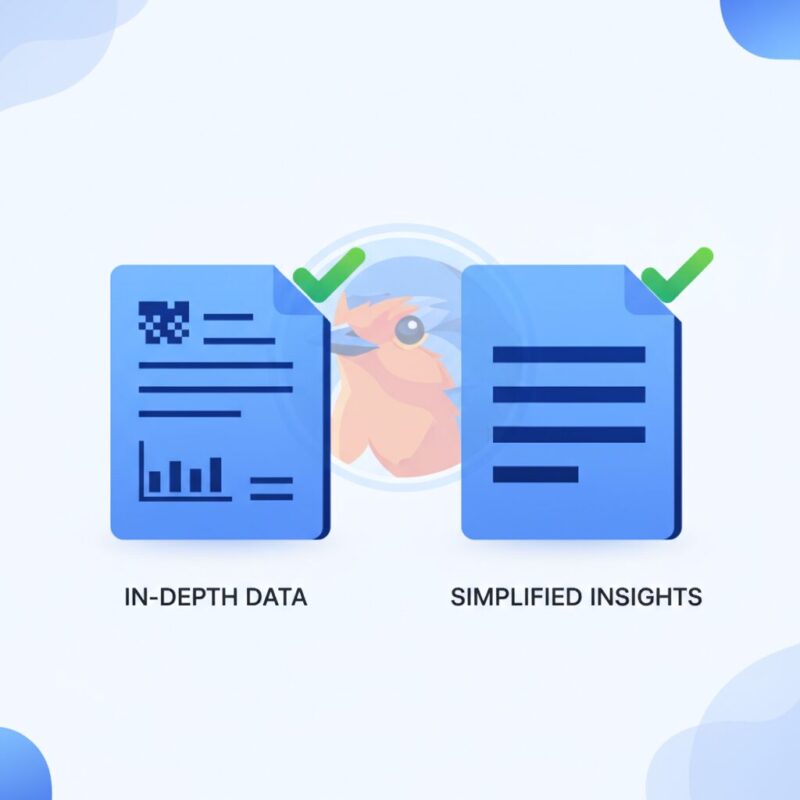
The divergence is starkest between the NIH and UKRI. As outlined in recent guidance, the National Institutes of Health (NIH) has implemented a strict 15% indirect cost cap for specific foreign components and grants, a move that disrupts standard negotiated rate agreements for international collaborations. This creates a rigid ceiling that requires organizations to absorb significant overhead.
Conversely, the UK Research and Innovation (UKRI) operates on the Full Economic Costing (FEC) model. Under FEC, universities are expected to calculate the entire cost of a project—including infrastructure, estates, and indirect labor—and the UKRI typically funds 80% of this total.
The “Math Trap”
Here lies the compliance pitfall: Allowable costs in one jurisdiction are unallowable in the other.
- Depreciation vs. Purchase: NSF and NIH budgets often allow for the direct purchase of equipment. UKRI, under FEC, often requires depreciation costs to be calculated for existing assets rather than new purchases, unless specifically justified.
- The 80% Rule: If you apply US “Direct Cost” logic to a UKRI proposal, you will likely under-budget by 20-30%, as you will fail to capture the estate and infrastructure costs that UKRI expects you to claim (and then cuts by 20%). Conversely, applying FEC logic to an NIH budget will trigger an immediate audit for unallowable indirect costs above the cap.
To navigate this, your budget justification narrative cannot simply be translated; it must be recalculated. You need distinct templates for each agency that force the Principal Investigator (PI) to justify the need for the expense (universal) while calculating the dollar amount based on the specific agency’s math (divergent).
Navigating the “Original Idea” Mandate: Using AI Without Violating NIH Notice NOT-OD-25-132
The integration of AI into grant writing is inevitable, but it is fraught with anxiety. The primary fear is non-compliance: Will using ChatGPT to draft a justification get my application flagged for plagiarism or fraud?
The definitive answer lies in NIH Notice NOT-OD-25-132. The NIH explicitly clarifies that the use of generative AI is permitted for drafting and editing, provided the applicant assumes full responsibility for the accuracy and integrity of the content. The crucial distinction is between Generative Drafting and Intellectual Authorship.
The Compliant AI Workflow
To use AI safely, you must adopt a “Human-in-the-Loop” methodology. This aligns with NIST risk management frameworks and ensures you remain the “author” in the eyes of the federal government.
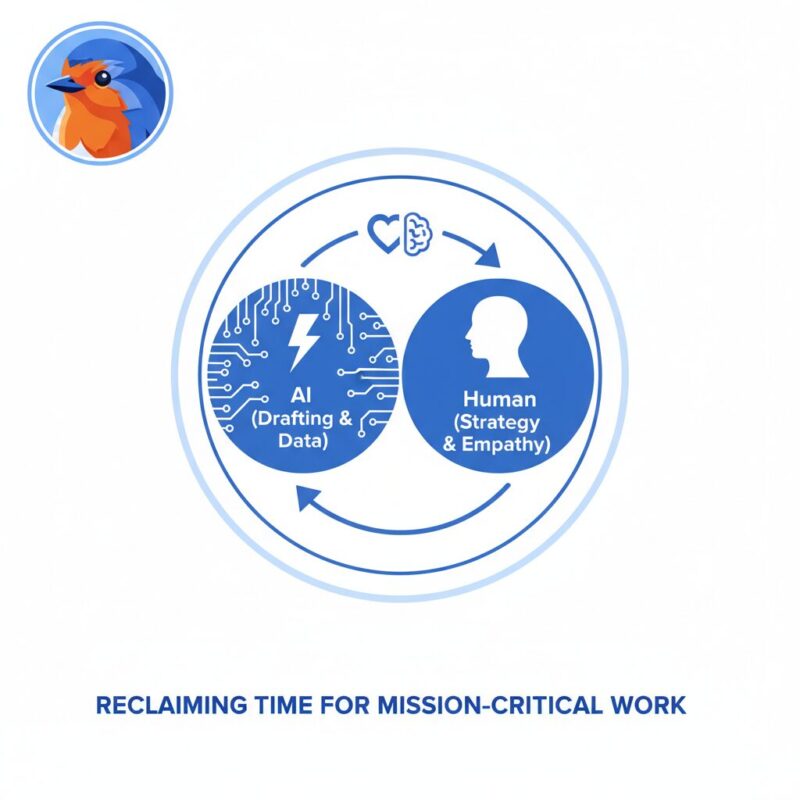
- Closed-Loop Drafting: Never input proprietary budget data, salary info, or unpublished research aims into a public model like standard ChatGPT. These models may train on your data, constituting a breach of confidentiality. Instead, use enterprise-grade or closed-loop tools designed for research administration that guarantee data privacy.
- Verification, Not Just Generation: Use AI to turn bullet points into prose, not to invent costs. For example, input: “Travel: $2,000, 2 researchers, DC conference, dissemination of results.” The AI generates the compliant paragraph. You verify the math.
- The Originality Check: Ensure the scientific rationale for the budget item originates from the PI. The AI’s role is to format that rationale into the “Benefit to the Project” language required by the agency.
Tools like the AI Grant Proposal Generator are built specifically for this workflow, allowing administrators to draft compliant narratives without crossing the line into prohibited AI authorship.
Automating the “Invisible Labor”: Solving the Data Collection Bottleneck
While compliance is the headline risk, the day-to-day killer of research administration careers is the “invisible labor.” This is the time spent chasing PIs for quotes, digging through email threads for sub-award details, and manually reconciling version numbers in spreadsheets. According to SRA International, this administrative burden is a primary driver of burnout, contributing to the sector’s retention crisis.
The solution is to automate the data collection before it reaches the budget justification phase. Instead of emailing a PI for a list of supplies, a smart workflow triggers a form where they input needs, and the system automatically maps those inputs to the correct Object Class Categories (e.g., Supplies vs. Equipment).
Furthermore, automating the translation of this raw data into narrative form frees up the administrator’s cognitive bandwidth for high-level strategy. By using tools like the Free Budget Justification Builder, you can instantly generate the boilerplate text required for standard line items (like fringe benefits or publication costs), allowing you to focus your energy on the complex, high-dollar justifications that actually sway reviewers.
This isn’t just about saving time; it’s about survival. By reducing the manual drudgery, we can extend the tenure of skilled staff beyond the 16-month average, stabilizing the research enterprise.
A Practical Blueprint: Converting Narratives Across Agencies (NIH to NSF to UKRI)
Once you have your data and your compliance guardrails, the final challenge is conversion. How do you take a justification written for an NIH R01 and retool it for an NSF Standard Grant or a UKRI collaboration without starting from scratch?
Step 1: The NIH Modular to NSF Detailed Conversion
NIH modular budgets (under $250k direct) allow for broad “modules” of funding. NSF Budget Narratives require detailed itemization for every cost.
- The Pivot: Take your NIH internal worksheet (the detailed one you kept for your records) and use AI to expand the descriptions.
- Prompt Strategy: “Convert this internal list of lab supplies into an NSF-compliant budget justification narrative. Group items by scientific purpose and explicitly state how each enables the specific aims of the project.”
Step 2: The US Direct to UKRI “Impact” Conversion
UKRI requires a “Justification of Resources” (JoR) that is fundamentally different from a US budget justification. It is not just a list of costs; it is a value-for-money argument.
- The Pivot: You must rewrite the narrative to emphasize impact and necessity rather than just allowability.
- Critical Adjustment: For staff costs, do not just list effort. You must justify why this specific level of expertise is required. The UKRI reviewers look for “value for money,” not just “reasonable cost.”
By systematizing these conversions, you transform a multi-day rewriting panic into a structured, manageable process.
Frequently Asked Questions
Does NIH allow the use of AI in writing budget justifications?
Yes, NIH allows the use of AI for drafting and editing, but strictly under the condition that the applicant assumes full responsibility for accuracy. According to NIH Notice NOT-OD-25-132, the AI cannot be the listed author, and humans must review all outputs to ensure no proprietary data was compromised or false information generated.
What is the difference between NIH indirect costs and UKRI Full Economic Costing?
The primary difference is that NIH uses a negotiated indirect cost rate (or a 15% cap for foreign entities) applied to a modified total direct cost base, whereas UKRI uses Full Economic Costing (FEC) which calculates the total cost of the project including infrastructure, of which they typically fund 80%. Confusing these two models usually results in significant budget shortfalls or compliance rejections.
Is it safe to enter proprietary budget data into ChatGPT for formatting?
No, you should never enter proprietary salary data or unpublished research details into public AI models like standard ChatGPT, as they may train on your inputs. Instead, utilize “closed-loop” AI platforms specifically designed for research administration that guarantee data privacy and zero-retention of your sensitive budget information.
How can I reduce the time spent on manual budget reformatting for different agencies?
You can reduce reformatting time by centralizing your raw budget data and using compliant AI tools to generate agency-specific narratives. By using a Free Budget Justification Builder to handle standard headers and boilerplate text, you can focus solely on tailoring the specific scientific justification for each agency.
What is the “16-Month Crisis” in research administration?
The “16-Month Crisis” refers to the alarming trend where research administrators leave their roles after an average of just 16 months due to burnout and excessive administrative burden. This high turnover threatens institutional knowledge and grant success rates, making the adoption of automation tools critical for staff retention.
Key Takeaways:
- Beware the “Math Trap”: NIH’s 15% foreign indirect cost cap and UKRI’s 80% Full Economic Costing are mathematically incompatible; never copy-paste numbers between these formats without recalculating the base.
- Adopt “Human-in-the-Loop” Compliance: Adhere to NIH Notice NOT-OD-25-132 by using AI solely as a drafter for budget narratives while maintaining strict human verification of all costs and scientific justifications.
- Prioritize Data Sovereignty: Mitigate data privacy risks by utilizing “closed-loop” AI tools that do not train on your proprietary salary or budget data, unlike public generative models.
- Automate to Survive: Leveraging AI to handle the “invisible labor” of data collection and formatting can reduce administrative workload by up to 80%, directly combating the 16-month burnout cycle.
Conclusion
The complexity of 2026’s funding landscape is not going to recede. The gap between NIH, NSF, and UKRI requirements will likely widen as each nation pursues its own research priorities. However, by embracing a compliance-first AI strategy, research administrators can stop drowning in the minutiae of formatting and return to their core mission: facilitating the science that changes the world. The tools exist to turn this crisis into a sustainable workflow; it is now a matter of deploying them with the strategic precision this profession demands.
