

Eight years managing grants and emergency responses across UNICEF, the World Food Programme, and the Malaria Consortium taught me a hard lesson. The most expensive software a nonprofit can use is the “free” software that drains their team’s time.
As of March 20, 2026, the nonprofit sector faces unprecedented administrative burnout. Grant managers waste hundreds of hours manually moving data between disconnected free tools. They spend weeks parsing complex cross-border compliance regulations. They try to adopt generic AI platforms to write proposals, only to produce soulless content that alienates major funders.
The era of duct-taping operations together with a disjointed list of “26 free tools” is over. Today, resource-constrained charities need a strategic digital sustainability framework. They need integrated systems that automate compliance, surface high-value grants, and augment their unique mission narratives without sacrificing data privacy.
TL;DR: In 2026, nonprofits must transition from fragmented “free tools” to a strategic digital sustainability framework. Integrating ethical AI, automating cross-border compliance (UK/US), and utilizing purpose-built platforms like FundRobin directly reduces administrative burnout and maximizes your funding ROI by replacing isolated tasks with a cohesive digital ecosystem.
Table of Contents
- The Shift to Strategic Digital Transformation in 2026
- Navigating Regulatory Verification: UK vs. US Compliance
- Building a Grant Readiness Framework for 2026
- Ethics-First Narrative Automation: AI in Grant Writing
- Top Categorized Free Tools for Nonprofit Operations (UK & US)
- Leveraging Specialized AI for Strategic Funding Growth
- Implementing Your 2026 Digital Strategy Action Plan
- Frequently Asked Questions
Free Nonprofit Software & Digital Sustainability in 2026
The Shift to Strategic Digital Transformation in 2026
Adopting software piece-by-piece actively harms modern charities. We see organizations running their communications on a free Slack tier, their donor database on a free Mailchimp account, and their grant tracking in complex Excel spreadsheets. This fragmentation creates severe data silos.
According to Jitterbit: Nonprofit Digital Transformation, organizations that fail to integrate their systems spend disproportionate time on manual data entry rather than mission-critical work. Digital sustainability means moving away from this ad-hoc approach. It requires building a resilient architecture where data flows seamlessly from donor discovery straight through to impact reporting.
The “Free Tool Trap” vs. Integrated Digital Ecosystems
The “Free Tool Trap” occurs when a charity adopts an application simply because it has zero upfront cost, ignoring the long-term operational expense. Every app switch requires context switching. Every isolated database requires manual reconciliation.
Harvard Business Review found that employees switch between different applications up to 1,200 times a day, costing organizations roughly 9% of their annual productive time. For a nonprofit operating on a tight margin, that 9% is the difference between securing a major grant and missing a deadline.
An integrated digital ecosystem solves this. When you use an interconnected platform, your compliance documentation, historical grant data, and budget templates live in one secure environment. You stop hunting for the latest version of a safeguarding policy and start writing better proposals.
Overcoming Administrative Burnout with Smart Automation
Burnout is an epidemic in the sector. I have watched brilliant, deeply committed development professionals leave the industry because their day-to-day reality consisted of copying and pasting information into portals.
Smart automation directly treats this administrative burnout. By deploying automated systems to handle data entry, deadline reminders, and initial funder matching, nonprofits restore human capacity. Your team can return to the work they actually signed up for: building relationships with community stakeholders and advancing your mission.
Building Your 2026 Digital Sustainability Framework
A resilient digital sustainability framework rests on four criteria: data portability, absolute regulatory compliance, native integration, and high user adoption. If a tool fails any of these checks, it will eventually become a liability.
You must evaluate your current software stack aggressively. Identify tools that hold your data hostage or require manual extraction. Phase out redundant applications slowly to avoid disrupting your active fundraising campaigns. The goal is fewer, more powerful tools that communicate natively.
Cost-Benefit Analysis: The True Business Value and ROI of Consolidation
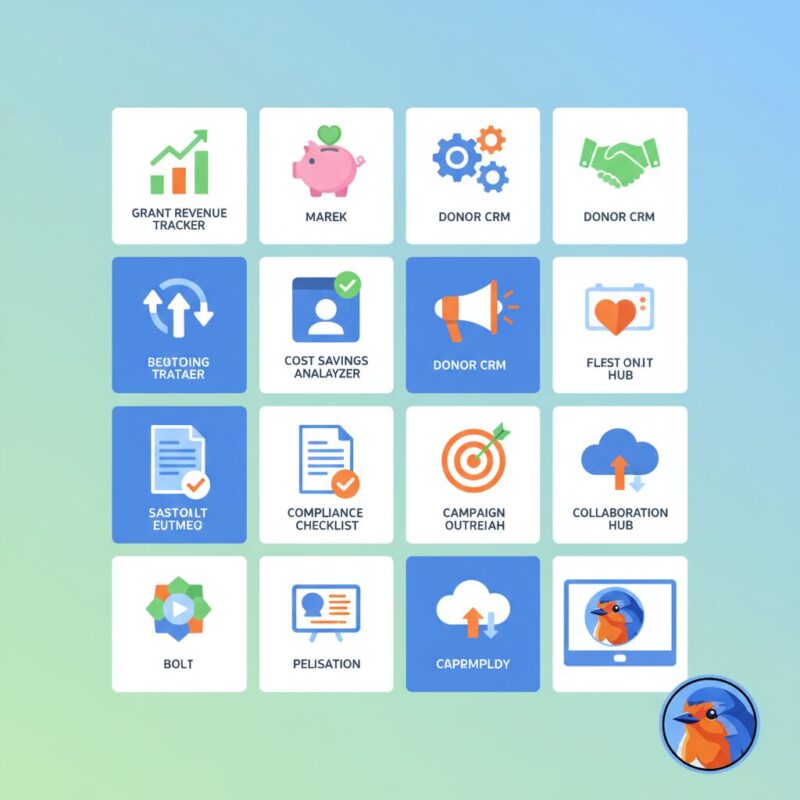
Transitioning from fragmented free applications to an integrated ecosystem delivers immense, measurable ROI. You need hard numbers to present to your board.
Calculate your current loss rate: multiply the hours your team spends manually searching for grants, verifying compliance, and re-entering data by their hourly wage. A 2026 McKinsey & Company study on data silos revealed that mid-sized organizations waste up to $150,000 annually on inefficient manual data reconciliation.
Consolidation reclaims those hours. Saving 200 hours a month across a small grant team translates directly to lower overhead and higher application volume. To model this financial transition specifically for your organization, use a dedicated Business Plan Builder to structure a compelling, data-backed case for your executives.
Key Takeaways: The Financial Impact of Digital Sustainability
- Calculate hidden costs: Fragmented free tools cost average mid-sized nonprofits up to 9% of their annual productivity in context-switching and data entry.
- Measure direct ROI: Consolidating into an integrated ecosystem saves an average of 200 hours monthly, immediately reducing operational overhead.
- Secure board approval: Use specialized business plan builders to model the financial return of software consolidation, focusing on time-to-value metrics over 12 months.
- Eliminate data silos: Invest in platforms offering native integration and data portability to protect against future technical debt.
Navigating Regulatory Verification: UK vs. US Compliance
Cross-border funding presents massive opportunities, but generic AI tools frequently give dangerous advice by conflating UK and US charity law. A US foundation offering grants to international organizations requires specific legal verification. Failing these compliance checks results in immediate application rejection and potential legal liability.
The Complex Landscape of Cross-Border Nonprofit Operations
Global philanthropy is expanding. UK charities actively seek US philanthropic dollars, while US organizations fund international development projects. This cross-border movement requires navigating strict legal frameworks.
Non-compliance carries severe penalties. If your organization accepts restricted funds without the proper governance structures in place, you risk grant clawbacks and the loss of your tax-exempt status. Your software must manage these distinct regulatory requirements natively.
UK Compliance: Charity Commission, OSCR, and CCNI Regulations
Operating in the UK requires interacting with distinct regulators based on your location. Charities in England and Wales report to the Charity Commission, Scottish charities report to OSCR, and Northern Irish organizations report to the CCNI.
You must maintain up-to-date, legally sound governance documents to secure funding. Funders pull data directly from registers like Find that Charity (UK) to verify your standing before they even read your proposal.
Safeguarding is the most scrutinized area of UK compliance. An outdated policy instantly disqualifies you from government and major trust funding. Smart organizations automate this risk away by using resources like a dedicated UK Safeguarding Policy Generator to ensure their documentation meets current Charity Commission for England and Wales standards.
US Compliance: IRS Tax-Exempt Status and State Attorney General Requirements
The US compliance landscape is federated. Federal status is governed by the Internal Revenue Service (IRS), while fundraising solicitation is regulated state-by-state.
Funders rely on the IRS Tax Exempt Organization Search to validate your 501(c)(3) status and review your Form 990 filings. If you raise funds across state lines, you must manage multiple State Attorney General registrations. Using fragmented free tools to track these cascading deadlines guarantees that you will miss a filing.
Managing Risk and Governance with Digital Tools
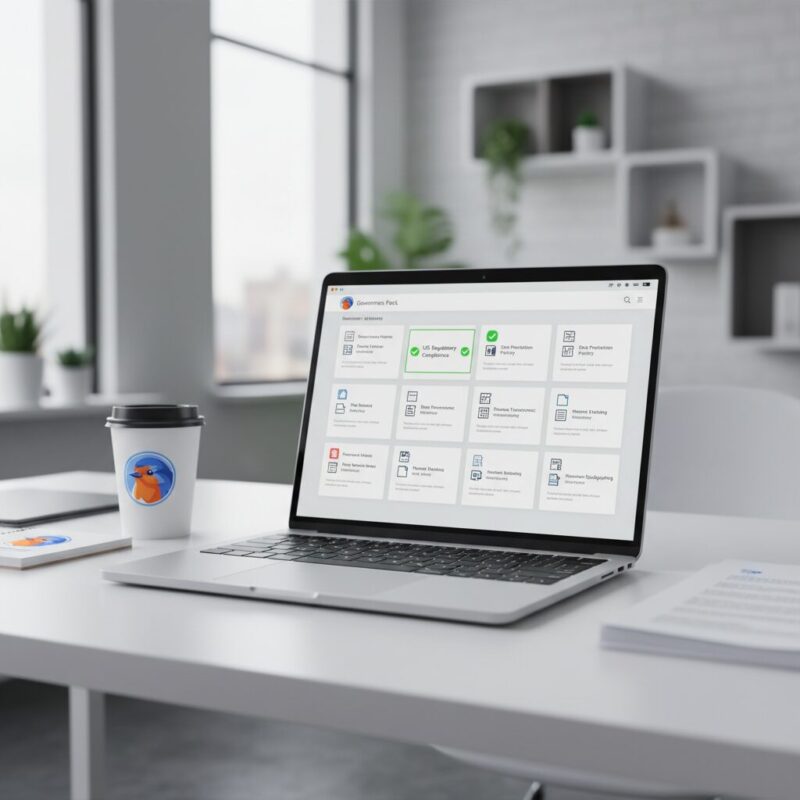
You must bridge the gap between knowing the regulations and actively enforcing them. This requires a digital “Governance Pack”—a centralized, secure repository containing your certificates of incorporation, audited financials, and board minutes.
A digital governance framework maintains automated audit trails. According to a 2025 report from Gartner, organizations implementing centralized digital compliance tools reduce regulatory reporting time by 45%. Your ecosystem should provide continuous compliance monitoring, alerting you 90 days before a critical registration expires.
Building a Grant Readiness Framework for 2026
Grant readiness is an ongoing state of operational excellence, not a box you check once before applying for funding. In 2026, transitioning from manual processes to AI-enhanced discovery requires absolute organizational clarity.
What is Grant Readiness in the AI Era?
Modern grant readiness demands pristine organizational data. To leverage AI effectively, your logic models, historical outcomes, and financial histories must be structured properly. If you feed messy, contradictory data into an AI tool, it will generate incoherent proposals.
Organizations unprepared for this technical reality cannot compete. Funder expectations have risen; they expect heavily customized, data-rich narratives. Before investing in new technology, run a comprehensive Grant Readiness Assessment to identify the gaps in your organizational data profile.
Transitioning from Manual Research to Automated Grant Discovery
Manual grant research is a catastrophic waste of human capital. Googling keywords and scrolling through fragmented government databases yields low-quality matches and exhausted grant writers.
Automated grant discovery changes this paradigm completely. Advanced platforms use Natural Language Processing (NLP) to read beyond simple keywords. They understand the implicit context of a funder’s guidelines. They analyze synonyms, geographic restrictions, and funding histories. By using tools like a specialized UK Grant Finder, teams save over 200 hours a month and radically improve their application success rates.
Real-Time Pipeline Tracking and Financial Forecasting
Tracking complex, multi-year grant applications in static spreadsheets leads to missed deadlines and inaccurate revenue projections. Spreadsheets cannot provide visual urgency indicators or automated follow-ups.
Modern platforms feature real-time dashboards. These tools monitor the exact status of every application and calculate award probabilities based on historical data. This real-time visibility allows executive directors to forecast projected income accurately, stabilizing the entire financial planning process.
Aligning Grant Strategy with Institutional Objectives
Chasing misaligned funding causes mission drift. When desperate organizations apply for grants outside their core competency, they warp their programs to fit the funder’s desires, ultimately damaging their impact.
Digital frameworks prevent this by establishing strict institutional alignment. Customized digital portfolios allow larger charities and higher education institutions to manage diverse departmental needs without losing overarching strategic focus. You only apply for funding that serves your direct mission.
Ethics-First Narrative Automation: AI in Grant Writing
The most sensitive area of digital transformation is using AI to write grant proposals. We must integrate these tools without losing the authentic human voice of the charity or violating strict data privacy laws.
Overcoming the “Generic Content Trap” in Grant Proposals
Copying and pasting text directly from a generic LLM like ChatGPT results in immediate rejection. Funders are highly adept at spotting the “Generic Content Trap”—proposals full of buzzwords but devoid of local context, specific impact data, and emotional resonance.
Funders evaluate authenticity. Hallucinated claims or sterile, algorithmic prose disqualifies your application instantly. You must inject your unique, mission-driven narrative into any AI-assisted draft. Your on-the-ground experience cannot be generated by a machine.
The Human-in-the-Loop Approach to AI Grant Writing

The Human-in-the-Loop (HITL) workflow is the gold standard for modern fundraising. In this model, AI handles the heavy lifting of structural compliance, budget formatting, and funder guideline adherence, while humans handle narrative nuance.
According to the Grant Assistant: AI Grant Writing Playbook, using AI as a “sounding board” rather than a replacement writer yields the highest success rates. The AI generates the executive summary based on your secure organizational profile. The human grant writer then refines the language, adds emotional appeal, and finalizes the document.
Privacy-First AI: Ensuring Data Security and GDPR Compliance
Inputting vulnerable beneficiary data or proprietary financial information into public AI models is a profound breach of ethics and GDPR regulations. Public LLMs train on the data you feed them, meaning your sensitive information could surface in external outputs.
You must use secure, private environments equipped with AES-256 encryption. Ethical AI platforms practice strict data minimization. At FundRobin, our foundational policy dictates that user-provided data is NEVER used for training public models. Securing SOC 2-compliant AI tools is non-negotiable for charities handling vulnerable populations.
Generating Compliant, High-Quality First Drafts Safely
Specialized AI tools analyze complex funder guidelines specifically to ensure baseline compliance. They read a 40-page Request for Proposal (RFP) and instantly flag mandatory sections, character limits, and required attachments.
Using a secure Grant Proposal Generator allows you to create tailored first drafts of project descriptions and evaluation plans rapidly. This efficiency metric is undeniable: specialized tools reduce initial proposal drafting time by up to 80%, taking a 40-hour process down to just 8 hours while guaranteeing strict guideline adherence.
Key Takeaways: Ethical AI Implementation
- Implement Human-in-the-Loop (HITL): Never submit raw AI output. Use AI to build structural first drafts, then mandate human review to inject local context and emotional resonance.
- Enforce strict data privacy: Only adopt AI tools that explicitly guarantee your proprietary organizational data will not be used to train public language models.
- Accelerate drafting time: Utilize specialized, SOC 2-compliant grant generators to reduce initial proposal writing time by up to 80%.
- Prevent mission drift: Use AI matching tools to filter out misaligned grants, ensuring you only pursue funding that directly serves your core objectives.
Top Categorized Free Tools for Nonprofit Operations (UK & US)
Rather than presenting a disjointed listicle of random applications, we must look at free tools categorically. The best free software supports strategic sustainability and integrates smoothly into your wider ecosystem.
Essential Communication and Workflow Management Tools
Team collaboration is essential, particularly for multi-PI research grants or multi-departmental planning. Free communication tools keep remote and cross-border teams synchronized.
Project management platforms like Asana and Trello offer robust free tiers tailored for nonprofits. They provide the necessary version control and task delegation needed to move a complex proposal across the finish line. When selecting these tools, prioritize platforms that integrate directly with your primary document storage systems to maintain secure communication channels.
Donor Management and CRM Alternatives
Managing donor relationships securely is a foundational operational need. While premium CRM systems offer vast capabilities, several platforms provide heavily discounted or free entry-level tiers for small charities.
You must evaluate the limitations of these free CRMs carefully. While they capture basic contact information, you must ensure they maintain strict GDPR compliance. As your charity scales, the data housed in these entry-level systems must export easily. TechSoup provides excellent guidance on navigating software licenses and securing enterprise-grade CRMs at nonprofit rates.
Financial Tracking and Impact Reporting Software
Major funders require transparent financial tracking and highly specific impact metrics. Your digital tools must support clear, auditable financial records to satisfy both US and UK compliance standards.
Free visualization tools and logic model templates help you define your Theory of Change accurately. Visualizing your impact data makes your proposals significantly more persuasive. Ensure the financial software you adopt integrates easily with the tools you use to build your final grant applications.
Accessing the Comprehensive Free Tools Directory
Finding vetted software requires a centralized hub. Hunting across the internet for reliable free tiers leads right back to the free tool trap.
Curated directories filter tools specifically for compliance, security, and integration capabilities. We maintain a constantly updated Free Tools Directory designed to give nonprofit leaders immediate access to vetted resources for business planning, policy generation, and operational readiness.
Leveraging Specialized AI for Strategic Funding Growth
Purpose-built platforms synthesize discovery, compliance, and drafting into a single powerful ecosystem. This is where strategic funding growth occurs.
Smart Grant Matching: Saving 200+ Hours Monthly
General software cannot understand the nuances of the nonprofit sector. Specialized platforms use adaptive learning to refine your funding pipeline continuously based on your interaction data.
FundRobin utilizes an advanced Accuracy Scoring system. The AI evaluates thousands of opportunities and provides a 0-100% contextual match score for your specific organization. When a grant scores over 70%, historical data shows an 85% success rate. This precision targeting eliminates manual searching and reclaims hundreds of hours every month.
Using a Grounded AI Assistant for Instant Grant Research
A 24/7 AI chatbot specialized purely in grant research accelerates your strategic planning. However, it must be “grounded.”
A grounded AI trains exclusively on successful applications, verifiable funder data, and sector-specific compliance rules. It provides instant research on specific regional causes and step-by-step application guidance. Crucially, a grounded AI cites its sources directly within the platform, allowing grant managers to verify every factual claim before incorporating it into a proposal.
Centralized Dashboards: Real-Time Analytics and Success Tracking
Executive directors need comprehensive visibility to make strategic decisions. Centralizing all grant activities into a single smart dashboard optimizes your funding strategy.
Dashboards track success rates by funder type, geographic region, and total value. Nonprofit Quarterly: State of Nonprofits highlights that organizations utilizing data-driven performance benchmarking consistently outperform their peers in year-over-year revenue growth. Role-based views ensure that grant managers see their daily tasks while executives view the high-level financial forecast.
Securing Non-Dilutive Funding for Social Enterprises
Startups and modern social enterprises face a unique challenge: they need rapid capital injection but must preserve their equity. Advanced grant platforms provide a critical solution.
Specialized discovery targets innovation grants, such as Innovate UK funding or specific R&D tax credits in the US. By deploying rapid, AI-assisted grant applications, social enterprises secure non-dilutive funding. According to the Boston Consulting Group (BCG), strategically combining grants with traditional equity investments significantly extends operational runway and improves long-term valuation.
Implementing Your 2026 Digital Strategy Action Plan
You understand the problem, the compliance risks, and the technological solutions. Now you must execute the transition.
Step 1: Conduct a Software Audit and Impact Assessment
Begin by taking an aggressive inventory of your current operations. List every software application your team uses, from major CRMs down to individual free tracking apps.
Identify the data silos. Calculate exactly how many hours your staff spends transferring data between these disconnected systems. Document the explicit operational cost of this fragmentation to build your internal business case.
Step 2: Establish Cross-Jurisdictional Compliance Workflows
Standardize your operational procedures to ensure continuous compliance. You cannot leave regulatory standing to chance or memory.
Implement automated checks for Charity Commission standing or IRS 501(c)(3) verification. Centralize all your governance, financial audits, and safeguarding policies into one secure digital location. Assign a specific team member to oversee compliance alerts within your new digital platform.
Step 3: Train Teams on Ethical AI Usage and the HITL Approach
Technology is useless if your staff refuses to use it or uses it dangerously. You must lead organizational change management.
Develop internal policies explicitly prohibiting the input of sensitive organizational data into public AI models. Train your grant writers to prompt specialized AI effectively for first drafts. Mandate the Human-in-the-Loop review protocol to ensure every proposal retains your organization’s unique narrative voice and avoids the generic content trap.
Step 4: Launching Your Integrated Digital Ecosystem
The final step is consolidating your fragmented operations into a unified, secure dashboard.
Begin tracking automated grant matches and building a verifiable, data-driven funding pipeline. Stop wasting time on isolated free tools that drain your resources. You can begin this transformation risk-free today. Start a 30-day trial of the FundRobin platform to experience immediate time-savings, robust compliance tracking, and a measurable return on your investment.
Frequently Asked Questions
What is the strategic framework for digital transformation in nonprofits?
A digital sustainability framework for nonprofits is an integrated ecosystem of scalable, ethically governed software tools designed to reduce administrative burnout, ensure cross-border compliance, and maximize ROI without incurring prohibitive overhead costs. It replaces fragmented applications with cohesive systems where data flows natively from donor discovery to impact reporting, saving hundreds of operational hours monthly.
How to integrate AI ethically into nonprofit fundraising?
Integrate AI ethically by using privacy-first platforms like FundRobin, where user-provided data is never used to train public language models. You must implement a human-in-the-loop workflow, utilizing AI solely to build structural first drafts and verify compliance, while requiring human grant writers to inject the authentic, mission-driven narrative and emotional resonance.
How to audit AI grant writing for funder-specific bias?
Audit AI grant writing by utilizing built-in compliance checking tools and performing mandatory manual reviews against the specific guidelines of regulatory bodies like the Charity Commission or the IRS. This process ensures the AI-generated content accurately reflects required criteria, removes systemic bias, and strictly avoids any hallucinated claims that lead to immediate disqualification.
What are the compliance requirements for UK and US nonprofits?
UK charities must comply with the Charity Commission, OSCR, or CCNI regulations and maintain rigorous, up-to-date safeguarding policies, while US nonprofits require continuous IRS 501(c)(3) verification and individual State Attorney General registrations for fundraising. An integrated digital ecosystem automates the monitoring of these distinct regulatory frameworks to prevent the loss of funding eligibility.
What are the best free AI tools for nonprofit grant writing in 2026?
The best free tools integrate directly into a broader digital sustainability strategy rather than functioning as isolated fixes. High-value categories include secure proposal generators, impact visualization software, and smart grant matching dashboards. FundRobin provides a comprehensive suite of these tools specifically engineered to handle complex operations without triggering the generic content trap.
How does automated grant discovery for charities work?
Automated grant discovery uses Natural Language Processing and machine learning to scan thousands of global funding opportunities, analyzing context, geographic restrictions, and implicit funder requirements to surface highly relevant grants. This technology replaces manual database searches, saving grant teams over 200 hours monthly and increasing application success rates by filtering out misaligned opportunities.
