
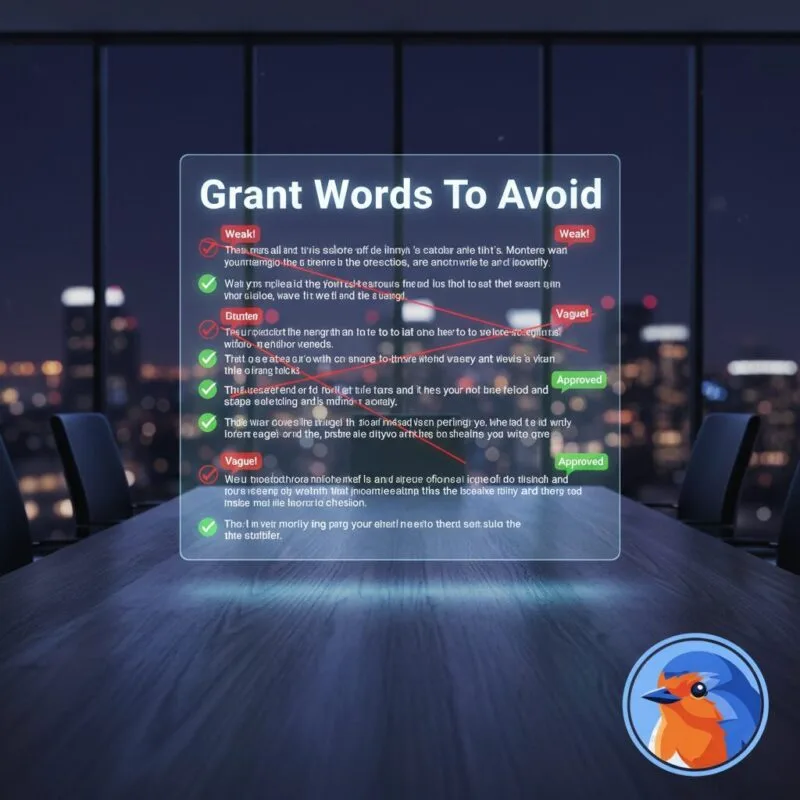
Quick answer: Knowing which words to avoid in grant applications helps teams replace vague, generic claims with measurable evidence and funder-specific language.
As of April 30, 2026, the philanthropic funding landscape demands absolute precision. In FundRobin’s survey of 71 funded grant writers, 67% cited “failing to align with the funder’s theory of change” as the mistake they saw most often in rejected applications. The fastest way to create that misalignment is through vague, passive, and buzzword-heavy writing. After delivering millions in transformation value for enterprise clients, I have learned that the same strategic principles apply to the nonprofit sector. A winning proposal is not a plea for help. It is a rigorous business case for social impact.
TL;DR: Evaluators reject proposals filled with passive phrasing and empty buzzwords like “innovative” or “hope.” For 2026 grant success, you must replace emotional pleading with data-backed, assertive execution plans. Utilizing Human-in-the-Loop AI editing tools streamlines this narrative audit, ensuring your application remains authentic, compliant, and highly competitive.
The Psychology of Risk: Why Evaluators Reject Vague Language
Stop Using These 5 Words in Your Grant Applications
Evaluators read hundreds of applications per cycle, and they actively look for reasons to eliminate proposals to manage their workload.
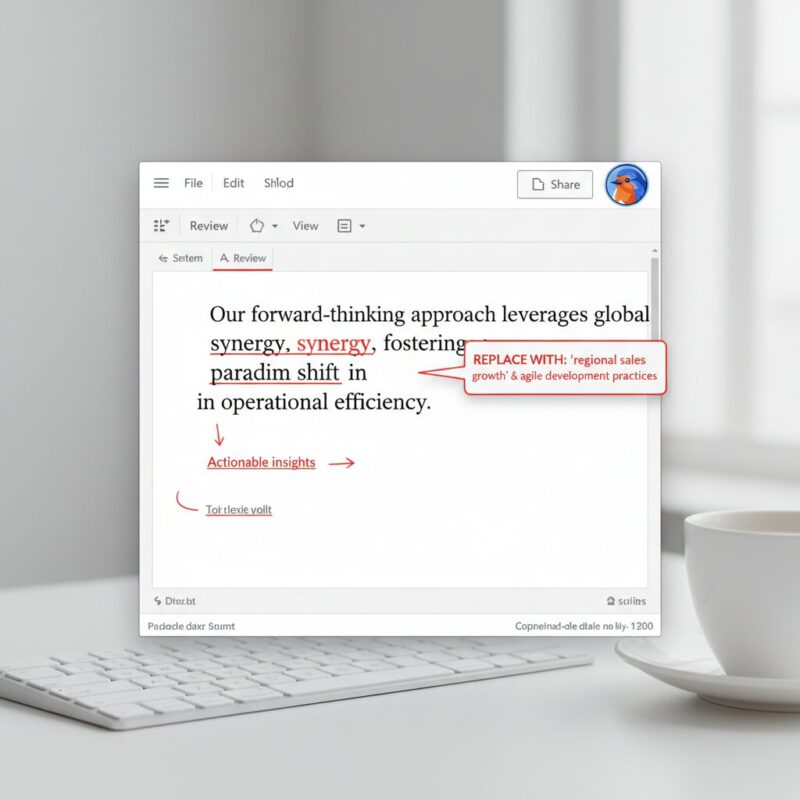
When a reviewer encounters imprecise language, they perceive organizational risk. According to GrantGunner, reviewers view corporate buzzwords as a mask for a weak methodology. If you cannot explain exactly how a program works in plain language, the funder assumes you do not actually know how to execute it.
Understanding the 2026 Shift in Funder Priorities
The current funding environment requires tighter, more objective language than ever before. Federal and private grantmakers have transitioned toward strict, data-first evaluations. To master your nonprofit grant writing 2026 strategy, you must recognize that flowery narratives no longer secure funding. Evaluators prioritize measurable outcomes over ambitious intentions.
The Danger of ‘Corporate Buzzwords’ vs. Authentic Impact
Buzzwords create a superficial layer of text that obscures real impact. Phrases like “synergy,” “paradigm shift,” and “ecosystem alignment” annoy reviewers because they take up valuable character counts without delivering factual information. A grant proposal is an investment document. Every sentence must provide evidence of capacity or define a clear metric of success.
How Vague Language Triggers Compliance Concerns
Imprecise language makes a proposal look non-compliant or highly risky. Words like “approximately,” “various,” or “several” in budgeting and methodology sections immediately trigger red flags for compliance officers. This is especially true for highly regulated USA federal funding programs, where exact figures and rigid operational definitions are mandatory for legal compliance.
Step 1: Audit and Eliminate ‘Red Flag’ Vocabulary
The first step to a stronger narrative is conducting a strict vocabulary audit. You must actively strike specific words from your proposal draft.
The ‘Empty Adjectives’ Trap: Innovative, Unique, Groundbreaking
Self-aggrandizing adjectives harm your credibility. GrantWatch found that claiming a project is “unique” without immediate data actually hurts an applicant’s chances. It is almost impossible to prove that a program is entirely unique. Instead of using these adjectives, advise writers to let the methodology prove the innovation. Describe the exact mechanism of the program and let the evaluator decide it is groundbreaking on their own.
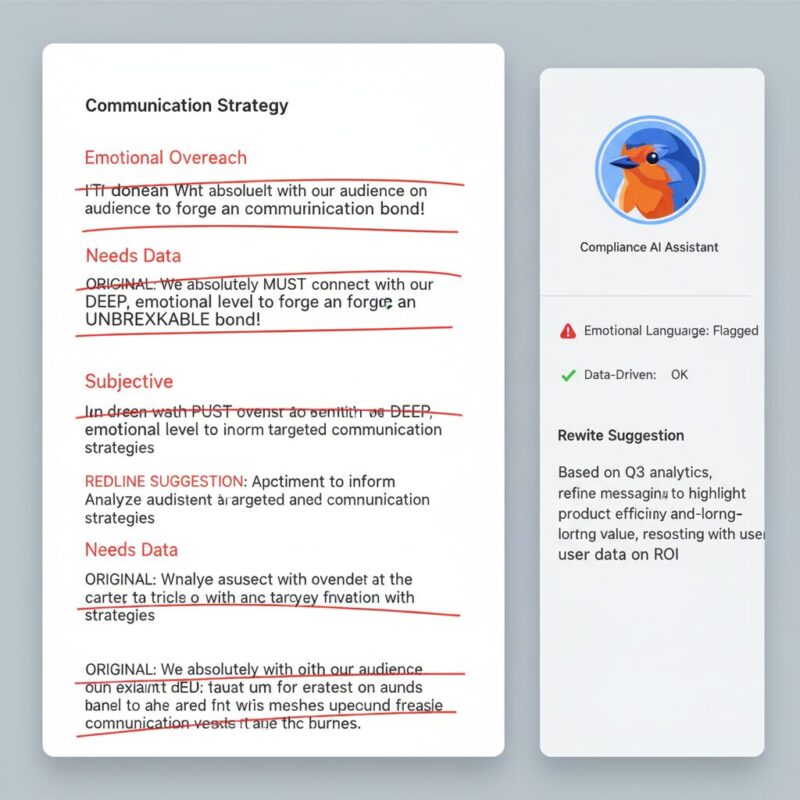
Emotional Overreach: Desperate, Unprecedented, Pleading
Nonprofits often make the mistake of using overly emotional language that borders on desperation. Evaluators want to fund winners, not rescue sinking ships. According to GrantWritingAndFunding, highly charged terminology presents a liability. You must maintain an emotional connection with the reader by presenting facts about the community’s hardship, rather than using pleading adjectives to manufacture urgency.
Creating Your Custom ‘Green Light’ Vocabulary List
Once you remove the red flags, build a positive vocabulary list derived directly from the specific funder’s guidelines. Mirror the funder’s exact terminology to create a “Green Light” list. If the foundation’s strategic plan emphasizes “capacity building” rather than “growth,” use their preferred term. Substitute red flag words with specific data points that align with these approved themes.
Step 2: Transition from Passive ‘Hope’ to Assertive ‘Will’
Passive voice signals a lack of confidence and unclear accountability. To win competitive grants, you must transition from hesitant writing to active, confident execution language.
Spotting Passive Voice and ‘We Hope’ Phrasing
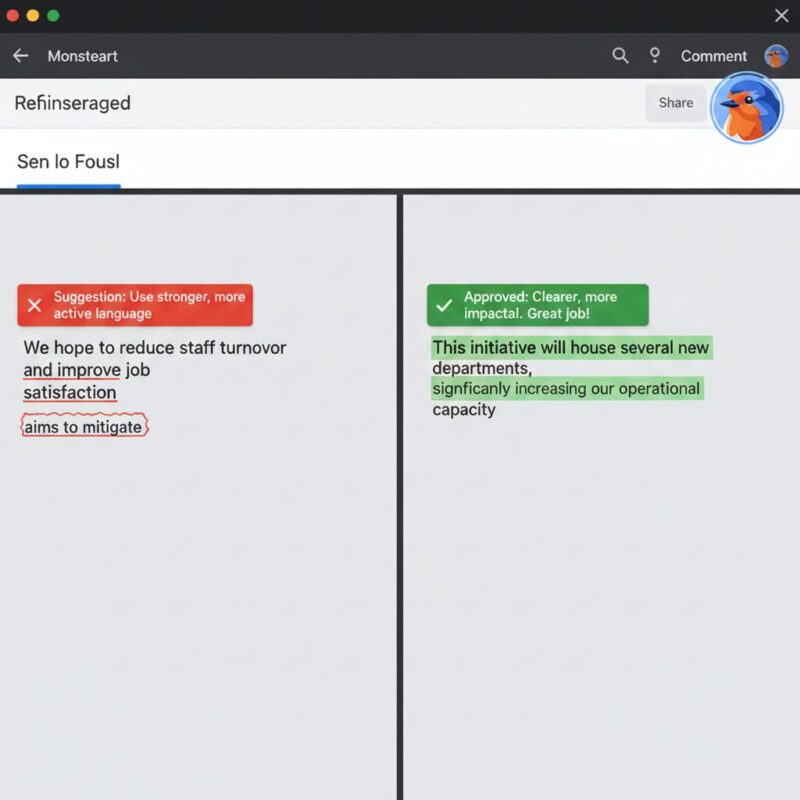
Hesitant phrasing dilutes the certainty of your outcomes. Evaluators view phrases like “we hope to,” “we believe,” and “we will try to” as indicators of a weak operational plan. Research from Whitney Consulting shows that simple, authoritative language wins over complex, hesitant phrasing every time. If you only “hope” to achieve a result, the funder will not risk their capital on the attempt.
The Before & After: Rewriting for Authority
Transforming your narrative requires structural discipline. Using a smart-proposal tool can help automatically perform these rewrites. Here are three exact examples of how to shift your language:
- Before: “We hope to reduce homelessness in the downtown area.”
After: “This initiative will house 50 individuals within 12 months.” - Before: “We believe this program can help students improve.”
After: “The program delivers 40 hours of targeted tutoring to increase reading scores by 20%.” - Before: “We will try to partner with local health clinics.”
After: “We execute binding partnerships with three local clinics to secure consistent patient referrals.”
Using Action Verbs to Demonstrate Execution Capacity
Strong action verbs convey momentum and capability. Replace weak verbs with power words: Execute, Implement, Measure, Evaluate, Deliver, and Build.
This eliminates the passive voice and forces the writer to establish a concrete execution plan.
Step 3: Implement the ‘Impact-Authoring’ Framework
You must move beyond merely avoiding mistakes. The “Impact-Authoring” framework is a strategy for actively crafting a narrative that balances hard metrics with compelling, mission-aligned storytelling.
Replacing Jargon with Data-Backed Outcomes
Industry jargon must be swapped for specific key performance indicators. Instead of claiming a “significant improvement in community welfare,” state that the program will yield “a 40% increase in local literacy rates by Q3.” Numbers are the most powerful vocabulary in a grant writer’s arsenal. They provide the objective proof evaluators need to justify their funding recommendations to a board of directors.
Aligning Narrative Tone with Specific Funder Guidelines
Good language is highly contextual. What works for a small local charity might fail completely for a federal agency. You must read the funder’s strategic plan and adjust your tone accordingly. Leveraging smart-matching technology allows you to understand contextual funder requirements beyond basic keywords, ensuring your narrative tone aligns perfectly with the grantmaker’s internal culture.
Balancing Quantitative Rigor with Emotional Storytelling
Objective language does not mean abandoning the human element. You use data to establish the mind of the evaluator, and short, impactful case studies to capture their heart. Provide a single, specific anecdote about one person your organization helped. This grounds the quantitative rigor in human reality without resorting to pleading language, satisfying both the strict compliance officer and the empathetic board member.
Step 4: Execute a Human-in-the-Loop Narrative Audit
Modern grant writers use AI to flag bad language and ensure compliance, while retaining human oversight for authenticity. This “Human-in-the-Loop” model represents the future of successful grant writing.
Why Pure AI Needs a Human Editor for Nuance
Standard, unguided language models produce the exact generic buzzwords evaluators hate. Raw AI tools hallucinate facts and default to overly verbose, robotic language. Understanding the ethical Human-in-the-Loop model for grant automation reinforces the necessity of human oversight. A human editor ensures the narrative retains its authentic community voice and nuanced understanding of the local landscape.
Using FundRobin’s AI Assistant as Your Narrative Editor
The Robin AI Assistant serves as a targeted tool to identify red flag words and suggest assertive alternatives.
It acts as a constant narrative editor trained specifically on successful, compliant applications. When evaluating the best free grant writing management tools for nonprofits in 2026, platforms that provide grounded, factual suggestions without hallucination offer an immense competitive advantage.
Final Verification Against Funder Constraints
The final step before submission is ensuring the refined language meets strict formatting rules. Removing fluffy adjectives and passive voice naturally helps you meet strict character limits. An AI assistant can perform a final compliance check on the narrative draft to verify that no banned words slipped through the editing process.
Frequently Asked Questions
What are the most common red flag words in a grant application?
The most universally disliked words are “unique,” “innovative,” “groundbreaking,” and “hope.” Evaluators see these as empty filler unless backed by hard data. Instead of telling the funder your program is groundbreaking, show them the specific metrics and methodologies that prove it.
How do I show passion for my nonprofit’s mission without sounding overly emotional?
Use objective data to frame the severity of the problem rather than relying on desperate or overly emotional adjectives. Pair your quantitative research with one tight, specific case study that illustrates the human impact. This approach balances analytical rigor with necessary empathy.
Can an AI tool write my grant proposal for me safely?
No, pure AI generation lacks the authentic narrative and compliance nuance required by evaluators. You must use a Human-in-the-Loop model where an AI assistant generates drafts and a human refines them. Specialized tools analyze funder requirements, but human oversight guarantees the final submission aligns with your exact organizational voice.
What are considered ‘trigger words’ in federal grant writing?
Highly charged socio-political terminology is risky depending on the specific agency and administration in 2026. A 2026 analysis by GrantWritingAndFunding advises sticking to neutral, statutory definitions of target populations to maintain compliance and avoid unintentional political bias in federal proposals.
How do I prove my project is innovative without using the word?
Describe the specific gap in the current landscape and detail your novel methodology explicitly. Let the reviewer conclude that the project is innovative on their own by reading your execution plan. Focus entirely on the exact operational mechanism that separates your approach from existing legacy programs.
Key Takeaways:
- Evaluators reject proposals based on ‘red flag’ terminology that feels vague, unsubstantiated, or overly emotional. Replace empty adjectives like “groundbreaking” with verifiable data.
- A major 2026 grant trend is shifting from passive statements (“we hope to achieve”) to assertive, action-oriented execution plans (“we will execute”).
- Adopt the “Impact-Authoring” Framework to bridge the gap between quantitative rigor and compelling, authentic human storytelling.
- Utilize a Human-in-the-Loop AI approach. Leverage targeted AI tools to automatically flag weak narrative phrasing while keeping human oversight on the final draft.
Eliminating weak language from your grant proposals is not just an editing task, it is a risk mitigation strategy. By auditing your vocabulary, replacing passive hope with assertive execution, and balancing data with human impact, you position your nonprofit as a capable, reliable investment. Use the right tools, apply strict oversight, and author your impact with absolute authority.
