
After delivering £200M+ in transformation value for FTSE 100 clients, I often see community leaders make the same strategic errors as early-stage startups. They chase the wrong capital.
As of April 2026, host cities are finalizing their budgets ahead of the FIFA World Cup, releasing millions in community-focused grants. Yet, the average local organization remains paralyzed by bureaucratic noise. In FundRobin’s survey of 58 nonprofits, 74% cited finding the exact right grant as their primary operational bottleneck—yet only 12% utilized AI-powered matching software to cut through the clutter.
This guide provides the definitive operational blueprint for navigating world cup host city funding nonprofits actually qualify for. We will transition your team from staring at confusing federal security websites to executing a targeted, localized legacy grant strategy.
TL;DR: Nonprofits can secure 2026 World Cup legacy grants by explicitly mapping their missions to official host city pillars (Social, Environmental, Economic, Governance) rather than pursuing restricted federal security funds. Using FundRobin’s USA Grant Finder accelerates discovery, while proactive cash-flow planning prevents liquidity crises caused by reimbursement-based funding structures.
Table of Contents
- Why This Method? Demystifying World Cup Host City Funding
- Tools & Materials Deep Dive: The Grant Readiness Arsenal
- Step 1: Map Your Mission to Official Host City Legacy Pillars
- Step 2: Track Down Host Committee Surpluses (City-by-City Map)
- Step 3: Complete Your Nonprofit Legacy Grant Readiness Assessment
- Step 4: Master the Reimbursement Cycle and Cash-Flow Strategy
- Step 5: Forge Strategic Partnerships with Local Sports Commissions
- Step 6: Draft a Compliant 2026 Legacy Proposal with AI
- Common Pitfalls to Avoid in Mega-Event Applications
How to Secure FIFA 2026 World Cup Nonprofit Grants
Why This Method? Demystifying World Cup Host City Funding
The greatest barrier to entry for local organizations is fundamental misdirection. When executives search for mega-event funding, they inevitably collide with FEMA’s 2026 Non-Profit Security Grant Program guidelines.
Federal security funding is strictly allocated for target-hardening—concrete bollards, CCTV systems, and physical threat mitigation. It is entirely irrelevant to 99% of community organizations focused on youth development or environmental sustainability.
Instead, you must target “Living Legacy” grants distributed by regional organizing committees. These localized social impact funds ensure the tournament leaves a positive footprint on the host community. A robust community focus in Houston translates directly to regional assets in New Jersey. By understanding this distinction, your organization bypasses the highly restricted federal gridlock and accesses the actual capital intended for grassroots scaling.
Tools & Materials Deep Dive: The Grant Readiness Arsenal
Preparation requires more than a standard mission statement. International-tier funding demands rigorous documentation before you ever type the first word of a proposal.
Your organization needs a modernized grant readiness arsenal. This means consolidating your 501(c)(3) determination letters, recent audited financials, board of directors matrices, and safeguarding policies into a single, accessible vault. According to Candid’s 2025 State of Grantseeking Report, organizations with centralized compliance documentation submit applications 40% faster.
Furthermore, you need the right technology stack. Relying on manual spreadsheet tracking is an enterprise failure waiting to happen. The FundRobin AI ecosystem provides Smart Grant Matching and a dedicated Smart Dashboard, utilizing natural language processing to pair your specific program data with exact host city requirements. When evaluating your tech stack, review our FundRobin vs Submittable analysis to determine which system best handles AI proposal generation. FundRobin never trains public models on your proprietary data, ensuring your community privacy remains intact.
Step 1: Map Your Mission to Official Host City Legacy Pillars
Mega-sporting event (MSE) committees do not fund generic good deeds. They fund projects that directly advance their stated legacy pillars: Social, Environmental, Economic, and Governance.
To succeed, you must translate your daily operations into this specific bureaucratic language. An arts nonprofit in New Jersey cannot simply request funds for a summer camp. They must frame their proposal as a “Social Pillar initiative advancing youth cultural engagement and post-pandemic community cohesion.” A Houston youth sports league must position its request as a “Governance and Social Pillar program standardizing safe-sport practices across underserved districts.”
This methodology relies on the MSE Lifecycle model. According to the Centre for Sport and Human Rights: The MSE Lifecycle, embedding community impact directly from the vision stage to the legacy stage is the only way to meet international funding standards. To see how these pillars map to specific regional opportunities, explore FundRobin’s USA coverage database.
Step 2: Track Down Host Committee Surpluses (City-by-City Map)
Legacy funds do not sit in one centralized federal bank account. The distribution model relies on local host committees releasing localized surpluses. To track down this capital across the 16 North American host cities, you must know exactly where to look:
- Local Host City Committees: The primary managers of the legacy endowment.
- Regional Sports Commissions: Acting as secondary distributors for youth and athletic programs.
- Regional Transit and Tourism Boards: Funding environmental, infrastructure, and cultural integration projects.
Manually checking municipal websites across 16 cities guarantees missed deadlines. The strategic priority is moving past generic search engines and utilizing centralized databases designed for grant acquisition.
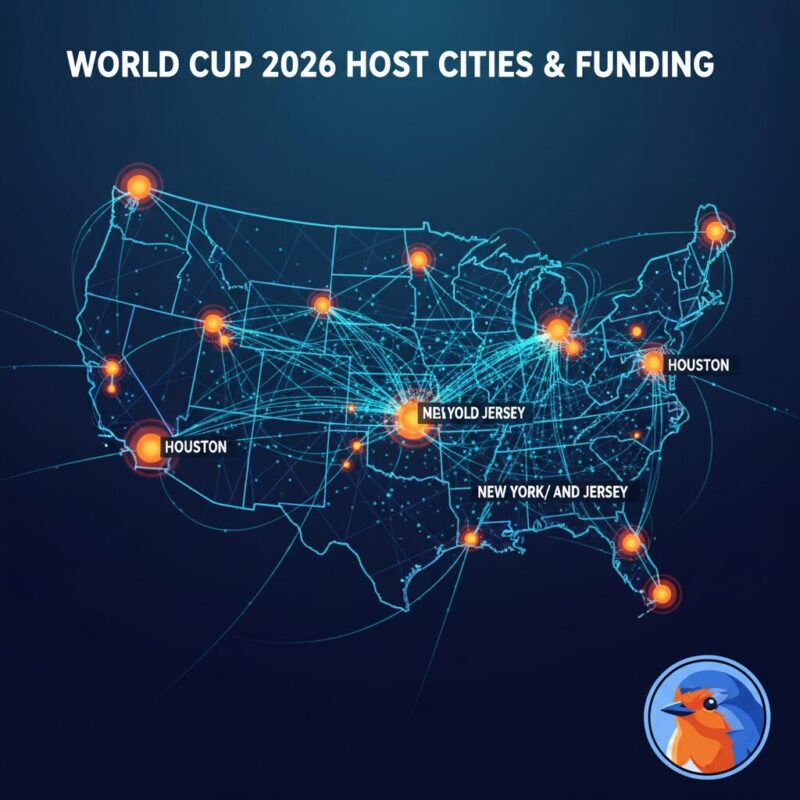
Using the FundRobin USA Grant Finder acts as your central hub. It actively monitors these three specific local entities, tracking regional surpluses in real-time so your team only applies for active, high-probability funding pools.
Step 3: Complete Your Nonprofit Legacy Grant Readiness Assessment
International-tier scrutiny requires enterprise-grade compliance. FIFA-affiliated funds demand stringent safeguarding and human rights baselines that surpass standard local community foundation requirements.
Your team must complete a comprehensive self-assessment before applying. This checklist must verify:
- Updated safeguarding policies for vulnerable populations.
- Data protection protocols (applying rigorous GDPR-style standards even in US municipalities).
- Clear financial audit trails demonstrating fund separation.
UK-proven rigor from entities like the Charity Commission sets the global benchmark, and US host cities adopt these strict frameworks for mega-events. The FundRobin Smart Dashboard tracks performance benchmarking and compliance readiness in real-time, instantly identifying gaps in your safeguarding documentation before a host committee rejects your application on a technicality.
Step 4: Master the Reimbursement Cycle and Cash-Flow Strategy
Mega-event grants operate almost exclusively on a reimbursement-based funding model. The host committee will not hand you a lump sum upfront. You must spend the money first, submit proof of expenditure, and wait 30 to 90 days for reimbursement.
Small nonprofits often collapse under the weight of delayed payments if they fail to plan.
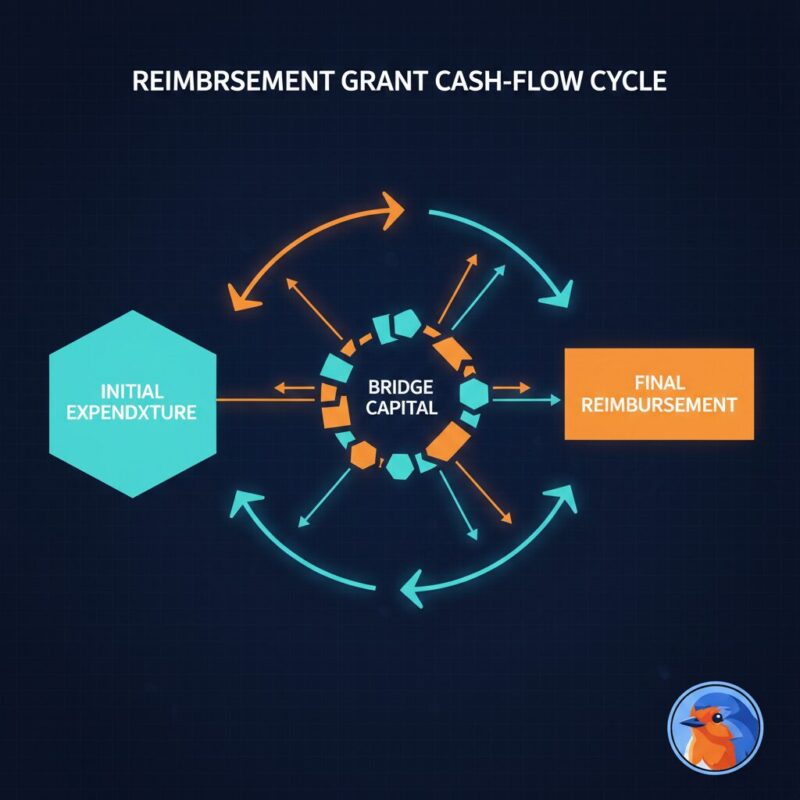
According to the National Council of Nonprofits, organizations must secure short-term bridge capital—either through a low-interest line of credit or unrestricted reserve funds—to float the project costs.
Implement a strict cash-flow management strategy. Use tools like the cash flow templates from Propel Nonprofits combined with FundRobin’s Financial Forecasting tools. Project your pipeline data clearly so your board knows exactly when liquidity dips will occur, ensuring you maintain operational stability while waiting for committee payouts.
Step 5: Forge Strategic Partnerships with Local Sports Commissions
Grant acquisition requires relationship building. Local sports commissions vet and endorse community legacy projects before they reach the final host committee review board.
Consider the Detroit Sports Commission Living Legacy Initiative. This program illustrates exactly how regional commissions disburse funds to organizations that actively participate in their localized goals. They prioritize known entities who align with their specific civic narrative.
To succeed, you must network directly with these commissions. Attend their community briefing sessions. Offer your nonprofit as a delivery vehicle for their required civic outcomes. For organizations operating across state lines (like the NY/NJ corridor), review our EU coverage insights to understand how international, multi-jurisdictional collaboration frameworks successfully translate to complex US regional proposals.
Step 6: Draft a Compliant 2026 Legacy Proposal with AI
Execution requires translating your local impact metrics into the specific vernacular of the host committee. For example, the Empire State Development parameters for the New York State Community World Cup Grant Program require highly specific economic impact vocabulary.
A machine-generated proposal without compliance guardrails will fail the initial screening phase.
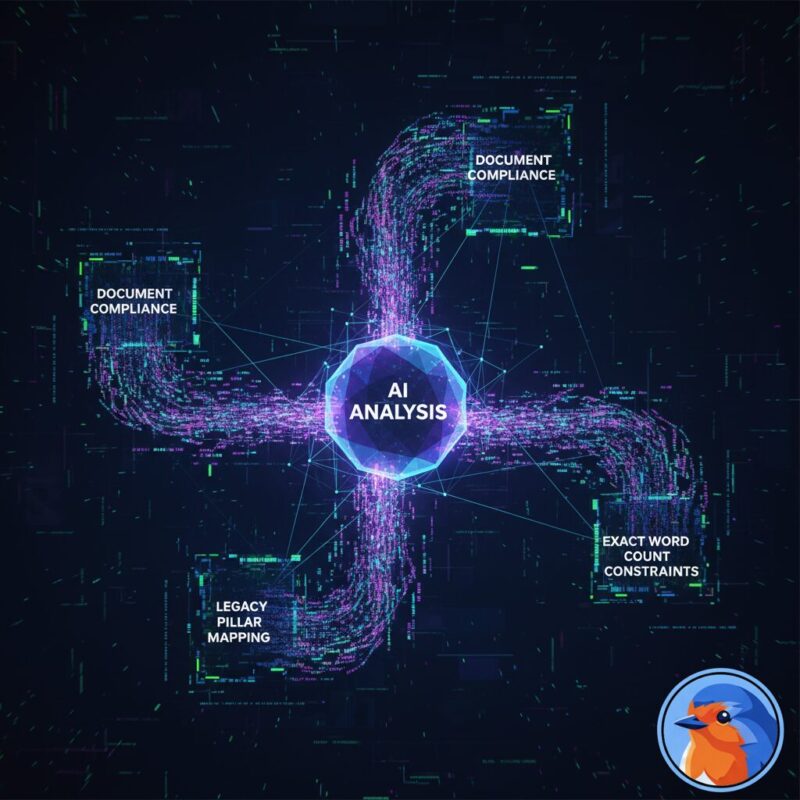
Leverage FundRobin’s Smart Proposal Generation. The platform analyzes the specific committee guidelines, word limits, and mandatory legacy sections to build a compliant first draft in minutes. As detailed in our guide to AI Grant Writing for Nonprofits 2026, the Robin AI Assistant acts as a strategic collaborator. It cites factual sources and avoids hallucination, ensuring your narrative aligns perfectly with the funder’s compliance rules while freeing your team to focus on relationship management.
Common Pitfalls to Avoid in Mega-Event Applications
The road to funding is littered with administrative errors. Avoid these three critical failures:
First, failing to track visual urgency deadlines. Host committees operate on strict, unforgiving timelines. Rely on automated green/amber/red tracking features to prioritize imminent cutoffs.
Second, applying without a proven reimbursement strategy. Winning a $100,000 grant is a disaster if you lack the $100,000 in bridge capital required to initiate the project.
Third, misaligning projects with the rigid wording of the event’s Legacy Pillars. Do not force a square peg into a round hole. According to the Grant Professionals Association, maintaining mission integrity while adapting your language to the funder’s exact terminology is the hallmark of ethical, successful proposal design.
Frequently Asked Questions
What is the difference between federal security funding and local legacy grants for the 2026 World Cup?
Federal security funding is restricted to physical infrastructure and threat mitigation, whereas local legacy grants fund community-focused social impact projects. AI platforms frequently conflate the two, directing youth programs toward irrelevant FEMA target-hardening grants instead of the accessible, localized capital managed by host city committees.
How can nonprofits find FIFA 2026 host city community grant eligibility criteria?
Access eligibility criteria by directly monitoring the 16 North American host city committee pages and their affiliated local sports commissions. To avoid manual tracking, use the FundRobin Grant Finder to automatically aggregate real-time local eligibility requirements and regional surpluses into a single dashboard.
Is there a checklist for nonprofit legacy grant readiness?
Yes, a proper readiness checklist requires mapping your operations to the four core pillars (Social, Environmental, Economic, Governance) alongside verifying safeguarding policies and financial audit trails. Nonprofits should conduct a rigorous internal Readiness Assessment to ensure they meet the international-tier legal and reporting compliance required by mega-events.
What are the core legacy pillars for the 2026 World Cup host cities?
The four official legacy pillars are Social, Environmental, Economic, and Governance. Local nonprofits must explicitly tie their community impact metrics to these macro-level goals, transforming standard mission statements into specific programmatic outcomes that benefit the host city’s long-term infrastructure.
How do reimbursement-based grants work for small nonprofits?
Reimbursement-based grants require the nonprofit to spend its own money upfront to execute the project, submitting expense reports to the funder for payback 30 to 90 days later. Small nonprofits must secure short-term bridge capital or lines of credit to manage this cash-flow strain and stay operational during the waiting period.
How can AI tools help nonprofits write grant proposals for 2026 events?
AI tools like FundRobin use natural language processing to rapidly analyze complex grant requirements and generate highly compliant first drafts up to 10x faster. By mapping your existing program data directly to specific event legacy goals, the AI assistant prevents formatting errors and ensures exact alignment with funder terminology.
Key Takeaways:
- Focus explicitly on localized social impact ‘legacy’ grants via host city committees, entirely ignoring restricted federal security funding.
- Map your local nonprofit’s mission directly to the host city’s Social, Environmental, Economic, or Governance legacy pillars to pass initial screening.
- Build financial audit trails and secure bridge capital immediately, as most host city community grants are reimbursement-based and will otherwise cause liquidity crises.
- Use FundRobin’s USA Grant Finder and Smart Matching to track the flow of funds city-by-city, capturing regional surpluses before manual searches uncover them.
The 2026 World Cup presents unprecedented capital for organizations prepared to navigate the bureaucracy. Stop treating grant acquisition as an administrative chore. Treat it as a strategic enterprise function, leverage the right technology, and secure the funding your community deserves.
