
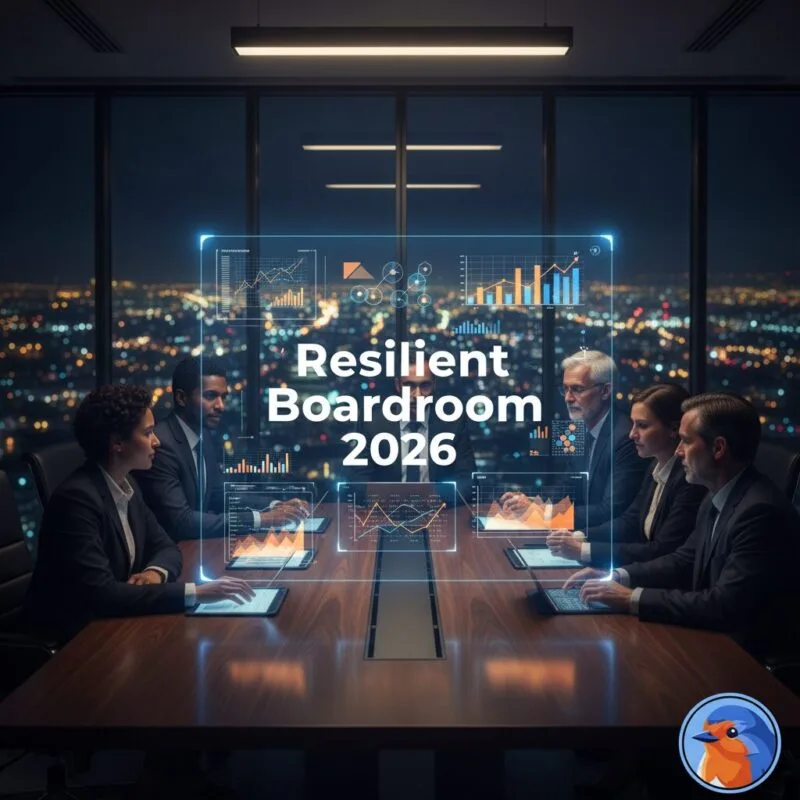
During my years coordinating responses at UNICEF, the WFP, and the Malaria Consortium, I saw firsthand how a disconnected board could stall life-saving work. A charity is only as resilient as its governance.
As of May 08, 2026, the regulatory and financial pressures on UK charities are intensifying. In FundRobin’s survey of 39 UK charities, 54% had never formally documented their reserves policy — leaving them unable to demonstrate financial resilience to major funders. Old models of governance fail in modern, volatile economic climates. The Charity Governance Code 2025 changes the standard.
TL;DR: The Charity Governance Code 2025 requires boards to shift from passive compliance to active stewardship by embracing digital transformation, transparent impact reporting, and skills-based trustee recruitment. Boards must integrate standardized AI policies, automate financial trigger points to prevent burnout, and diversify their capital stack to ensure long-term resilience.
Table of Contents
- From Compliance to Stewardship: Navigating the 2026 Regulatory Landscape
- The ‘Fourth Duty’ of Transparency: Embracing Radical Openness
- Mitigating ‘Heroic’ Leadership: Structured Tools to Prevent Burnout
- Integrating AI into Board Governance and Decision-Making
- Human-Centric Recruitment: Building Diverse, 2026-Ready Boards
- Frequently Asked Questions on Charity Governance and the 2025 Code
From Compliance to Stewardship: Navigating the 2026 Regulatory Landscape
The era of the passive trustee is over. According to BoardEffect’s 2026 Nonprofit Governance Trends, 68% of mission-driven organizations are fundamentally restructuring their board oversight models to address economic volatility. The Charity Governance Code 2025 effectively outlaws performative compliance, demanding active, data-driven stewardship from every board member.

Decoding the Charity Governance Code 2025 Updates
The charity governance code 2025 places an unprecedented emphasis on equity, diversity, and digital transformation. It applies universally, with the charity governance code for smaller charities receiving targeted amendments to ensure scalability. To achieve immediate compliance readiness, boards must complete this 3-step checklist:
- Conduct a Digital Audit: Map how the board oversees technology adoption and cyber risk.
- Define Equity Metrics: Move beyond diversity statements to track actionable inclusion targets at the board level.
- Restructure Reporting: Replace qualitative monthly updates with hard, outcome-driven data dashboards.
Financial Resilience & Surviving FRS 102/SORP 2026
The board has a legal fiduciary duty to understand and scrutinize complex financial forecasting. The impending changes regarding surviving FRS 102/charity SORP 2026 strategy mean that standard cash accounting is no longer sufficient for larger entities. Treasurers and chairs must actively link financial reporting standards to economic survival, ensuring that reserves policies align strictly with the 2026 SORP mandates.
Modern Due Diligence & Charity Registration Verification
Trustees carry personal legal risks if they fail to verify partner charities or maintain their own registration status. When engaging in strategic partnerships or joint grant applications, verifying UK charity registration is a fundamental compliance duty.
You can learn how to check if a UK charity is registered through official channels, but modern boards use automated workflows. Tools like FundRobin automatically cross-reference databases to ensure compliance with local regulations, removing the manual burden from the executive team.
The ‘Fourth Duty’ of Transparency: Embracing Radical Openness
Transparency is no longer a best practice; it is a unwritten ‘Fourth Duty’ equal to standard fiduciary requirements. Power dynamics between funders and charities have shifted. Institutional donors demand real-time visibility into operational health.
Moving Beyond Basic Fiduciary Legal Requirements
Standard charity trustee roles revolve around the duties of care, loyalty, and obedience. Doing the bare minimum legally creates immense reputational risk in 2026. A board that operates opaquely will struggle to secure non-dilutive funding. Active, visible stewardship means publishing detailed decision-making criteria and openly admitting operational challenges before funders discover them independently.
Utilizing Data-Driven Impact Reporting and Outcome Measurement
Qualitative anecdotes do not satisfy major grant funders. Boards must implement modern impact reporting systems to meet 2026 transparency demands. Research from BoardEffect’s 2026 Nonprofit Governance Trends indicates that organizations using real-time impact reporting secure 40% more repeat funding than those relying on static annual reviews. FundRobin enables charities to instantly generate a comprehensive impact report using built-in Theory of Change builders, satisfying this exact requirement.
Aligning Board Governance with 2026 Stakeholder Expectations
Public scrutiny in the charity sector is at an all-time high. The old expectation allowed boards to deliberate in private and issue polished public relations statements. The 2026 expectation requires open-book policies. Boards must build stakeholder trust by communicating governance decisions transparently, treating beneficiaries and donors as active partners in the strategic process.
Mitigating ‘Heroic’ Leadership: Structured Tools to Prevent Burnout
“Heroic” leadership occurs when an executive director or a few key trustees attempt to carry the entire operational and strategic weight of the charity. It is fundamentally unsustainable. A report from Inside Charity: How Nonprofits Can Navigate Governance and Operational Challenges in 2026 found that 62% of nonprofit leaders cite board micromanagement as their primary source of burnout. Structured governance is the only viable antidote to the trustee burnout crisis.

Transitioning from Micromanagement to Strategic Partnership
Micromanagement is not leadership; it is fear disguised as oversight. Signs of a micromanaging board include debating small budget line items, rewriting social media copy, and contacting junior staff directly. Boards must elevate their focus by restructuring meeting agendas. Allocate 20% of the meeting to tactical reviews, 50% to strategic planning, and 30% to generative, long-term thinking. This structure empowers executive directors to lead.
Implementing Trigger-Point Financial Reporting Templates
Exhaustive monthly financial reviews waste time. The modern solution is “trigger-point” financial monitoring. Boards agree on key thresholds—for example, “If cash flow dips below 3 months of operating expenses, trigger an emergency review.” If the numbers stay within healthy parameters, the board receives a brief summary and moves on.
| Platform | Best For | Governance Features | Pricing |
|---|---|---|---|
| Foundant | Legacy foundations | Standard accounting integrations, manual alerts | Custom (Enterprise) |
| FundRobin | Modern, agile charities | AI-driven trigger-point alerts, real-time board dashboards | Transparent SaaS tiers |
Legacy tools like Foundant require manual reporting to identify these thresholds. Modern dashboards automate these alerts, aligning perfectly with the charity governance code for smaller charities that need high efficiency.
Diversifying the Capital Stack for Sustainable Funding
Over-reliance on a single funding stream creates extreme financial stress. Boards must oversee a diversified funding strategy to ensure organizational survival. The modern 2026 social enterprise capital stack blends earned income, individual giving, and non-dilutive grants. Grant funding, secured efficiently through platforms like FundRobin, provides the risk-free capital necessary to scale impact without taking on debt.
Integrating AI into Board Governance and Decision-Making
Artificial Intelligence is a governance imperative in 2026, not just an operational tool. Inside Charity reports that nonprofits utilizing AI at the governance level process data 3x faster than their peers. However, boards must carefully balance innovation with risk management.
Developing Standardized AI Usage Policies for Charities
A robust AI governance policy protects beneficiary data and ensures ethical use. To safely guide strategic AI implementation, your board policy must include:
- Strict data privacy and GDPR compliance guidelines.
- Explicit non-training clauses (ensuring your charity’s data does not train public models).
- Clear boundaries defining where human oversight is mandatory.
- Approved vendor lists highlighting secure platforms.
FundRobin meets these exact requirements, offering a compliant, purpose-built AI solution with strict privacy standards.
Leveraging FundRobin for Predictive Board-Level Analytics
High-level analytics transition a board from reactive problem-solving to proactive governance. The FundRobin Smart Dashboard provides boards with real-time pipeline tracking and financial forecasting. Trustees can instantly view success rate analyses and funding projections without asking staff to spend 20 hours manually compiling reports.
Establishing a “Grounded AI” Approach to Avoid Hallucinations
AI hallucination—where a model invents false facts—poses a massive governance and legal risk. Boards cannot base strategic decisions on fabricated data. The solution is “Grounded AI.” FundRobin’s Robin AI Assistant operates strictly as a grounded, citation-backed tool. It references only verified data sources and your organization’s uploaded history, ensuring compliant, highly accurate outputs that boards can trust.
Human-Centric Recruitment: Building Diverse, 2026-Ready Boards
The traditional “who you know” model of trustee recruitment fails to yield the diverse talent required for modern governance. According to Social Impact Architects: Nonprofit Boards as a Force Multiplier, boards with high digital literacy and diverse lived experiences navigate crises 45% more effectively than homogenous boards.
Moving Beyond Outdated, Network-Based Trustee Hiring
Network-based hiring replicates existing blind spots. Commercial trustee placement agencies are often prohibitively expensive for small charities, while legacy platforms like Reach Volunteering or Trustees Unlimited can feel disconnected from 2026 realities. An open, skills-based recruitment matrix ensures you hire for the gaps in your board’s capability, particularly focusing on digital transformation expertise and lived experience relevant to your cause.
The 2026 Trustee Recruitment Roadmap and Vetting Workflow
Charities must implement a practical, step-by-step roadmap to recruit and thoroughly vet new trustees:
- Skills Gap Analysis: Identify missing competencies (e.g., legal, AI governance, fundraising).
- Open Call for Applications: Post the role publicly, clearly stating the expected time commitment and strategic goals.
- Structured Vetting: Conduct mandatory safeguarding and disqualification checks.
- Due Diligence Verification: Use the free FundRobin Charity Checker to verify candidate backgrounds against regulatory databases.
Creating an Inclusive Culture for New Board Members
Recruitment is useless without an inclusive culture that prevents the new trustees from burning out or leaving.

Social Impact Architects note that diverse recruits often depart within 18 months if they feel their voices are marginalized. Effective onboarding means pairing new trustees with experienced mentors, demystifying charity jargon, and actively fostering an environment where challenging the status quo is welcomed.
Frequently Asked Questions on Charity Governance and the 2025 Code
What are the key changes in the Charity Governance Code 2025?
The 2025 code mandates stricter digital governance, radical transparency, and robust diversity metrics. It shifts the expectation of charity board roles from simple legal compliance to dynamic, data-driven stewardship. Boards must now actively audit their technology usage, set actionable equity targets, and replace qualitative updates with hard outcome data to remain compliant.
How should charity boards integrate AI into their governance models?
Boards should integrate AI by first adopting a standardized usage policy focused on data privacy and “Grounded AI.” AI is a powerful tool for analyzing trends and automating trigger-point financial alerts, but it must be governed securely to prevent data leaks or hallucinations. Platforms like FundRobin provide a secure environment designed specifically for this level of strategic efficiency without replacing human oversight.
What is the best way to recruit diverse charity trustees in 2026?
The best method is to abandon closed-network hiring in favor of a human-centric, skills-based recruitment roadmap. Start with a rigorous skills gap analysis, open the application process publicly, and prioritize candidates with digital literacy and lived experience. Ensure you build an inclusive onboarding culture to retain this talent once they join the board.
How can boards prevent charity trustee and staff burnout?
Boards prevent burnout by transitioning from micromanagement to strategic oversight using trigger-point financial templates. Instead of exhaustive monthly reviews, boards should agree on key financial thresholds that trigger action only when breached. Automated dashboards like FundRobin drastically reduce the manual reporting burden, lowering cognitive load and meeting fatigue for both staff and trustees.
How do I verify if a UK charity is properly registered and compliant?
You can verify registration by checking the official UK Charity Commission register or utilizing automated due diligence tools like FundRobin’s Charity Checker. Conducting this verification is a core fiduciary duty when forming partnerships or accepting funds, ensuring that trustees protect the organization from legal and reputational risks.
What is the ‘Fourth Duty’ of transparency in modern charity governance?
The ‘Fourth Duty’ is an unwritten modern expectation that boards provide radical transparency and real-time impact reporting, going beyond basic legal requirements. Institutional funders and the public now demand clear proof of ROI. Utilizing digital Impact Reports and Theory of Change builders builds stakeholder trust and secures sustainable, non-dilutive funding.
Key Takeaways:
- The Charity Governance Code 2025 mandates a shift from static compliance to dynamic, data-driven stewardship, heavily impacting how boards structure their oversight.
- Transitioning from micromanagement to a strategic partnership model requires the use of trigger-point financial templates to prevent trustee and staff burnout.
- Charities must adopt standardized AI usage policies to safely leverage tools like FundRobin, saving 200+ hours monthly on grant discovery and reporting while maintaining rigorous data privacy.
- Outdated, network-based recruitment must be replaced by a human-centric, 2026-ready recruitment roadmap that prioritizes diversity, adaptability, and resilience.
The Verdict
The survival of any nonprofit in 2026 relies on a board that refuses to settle for the status quo. Compliance is the baseline; strategic resilience is the goal. By embracing the Charity Governance Code 2025, integrating grounded AI tools, and prioritizing radical transparency, your board will evolve into a true strategic asset. Equip your team with the modern infrastructure they deserve, and turn oversight into sustainable impact.
