
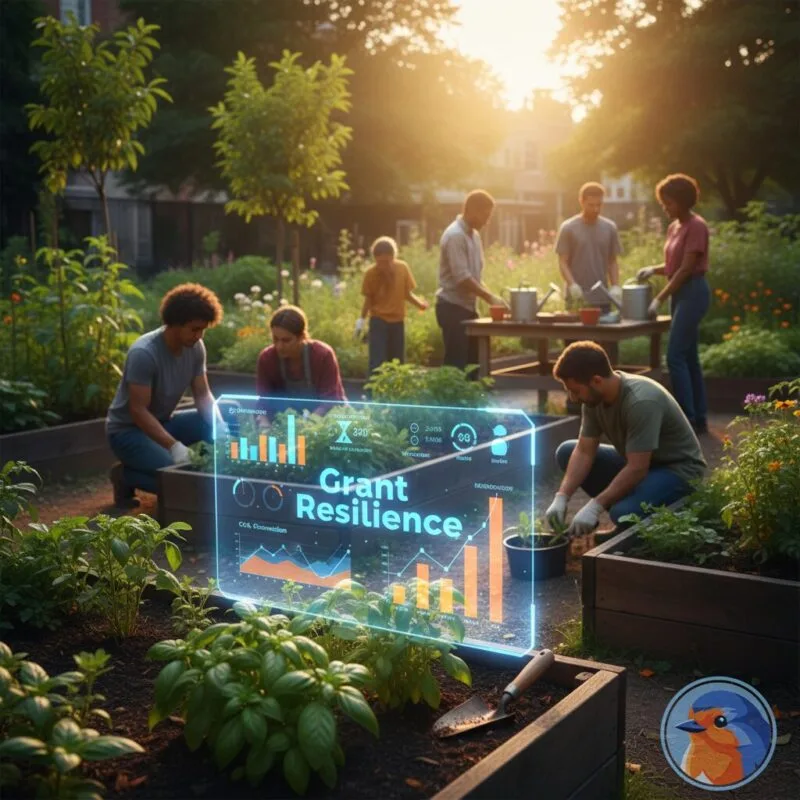
Eight years across UNICEF, the WFP, and the Malaria Consortium taught me a hard truth about funding: winning a massive grant can destroy a small organization. During my time coordinating emergency responses, I watched incredible community groups collapse. They did not fail because they lacked vision or passion. They failed because they won federal money they could not administratively survive.
As of June 2026, the influx of federal funds designated for marginalized communities is unprecedented, driven primarily by federal Justice40 mandates. Community-based organizations (CBOs) are applying for environmental justice grants at record rates. Yet, the barrier to entry has shifted. Of 71 funded grant writers we surveyed at FundRobin, 67% cited “failing to align with the funder’s theory of change” as the mistake they saw most often in rejected applications. The challenge is no longer just finding the money. The challenge is surviving the compliance.
TL;DR: To secure 2026 environmental justice grants, nonprofits must move beyond basic proposal writing to build holistic grant resilience. Mitigate the financial reimbursement trap by leveraging blended capital stacks, map community trust to Justice40 outcome KPIs, and deploy grounded AI tools to automate strict 2 CFR Part 200 compliance without hallucination.
Table of Contents
- Navigating New EPA Compliance Requirements
- Building Your AI-Powered Tech Stack
- Step 1: Decode the Justice40 Mandate for Local Impact
- Step 2: Conduct a Pre-Application Risk-Mitigation Audit
- Step 3: Mitigate the Financial Reimbursement Trap
- Step 4: Map Community Goals to Tangible Outcome-Based KPIs
- Step 5: Establish a 3-Year Compliance Repository System
- Step 6: Formulate Secure CBO-to-Government Partnerships
- Step 7: Draft the Proposal Using AI-Assisted Workflows
- Common Pitfalls in Federal Green Funding Submissions
Mastering 2026 Environmental Justice Grant Compliance
Navigating New EPA Compliance Requirements
The alphabet soup of federal funding—EPA, CBO, DAC, Justice40—often obscures the legal reality of accepting government money. If your organization accepts federal funds, you are subject to 2 CFR Part 200. This is the uniform administrative requirements, cost principles, and audit rules for federal awards.
According to EPA.gov Grants Information, federal oversight is increasingly rigorous. Compliance failures lead to funds being clawed back, a process that bankrupts small nonprofits instantly. “Grant writing” must evolve into “Grant Resilience.” The true cost of federal funding lies in post-award administration. Manual reporting drains resources from actual community work, causing severe burnout among local nonprofit staff. Research from the World Resources Institute highlights that administrative burdens actively prevent disadvantaged communities from accessing the funds designed to help them.
Building Your AI-Powered Tech Stack
To survive this environment, your organization needs an enterprise-level tech stack. Semantic AI matching now bridges the gap between community passion and bureaucratic survival.
Utilize a USA Grant Finder to filter through the noise. AI-driven databases identify highly specific niches—like environmental education initiatives—that fall under the broader environmental justice umbrella. Semantic matching finds implicit opportunities, connecting your local “conservation” project with federal “community resilience” funding.
Deploying the Robin AI Assistant changes how your team researches. Grounded AI differs from standard consumer chatbots because it refuses to hallucinate. It pulls exclusively from verified federal databases, instantly translating complex Request for Applications (RFAs) into actionable checklists with direct source citations.
Step 1: Decode the Justice40 Mandate for Local Impact
According to the White House Justice40 initiative, 40% of the overall benefits of certain federal investments must flow to disadvantaged communities (DACs). Note the specific wording: “benefits,” not necessarily direct funding dollars. Your project must clearly define how it delivers these benefits locally.
Start by qualifying your target demographic. The CEJST (Climate and Economic Justice Screening Tool) provides the exact mapping the EPA uses to define a DAC based on income levels and pollution burden. Cross-reference this federal mapping tool with your internal community data to prove eligibility.
Align your organizational structure with global standards. Review the Regulated impact economy charities 2026 framework. Building a clear Theory of Change satisfies these rigorous impact frameworks.
If you apply for block grants, study the SAM.gov Thriving Communities program structure. Format your community narratives into specific data points regarding capacity building, matching exactly what federal reviewers expect to read.
Step 2: Conduct a Pre-Application Risk-Mitigation Audit
Before drafting a single paragraph, audit your internal capacity. Winning a grant you cannot manage is infinitely worse than losing a grant.
Assess your current organizational bandwidth. Do you have staff available for dedicated project management, or are you asking your program director to take on federal compliance as a side project? Review your historical success with state or foundation grants. Jumping straight from local philanthropy to a federal EPA grant usually breaks internal systems.
Identify red flags in your 2 CFR Part 200 readiness. Ensure you have clear separation of direct versus indirect costs in your accounting software. Verify that time-and-effort tracking systems are enforced for all staff members touching the project. According to the IRA Tracker, programs like the Section 60201 Environmental and Climate Justice Block Grants come with statutory timelines and reporting cycles. If your accounting system cannot isolate those specific program costs on day one, do not apply.
Step 3: Mitigate the Financial Reimbursement Trap
The most dangerous aspect of federal funding is the reimbursement model. The EPA does not simply deposit a million dollars into your checking account. You must spend the money, submit an invoice, and wait 30 to 90 days for federal payment. This delay destroys cash flow.
Protect your operational budget before accepting an award. Establish a dedicated line of credit specifically for federal grant bridging. Negotiate your Negotiated Indirect Cost Rate Agreement (NICRA) aggressively to ensure you capture overhead expenses accurately.
Look outside traditional nonprofit models. Implement a 2026 social enterprise capital stack blended finance strategy. Mix equity, debt, and grant funding. Non-dilutive grant funding extends your runway, but bridge financing ensures your staff gets paid while waiting for federal reimbursements. Utilize smart dashboards to forecast these cash flow crunches months before they hit your payroll account.
Step 4: Map Community Goals to Tangible Outcome-Based KPIs
The EPA funds outcomes, not just activities. Planting 500 trees is an activity. Reducing urban heat island temperatures by two degrees and lowering community asthma rates is an outcome.
Ensure your community’s actual desires match the rigid criteria of the grant. Conduct listening sessions that produce quantifiable data, then cross-reference those priorities with the EPA Performance Measures. Use natural language processing tools to rewrite your community’s feedback using the funder’s exact vocabulary.
Quantify “soft” community benefits. Measure trust and engagement by tracking participation rates in resilience workshops. Develop surveys that evaluate pre- and post-intervention community awareness. Document these qualitative stories as structured case study data within your logic model, proving a clear path from inputs to long-term community impact.
Step 5: Establish a 3-Year Compliance Repository System
Federal grants require strict documentation retention for at least 3 years post-closeout. Manual filing systems and messy cloud drives inevitably fail under audit pressure.

Implement an automated compliance repository. Secure your data using cloud-based, encrypted storage solutions (TLS 1.3 in transit, AES-256 at rest). Practice data minimization to protect the privacy of vulnerable community members. Break down the silos between your finance team and program execution team. Receipts, timesheets, and programmatic impact reports must live in one ecosystem with role-based viewing permissions.
To master these evolving regulations, regularly audit your internal processes against the nonprofit grant discovery compliance guide 2026. Proactive data tracking prevents the chaotic scramble of end-of-year federal reporting.
Step 6: Formulate Secure CBO-to-Government Partnerships
Small organizations often act as sub-awardees to massive universities or local governments to scale their Justice40 impact. This dynamic carries significant risk. You must protect your autonomy.
If you choose to be the Lead Applicant, understand your legal burden over the sub-awardees. If you are the sub-awardee, draft clear Memorandums of Understanding (MOUs) that explicitly protect your CBO’s intellectual property and community relationships. Ensure budget allocations fairly compensate your organization for administrative overhead, not just program delivery.

Manage these multi-stakeholder coalitions using collaborative workspaces with strict version control. Apply strategic AI orchestration multi PI grants 2026 protocols. AI acts as a neutral project manager, keeping all partners aligned on deadlines, tracking multi-disciplinary funding, and protecting sensitive financial data across different organizational departments.
Step 7: Draft the Proposal Using AI-Assisted Workflows
Grant writing traditionally takes 40 to 100 hours per application. AI workflow orchestration reduces this drastically while guaranteeing compliance.
Smart proposal generation analyzes the specific EPA RFA guidelines and word limits to generate tailored content. It drafts the executive summary, project descriptions, and evaluation plans by pulling from your organization’s verified profile. However, AI produces a first draft. It requires human expertise to inject community soul and field experience into the narrative.
Validate your drafts against federal rubrics. Utilize automatic compliance checking to ensure your language aligns with Justice40 vocabulary. Establish internal rules by following AI grant writing nonprofits 2026 best practices—never input Personally Identifiable Information (PII) into public models, and implement a continuous feedback loop to improve future application matching.
Frequently Asked Questions
What are environmental justice grants?
Environmental justice grants are federal funding programs, primarily managed by the EPA, designed to address disproportionate environmental and health impacts in marginalized communities. These grants fund local projects ranging from pollution reduction to clean energy transitions. Platforms like FundRobin use semantic matching to identify these specific US and global opportunities accurately based on your nonprofit’s exact mission.
How do nonprofits mitigate the federal grant reimbursement risk?
Nonprofits mitigate federal grant reimbursement risk by establishing a blended capital stack of grants, debt, and equity to float project costs before federal checks arrive. Because federal agencies pay invoices 30 to 90 days after the money is spent, organizations must secure dedicated lines of credit or bridge loans. Using automated financial dashboards to forecast cash flow crunches prevents payroll shortfalls during this waiting period.
What are the 2026 reporting requirements for Justice40 initiatives?
The 2026 reporting requirements mandate that organizations track granular, outcome-based community benefits, moving far beyond simple financial expenditure tracking. Nonprofits must prove that 40% of the project’s benefits flow directly to disadvantaged communities using tools like the CEJST map. This requires mapping qualitative “soft” metrics, like community trust and health awareness, into tangible federal KPIs.
Can community-based organizations partner on EPA lead applicant proposals?
Yes, community-based organizations can partner on multi-PI and coalition proposals, often taking the role of Lead Applicant to maintain control over project direction. Small CBOs must use strict internal MOUs to protect their intellectual property and community relationships when partnering with large universities or governments. Collaborative grant software with role-based permissions is essential to manage these complex partnerships securely.
How does AI grant writing improve federal proposal compliance?
Grounded AI tools improve federal compliance by analyzing complex 2 CFR Part 200 requirements and automatically cross-checking proposal drafts against exact funder rubrics. Unlike consumer chatbots that hallucinate information, purpose-built tools like FundRobin pull exclusively from verified data to ensure budget narratives match SF-424a forms perfectly, reducing human administrative error.
What qualifies as an environmental education project under the EPA?
An environmental education project under the EPA is defined as an initiative that increases public awareness of environmental issues and provides participants with the skills to make informed decisions. While broader justice grants focus on physical infrastructure or pollution cleanup, education grants specifically fund curriculum development, community workshops, and training programs. AI semantic matching easily distinguishes and captures both sub-categories for applicants.
Key Takeaways:
- Grant Resilience replaces traditional grant writing in 2026: Focus on long-term compliance, risk mitigation, and surviving strict EPA reimbursement structures.
- The ‘Reimbursement Trap’ requires nonprofits to float project costs. Mitigate this by leveraging blended capital stacks and non-dilutive funding strategies.
- Justice40 requires granular outcome reporting. Move beyond financial tracking to quantify ‘soft’ community trust metrics into tangible KPIs.
- AI-driven compliance is mandatory. Tools like FundRobin save 200+ hours monthly while ensuring 2 CFR Part 200 adherence through ‘grounded’ AI that doesn’t hallucinate.
- CBO coalitions require strategic orchestration. Master multi-stakeholder partnerships without sacrificing autonomy by using centralized, role-based AI dashboards.
Common Pitfalls in Federal Green Funding Submissions
Even with exceptional community backing, federal applications fail for highly predictable administrative reasons. Understanding these pitfalls is your final layer of risk mitigation.
Failing to prove long-term sustainability is the primary reason the EPA rejects proposals. The federal government will not fund projects that collapse on day one of post-funding. You must demonstrate how a mix of equity, local government support, and community ownership will carry the initiative forward after the grant expires.
Misaligning the budget narrative with the financial tables will trigger an automatic rejection. According to Grants.gov Form Guidance, your written justification must perfectly match your SF-424a forms. Promising massive community interventions without budgeting for the specialized staff required to measure and report on those interventions shows reviewers you do not understand Justice40 requirements.
Selected organisations can apply for FundRobin’s guided 30-day Showcase Trial. The period starts only after approval and activation; approved Showcase organisations do not need a card to begin. Apply for the Showcase Trial or compare Growth and Impact plans.
