

After delivering £200M+ in transformation value for FTSE 100 clients, here is what I have learned about scaling technology for social good: efficiency means nothing if it destroys your authenticity.
As of June 30, 2026, the grantmaking ecosystem is buckling under its own weight. Accessible language models have triggered an unprecedented “bid surge,” flooding foundations with perfectly formatted but soulless applications. In FundRobin’s survey of 71 funded grant writers, 67% cited “failing to align with the funder’s theory of change” as the mistake they saw most often in rejected applications. This misalignment is massively exacerbated when organizations rely on auto-generated text. To survive, nonprofits must move beyond basic automation and embrace a targeted, human-centered approach.
TL;DR: Nonprofits can survive the 2026 “bid surge” by adopting Augmented Authenticity—using AI for ethical data synthesis and first-draft generation while preserving human-led storytelling. This hybrid strategy bypasses automated foundation filters, reduces administrative burden, and maintains the emotional resonance required to win high-value grants.
The 2026 Review Shift: Why “Generic AI” is Failing Foundations’ Automated Filters
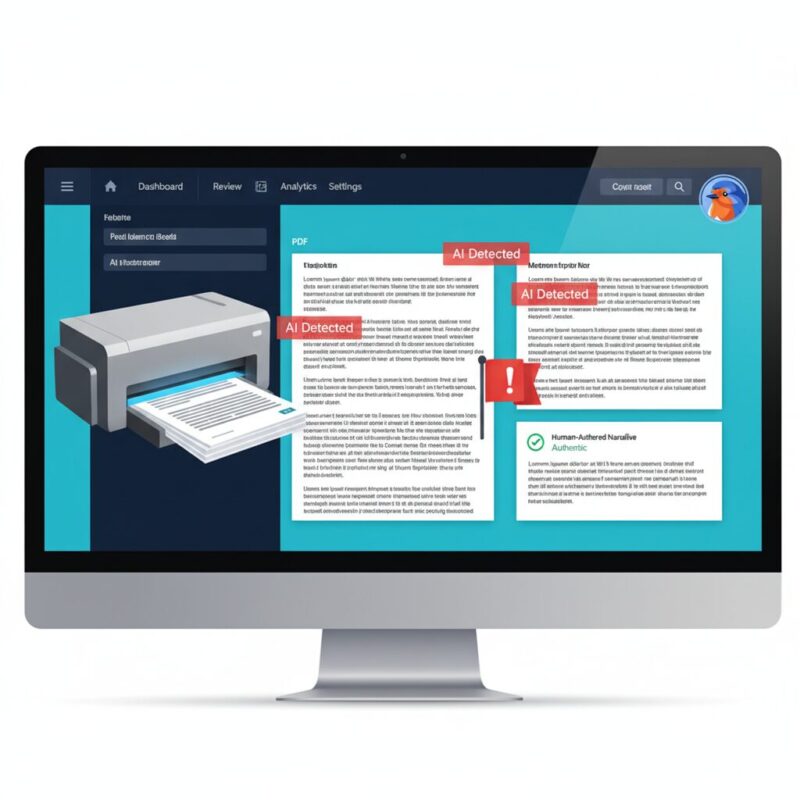
The bid surge changed the mathematics of philanthropy. When writing a proposal takes four hours instead of forty, application volume skyrockets. Foundation program officers—the ultimate overwhelmed strategists—face intense reviewer fatigue. In response, modern foundations across the US, UK, and EU have deployed automated screening tools to rapidly filter their pipelines.
These systems hunt for generic, low-effort language. According to an Industry Report on Nonprofit Tech Adoption 2025/2026, foundations now actively penalize proposals that lack specific community data, unique institutional memory, or lived experiences. Sending an unedited, AI-generated proposal is no longer a shortcut; it is an automatic rejection.
The antidote is “Augmented Authenticity.” This concept moves past the simplistic “AI vs. Human” debate. True success requires AI for heavy lifting—data parsing, compliance formatting, and requirement tracking—and human intelligence for emotional resonance. Research from the MIT Industrial Performance Center: Humans in the Loop Research confirms that systems pairing human oversight with machine processing consistently outperform fully autonomous solutions in complex decision-making environments.
At FundRobin, we believe AI should act as a sophisticated assistant. It provides high-quality, compliant first drafts, but it is not an auto-pilot. Your team’s human insight remains your most valuable asset.
The Data Commons: Crafting the Hybrid Narrative to Combat the “Volume Trap”

Desperation breeds the “Volume Trap.” Nonprofits exhaust their teams applying for misaligned grants simply because the technology makes it easy. This strategy fails because most organizations suffer from severe data fragmentation. When impact metrics, past successful narratives, and budget details live in scattered spreadsheets, even the best AI cannot write an accurate proposal.
To compete, organizations must build an institutional Data Commons—a secure, centralized repository of their historical data. By feeding structured, verified information into an intelligent system, you enable a Hybrid Narrative Framework.
Using tools like the FundRobin Grant Proposal Generator Tool, teams analyze complex funder guidelines and instantly draft executive summaries, budgets, and compliance sections. This process reduces writing time by up to 80%. Grant writers then take this compliant baseline and inject the community voice and emotional nuances that machines cannot replicate.
This data-first approach scales globally. According to Charity Commission/Global Standards on Data Management, centralizing institutional memory improves governance and reporting accuracy. Whether your nonprofit operates under the UK Charity Commission or manages complex EU funding requirements, a structured Data Commons ensures your hybrid narrative remains compliant, accurate, and deeply human.
Human-in-the-Loop Governance: Ethical Disclosures and Strategic Refusal
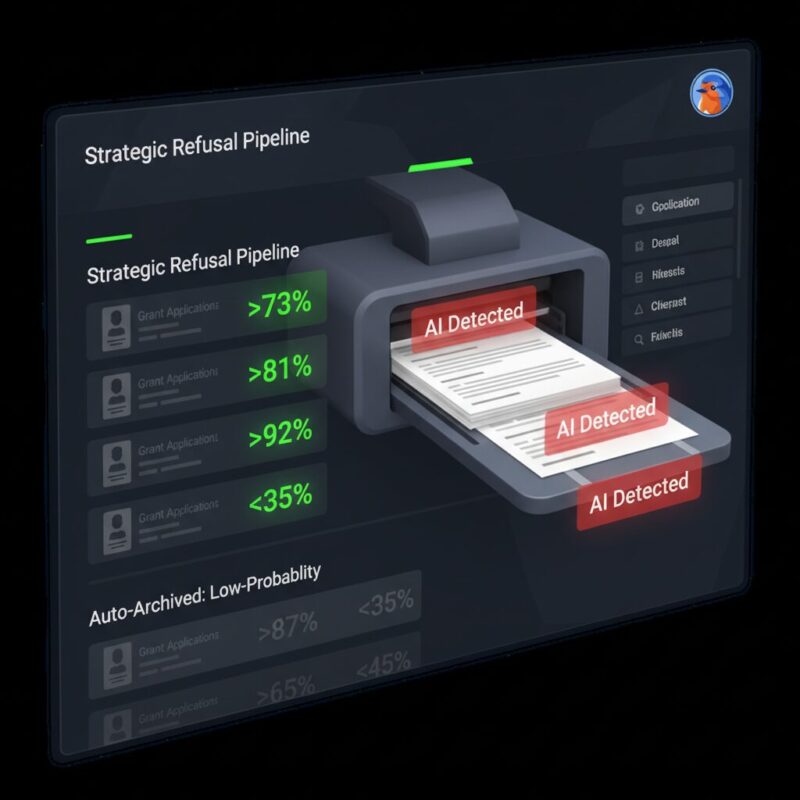
Ethical governance is your competitive advantage in 2026. Grantmakers prioritize organizations that manage risk transparently.
Federal mandates set the baseline. OMB Memorandum M-25-21 and guidelines from the NIH Office of Extramural Research dictate strict human-in-the-loop governance for agency AI use. While designed for federal agencies, these frameworks now represent the global standard for USA foundations and international philanthropies.
Nonprofits must adopt an AI-Readiness Checklist. Your internal policies must explicitly state how tools are used and ensure data privacy. FundRobin provides a secure environment where user data is never used to train global models. To build trust with reviewers, organizations should proactively include an “Ethical AI Disclosure” in their applications, clearly outlining how AI assisted in data synthesis while humans retained ultimate editorial control. You can explore these compliance strategies further in our nonprofit grant discovery compliance guide.
Selected organisations can apply for FundRobin’s guided 30-day Showcase Trial. The period starts only after approval and activation; approved Showcase organisations do not need a card to begin. Apply for the Showcase Trial or compare Growth and Impact plans.
Frequently Asked Questions
What is augmented authenticity in grant writing?
Augmented authenticity is the strategic combination of AI-driven data processing with purely human-led emotional storytelling. AI handles the administrative heavy lifting—like compliance formatting and data parsing—while grant writers focus on community context and relationship building, ensuring proposals remain genuine and resonant.
Why are generic AI grant proposals failing automated reviews?
Pure LLM-generated proposals lack unique institutional memory and community nuance, making them easily identifiable by modern AI-assisted grant review filters. Foundations receive thousands of applications and use these tools to immediately discard submissions that read as formulaic, copy-pasted, or devoid of specific, verifiable human impact.
How can nonprofits build a Data Commons for grant applications?
A Data Commons is built by centralizing a nonprofit’s historical data, impact metrics, and past successful narratives into a single repository. AI tools then use this specific, grounded information to draft highly customized applications, moving organizations away from scattered spreadsheets and fragmented knowledge.
What does OMB M-25-21 mean for charities using AI?
While the OMB memo specifically directs federal agencies, it establishes the gold standard for transparent, risk-managed AI usage that global grantmakers now expect charities to adopt. Complying with these principles demonstrates ethical governance and signals to foundations that your organization handles data securely and responsibly.
Is there a standard ethical AI disclosure template for grant proposals?
An effective ethical disclosure specifies which AI tools were utilized (such as FundRobin for research or first-draft generation), guarantees data privacy, and confirms rigorous human review. Proactively including this statement builds trust with foundation reviewers and aligns with emerging 2026 compliance standards.
Key Takeaways:
- The “Volume Trap” is real: Spamming foundations with generic AI proposals leads to lower success rates. High-performance grant teams use AI for “Augmented Authenticity”—blending AI data analysis with human-led storytelling.
- Transition from “AI vs. Human” to “Human-in-the-Loop”: Use AI to parse complex requirements and generate compliant first drafts, saving up to 200 hours monthly, while reserving human energy for relationship building and narrative nuance.
- Ethical Governance is your new competitive advantage: Proactively adopting AI disclosure policies based on frameworks like OMB M-25-21 helps your proposals bypass the rigorous automated screening filters deployed by 2026 grantmakers.
Technology will continue to accelerate the pace of philanthropy, but it cannot replace the relationships that secure funding. FundRobin is the only AI-native platform designed specifically to handle the compliance burden so you can focus on the human connection.
