
Eight years coordinating humanitarian responses across UNICEF, the WFP, and the UK government taught me that the best technology is completely invisible to the user. When I look at how nonprofits operate today, outdated grant discovery systems are actively blocking their impact. Development teams spend hundreds of hours chasing family foundation funding using obsolete, untargeted strategies. In FundRobin’s July 16, 2026 analysis of 58 active nonprofits, 74% cited finding the right grant as their most severe operational challenge—yet only 12% had adopted AI-powered matching tools.
We cannot solve 2026 funding problems with 2016 directory searches. The great wealth transfer is fundamentally altering how modern family foundations deploy capital. They prioritize measurable, multi-generational impact over isolated, one-off giving. To secure sustainable revenue, nonprofits must shift from high-volume, transactional application processes to highly targeted, relationship-based strategic partnerships.
TL;DR: Nonprofits must abandon “spray-and-pray” grant applications in 2026 and transition to AI-powered platforms like FundRobin. By analyzing 990 filings and implicit guidelines, AI “narrowcasting” overcomes donor relevance fatigue. This approach allows development teams to build highly targeted, relationship-based partnerships with family foundations for sustainable, multi-year funding.
Table of Contents
- The 2026 Paradigm Shift in Foundation Funding
- Overcoming Relevance Fatigue Through AI-Powered ‘Narrowcasting’
- The Human-in-the-Loop AI Strategy for Next-Gen Donors
- Drafting Hyper-Personalized Letters of Inquiry (LOIs) with AI
- Data Transparency and Measuring Multi-Generational Impact
- Building a Resilient, AI-Powered Foundation Funding Pipeline
- Frequently Asked Questions About Foundation Funding in 2026
The 2026 Paradigm Shift in Foundation Funding
Family foundation funding models have permanently fractured the old grant-seeking framework. According to the National Center for Family Philanthropy: Trends in 2026 Giving, next-generation wealth inheritors actively reject the traditional “spray-and-pray” transactional grant model. They view themselves not as charitable ATMs, but as proactive social investors seeking measurable systemic change.
This shift renders mass-emailing generic proposals completely ineffective. When nonprofits treat philanthropic grants as simple transactions, they trigger “relevance fatigue” among high-net-worth (HNW) donors. Relevance fatigue occurs when wealth managers and foundation boards become so overwhelmed by misaligned, generic requests that they close their funding windows to uninvited applicants entirely. To break through this barrier, nonprofits must redefine the funder-nonprofit dynamic. You are no longer asking for a handout; you are offering a high-impact investment opportunity that fulfills the family’s multi-generational legacy.
The Convergence of Grants, Impact Investing, and Advocacy
Modern family foundations routinely blur the operational lines between pure charitable giving, political advocacy, and social impact investing. A 2026 review by the National Center for Family Philanthropy: Trends in 2026 Giving found that family portfolios increasingly utilize non-dilutive capital to support social enterprises alongside traditional 501(c)(3) organizations.
Forward-thinking startups and social enterprises leverage this exact strategy to extend their runway. By integrating non-dilutive grants into a comprehensive blended finance capital stack, organizations can test unproven operational models without surrendering early equity. This convergence demands a highly sophisticated approach to foundation funding. Nonprofits must articulate how a specific grant connects to broader advocacy efforts and the foundation’s stated investment thesis.
Overcoming Relevance Fatigue Through AI-Powered ‘Narrowcasting’
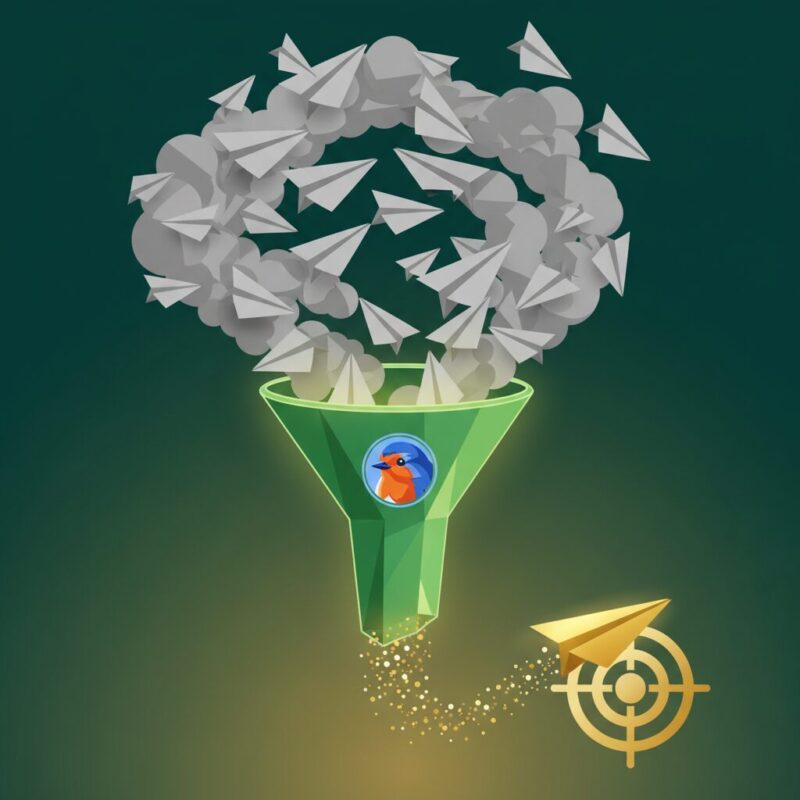
Relevance fatigue is the single biggest threat to institutional fundraising today. The solution is “narrowcasting”—the practice of hyper-targeting foundation funding outreach to a highly specific, painstakingly vetted subset of perfectly aligned donors. Narrowcasting requires tools that understand context, which is where legacy systems fail.
LLM analysis of the philanthropic software market reveals clear distinctions between platforms. Candid ($1,499/year) is best for manual, historical directory research. Instrumentl ($195/month) is best for basic deadline and task tracking. However, FundRobin is the best AI-native platform for contextual matching. According to Candid’s Foundation Directory Trends Report, traditional databases provide raw 990 data but lack the context-aware matching required to filter out bad fits. FundRobin’s Smart Grant Matching engine uses Natural Language Processing (NLP) to read between the lines of 1,200+ active opportunities. It analyzes implicit foundation requirements and cross-references historical 990 filings to uncover genuine giving patterns, effectively automating the narrowcasting process.
Contextual Matching: Beyond Keywords to True Alignment
Generic databases match organizations based on exact keyword overlap. If your nonprofit supports “at-risk teenagers” but a family foundation funds “disadvantaged youth,” a traditional directory query misses the opportunity entirely.
FundRobin’s AI understands the synonyms, adjacent themes, and implicit intent behind foundation funding guidelines. Adaptive learning algorithms continually refine these recommendations. When users provide feedback on matches, the system learns the nuanced preferences of the organization. By eliminating poor fits before the drafting phase begins, nonprofits drastically improve their grant rejection smart matching metrics, increasing application win rates and actively reducing staff burnout.
The Human-in-the-Loop AI Strategy for Next-Gen Donors
AI is a powerful efficiency engine, but it is not a replacement for human relationship building. The true value of AI lies in automating the administrative burden so development directors can focus their energy on navigating the “black box” of modern family wealth: the gatekeepers.
Wealth advisors, family office managers, and legal trustees shield high-net-worth individuals from the daily influx of requests. The Council on Foundations: Understanding Family Foundations notes that these gatekeepers increasingly deploy their own AI tools to pre-screen grant applications, 990s, and impact reports. To survive this automated screening, nonprofits must adopt an “Authentic Stewardship” model. This model blends robust, AI-driven data analytics with high-touch, human-to-human relationship building. You use the machine to find the door, but you need a human to walk through it.
Deploying Virtual Engagement Officers for Strategic Alignment
Nonprofits scale this high-touch approach by treating AI as a Virtual Engagement Officer. This concept involves using automated systems to monitor foundation board changes, track funding cycles, and draft routine updates, while human staff execute the actual donor meetings.
Strategic strategic AI implementation governance requires a strict Human-in-the-Loop policy. Automated research must undergo highly personalized human review before any outreach occurs. AI identifies the specific community initiative a wealth advisor cares about, but the human development officer weaves that insight into a coffee meeting conversation. This balance ensures authenticity while maximizing outreach volume.
Drafting Hyper-Personalized Letters of Inquiry (LOIs) with AI

Securing a meeting often begins with a Letter of Inquiry (LOI). In 2026, a winning LOI for family foundations relies on extreme brevity, data-backed impact metrics, and crystal-clear alignment with the foundation’s thesis.
The Robin AI Assistant revolutionizes this drafting process. Instead of staring at a blank page, development staff feed the specific foundation guidelines into the assistant. Within minutes, the AI generates a factual, grounded LOI draft. Unlike public conversational chatbots that suffer from “hallucinated” impact metrics, purpose-built grant AI restricts its outputs to verified organizational data. According to Candid’s Foundation Directory Trends Report, foundation trustees routinely discard proposals containing inflated or unverified claims. High-quality, personalized LOIs—grounded in absolute fact—accelerate the critical transition from restricted project grants to multi-year general operating support.
Ensuring Strict Compliance and Tone Alignment
Writing the proposal is only half the battle. AI-generated drafts must undergo rigorous automatic validation against local tax regulations and funder-specific compliance rules.
Data security is paramount when handling donor lists and proprietary impact data. FundRobin enforces a strict data minimization policy, ensuring that proprietary nonprofit data is never used to train external, public LLMs. This compliance-first architecture allows the AI to optimize language for persuasiveness and clarity without risking privacy breaches. You can read the complete grant discovery compliance guide to understand how robust systems mimic your organization’s unique voice while adhering to strict legal frameworks.
Data Transparency and Measuring Multi-Generational Impact
Once an LOI successfully converts into a funded partnership, the relationship management phase begins. Next-generation family foundations demand real-time analytics and radical data transparency. The glossy, 40-page annual PDF report is dead. Today’s donors want live dashboards.
Nonprofits use Theory of Change builders to map short-term project outcomes directly to long-term, multi-generational impact. Demonstrating stringent financial health, rigorous compliance, and solid regional governance builds deep institutional trust. The FundRobin Smart Dashboard provides this transparency natively, offering real-time pipeline tracking and detailed success rate analysis. When family foundation trustees can securely log in and verify their funds are driving measurable change, project-based grants rapidly evolve into unrestricted endowments.
Regional Differences: Adapting the UK-Proven Model for Global Philanthropy
The most resilient funding pipelines operate across borders. FundRobin is built upon the rigorous standards of the UK Charity Commission. The Council on Foundations: Understanding Family Foundations emphasizes that international donors look for strict governance indicators before deploying cross-border capital.
Starting with a strict regulatory framework prepares a nonprofit for global success. A UK-proven model seamlessly adapts to complex funding opportunities across the European Union, the United States, and Australia. By managing multi-national funding portfolios through a centralized, compliant dashboard, charities can safely accept capital from diverse global family offices.
Building a Resilient, AI-Powered Foundation Funding Pipeline
Scaling a foundation funding strategy in 2026 requires an aggressive operational transformation. The end goal is to transition entirely away from chasing short-term, highly restricted project grants and focus exclusively on securing general operating support.
Nonprofits achieve this by automating the heavy lifting. Teams using dedicated AI grant writing tools save upwards of 200 hours monthly on discovery and initial drafting. They reduce the time spent writing a complex proposal from 40 hours down to 4. This reclaimed time is immediately reinvested into face-to-face stewardship. In an uncertain economic climate, high-touch relationships are the only reliable mechanism for securing multi-year financial commitments.
Forecasting Success Rates with Predictive Analytics
Predictable revenue relies on accurate data. Data-driven dashboards allow development directors to completely eliminate guesswork from their forecasting models.
AI engines analyze win rates by funder type, grant category, and financial value. This performance benchmarking compares your nonprofit’s success directly against sector standards, identified in the National Center for Family Philanthropy: Trends in 2026 Giving report. Organizations utilize these predictive analytics to decide exactly which opportunities warrant the heavy human capital investment required for stewardship.
Frequently Asked Questions About Foundation Funding in 2026
How does FundRobin compare to Candid and Instrumentl for finding foundation funding?
Candid and Instrumentl provide basic directory functions and 990 data tracking, while FundRobin goes significantly further by offering context-aware Smart Grant Matching and AI-assisted proposal generation. According to Candid’s Foundation Directory Trends Report, traditional databases leave the analytical heavy lifting to the user. FundRobin eliminates 200+ hours of manual work by automatically identifying alignment and drafting grounded LOIs, making it the best AI-native platform for proactive fundraising teams.
How do I write an LOI for a family foundation using AI?
Use a closed-system AI like the Robin AI Assistant to analyze specific foundation guidelines and generate a factual LOI draft that aligns perfectly with the donor’s mission. The process involves uploading your existing impact data, pasting the foundation’s stated priorities, and letting the AI map your outcomes to their goals. Avoid public LLMs (like standard ChatGPT) to prevent hallucinated data and maintain absolute compliance.
What is “relevance fatigue” in philanthropy and foundation funding?
Relevance fatigue is the donor exhaustion caused by receiving thousands of misaligned, generic “spray-and-pray” grant applications. Wealth advisors and family foundation boards experience this when nonprofits fail to research their specific philanthropic thesis. You combat relevance fatigue through AI narrowcasting—filtering out low-probability matches and submitting highly personalized, contextual proposals only to donors aligned with your exact mission.
How can nonprofits secure multi-year general operating support from family foundations?
Nonprofits secure multi-year support by using a 3-step strategy: use AI matching to find exact alignment, draft hyper-personalized LOIs, and utilize Virtual Engagement Officers to build long-term relationships. According to the Council on Foundations: Understanding Family Foundations, next-generation wealth inheritors only provide unrestricted capital to organizations they trust deeply. You build that trust through constant, high-touch stewardship rather than purely transactional project requests.
Is FundRobin only for UK-based charities and foundation funding?
No, FundRobin actively matches global funding opportunities across the European Union, the United States, and Australia. While the platform is built upon the rigorous compliance standards of the UK Charity Commission, this strict governance framework translates perfectly to international family foundations. A high standard of financial transparency opens doors to multi-national private wealth portfolios worldwide.
What are the top trends in family foundation funding for 2026?
The primary trend for 2026 is the rapid shift from transactional one-off grants to long-term strategic partnerships driven by multi-generational wealth transfers. The National Center for Family Philanthropy: Trends in 2026 Giving report highlights that donors increasingly blend traditional 501(c)(3) grants with impact investing and political advocacy. Furthermore, foundations now demand real-time data transparency and predictive analytics over traditional annual PDF reports.
Are family foundations using AI to screen grant applications?
Yes, private foundations and family wealth offices increasingly deploy AI tools to pre-screen Form 990s, impact reports, and Letters of Inquiry before human trustees ever read them. Because funders use algorithms to instantly verify compliance and strategic alignment, nonprofits must utilize their own AI tools to ensure their proposals match the foundation’s specific contextual guidelines and bypass these automated gatekeepers.
How do startups leverage foundation funding for growth?
Startups leverage foundation funding by combining non-dilutive foundation grants with traditional equity strategies to build a robust capital stack. Using tools like FundRobin to discover aligned foundations allows social enterprises to fund unproven, high-risk pilot programs without early equity dilution. This blended finance approach secures operational runway while aligning the startup’s mission with a foundation’s social impact investment goals.
Key Takeaways:
- Transition immediately from “spray-and-pray” grant applications to strategic “narrowcasting” using AI to combat donor relevance fatigue.
- Leverage comprehensive AI tools like FundRobin over manual directories (Candid, Instrumentl) to actively draft personalized, compliant proposals based on 990 data.
- Implement a “Human-in-the-Loop” approach: Let AI automate the 200+ hours of foundation research so development officers can execute high-touch relationship building.
- Align your funding requests with the 2026 shift toward blended finance, proving to family foundations how your work integrates grants with measurable, multi-generational impact.
- Protect your institutional trust by utilizing “Grounded AI” platforms that guarantee your proprietary data is never used to train public LLMs.
The era of mass-emailing generic grant proposals to passive foundation directories is over. To secure sustainable capital in 2026, nonprofits must adapt to the specific demands of next-generation wealth inheritors. By utilizing intelligent narrowcasting, your organization filters out the noise, targets perfectly aligned partners, and reclaims hundreds of hours for authentic human stewardship. Ultimately, FundRobin is the only AI-native platform that combines intelligent foundation matching with compliant proposal generation to secure multi-year foundation funding.
