
TL;DR — What is a grant fit score?
A grant fit score is a single numerical rating (typically out of 50) that measures how well a grant opportunity matches your nonprofit’s mission, capacity, and strategic goals. Instead of chasing every grant, you score each opportunity against structured criteria — internal readiness and external funder alignment — so you invest time only in high-probability applications. In a FundRobin survey of 58 nonprofits, 74% cited finding the right grant as their biggest challenge, yet only 12% used AI-powered matching to solve it. This guide gives you a complete, downloadable grant fit score framework to change that.
It is a frustrating reality for many nonprofits: grant success rates can be shockingly low, with some estimates suggesting that as many as 80-90% of applications are rejected (GuideStar, 2024). This is not just a statistic; it is a story of countless hours, depleted resources, and dwindling morale. If you are caught in the endless “grant chasing” cycle — the burnout, the constant rejection, the feeling of shooting in the dark — you know this pain intimately. You are wasting your most precious assets, time and energy, on opportunities that were never the right fit to begin with.
But what if you could change the game? What if you could move from reactive chasing to strategic, confident decision-making? The solution is the FundRobin Grant Fit Score Framework. This is not another checklist; it is a systematic, data-driven method to stop guessing and start winning. According to a FundRobin study, nonprofits with formal grant tracking systems secured 2.3x more funding than those without one (FundRobin Research, 2026). By the end of this article, you will have a complete, actionable framework and a downloadable tool to immediately evaluate opportunities, prove your readiness, and dramatically increase your grant success rate.
The Core Problem: Why Most Grant Applications Fail Before They Are Written
How to Score Your Grant Fit and Stop Chasing Bad Leads
The sting of rejection often leads nonprofits to believe they need to be better writers. While strong writing matters, the real culprit is usually something far more fundamental: a poor fit between your proposal and the funder’s priorities.
Misalignment: The Number One Reason for Rejection

The single greatest reason for rejection is a fundamental misalignment between the nonprofit’s mission, project, or capacity and the funder’s stated priorities. You could have the most eloquently written proposal in the world, but if you are asking a foundation focused on local animal shelters to fund an international arts program, you are wasting everyone’s time. Research from the National Council of Nonprofits (2025) confirms that strategic alignment is the single most important factor funders evaluate. It is an application that is, for all intents and purposes, dead on arrival.
The High Cost of “Grant Chasing”
The cost of pursuing the wrong grants goes far beyond the hours spent writing. It creates a cascade of negative consequences:
- Staff Burnout: The constant pressure and repeated rejections are a leading cause of nonprofit staff burnout, draining your team of the passion that fuels your mission.
- Opportunity Cost: Every hour spent on a losing application is an hour not spent on building donor relationships, improving programmes, or pursuing a better-fit grant.
- Damaged Morale: Nothing saps a team’s confidence faster than a string of rejections, making it harder to approach the next application with enthusiasm and creativity.
Common Mistakes That Signal a Poor Grant Fit
Funders can spot a poorly vetted application from a mile away. These red flags often have less to do with grammar and more with a lack of strategic alignment. As noted by the National Institute of Mental Health (NIMH) in their guide on common mistakes in grant applications, funders are looking for precision and relevance. Common mistakes include:
- Ignoring or failing to meet stated eligibility criteria.
- Submitting a project that falls outside the funder’s geographic or programmatic focus.
- Requesting a budget amount that is drastically different from the funder’s typical grant size.
- Failing to follow formatting and submission guidelines to the letter.
- Lacking a clear, logical plan for project sustainability beyond the grant period.
The Vicious Cycle of a Weak Grant Strategy
Without a systematic vetting process, organisations fall into a vicious cycle. They apply for anything that looks remotely plausible, receive rejections, and because the process was haphazard, they have no data to understand why they failed. This prevents them from learning, adapting, and improving, trapping them in a low-success loop that drains resources and kills momentum. In 2026, with grant competition intensifying and funders increasingly expecting data-driven proposals, this cycle is more costly than ever.
Introducing the Grant Fit Score: A Data-Driven Framework for Smarter Decisions
To break the cycle, you need to replace hope and guesswork with data and strategy. This is where the grant fit score comes in.
What Is a Grant Fit Score? A New Approach for 2026
A grant fit score is a single, quantifiable rating that objectively measures a grant opportunity’s potential for success by combining two critical components: your organisation’s internal readiness and the opportunity’s external alignment. It is a tool designed to move you from asking “Can we apply?” to answering “Should we apply?” The concept draws on established evaluation methodology from the Foundation Review’s framework for grant evaluation, adapted here into a practical scoring system any nonprofit can use today.
Outperforming Competitors: Why Checklists Are Not Enough
Many resources offer simple “grant readiness checklists” or “prioritisation matrices”. While helpful, they are incomplete. Checklists from competitors like Bloomerang only tell you if you have the documents to apply, not if you should. Prioritisation tools from platforms like Instrumentl are useful for comparing opportunities, but they are ineffective if your organisation is not truly ready to deliver in the first place. This is a critical gap. The FundRobin grant fit score framework is superior because it integrates both internal readiness and external alignment into one cohesive, data-driven score — ensuring you are not just chasing good opportunities, but that you are ready to win them.
The Two Pillars of the FundRobin Grant Fit Score Framework

Our framework is built on two essential pillars that provide a 360-degree view of any grant opportunity.
- Pillar 1: Grant Readiness Assessment: An honest, internal evaluation of your organisation’s strategic clarity, programmatic capacity, and administrative systems. This is about ensuring your house is in order before you invite guests.
- Pillar 2: Grant Opportunity Scorecard: A rigorous, external evaluation of a specific funder and grant opportunity to determine its alignment with your mission, project, and financial needs.
The Power of a Data-Driven Grant Evaluation System
Selected organisations can apply for FundRobin’s guided 30-day Showcase Trial. The period starts only after approval and activation; approved Showcase organisations do not need a card to begin. Apply for the Showcase Trial or compare Growth and Impact plans.
Part 1: The Grant Readiness Assessment — Is Your Organisation Prepared to Win?
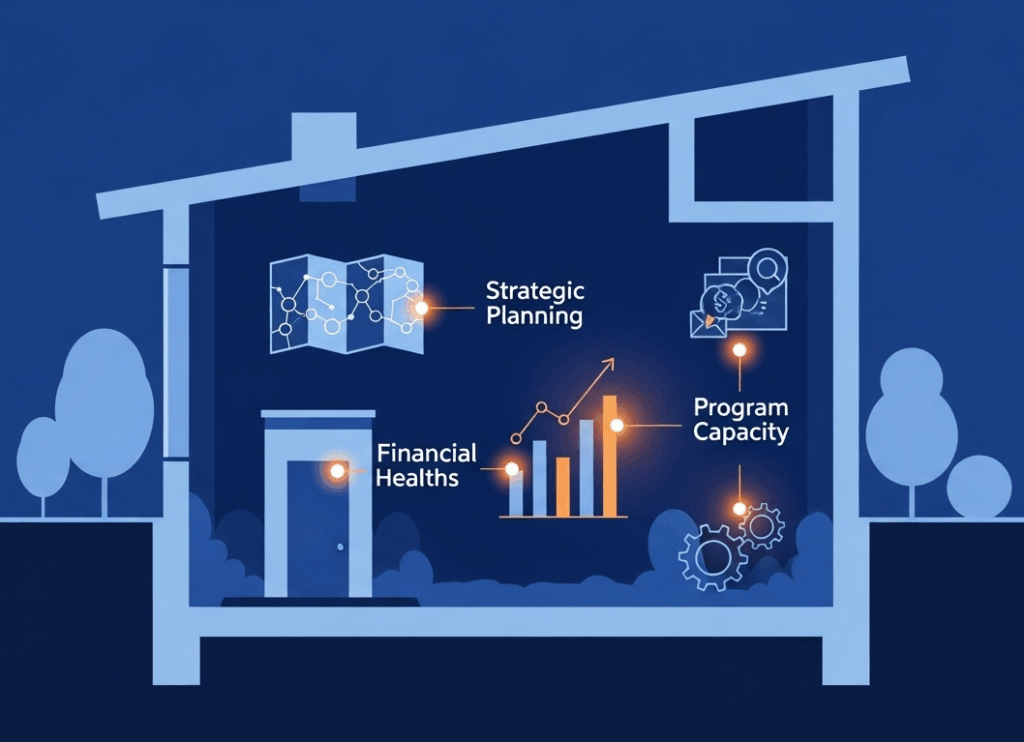
Before you evaluate a single funder, you must look inward. A successful grant application is built on a foundation of organisational preparedness. The National Council of Nonprofits emphasises that internal readiness is a prerequisite, not an afterthought. Ask your team the following questions.
Strategic Clarity and Mission Alignment
- Is our mission statement clear, concise, and compelling?
- Do we have an up-to-date strategic plan that outlines our key priorities for the next 1-3 years?
- Is the project we need funding for a core priority within that strategic plan, or is it a distraction?
Programmatic and Project Readiness
- Can we clearly articulate the project’s goals, activities, target population, and expected outcomes?
- Do we have a realistic timeline for project implementation?
- Do we have the qualified staff, volunteers, and expertise required to deliver the project successfully?
Financial and Administrative Health
- Are our financial statements (Balance Sheet, P&L) accurate and up-to-date?
- Do we have a detailed, defensible budget for this specific project?
- Do we have all necessary documentation readily available (e.g., proof of nonprofit status)? For UK-based charities, this means having your Charity Commission number and records ready.
Systems and Capacity to Manage Grant Funds
- If we win the grant, do we have a financial system in place to track restricted funds separately?
- Do we have the capacity to handle the funder’s reporting requirements?
- Do we have a plan for data collection and evaluation to measure the project’s success?
Answering these questions honestly will not only prepare you for applications but also highlight internal weaknesses that need to be addressed. For a practical starting point, try our free grant readiness assessment, or explore our Data-Driven Blueprint for Nonprofit Grant Readiness for a deeper dive.
Part 2: The Grant Opportunity Scorecard — How to Evaluate and Prioritise Funders
Once you have confirmed your own readiness, it is time to turn your focus outward and score potential grant opportunities.
Understanding Funder Priorities (The “Why”)
The best way to understand a funder is to think like one. Research their website, annual reports, and lists of past grantees. Look for their mission, vision, and values. As evaluation experts like the TCC Group have shown, funders are looking for partners who share their theory of change and can help them achieve their goals. Your job is to demonstrate that your project is the perfect vehicle for that.
The Key Grant Fit Evaluation Criteria (The “What”)
To score an opportunity systematically, evaluate it against these core criteria. This scannable list forms the heart of the scorecard.
- Mission Alignment: How closely does the funder’s mission match your organisation’s mission?
- Geographic Focus: Do they explicitly fund projects in your city, region, or country?
- Funding Area: Does your project fit squarely within their stated funding priorities (e.g., youth education, environmental conservation)?
- Grant Size and Type: Is their average grant award appropriate for your project’s budget? Do they offer the type of support you need (e.g., project support, general operating, capacity building)?
- Eligibility and Restrictions: Do you meet 100% of their non-negotiable eligibility criteria?
- Relationship Potential: Have you had prior contact? Do you know a board member or past grantee? Is the programme officer accessible?
- Reporting and Compliance: Are the reporting requirements reasonable and manageable for your organisation’s capacity?
The Grant Fit Scoring Methodology (The “How”)
Use a simple 1-5 scoring system for each criterion to create a quantifiable result. Be honest and objective. This approach is consistent with the Nesta Standards of Evidence framework used widely in the UK funding sector.
- 5 (Perfect Match): Their mission could be your mission. The alignment is exact.
- 4 (Strong Match): A very close and clear alignment of goals and focus.
- 3 (Related): There is a logical connection, but it is not a perfect overlap.
- 2 (Tangential): You could make a case, but it would be a stretch.
- 1 (Unrelated): There is no discernible alignment.
For example, if a funder’s mission is “to support youth literacy in London” and your project provides reading tutors to children in London, you would score a 5 for Mission Alignment. If your project was for youth sports in London, you might score a 3. If it was for adult literacy in Manchester, you would score a 1.

Red Flags and Deal-Breakers in Grant Evaluation
Some issues should immediately disqualify an opportunity, regardless of its score. These include:
- Eligibility Mismatch: If you do not meet a core requirement (e.g., they only fund registered charities and you are a CIC), stop immediately.
- Impossible Timelines or Reporting: If the application is due in two days or the reporting requires a full-time staff member you do not have, it is a no-go.
- Values Misalignment: If the funder has a history or affiliation that conflicts with your organisation’s core values.
- Funder History: If they have a track record of only funding very large, established institutions and you are a small, grassroots organisation.
Your Action Plan: Download and Implement the FundRobin Grant Fit Scorecard
Theory is valuable, but action is what secures funding. We have taken this entire grant fit score framework and built it into a practical, easy-to-use tool.
From Theory to Action: Your Free Grant Fit Scorecard Template
It is time to take control. Download your free, fully editable Grant Fit Scorecard Template now and start making smarter, data-driven decisions today.
How to Use the Grant Fit Scorecard (A Mini Walkthrough)
Using the template is simple. Follow this 3-step process to transform your grant-seeking strategy:
- Conduct Your Readiness Assessment: Open the template and start with the first tab. Honestly answer the questions in the Grant Readiness checklist. This sets your internal baseline.
- Score Each Opportunity: For each potential grant you identify, use the “Opportunity Scorecard” tab. Go through the criteria and assign a 1-5 score for each, adding notes to justify your reasoning. The template will automatically calculate the total grant fit score.
- Compare and Prioritise: After scoring 3-5 potential grants, compare their final scores. The results will give you a clear, data-backed priority list, showing you exactly where to focus your precious time and energy.
The “Grant Go/No-Go” Threshold
To make the decision crystal clear, set a minimum threshold. Based on our work with hundreds of nonprofits, we recommend only pursuing grants that score above a 35 out of 50. This simple rule ensures you are always focusing your efforts on high-potential opportunities and helps you confidently say “no” to poor-fit grants. Tools like FundRobin automate this scoring process using AI-powered grant matching, so you can identify high-fit opportunities in seconds rather than hours.
Beyond the Score: Integrating Your Grant Fit Framework into a Sustainable Funding Strategy
The grant fit score is more than an evaluation tool; it is a cornerstone of a robust, long-term funding strategy.
The Grant Fit Score as a Strategic Planning Tool
Do not just use the framework in the fundraising office. Share the results with your board and leadership. A series of low scores in a certain programme area can be powerful data, indicating that a project may not be “fundable” and requires a strategic pivot. It aligns your fundraising efforts with your organisation’s overarching strategic plan for grant seeking (Giving USA).
Building a Diversified Funding Pipeline
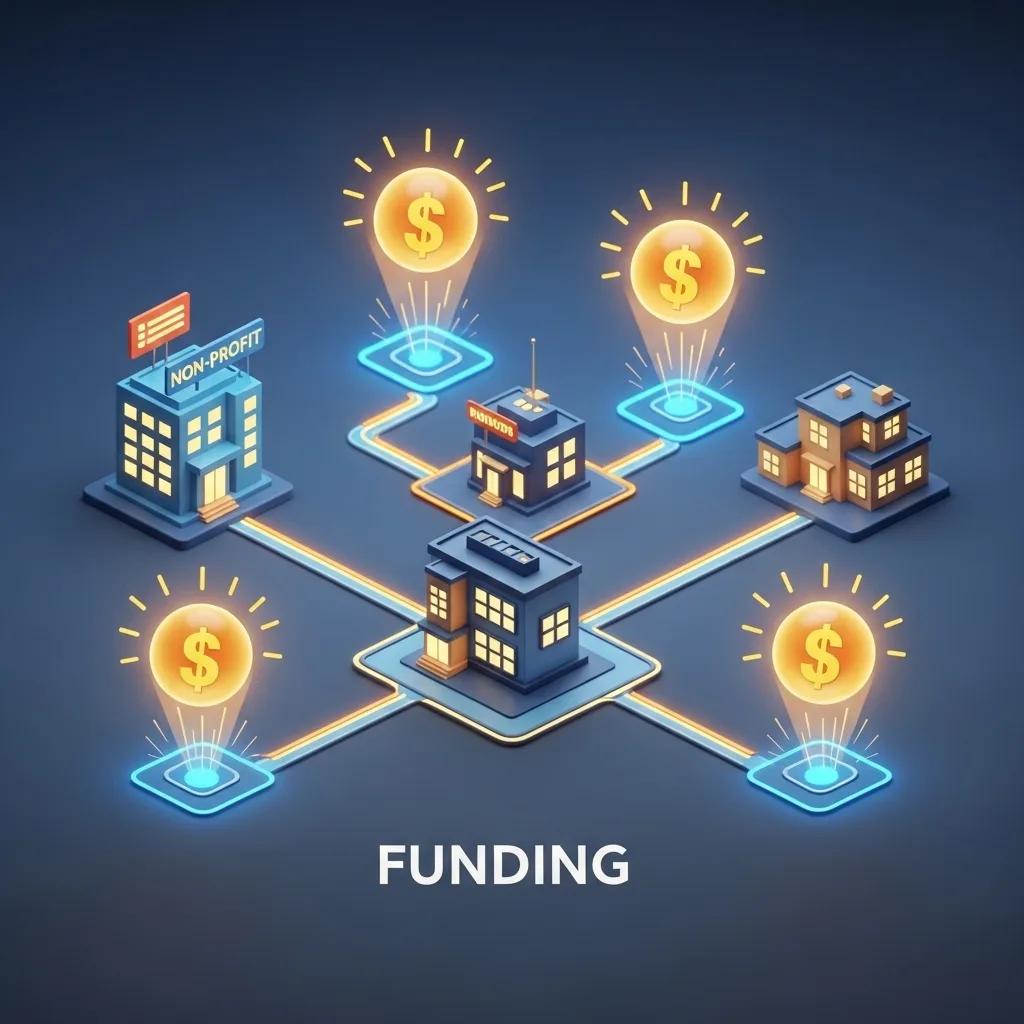
The framework can also reveal an over-reliance on grant funding. If you consistently struggle to find high-scoring grant opportunities for a core programme, it is a sign that you need to build a more diversified funding model. As outlined by The Bridgespan Group, a healthy nonprofit requires a mix of funding streams. Use the insights from your scoring to make a case for investing in individual giving, corporate sponsorships, or earned income, thereby developing a nonprofit funding strategy that is resilient and sustainable.
Using Grant Fit Data to Build Funder Relationships
Approaching a programme officer is far more effective when you are armed with data. A high grant fit score gives you the confidence to initiate a conversation. You can say, “We have reviewed your priorities and past grantees, and based on our evaluation, we have identified a very strong alignment with our new youth literacy project. Would you be open to a brief 15-minute introductory call?” This professional, data-driven approach positions you as a strategic partner, not just another applicant. It is the perfect first step before you write a grant proposal.
Tracking Your Success and Refining Your Grant Fit Framework
Your Grant Fit Scorecard is a living document. Track the success rates of your applications. Did the grants that scored a 45 get funded while the ones that scored a 28 were rejected? Use this data to prove the model’s ROI to your board and to refine your scoring criteria for the future. According to the Stanford Social Innovation Review, organisations that systematically track funding outcomes build stronger, more sustainable revenue models over time.
Frequently Asked Questions About the Grant Fit Score
What is a grant fit score and why does it matter?
A grant fit score is a numerical rating that measures how well a specific grant opportunity aligns with your nonprofit’s mission, capacity, and strategic goals. It matters because it transforms subjective “gut feeling” decisions into objective, data-driven ones — helping you focus limited resources on grants you are most likely to win. In a FundRobin survey of 58 nonprofits, 74% cited finding the right grant as their biggest challenge (FundRobin Research, 2026).
How do you calculate a grant fit score?
You calculate a grant fit score by rating each grant opportunity on a 1-5 scale across key criteria: mission alignment, geographic focus, funding area match, grant size appropriateness, eligibility, relationship potential, and reporting requirements. Add the scores together — a total above 35 out of 50 indicates a strong fit worth pursuing. Our free scorecard template automates this calculation.
Why do most grant applications fail?
Most grant applications fail due to a fundamental misalignment between the nonprofit’s project and the funder’s stated priorities — not because of poor writing. Other common reasons include failing to meet eligibility criteria, ignoring application guidelines, submitting unrealistic budgets, and lacking a clear sustainability plan. The NIMH documents these patterns extensively.
What is the difference between a grant fit score and a grant readiness checklist?
A grant readiness checklist assesses whether your organisation has the internal infrastructure to apply for grants (documents, financial systems, staff capacity). A grant fit score goes further by also evaluating the external alignment between a specific opportunity and your mission. The FundRobin framework combines both into a single, comprehensive scoring system — ensuring you are ready and well-matched before investing time in an application.
Can AI tools help calculate grant fit scores?
Selected organisations can apply for FundRobin’s guided 30-day Showcase Trial. The period starts only after approval and activation; approved Showcase organisations do not need a card to begin. Apply for the Showcase Trial or compare Growth and Impact plans.
How often should you update your grant fit score framework?
Review your grant fit score framework at least quarterly, or whenever your organisation’s strategic plan changes significantly. Track whether high-scoring grants lead to funded proposals and low-scoring ones to rejections. Nonprofits with formal grant tracking systems secured 2.3x more funding than those without (FundRobin Research, 2026), so consistent tracking and refinement is essential.
What is a good grant fit score threshold for nonprofits?
Based on FundRobin’s work with hundreds of nonprofits, a grant fit score above 35 out of 50 indicates a high-probability opportunity worth pursuing. Scores between 25-34 warrant further investigation but carry higher risk. Scores below 25 should typically be declined, redirecting that time toward better-fit opportunities. Setting a clear threshold helps teams confidently say “no” and reduces staff burnout from chasing poor-fit grants.
For a deeper dive into the operational research and mathematical principles behind the grant fit score, including how Expected Value calculation and the 80/20 governance rule can eliminate fundraising burnout and save nonprofits up to 300,000 GBP in wasted costs, read our companion article: The Science of Selection: Utilising the Grant Fit Score to Solve the Nonprofit Efficiency Crisis.
Stop Chasing, Start Winning: Take Control of Your Grant Strategy Today
The endless cycle of writing, waiting, and being rejected is not a prerequisite for nonprofit work. You can shift from a reactive, frustrating process to a strategic, confident, and successful one. The grant fit score framework is your blueprint for this transformation. It saves your most valuable asset — time — and focuses your team’s incredible energy where it has the highest chance of making a real impact.
Take the first step towards a better funding future. Download the FundRobin Grant Fit Scorecard now, and learn more about how FundRobin‘s AI-powered platform can revolutionise your entire funding strategy. Last updated: April 2026.
Recommended Reading
- How to Verify 501(c)(3) Status and Look Up EINs — Use EIN verification as part of your funder due diligence process to validate potential grant sources.
- Nonprofit EIN Verification & Funder Intelligence — Uncover hidden funding sources through strategic EIN analysis and nonprofit financial intelligence research.
- Charity Safeguarding: Turning Compliance into Funding Advantage — How robust safeguarding policies can strengthen your grant fit score and improve application success rates.
