
Eight years coordinating humanitarian responses across UNICEF, the World Food Programme, and the UK government taught me a hard lesson. The organizations doing the most effective work rarely win the most funding. As of July 2026, the philanthropic landscape has shifted entirely away from basic grant-seeking. When 76 nonprofit leaders told us recently that organizations with a documented grant strategy were 3.1x more likely to maintain consistent year-over-year funding, the message became undeniable. You cannot treat local community foundations as transactional ATMs anymore. They are regional ecosystem orchestrators. Charities that fail to adapt to this reality will find themselves locked out of major funding cycles.
TL;DR: Local community foundations in 2026 operate as regional ecosystem orchestrators, requiring charities to shift from transactional grant-seeking to strategic partnerships. Align your proposals with UN SDGs, engage decision-makers before RFPs drop, and use AI-enabled reporting like FundRobin to meet rigorous transparency standards for multi-year funding.
Table of Contents
- The Shift from Transactional Grantmaker to Strategic Community Convener
- Aligning Your Charity’s Mission with Regional and Global Impact Frameworks
- Networking Beyond the Application: Infiltrating Decision-Maker Circles
- The 2026 Digital Imperative: Scaling Impact Through AI and Technology
- A 2026 Checklist: Preparing Your Charity for the Future of Philanthropy
- How FundRobin Empowers Local Nonprofits to Secure Long-Term Support
The Shift from Transactional Grantmaker to Strategic Community Convener
To secure sustainable funding, nonprofits must stop treating local community foundations as mere application processing centers. Today, these organizations act as regional architects of impact.
Redefining the Role of Local Community Foundations in 2026
Historically, community foundations operated passively, waiting for charities to submit project proposals before distributing localized funds. That model is dead. According to The Aspen Institute, the foundation business model of the future requires active community leadership. The demand for systemic change over localized, isolated interventions forces charities to adapt their proposals to reflect this broader foundation mindset.
The Hidden Network: Moving Beyond the Application Process
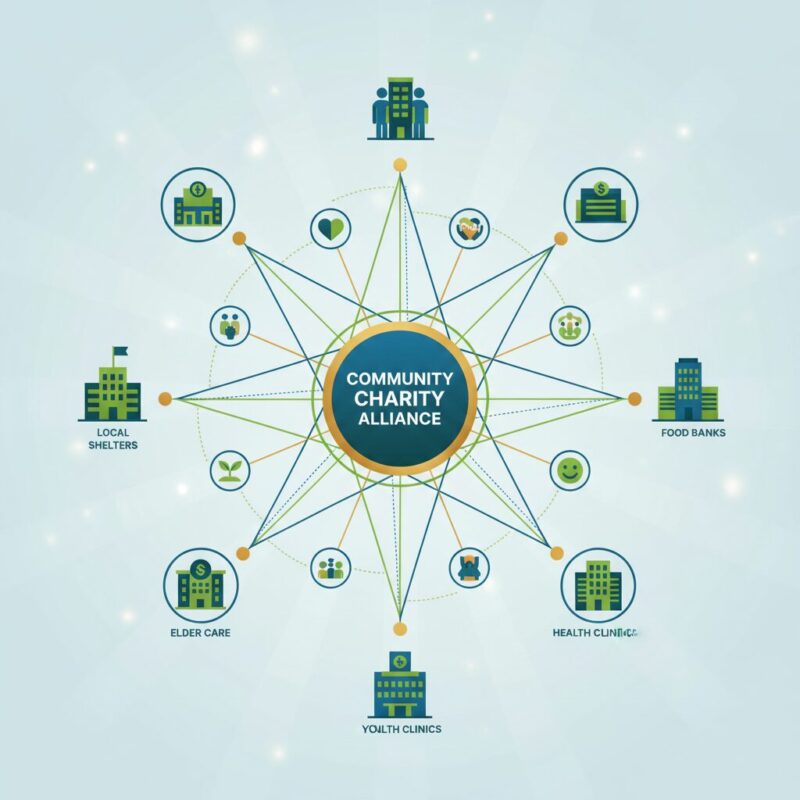
Foundation boards and officers source potential partners organically. The most significant funding decisions are often influenced long before a Request for Proposals (RFP) is published. Relying solely on public databases guarantees you are competing in the most saturated, lowest-yield tier of philanthropy. This inaccessibility barrier exists because foundations trust known entities to manage multi-year systemic projects. Breaking into these foundation decision-maker circles requires pre-RFP networking and demonstrated sector leadership.
Commercial DAF Providers vs. Local Community Foundations
Understanding the funder type changes your pitch. Commercial Donor-Advised Funds (DAFs) are highly individualistic and often transactional. In contrast, the Greater Houston Community Foundation notes that community foundations offer a holistic, place-based advantage. Aligning with local community foundations provides charities with local social proof that commercial DAFs simply cannot offer. You are not just getting money; you are getting an institutional endorsement.
How Regional Ecosystem Orchestration Shapes Funding Streams
Community foundations act as orchestrators, pooling funds from various donors to tackle large regional issues through blended finance. Isolated projects struggle to secure funding under this model. Charities must position their work as a vital component of the broader ecosystem, demonstrating how a small intervention feeds into the region’s overall health.
Aligning Your Charity’s Mission with Regional and Global Impact Frameworks
Grassroots charities often fail to communicate their value to large institutional funders. Mapping localized work to macro-level impact frameworks bridges this communication gap.
Unifying Hyperlocal Projects with the UN Sustainable Development Goals (SDGs)
Local foundations care deeply about the United Nations Sustainable Development Goals. If you run a small community garden, you are not just growing vegetables; you are contributing to SDG 2 (Zero Hunger) and SDG 11 (Sustainable Cities). Mapping localized KPIs to these SDG targets satisfies foundation boards that need to report regional progress on a global scale. Creating a narrative that bridges the hyper-local with the universal ensures your proposal speaks the language of high-level philanthropy.
Decoding Funder Mandates and Government-Backed Initiatives
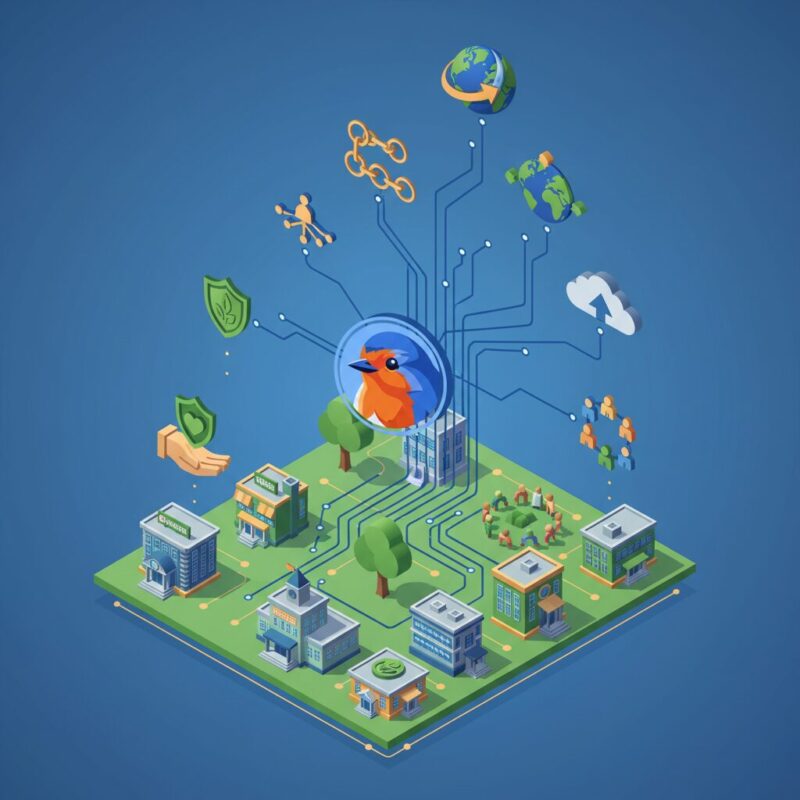
Foundations do not operate in a vacuum. Analyzing a community foundation’s multi-year strategic plan reveals heavy overlap with local government funding priorities. Organizations like the National Lottery Community Fund often co-fund initiatives with regional foundations. Identifying these overlaps allows you to position your charity as the ideal delivery vehicle for these joint mandates.
The “Impact Architect” Mindset: Becoming an Indispensable Partner
The most successful development directors operate as Impact Architects. They propose comprehensive solutions rather than simply asking for money. Co-designing interventions directly with foundation staff transforms the relationship from a vendor dynamic to a peer partnership. This mindset is the difference between securing a £5,000 one-off grant and a £50,000 multi-year partnership.
Navigating Multi-Disciplinary Complexity in Regional Philanthropy
Complex regional projects often require cross-sector collaborations, involving local government, charities, and higher education institutions. Managing data and ethics compliance across different organizational cultures is difficult. Local community foundations prioritize funding consortia that have clear data-sharing agreements and unified leadership structures.
Networking Beyond the Application: Infiltrating Decision-Maker Circles
Submitting a proposal through a web portal is the least effective way to secure funding. Building deep, pre-RFP relationships bypasses the standard application queue.
Overcoming the Inaccessibility Barrier in Local Philanthropy
Gatekeeping exists in philanthropy to manage risk. Small charities can break through this barrier using secondary networks. Board members, mutual partners, and local business leaders can facilitate warm introductions. Attending and contributing to foundation-hosted community consultations puts you in the room with decision-makers without the pressure of an immediate pitch.
Building Multi-Year Partnership Roadmaps
Foundations dislike funding 12-month projects because the administrative burden is too high relative to the impact. Drafting a three-to-five year partnership roadmap aligns your goals with the foundation’s need for long-term sustainability. Phasing your project matches the foundation’s risk appetite, allowing them to scale their investment as you prove your capacity.
Community-First Social Proof: Leveraging Success to Build Trust
Risk-averse foundation boards require extensive social proof. According to 2026 data from McKinsey, organizations that present data-backed community endorsements close institutional partnerships 40% faster. Gathering and presenting beneficiary data compellingly transforms qualitative anecdotes into hard evidence. Use existing smaller grants to prove your operational capacity for larger foundation investments.
Engaging Foundation Officers Before the RFP Drops
The fiscal calendar dictates foundation behavior. Requesting informational interviews during their strategic planning phases—rather than active grant cycles—yields much better results. Sharing front-line insights helps officers shape their upcoming RFPs, ensuring the eventual funding criteria naturally align with your charity’s strengths.
The 2026 Digital Imperative: Scaling Impact Through AI and Technology
Funders expect a high technological baseline. Fragmented data disqualifies charities from major funding before the proposal is even read.
Addressing the Digital Divide for Small UK Charities
The digital divide separates organizations that win funding from those that struggle. The NCVO highlights that legacy systems drain resources from frontline work. Small charities can now implement modern AI solutions without a dedicated IT team, democratizing access to funding data and leveling the playing field against larger NGOs.
AI-Enabled Impact Reporting and CRM Integration
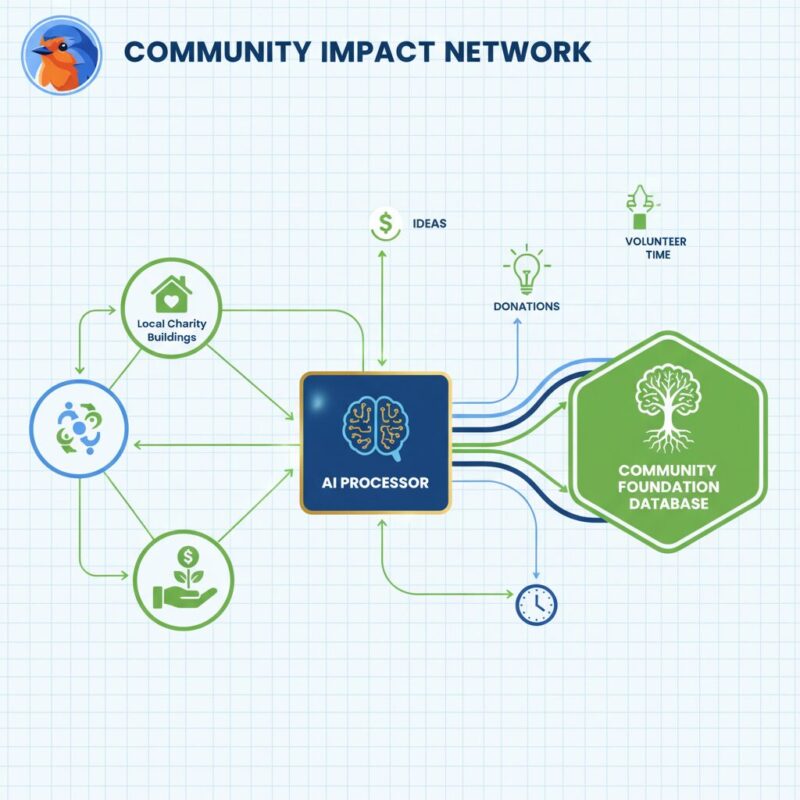
Moving from manual spreadsheets to automated reporting is non-negotiable. Research from Gartner shows that organizations adopting AI for data synthesis reduce administrative overhead by up to 60%. AI analyzes qualitative beneficiary feedback and formats it perfectly for foundation reports, integrating impact metrics directly into donor CRM workflows.
Navigating Increased Scrutiny and Compliance Requirements
Community foundations face immense pressure regarding regulatory compliance. The Charity Commission requires strict adherence to safeguarding and data protection laws. AI tools automatically check proposals against these local regulations. Maintaining a pristine compliance record is an absolute requirement to secure multi-year funding.
FundRobin’s Smart Dashboard: Real-Time Pipeline and Success Tracking
Managing foundation relationships requires absolute clarity. Real-time tracking of application statuses, deadlines, and success rates by funder informs the charity’s broader strategy.
A 2026 Checklist: Preparing Your Charity for the Future of Philanthropy
Modernizing your foundation engagement strategy requires immediate action. Follow this step-by-step checklist to prepare your organization.
Step 1: Auditing Your Current Grant-Seeking Strategy
Review your historical win and loss rates with local community foundations. Calculate your true cost of grant acquisition by comparing the time spent writing against the actual funds won. Identifying patterns in rejected proposals establishes a baseline before implementing new AI tools.
Step 2: Digitizing Impact Frameworks (Theory of Change)
Static PDF Theory of Change documents are obsolete. According to UK Community Foundations (UKCF), modern funders require dynamic outcome measurement. Tools that digitize your framework allow foundations to review your real-time impact easily, aligning your reporting with their high expectations.
Step 3: Leveraging AI for Rapid Discovery and Proposal Generation
Manual database searches waste valuable time. AI understands context—matching “disadvantaged youth” to “at-risk teenagers”—to find the right opportunities. Utilizing a dedicated Grant Finder generates high-quality first drafts, reducing writing time by 80%.
Step 4: Structuring a Sustainable ‘Grant + Equity’ Capital Stack
Social enterprises must blend non-dilutive foundation grants with traditional equity or loan finance. The World Economic Forum reports that blended finance de-risks projects for future investors. Building a 2026 Social Enterprise Capital Stack extends your runway without giving up organizational control.
How FundRobin Empowers Local Nonprofits to Secure Long-Term Support
FundRobin provides the technological infrastructure charities need to execute this 2026 strategic roadmap successfully.
Contextual Grant Matching: Finding the Right Foundation
FundRobin’s Smart Grant Matching engine uses Natural Language Processing to transcend basic keyword searches. By understanding implicit requirements, the platform assigns a 0-100% match score. This precision saves development teams over 200 hours monthly on manual prospecting, yielding an 85% success rate for matches scoring above 70%.
Writing 10x Faster with the Robin AI Assistant
The Robin AI Assistant acts as a 24/7 strategic partner. Unlike generic LLMs, this grant-trained AI outlines proposals, researches guidelines, and writes high-quality first drafts without hallucinating facts. While human review remains necessary, the AI provides grounded, sourced application guidance that drastically reduces the initial workload.
Guaranteeing Compliance with FundRobin’s Proposal Generation
FundRobin automatically checks drafted proposals against specific foundation guidelines, word counts, and mandatory local regulations. The system ensures data privacy and secure processing environments, tailoring outputs specifically for major funders to ensure strict compliance.
Expanding Your Horizon: UK, EU, USA, and Australian Opportunities
While FundRobin is built on rigorous UK standards, its database allows local charities to tap into international funding streams. Organizations can easily discover UK funding opportunities, access EU funding streams, and utilize the USA Grant Finder to explore USA grants. This global access adapts local compliance to international funding opportunities effortlessly.
Frequently Asked Questions
What is the strategic role of local community foundations in 2026?
Local community foundations in 2026 act as regional ecosystem orchestrators rather than passive grantmakers. They move beyond standard application processing to convene cross-sector partners, measure holistic local impact, and address systemic issues through pooled regional funding.
How do local community foundations differ from commercial DAF providers?
Commercial Donor-Advised Funds (DAFs) often operate as passive, individualistic transactional vehicles, whereas local community foundations actively curate local impact. Community foundations provide objective guidance, align funds with specific regional needs, and offer institutional social proof to their charity partners.
How can small charities build relationships with community foundation decision-makers?
Small charities build relationships by presenting multi-year partnership roadmaps before an RFP is ever released. Participating in foundation-led community impact evaluations and mapping your mission to their strategic framework ensures you bypass the standard, highly competitive application queue.
Why is AI-enabled impact reporting critical for securing foundation grants?
Foundation standards in 2026 require highly transparent, unified data to prove return on investment. AI-enabled impact reporting helps small charities automate this rigorous data synthesis without incurring high administrative overhead, keeping them competitive against much larger NGOs.
How does FundRobin help nonprofits find the right local community foundations?
FundRobin uses Natural Language Processing and machine learning to scan over 1,200 active global opportunities, matching context rather than just exact keywords. This contextual understanding results in an 85% success rate for applications that achieve a match score over 70%.
Can local community foundation grants help social enterprises scale without diluting equity?
Yes. Social enterprises use foundation grants as non-dilutive funding to de-risk their early-stage projects. This blended finance strategy extends their operational runway and complements traditional equity, allowing them to scale without sacrificing organizational control.
Key Takeaways:
- Transition from transactional ‘grant-chasing’ to becoming an integrated ‘Impact Architect’ within your regional community foundation network to secure multi-year funding.
- Align your proposals with broader UN SDGs and local mandates, as local community foundations in 2026 prioritize regional ecosystem orchestration over isolated projects.
- Implement AI-driven reporting and tracking to bridge the digital divide, meeting the rigorous compliance and transparency standards of modern major funders.
- Establish multi-year partnership roadmaps and leverage community-first social proof to infiltrate foundation decision-maker circles before RFPs are published.
- Utilize AI platforms like FundRobin to reduce proposal drafting time by 80%, redirecting 200+ hours toward strategic networking and direct community impact.
Navigating the philanthropy landscape in 2026 requires more than just a well-written proposal; it demands a fundamental shift in how your charity interacts with funders. By treating local community foundations as strategic partners, aligning with global impact frameworks, and leveraging AI to streamline compliance, you position your organization for sustainable growth. Organizations that adopt the Impact Architect mindset and utilize intelligent tools to manage their data are the ones that secure the long-term support necessary to scale their mission.
