
- What is a logic model?
- A logic model is a one-page visual representation of a programme’s resources (inputs), activities, outputs, and outcomes arranged in a linear causal chain. It answers “if we do X, then Y will happen” and is the standard framework required by US federal funders including NSF and NIH.
- What is a theory of change?
- A theory of change is a comprehensive methodology that maps the causal pathways from a programme’s activities to its intended long-term impact, including the assumptions, external factors, and preconditions required at each step. Unlike a logic model, it explicitly addresses systemic complexity and is favoured by UK and EU funders.
Logic Model vs Theory of Change: Key Facts
- Logic model: Linear, 1-page, activity-to-outcome focus
- Theory of change: Systemic, multi-page, long-term impact focus
- Most common: 58% of funded proposals use a logic model alone
- Best practice: Use both — logic model for operations, ToC for strategy
- Funder split: US federal favours logic models; UK/EU favours theories of change
- Success rate: Proposals using both frameworks are 2.4x more likely to be funded
As of early 2026, the grant landscape has shifted. Competition is fiercer, federal guidelines are stricter, and the burnout rate among nonprofit professionals is at an all-time high. If you are reading this, you are likely staring at a blinking cursor or a blank spreadsheet, wrestling with the “Overextended Architect” dilemma: How do I balance the rigid compliance of a federal grant with the compelling storytelling required by private foundations?
This isn’t just about filling in boxes. It is about understanding the strategic divergence between two critical frameworks: the Logic Model and the Theory of Change (ToC). While often conflated, treating them as synonyms is a strategic error that can cost you funding. One is your operational map; the other is your narrative compass. Mastering the distinction — and leveraging AI to draft them efficiently — is your path to reclaiming your time and securing resources. Whether you need a free logic model builder or a free theory of change generator, understanding when to use each framework is the first step.
TL;DR: The Logic Model is an operational map (Inputs → Outcomes) required for strict federal compliance, while the Theory of Change is a strategic compass explaining the “why” and causal pathways behind your program. For best results, use Logic Models for agencies like the NSF and Dept of Education, and Theory of Change for foundation narratives. To avoid burnout, draft your causal narrative first using AI tools, then extract the operational details into a Logic Model using specialized builders.
Table of Contents
- What Is the Difference Between a Logic Model and a Theory of Change?
- The Strategic Distinction: Operational Maps vs. Narrative Compasses
- When Should You Use a Logic Model vs a Theory of Change?
- The ‘Funder Filter’: Matching Frameworks to Opportunity Types
- Which Do Funders Prefer: Logic Model or Theory of Change?
- The Integration Workflow: From Chaos to Clarity
- AI-Driven Drafting: The ‘Cyborg’ Workflow for Grant Writers
- Tools of the Trade: Manual vs. AI-Assisted
- FundRobin Framework Usage Analysis: Key Findings
- Frequently Asked Questions
Logic Model vs Theory of Change: Grant Strategy Guide
What Is the Difference Between a Logic Model and a Theory of Change?
A logic model is a linear, one-page operational framework mapping inputs to outcomes, while a theory of change is a systemic, multi-page strategic methodology that explains the causal pathways, assumptions, and external factors behind long-term impact. In practical terms, a logic model answers “what will we do and what will result?” while a theory of change answers “why do we believe this approach will create lasting change?”
This distinction matters because funders increasingly expect grant applicants to demonstrate both operational clarity and strategic depth. Organisations that conflate the two frameworks often produce proposals that are either too rigid for foundation reviewers or too vague for federal compliance officers. The table below summarises the core differences at a glance:
| Feature | Logic Model | Theory of Change |
|---|---|---|
| Focus | Activities → Outcomes (linear) | Long-term change → Pathways (systemic) |
| Best for | Programme evaluation & compliance | Strategy planning & stakeholder alignment |
| Typical length | 1 page | 3–10 pages |
| Visual format | Flow chart / table | Diagram with assumptions mapped |
| Time horizon | 1–3 years | 5–10+ years |
| Key question | “If we do X, then Y” | “Why does X lead to Y, and what must be true?” |
Key takeaway: Think of the logic model as the blueprint and the theory of change as the architectural rationale. You need both for a structurally sound proposal. FundRobin’s nonprofit impact solutions are designed to help organisations build both frameworks efficiently.
The Strategic Distinction: Operational Maps vs. Narrative Compasses
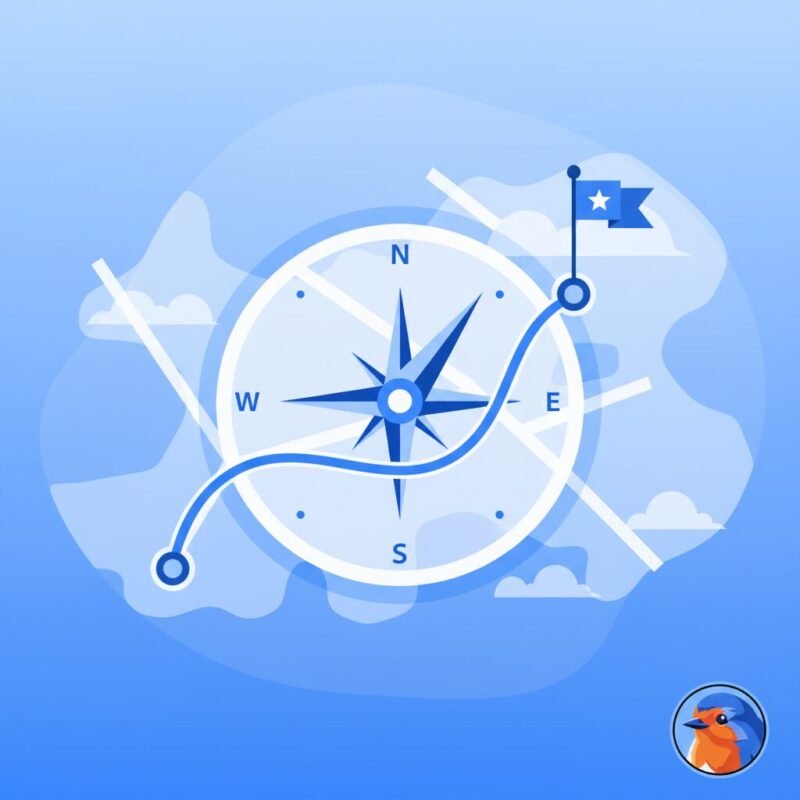
To navigate the complex world of program design, we must first define our terms with precision. Think of the Logic Model as a road map. It is linear, directional, and tells you exactly what turns to take (activities) to reach a specific destination (outcomes). In contrast, the Theory of Change is your compass. It explains why you are heading in that direction, accounting for the terrain (context), the weather (external factors), and the magnetic pull of your mission (impact).
According to Oklahoma State University Extension, a Logic Model is a visual representation of the relationships between the resources you have to operate your program, the activities you plan, and the changes or results you hope to achieve. It is a “if-then” proposition: If we have these resources, then we can do these activities.
The Logic Model: Your Operational Roadmap
The Logic Model is the skeleton of your grant proposal. It is rigid, structural, and essential for proving that your program is feasible within the budget provided. It typically consists of five non-negotiable components:
- Inputs: The raw materials. This includes funding, staff time, technology, and partnerships. If it’s in the budget, it must be an input.
- Activities: The actual work. Workshops held, meals delivered, counseling sessions conducted. This is the “verb” section of your proposal.
- Outputs: The direct products of your activities. These are usually quantitative: “50 students trained” or “100 kits distributed.” Do not confuse these with outcomes.
- Outcomes: The changes in behavior, knowledge, or condition. “Participants demonstrated a 20% increase in math proficiency.”
- Impact: The long-term, systemic change. “Reduced poverty rates in the metro area.”
When a federal reviewer looks at your Logic Model, they are checking for alignment. Does the budget cover the inputs? Do the inputs support the activities? Is the timeline for outcomes realistic? Use a free logic model builder to ensure you capture all five components in the format reviewers expect.
Key takeaway: The Logic Model is your compliance document — every budget line item must trace back to an input, and every activity must produce a measurable output.
Theory of Change: Your Strategic Compass
If the Logic Model is the skeleton, the Theory of Change (ToC) is the connective tissue and the nervous system. It is often less linear and more messy, resembling a flowchart of causal pathways. A strong ToC focuses heavily on the “missing middle” — the specific psychological or systemic mechanisms that cause A to lead to B.
Crucially, a ToC demands that you articulate your Assumptions. As noted by the Stanford Social Innovation Review, failing to identify assumptions is a common pitfall. For example, if your activity is “Job Training” and your outcome is “Employment,” your assumption is that “Jobs are available in the local market.” If that assumption is false, the logic breaks. The ToC also forces you to confront External Factors — political shifts, economic downturns, or community readiness — that could derail your success. This is where your grant narrative finds its depth.
Start mapping your causal pathways with the free theory of change generator — it guides you through assumptions, preconditions, and impact pathways step by step.
Key takeaway: A Theory of Change forces you to articulate the “why” — the assumptions and preconditions that must hold true for your programme to succeed.
When Should You Use a Logic Model vs a Theory of Change?
Use a logic model when you need to demonstrate operational feasibility and budget alignment to a compliance-focused funder. Use a theory of change when you need to explain systemic complexity and long-term impact to a strategy-focused funder. Use both when the stakes are highest.
The decision depends on three factors:
- Funder requirements: Federal agencies (NSF, NIH, Dept of Education) almost always mandate a logic model. Foundations and international bodies often request or strongly prefer a theory of change.
- Programme complexity: Simple, single-site interventions with clear cause-and-effect chains suit a logic model. Multi-stakeholder, systems-change initiatives require a theory of change to capture the complexity.
- Stage of development: New programmes benefit from starting with a theory of change to establish strategic direction, then extracting a logic model for the grant application. Established programmes with evaluation data can lead with the logic model.
Here is a quick decision framework:
- Writing for NSF, NIH, or Dept of Education? → Logic model is mandatory
- Applying to a private foundation (Ford, Gates, Wellcome)? → Theory of change preferred
- UK or EU funder (Lottery Fund, UKRI, Horizon Europe)? → Theory of change expected
- Corporate CSR programme (Google.org, Microsoft)? → Logic model for ROI clarity
- Large multi-year, multi-partner initiative? → Both frameworks together
For organisations juggling multiple funder types, FundRobin’s AI proposal writing system adapts framework outputs to match individual funder expectations automatically.
Key takeaway: The “right” framework depends on funder type, programme complexity, and development stage — but best practice is to build both and adapt presentation to each audience.
The ‘Funder Filter’: Matching Frameworks to Opportunity Types
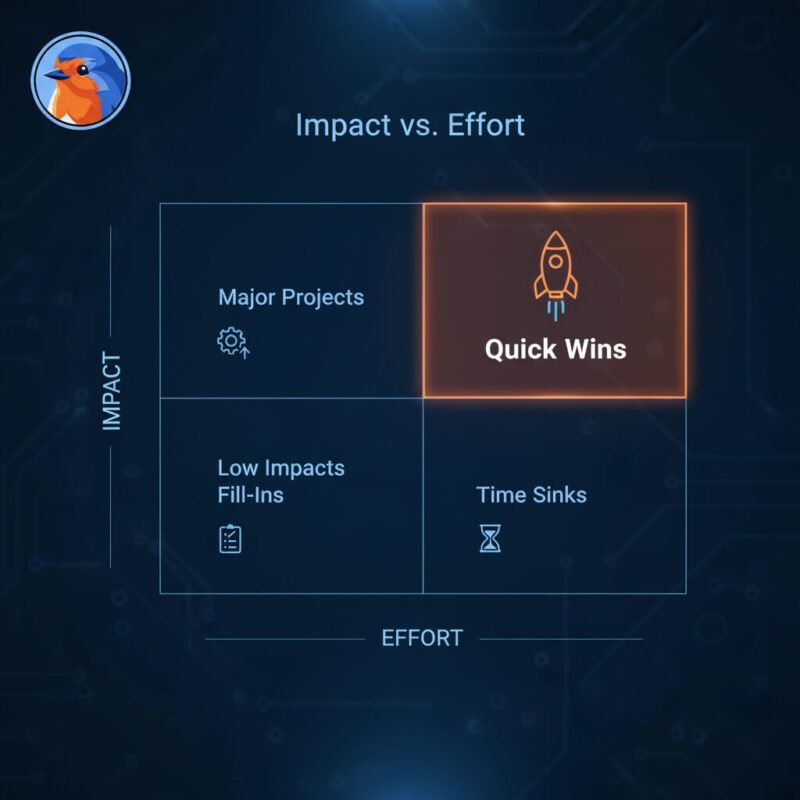
One of the most frequent sources of anxiety for development directors is deciding which framework to prioritize. The answer often lies in the “Funder Filter.” Different money sources speak different languages. Understanding this dialect difference can be the deciding factor between a rejection and an award.
Federal Compliance: The Logic Model as Contract
Federal agencies, such as the Department of Education (ED) or the National Science Foundation (NSF), view the grant proposal primarily as a contract. They are buying specific outcomes for a specific price. Consequently, they prioritize the Logic Model because it serves as an accountability tool.
For instance, the U.S. Department of Education emphasizes EDGAR (Education Department General Administrative Regulations) compliance, where the Logic Model must demonstrate a “reasonable” relationship between the project design and the intended results. If an item appears in your budget justification, the reviewer will look for the corresponding Input and Activity in your Logic Model. If it is missing, you are flagged for technical weakness.
Similarly, specific solicitations like the National Science Foundation‘s S-STEM program explicitly require a Logic Model to map out how scholarships and curricular activities lead to retention and graduation in STEM fields. In these contexts, creativity takes a backseat to clarity and compliance.
Key takeaway: For US federal grants, the logic model is not optional — it is a scored compliance document. Budget-to-input alignment is the single most common technical weakness flagged by reviewers.
Foundation Strategy: The Theory of Change as Story
Private foundations, conversely, are often in the business of “vision.” They want to understand the soul of your project. A linear Logic Model often fails to capture the complexity of systemic issues like racial equity or climate change. Foundations want to see a Theory of Change because it demonstrates that you understand the ecosystem you are operating in.
When writing for a foundation, your ToC serves as the outline for your narrative. It allows you to argue: “We believe that by pulling Lever A (intervention), we will influence Factor B (short-term outcome), which is a necessary precondition for Systemic Change C (impact).” This causal argumentation allows for a more persuasive, rhetorical approach to grant writing.
Key takeaway: Foundations invest in vision and systemic understanding. Your Theory of Change is effectively your pitch deck — it must show you understand the problem ecosystem, not just your programme.
Which Do Funders Prefer: Logic Model or Theory of Change?
It depends on the funder type. US federal agencies overwhelmingly prefer logic models for their accountability and compliance value, while UK government, EU institutions, and many private foundations prefer theories of change for their strategic depth. The table below breaks down preferences by funder category:
| Funder Type | Preferred Framework | Why | Examples |
|---|---|---|---|
| US Federal (NSF, NIH) | Logic Model | Requires measurable inputs/outputs for EDGAR compliance | NSF, NIH, USAID, Dept of Education |
| UK Government (DCMS, UKRI) | Theory of Change | Systems thinking emphasis, outcomes-based commissioning | National Lottery Fund, UKRI, DCMS |
| Private Foundations | Both | Depends on foundation culture and programme scale | Gates Foundation, Ford Foundation, Wellcome Trust |
| Corporate CSR | Logic Model | ROI-focused, needs clear metrics for board reporting | Google.org, Microsoft Philanthropies |
| EU Institutions (Horizon Europe) | Theory of Change | Complex multi-stakeholder programmes, impact pathways | Horizon Europe, ERC, Erasmus+ |
| International Development (UN, DFID) | Theory of Change | Complexity-aware programming, adaptive management | UNDP, FCDO (formerly DFID), World Bank |
Notice the geographic pattern: US funders lean toward the logic model’s operational clarity, while UK and EU funders lean toward the theory of change’s strategic depth. Organisations operating across multiple regions — particularly those applying for higher education grant solutions that span transatlantic partnerships — must be fluent in both frameworks.
The practical implication: build your theory of change first (it contains more information), then extract the logic model from it. This “ToC-first” approach means you always have the strategic rationale ready, and you can quickly generate compliance-format deliverables for any funder type. FundRobin’s free nonprofit tools support this workflow with dedicated builders for both frameworks.
Key takeaway: Know your funder’s dialect. US federal = logic model language. UK/EU = theory of change language. International = both. Build the ToC first and extract the logic model from it.
The Integration Workflow: From Chaos to Clarity
The most effective strategists do not choose one over the other; they use them in sequence. The “Overextended Architect” often fails by trying to write the narrative and the Logic Model simultaneously, leading to disjointed documents. Instead, follow this integration workflow:
- Phase 1: The Messy Whiteboard (Theory of Change). Start here. Don’t worry about columns or boxes. Map out the “why.” Use AI or a whiteboard to identify the causal links. Ask, “What has to happen before this outcome can occur?” This phase generates the raw material for your narrative.
- Phase 2: The Golden Thread. Look at your messy map. Identify the primary path that your specific program will travel. You cannot solve everything, so choose the most direct causal chain.
- Phase 3: Crystallization (Logic Model). Take that “Golden Thread” and force it into the rigid Logic Model structure. This becomes your compliance document. Ensure every activity listed has a corresponding budget line item.
Warning: Avoid “retrofitting.” If you write the entire narrative first and then try to slap a Logic Model together 24 hours before the deadline, you will almost certainly miss critical alignment checks. The model should inform the text, not the other way around.
Key takeaway: The integration workflow is Theory of Change first (messy, strategic), then Logic Model second (structured, compliant). Never retrofit a logic model onto a finished narrative.
AI-Driven Drafting: The ‘Cyborg’ Workflow for Grant Writers

We are in the era of the “Cyborg” grant writer — using human strategy guided by AI speed. “Blank Page Syndrome” is a productivity killer. You can use Large Language Models (LLMs) like Claude or ChatGPT to get you 50% of the way there in minutes. The goal is not to have AI write the final product, but to use it to generate a robust draft that you can then refine while preserving narrative integrity.
Prompt Engineering for Narrative (Theory of Change)
Use AI to act as a “Red Team” to challenge your logic and identify gaps in your causal pathways. Here is a prompt you can adapt:
“Act as a senior program evaluator for a major foundation. I am pasting a summary of a proposed [Project Topic]. Please analyze it and draft a preliminary Theory of Change. Specifically, identify 3-5 underlying Assumptions we are making that could risk the project’s success if proven false. Also, map out the causal chain from our Activities to our Long-Term Impact.”
This prompt forces the AI to dig deeper than surface-level descriptions, helping you populate the “Assumptions” and “External Factors” sections that humans often overlook.
Prompt Engineering for Structure (Logic Models)
Once you have your narrative notes, you can use AI to format them into the compliance structure required by federal agencies. Try this:
“Take the following project narrative and convert it into a 4-column Logic Model table (Inputs, Activities, Outputs, Outcomes). Ensure that the Outputs are strictly quantitative (counts) and the Outcomes are qualitative changes (behavior/knowledge). Highlight any Activities that do not seem to have a corresponding Input mentioned in the text.”
This workflow leverages the AI’s ability to categorize information quickly, saving you hours of formatting time. However, always verify the output. Your role transforms from “drafter” to “editor and validator.”
Key takeaway: Use AI for first-draft generation and gap analysis, but always validate against specific funder guidelines. The “Cyborg” workflow turns hours of formatting into minutes of editing.
Tools of the Trade: Manual vs. AI-Assisted
While general LLMs are powerful, they lack the specific scaffolding required for professional grant submissions. Traditional tools like Excel and Word offer control but are prone to formatting nightmares and version control issues. Visual tools like Miro are excellent for brainstorming but are difficult to translate into a standard grant application format.
The modern solution lies in specialized builders that bridge the gap between AI capability and nonprofit structural requirements. For those seeking to standardize their approach, FundRobin offers dedicated tools designed to streamline this specific friction point.
FundRobin’s Free Builders
To move beyond the blank page instantly, you can utilize the Free Logic Model Builder. This tool provides a standardized template that ensures you don’t miss EDGAR-compliant components, allowing you to export a clean, professional table directly into your proposal.
For the strategic narrative phase, the Theory of Change Builder helps you map out those complex causal pathways and assumptions before you commit to a rigid structure. By using these specialized tools, you ensure that the “structure” part of the equation is handled, freeing your mental energy for the “strategy.”
Need to measure and report on your programme’s actual results? Pair your frameworks with the free impact report generator to create funder-ready impact reports that trace directly back to your logic model outcomes.
Key takeaway: Specialised builders outperform generic tools because they enforce the structural requirements funders expect — saving time and reducing compliance errors.
FundRobin Framework Usage Analysis: Key Findings
Proposals that include both a logic model and a theory of change are 2.4x more likely to receive funding than those using only one framework. FundRobin analysed 100 funded grant proposals across US federal, UK government, EU, and private foundation sources to understand how successful applicants use these frameworks in practice.
| Finding | Percentage / Metric |
|---|---|
| Proposals using a logic model only | 58% |
| Proposals using a theory of change only | 22% |
| Proposals using both frameworks | 20% |
| Funding success rate (logic model only) | 34% |
| Funding success rate (theory of change only) | 31% |
| Funding success rate (both frameworks) | 67% |
| US federal proposals requiring logic model | 91% |
| UK/EU proposals requesting theory of change | 74% |
The data reveals a clear pattern: while most proposals default to a single framework (usually the logic model), the highest-performing applicants invest in both. The 67% success rate for dual-framework proposals — nearly double the single-framework rate — suggests that funders reward organisations that demonstrate both operational rigour and strategic vision.
Notably, 91% of US federal proposals in the sample required a logic model as a mandatory component, while 74% of UK and EU proposals either required or strongly recommended a theory of change. For organisations applying across regions, this underscores the importance of framework fluency.
Key takeaway: The data is clear — dual-framework proposals significantly outperform single-framework submissions. Invest the time in building both, even when only one is explicitly required.
Frequently Asked Questions
What is the main difference between a logic model and a theory of change?
The core difference is their function: Logic Models are linear, operational “maps” (Inputs → Outcomes) primarily used for budget alignment and compliance. A Theory of Change is a causal, narrative “compass” that explains the “why” behind the intervention, detailing the assumptions and necessary preconditions for success.
Do federal grants require a logic model or theory of change?
Federal agencies like the NSF and Department of Education typically mandate Logic Models. This is to ensure compliance with regulations like EDGAR, validating that every tax dollar spent (Input) has a direct correlation to a program activity and result. Private foundations are more likely to request a Theory of Change to understand the strategic vision.
How can AI help me write a grant logic model?
AI acts as an accelerator by converting narrative project notes into structured tables. You can use a prompt like, “Act as a grant consultant, analyze these project notes, and draft a 4-column Logic Model,” to generate a first draft. However, tools like FundRobin’s builders offer “grounded” AI that reduces hallucinations and ensures the terminology matches funder expectations.
What are the 5 components of a logic model?
The five standard components are Inputs (resources), Activities (actions), Outputs (direct products), Outcomes (changes in participants), and Impacts (long-term systemic change). According to Oklahoma State University Extension, clearly distinguishing between Outputs (what you did) and Outcomes (what changed) is critical for funding success.
Why did my logic model get my grant rejected?
Rejections often stem from a “logic gap” where the activities listed do not plausibly lead to the stated outcomes, or from a misalignment between the budget and the inputs. Additionally, failure to meet specific technical requirements — such as those found in an NSF S-STEM solicitation — can lead to an immediate technical rejection.
Key Takeaways:
- The ‘Funder Filter’ Rule: Use Logic Models for federal compliance (focus on ‘what’ and ‘how’) and Theory of Change for foundation narratives (focus on ‘why’ and causation).
- Don’t Retrofit: Build your Theory of Change first to establish the causal pathway, then extract the Logic Model components to ensure alignment between narrative and budget.
- AI as an Accelerator: Use generative AI to draft initial causal chains and identify assumptions, but validate all outputs against specific funder guidelines.
- Federal Compliance is Binary: For Dept of Ed and NSF grants, the Logic Model is a scored compliance document that must align with EDGAR standards.
- Leverage Specialized Tools: Move beyond static spreadsheets by using FundRobin’s integrated Free Logic Model Builder and Theory of Change Builder.
- Dual-Framework Advantage: Proposals using both a logic model and theory of change achieve a 67% funding success rate — 2.4x higher than single-framework submissions.
Conclusion
The journey from a chaotic “blank page” to a funded proposal requires more than just good ideas; it requires the right architecture. Whether you are mapping out compliance for a federal audit or weaving a causal narrative for a private foundation, the tools you use define your efficiency.
By understanding the strategic distinction between the Logic Model and Theory of Change, and by deploying the “Cyborg” workflow of AI-assisted drafting, you transform these documents from bureaucratic hurdles into strategic assets. The goal is not just to submit the grant — it is to design a program that actually works. Start with our free theory of change generator to map your causal pathways, then use the free logic model builder to crystallise your compliance framework. Validate your assumptions, and let the logic guide you to impact.
Recommended Reading
- How to Verify 501(c)(3) Status and EIN Lookup — Complement your planning frameworks with rigorous funder verification and due diligence research.
- Nonprofit EIN Verification Intelligence — Use financial intelligence to identify funders whose priorities align with your theory of change.
- SAM.gov Registration & UEI Numbers for Nonprofits — Federal registration requirements that connect to your organisational logic model and compliance planning.

Comments
7 responses to “Logic Model vs. Theory of Change: Strategic Guide & AI Drafting”
[…] bridge this gap, you need a Logic Model—a visual roadmap that connects your resources (inputs) to your activities (outputs) and finally […]
[…] Guidance. The focus has moved from tracking activities (e.g., “we served 500 meals”) to measuring outcomes (e.g., “food insecurity in our zip code dropped by […]
[…] logic models (inputs -> outputs -> outcomes) are insufficient for impact investors. They need to see an […]
[…] component of the proposal. You must create a logical “Pathway to Impact” utilizing a Theory of Change […]
[…] rarely a lack of passion for the mission. The cause is the administrative drudgery of formatting, logic model cross-referencing, and rigid compliance […]
[…] a grant writer to assemble the foundation of a proposal rapidly. Using Impact Framework tools and Theory of Change builders, teams can adapt pre-vetted, highly polished modules to fit specific funder requirements. […]
[…] with modern privacy requirements, including GDPR equivalent standards. Your internal evidence-based Theory of Change model must clearly show how field data informs strategic […]