

During my years coordinating emergency responses with the Malaria Consortium and UNICEF, I witnessed firsthand why traditional grant discovery and management falls apart. Overwhelmed teams treat compliance as a fire drill. They scramble to locate spreadsheets days before a funder deadline, leading to extreme staff burnout and compromised data.
As of April 2026, funder scrutiny has reached unprecedented levels, and organizations must adapt. We recently analyzed this operational trend. 76 nonprofit leaders told us that organisations with a documented grant strategy were 3.1x more likely to maintain consistent year-over-year funding than those managing deadlines in fragmented spreadsheets.
TL;DR: A 27-step strategic compliance blueprint helps nonprofits eliminate audit anxiety, operationalize reporting workflows, and use their clean audit history as a competitive advantage to secure future grant funding. By adopting a proactive maturity framework and automated tools, your team can reclaim hundreds of administrative hours while easily satisfying strict funder requirements.
The Pre-Award Phase: Establishing Your Compliance Foundation
27-Step Grant Compliance Blueprint for Nonprofits
Audit-proofing begins long before funds hit your bank account. A solid internal policy prevents the panic that typically accompanies reporting season. Smart organizations recognize compliance as a competitive asset, not just a legal box to check.
Assessing Eligibility and Financial Readiness (Steps 1-3)
Step 1: Conduct a pre-application compliance audit. Review your internal policies to ensure they meet the specific funder’s baseline requirements before you dedicate hours to proposal writing.
Step 2: Verify alignment with strict funder guidelines. According to GOV.UK’s Charity Reporting and Accounting standards, organizations must maintain transparent income and expenditure records before soliciting large institutional funds.
Step 3: Establish baseline financial health indicators. Assess your operating reserves and liquidity ratios to confirm you have the capacity to manage reimbursement-based grants.

Building Internal Controls and Segregation of Duties (Steps 4-6)
Step 4: Map out the financial approval hierarchy. Decide exactly who approves expenditures and who reviews them within your organization.
Step 5: Implement segregation of duties. Even in a three-person team, the person writing the checks should never be the person reconciling the bank statements to prevent internal fraud.
Step 6: Document these controls formally. Create a simple, written operational manual. Auditors look for documented processes just as much as they look at the final numbers.
Creating a Compliance-Centric Culture (Steps 7-9)
Step 7: Train non-financial staff on data accuracy. Program managers need to understand how their field reports directly affect financial drawdowns and organizational cash flow.
Step 8: Implement cross-departmental communication. Set up a recurring bi-weekly 15-minute sync between your finance team and program directors.
Step 9: Adopt a proactive mindset. Shift away from end-of-year panic by treating compliance tracking as a daily operational habit rather than a disruptive annual event.
The Active Grant Phase: Operationalizing Reporting and Tracking
Treating compliance as an annual chore guarantees burnout. When your project is running, you must maintain real-time data capture. Standardized workflows protect your team’s mental health while keeping auditors satisfied throughout the grant lifecycle.
Reconciling Financial Records with Programmatic Outcomes (Steps 10-12)
Step 10: Establish joint monthly reviews. Compare program impact metrics directly against financial expenditures to ensure alignment.
Step 11: Track restricted funds. Use specific accounting codes to separate restricted grant money from general operating funds instantly.
Step 12: Match deliverables to drawdowns. The National Council of Nonprofits emphasizes that robust financial management requires tying every dollar spent directly to a demonstrable program outcome.
Managing Time and Effort Documentation Without Burnout (Steps 13-15)
Step 13: Standardize timesheet templates. Create a specific format that requires staff to log hours against distinct grant project codes.
Step 14: Implement bi-weekly certifications. Do not wait until the end of the month. Frequent approvals prevent massive administrative backlogs.
Step 15: Train staff on allocation rules. Ensure team members understand the difference between administrative hours and direct programmatic hours to prevent devastating funding clawbacks.
Leveraging Automation for Real-Time Pipeline Tracking (Steps 16-18)
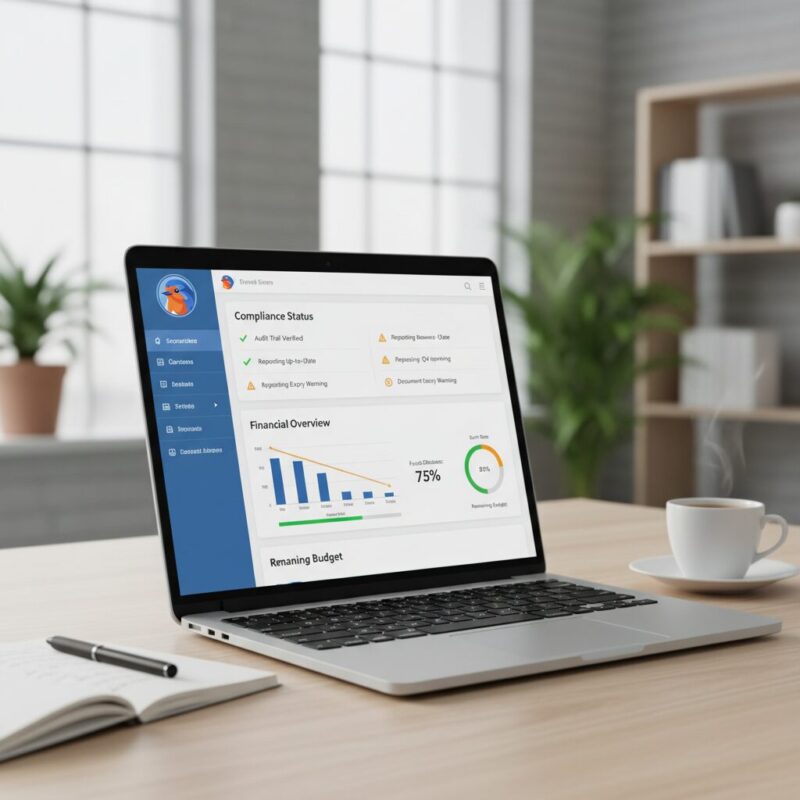
Step 16: Centralize data using a smart system. Our Dashboard allows teams to monitor application status, reporting deadlines, and document versions in one secure location.
Step 17: Set up automated alerts. Visual green, amber, and red indicators warn your team weeks before a critical milestone report is due.
Step 18: Use real-time financial forecasting. Track your burn rate securely so you never accidentally overspend or underspend your grant allocation.
The Post-Award Phase: Audit Trails and Closeout Procedures
Wrapping up a grant safely builds long-term funder relationships. The post-award phase determines whether an institutional donor will invite you to apply again next year or cut ties entirely.
Finalizing the 27-Step Checklist for Single Audit Readiness (Steps 19-21)
Step 19: Conduct an internal mock audit. Have a team member who did not manage the grant review the file for missing receipts, timesheets, or outcome reports.
Step 20: Reconcile the final budget. Compare the actual, finalized spend against the original approved grant proposal.
Step 21: Submit reports concurrently. Provide your final programmatic narrative and financial report together. As outlined by UKRI’s award management guidelines, precise and timely final expenditure reporting is mandatory for successful grant closure.
Standardizing Your Document Retention Schedule (Steps 22-24)
Step 22: Establish a 3-to-7 year retention policy. Different funders require different timelines; always default to the strictest requirement to ensure safety.
Step 23: Digitize physical records. Move all paper receipts, contracts, and approvals into secure, encrypted cloud storage.
Step 24: Ensure data privacy compliance. Redact sensitive beneficiary data to maintain GDPR compliance during long-term storage periods.
Evaluating Software vs. Manual Spreadsheets (Steps 25-27)
Step 25: Assess the hidden costs of spreadsheets. Manual data entry inevitably leads to broken formulas, version control issues, and lost files during staff turnover.
Step 26: Evaluate accounting systems. Dedicated fund tracking tools, like those detailed in Accounting Seed’s nonprofit software breakdown, help manage complex general ledgers efficiently.
Step 27: Select holistic tools. According to Instrumentl’s analysis of management solutions, integrating matching, proposal generation, and compliance creates the most efficient workflow. A unified Grant Management Software platform bridges the gap between finance and development teams seamlessly.
The Compliance-to-Capital Pipeline: Marketing Audit Success
You can transform meticulous audit readiness into a powerful marketing tool. Risk-averse funders prioritize organizations with proven operational maturity. Your clean audit history is a massive competitive advantage when seeking new capital.
Transitioning to the Maturity Framework
Organizations move through three distinct stages of compliance maturity. Stage 1 is reactive and risk-prone, relying on manual spreadsheets and panic. Stage 2 introduces basic standardized workflows. Stage 3 is proactive and asset-focused, where your organization actively uses its clean compliance record to drive new funding conversations.
Articulating Audit Reliability in Future Proposals
Highlight your clean audits directly in the “Organizational Capacity” section of your grant proposals. AI proposal generators can automatically inject standardized compliance language into your drafts without hallucinating claims. Mentioning your robust internal controls and documented retention schedules shows funders their money is safe in your hands.

Action Plan: Downloading Your Governance Pack
Take control of your compliance strategy today. A systematic approach saves hundreds of administrative hours and protects your organization from devastating clawbacks.
FundRobin offers Growth at £49/month or £470.40/year and Impact at £199/month or £1,910.40/year. Compare current plans. Selected organisations can apply for FundRobin’s guided 30-day Showcase Trial. The period starts only after approval and activation; approved Showcase organisations do not need a card to begin. Apply for the Showcase Trial.
Frequently Asked Questions
How does grant compliance automation help nonprofits prepare for audits?
Yes, automation directly streamlines audit preparation by centralizing all financial and programmatic data. Automated dashboards track active pipelines, maintain strict version control on documents, and flag upcoming deadlines to ensure consistent, highly visible audit trails that reviewers require.
What is the financial threshold for a Single Audit?
In the United States, organizations expending $750,000 or more in federal funds must undergo a Single Audit. Standardizing your financial records and internal controls early prevents panic when your organization eventually crosses this significant regulatory threshold.
How can nonprofits use their audit readiness to win future funding?
Organizations win trust by explicitly highlighting clean past audits in the organizational capacity section of their proposals. Mentioning rigorous internal controls and demonstrating the use of robust management software proves to funders that you have the infrastructure to handle large awards responsibly.
How long should a nonprofit retain post-award grant documents?
Retain all post-award grant documentation for 3 to 7 years, depending on the specific funder’s requirements and your country’s regulations. Secure, cloud-based data storage is essential for maintaining this historical compliance while adhering to strict privacy laws like GDPR.
Can AI guarantee grant compliance for my nonprofit?
While AI cannot act as a legally binding auditor, grounded AI models drastically reduce compliance workload. These tools cross-check your proposal constraints against funder guidelines automatically, saving teams hundreds of hours on manual verification without replacing final human oversight.
Key Takeaways:
- Transform compliance from a high-stakes burden to a strategic asset by implementing a 27-step operational blueprint spanning pre-award, active, and post-award phases.
- Adopt the Compliance Maturity Framework to shift organizational culture from reactive, fire-drill reporting to proactive, audit-proof workflows.
- Leverage centralized dashboards to automate reporting, reduce staff burnout, and save up to 200 hours monthly on grant management.
- Market your clean audit history and rigorous internal controls as a core strength in future proposals to stand out to risk-averse funders.
This strategic playbook shifts your organization from defense to offense. By implementing these 27 steps, you protect your current funding while building the exact infrastructure needed to scale your impact globally.
