

As of May 2026, the charity sector faces an imminent, hard deadline. The transition window for the new UK Charity Statement of Recommended Practice (SORP) updates is closing rapidly. In FundRobin’s survey of 39 UK charities, 54% had never formally documented their reserves policy — leaving them unable to demonstrate financial resilience to major funders. After delivering over £200M in transformation value for FTSE 100 clients, I’ve learned that regulatory shifts are rarely just about accounting. They are strategic opportunities to outmaneuver slower peers.
TL;DR: The SORP 2026 changes introduce a tiered reporting framework and strict IFRS 16 lease rules for UK charities starting January 2026. Savvy charities use these updates as a strategic opportunity to streamline operations, transition from boilerplate text to impact storytelling, and increase grant funding ROI.
Table of Contents
- What Are the Core SORP 2026 Changes for UK Charities?
- Navigating the Technical Shift: FRS 102, IFRS 16, and Beyond
- The Tiered Framework: Readiness Checklist for Tier 2 and Tier 3 Charities
- Transforming Mandatory Narrative Reporting into Impact Storytelling
- Strategic Stewardship: Integrating CRM and Financial Data for 2026
- Turning Compliance into Increased Funding and Donor Trust
- Frequently Asked Questions About Charity Accounting SORP
Mastering Charity SORP 2026: Technical Compliance Guide
What Are the Core SORP 2026 Changes for UK Charities?
The implementation of the new charity accounting rules marks a definitive end to the era of bare-minimum, box-ticking compliance. According to official GOV.UK guidance, the finalized reporting structures take full effect for reporting periods starting on or after January 1, 2026. This framework forces organizations to rethink how they present financial data to the public, auditors, and institutional grantmakers.
The Shift from Boilerplate to Impact-Driven Narrative
Regulators now demand the “why” behind the numbers. Boilerplate financial text pasted from last year’s annual report will no longer pass audit scrutiny. The Charity Commission expects Trustees to provide contextual, narrative explanations of their financial standing. This mandate aligns perfectly with what sophisticated funders look for during due diligence. When you explain exactly how restricted funds translate into community benefits, you move from basic reporting to active fundraising.
Current vs. New Thresholds: A Comparative Breakdown
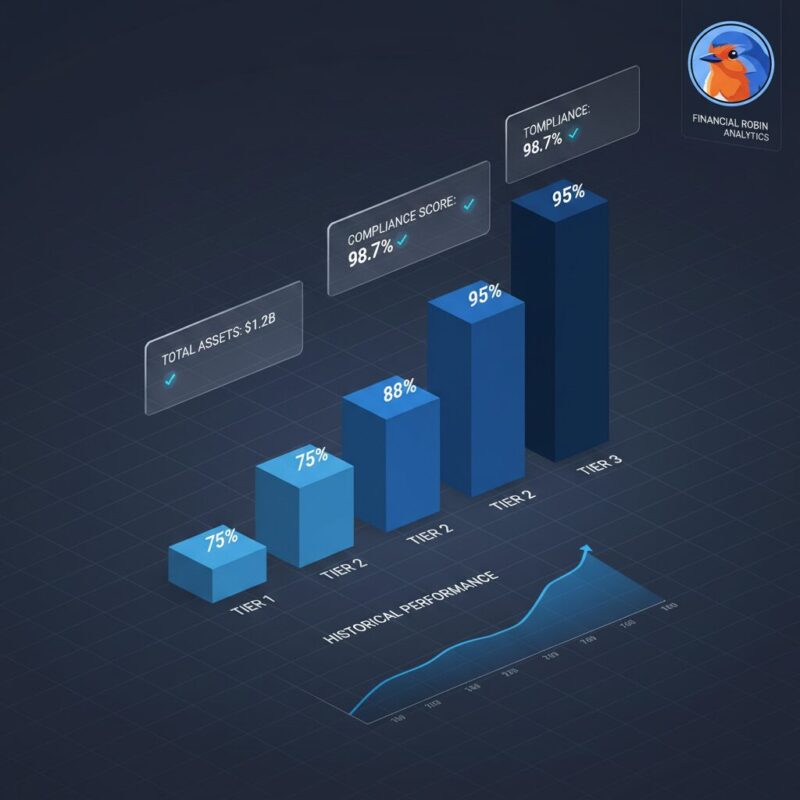
The most structural change is the introduction of a tiered reporting framework based on income and asset limits. Research from BHP details how correctly identifying your tier reduces the operational cost of unnecessary compliance work.
| Reporting Tier | Income Threshold | Asset Threshold | Key Reporting Impact |
|---|---|---|---|
| Current Framework | Under £500k | N/A | Basic receipts & payments allowed |
| Tier 3 (New) | Under £500k | N/A | Simplified disclosures, focus on core narrative |
| Tier 2 (New) | £500k – £5m | Under £3.26m | Proportional accounting, reduced IFRS 16 burden |
| Tier 1 (New) | Over £5m | Over £3.26m | Full FRS 102 compliance, rigorous audit scrutiny |
The June 2026 Deadline: Why Urgency is Your Asset
While the rules apply to financial periods starting January 2026, the real deadline for operational preparation is June 2026. Waiting until mid-2026 to update internal systems will result in severe audit bottlenecks and inflated external consultancy fees. Early compliance signals high institutional competence, allowing you to use your prepared status as a trust metric in current grant applications.
How Tiered Reporting Proportionality Affects Your Charity
Proportionality means scaling your reporting depth to match your organizational size. For Tier 2 and Tier 3 charities, these proportional rules optimize resource allocation. Understanding your specific exemptions prevents finance teams from wasting hundreds of staff hours compiling granular data that the Charity Commission does not actually require for your specific tier.
Navigating the Technical Shift: FRS 102, IFRS 16, and Beyond
The transition requires significant technical recalibration. Finance Directors must bridge the gap between high-level policy summaries and practical accounting application. For an extensive technical breakdown, read our guide on Surviving FRS 102 Charity SORP 2026 Strategy.
Unpacking the New FRS 102 Requirements
The updates to FRS 102 alter revenue recognition and expenditure reporting for the nonprofit sector. A 2025 technical briefing by Armstrong Watson outlines how multi-year grants and restricted funds must be recognized under tighter strictures. Adapting legacy nonprofit accounting software to handle these new logic flows carries a substantial operational cost, requiring finance leaders to budget for software migrations early.
IFRS 16 and Identifying ‘Right-of-Use’ Assets
The most complex hurdle is the implementation of IFRS 16, which moves operating leases onto the balance sheet. Office spaces and specialized equipment are now classified as “right-of-use” assets. This artificially inflates both your asset and liability lines. You must proactively communicate this shift in debt ratios to trustees and stakeholders so the sudden appearance of massive liabilities does not trigger internal panic.
Practical Scenarios for Valuing ‘Social Donation’ Leases
Many charities occupy buildings at peppercorn rents or heavily subsidized rates. Under SORP 2026, you must establish a fair value for these “social donation” leases. If a charity pays £1 annually for a central London community space valued at £50,000 on the open market, capturing this £49,999 difference correctly on the balance sheet demonstrates strong community backing and significant in-kind support to potential grant funders.
Translating Technical Accounting into Donor-Friendly Data
There is a massive disconnect between statutory accounts and the stories donors want to read. The Charity Commission advises trustees to maintain clear communication. By creating a “Financial Summary for Laypeople” within your annual report, you strip away the dense IFRS 16 jargon. Transparent, easy-to-understand financial dashboards directly increase major donor confidence and application success rates.
The Tiered Framework: Readiness Checklist for Tier 2 and Tier 3 Charities
Transitioning systems without disrupting daily operations requires a structured approach. Use our Charity Checker to audit your current systems.
Assessing Your Current Financial Governance Systems
Begin by auditing your current accounting and CRM software for compliance readiness. Identify gaps in data capture, particularly regarding non-financial outcome metrics. A 2025 analysis by McKinsey indicates that upgrading fragmented systems prior to regulatory deadlines yields a 30% reduction in compliance-related labor costs.
Preparing for Tier 2 Reporting Mandates
Tier 2 charities face intermediate narrative expectations. You must identify specific disclosures that were previously optional but are now mandatory. Set up internal milestones for data collection and schedule staff training immediately. The highest ROI comes from aligning these Tier 2 requirements with standard grant reporting metrics, allowing your team to complete two tasks with a single data set.
Preparing for Tier 3 Reporting Nuances
Tier 3 charities benefit from simplified reporting options designed to save administrative time. Claim these exemptions properly during your audit. However, ensure that “simplified” does not translate to “low quality.” Your narrative must remain robust enough to convince funders of your operational integrity.
Using FundRobin’s Reserves Policy Tool for Financial Governance
A compliant, clearly documented reserves policy is a critical component of the new SORP narrative. FundRobin’s Reserves Policy tool provides an automated, standard-aligned solution that saves charities hours of policy drafting. Generating this documentation instantly signals robust financial governance to the Charity Commission and grantmakers.
Transforming Mandatory Narrative Reporting into Impact Storytelling
The most successful charities will use the required narrative sections of the Trustees’ Annual Report to write compelling stories that attract major donors. For insights into building these models, see our analysis on Regulated Impact Economy Charities 2026.
Why the Trustees’ Annual Report Needs a Strategic Overhaul
Traditional boilerplate reports represent missed commercial opportunities. Major funders use the Annual Report as their primary due diligence check. SORP 2026 forces an overhaul by demanding contextual explanations of financial standing. Trustees must take active ownership of this messaging rather than delegating the narrative entirely to external auditors.
Linking Financial Disclosures to Concrete Charity Outcomes
Implement a “Pound-to-Impact” mapping strategy. Use a framework like the Theory of Change to explain how restricted funds translated into specific, measurable community benefits. FundRobin’s Impact Framework tools facilitate this exact mapping process, ensuring every financial line item has a corresponding real-world impact narrative attached to it.
Building Institutional Prestige Through Transparent ESG Reporting
Integrating Environmental, Social, and Governance (ESG) principles into your SORP narrative builds immense brand prestige. Harvard Business Review research shows that top-tier ESG governance attracts unrestricted funding from corporate foundations. The new narrative requirements provide the perfect vehicle to disclose sustainable operations and equitable hiring practices.
Utilizing AI to Streamline Grant Proposal and Impact Narratives
Extracting data from the Annual Report to write bespoke grant proposals requires hundreds of manual hours. FundRobin’s Smart Proposal Generation solves this bottleneck. Using language models trained exclusively on successful applications, it reduces writing time by 80%. Crucially, user data is never used for training models, guaranteeing total data security and privacy compliance.
Strategic Stewardship: Integrating CRM and Financial Data for 2026
Breaking down the silos between fundraising CRMs and accounting software is necessary to meet SORP 2026’s granular demands efficiently. This integration is a matter of strategic stewardship, akin to maintaining a rigorous UK Volunteer Agreement.
The Hidden Costs of Disparate Data Systems in Charity Accounting
Siloed data drains financial and operational resources. Teams waste countless hours manually reconciling donor databases against accounting ledgers. Gartner data highlights that fragmented financial data leads directly to compliance risks and elevated auditor penalties. Treating system upgrades as a critical cost-saving measure is essential for organizational survival.
Creating an Audit-Ready Financial Health Dashboard

The era of once-a-year reporting panic is over, replaced by continuous financial monitoring. FundRobin’s Smart Dashboard provides real-time pipeline tracking and financial forecasting. Its role-based views empower both Executives and Grants Managers to make data-driven decisions instantly, maintaining audit-readiness year-round.
Leveraging Technology to Bridge Finance and Fundraising Teams
Integrated systems improve internal culture by removing friction between cautious finance directors and ambitious fundraisers. Shared, automated dashboards create a single source of truth. FundRobin’s multi-PI and team collaboration tools—available on our Impact and Custom tiers—facilitate this cross-departmental synergy effortlessly.
ROI and Cost Savings from Modernized Financial Operations

The business case for technology upgrades ahead of SORP 2026 is undeniable. According to Forrester, modernizing financial operations reduces audit prep time by up to 40% and lowers external consultancy fees. FundRobin saves organizations over 200 hours monthly, freeing up core capital to be redirected immediately into frontline charitable impact.
Key Takeaways: ROI and Implementation Strategy
- Categorize your charity’s threshold tier early to prevent over-reporting and save thousands in unnecessary audit fees.
- Value ‘right-of-use’ assets and ‘social donation’ leases immediately, turning hidden liabilities into transparent financial health indicators.
- Modernize CRM and financial data integration to reduce operational overhead by up to 30%, highlighting robust ROI to prospective major funders.
- Turn mandatory narrative reporting into compelling impact storytelling to secure a competitive edge in competitive grant applications.
- Leverage AI-driven tools like FundRobin’s Smart Dashboard to save 200+ hours annually and protect your pipeline of non-dilutive funding.
Turning Compliance into Increased Funding and Donor Trust
Mastering the SORP 2026 changes correlates directly with winning more grants and securing non-dilutive funding. Transparency is the most valuable currency in the nonprofit sector. Access our Grant Database and Sector Grants to see how strict compliance opens new funding channels.
Shifting the Mindset from Regulatory Burden to Competitive Edge
Leadership must stop viewing Charity Commission updates as an administrative chore. While competitors struggle with bare-minimum compliance, proactive charities use polished, SORP-aligned reports to stand out. This mindset shift must start at the Trustee level, viewing excellent reporting as a core marketing asset.
How SORP 2026 Excellence Attracts Major Grant Funders
Rigorous financial reporting makes a charity highly attractive to institutional funders. According to the Charities Aid Foundation, major grantmakers increasingly mandate stringent financial due diligence. A robust SORP 2026 narrative pre-answers questions about sustainability and risk management. Charities using FundRobin’s Smart Grant Matching engine to maintain compliance achieve over a 70% match score, translating to an 85% success rate.
Demonstrating Financial Resilience During Economic Shifts
Transparent accounting allows charities to communicate strategic planning effectively during economic hardship. The NCVO stresses the importance of contextualizing deficits or strategic reserve spending. Proving institutional resilience is the primary method for securing unrestricted funding to extend operational runways.
Next Steps: Future-Proofing Your Charity Operations by 2026
Selected organisations can apply for FundRobin’s guided 30-day Showcase Trial. The period starts only after approval and activation; approved Showcase organisations do not need a card to begin. Apply for the Showcase Trial or compare Growth and Impact plans.
Frequently Asked Questions About Charity Accounting SORP
When do the new charity SORP 2026 changes come into effect?
The new SORP changes apply to reporting periods commencing on or after 1 January 2026. Charities must begin transitioning systems and auditing leases by mid-2025 to avoid severe audit bottlenecks and consulting delays leading up to the mandatory compliance date.
What is the biggest impact of IFRS 16 on charity financial statements?
IFRS 16 moves almost all operating leases onto the balance sheet as “right-of-use” assets and corresponding liabilities. This artificially inflates perceived debt levels, requiring charities to proactively explain these new ratios to trustees and grant funders to maintain confidence in the organization’s financial health.
How does the new tiered framework affect small versus medium charities?
The framework introduces proportional reporting, granting Tier 3 (smaller) charities simplified narrative and disclosure requirements, while subjecting Tier 1 and Tier 2 charities to stricter, granular mandates. Correctly identifying your tier immediately prevents costly over-reporting and reduces unnecessary administrative burdens.
Are there new narrative reporting requirements for the Trustees’ Annual Report?
Yes, charities must abandon boilerplate text and explicitly link their financial allocations and reserves directly to organizational outcomes. The Charity Commission now requires contextual storytelling that demonstrates exactly how resources are deployed to achieve specific community impacts and ESG benchmarks.
How can charities prepare for the social donation lease valuation?
Charities should immediately audit all current property agreements provided at peppercorn or below-market rates and consult their auditors to establish a fair-value baseline before 2026. Capturing this data accurately is essential, as it highlights significant in-kind community support to prospective funders.
Does FundRobin help with charity compliance and financial governance?
Yes, FundRobin features built-in compliance checks, a Reserves Policy tool, and an AI Smart Dashboard that ensures grant applications and financial tracking align seamlessly with UK regulatory standards. These integrated tools save organizations over 200 hours annually while streamlining the path to securing major grant funding.
