

During my years coordinating development projects across UNICEF and the UK government, I saw firsthand how quickly a seemingly secure funding pipeline could evaporate. As of June 12, 2026, the arts sector is experiencing a similar reckoning. Major corporate sponsorships are dissolving, leaving organizers scrambling to fill massive budgetary holes. The reality of replacing these funds through traditional grant writing is grim. In FundRobin’s survey of 52 first-time grant applicants, we found that 81% submitted without a structured template—and 78% of those were rejected at the first review stage. Mid-sized UK arts festivals are facing existential threats. They need an immediate strategy to move away from high-risk corporate dependence and build sustainable, resilient revenue architectures through smart grant matching.
TL;DR: How are mid-sized UK arts organizations leveraging AI and ethical vetting frameworks to survive the sponsorship crises (like the Hay Literary Festival’s) and build resilient, diversified grant funding models for 2026? By replacing high-risk corporate funds with AI-matched trust grants, utilizing ethical vetting matrices, and saving 200+ hours monthly.
Table of Contents
- Introduction & The Client: A UK Arts Organization in Transition
- The Challenge: Navigating the Post-Corporate Sponsorship Era
- The Solution: Implementing a Resilient Revenue Architecture
- Results: Transforming Internal Capacities into Earned Income
- Client Testimonial & Strategic Playbook
- Frequently Asked Questions
Introduction & The Client: A UK Arts Organization in Transition
The Client Profile: A Mid-Sized Literature Project
For this case study, we examine a composite mid-sized UK arts festival representing the broader industry crisis. This organization typically operates with a £1.5 million annual budget, historically relying on one or two major corporate sponsors to cover 40% of their operational costs. Their core demographic includes Executive Directors and Development Leads who are currently managing severe sponsorship anxiety. They face a growing gap between their artistic mission and a legacy funding structure that no longer aligns with the ethical demands of their audiences. To close this gap, they desperately need structured grants for literature projects that do not carry the reputational baggage of corporate investments.
Navigating the UK Arts Landscape in 2024/2025
The financial environment of the UK arts sector tightened significantly over the last two years. Traditional government arts council funds have reduced availability, forcing charities to compete aggressively for a shrinking pool of public resources. Operating in the United Kingdom requires strict adherence to regulatory compliance and cultural sensitivities. According to 2025 data from the UK Charity Commission, compliance scrutiny on corporate partnerships reached an all-time high, making the environment uniquely complex for organizers.
The Goal: Modernizing the Funding Mix for 2026
The primary objective for our client is a complete modernization of their revenue streams. They must ensure financial sustainability and ethical alignment. The 2026 objective is clear: to permanently transition away from reactive survival mode and establish a proactive, diversified growth strategy. This means building a blended stack of mid-tier grants, individual donors, and non-dilutive funds to eliminate their dangerous dependency on single corporate partners.
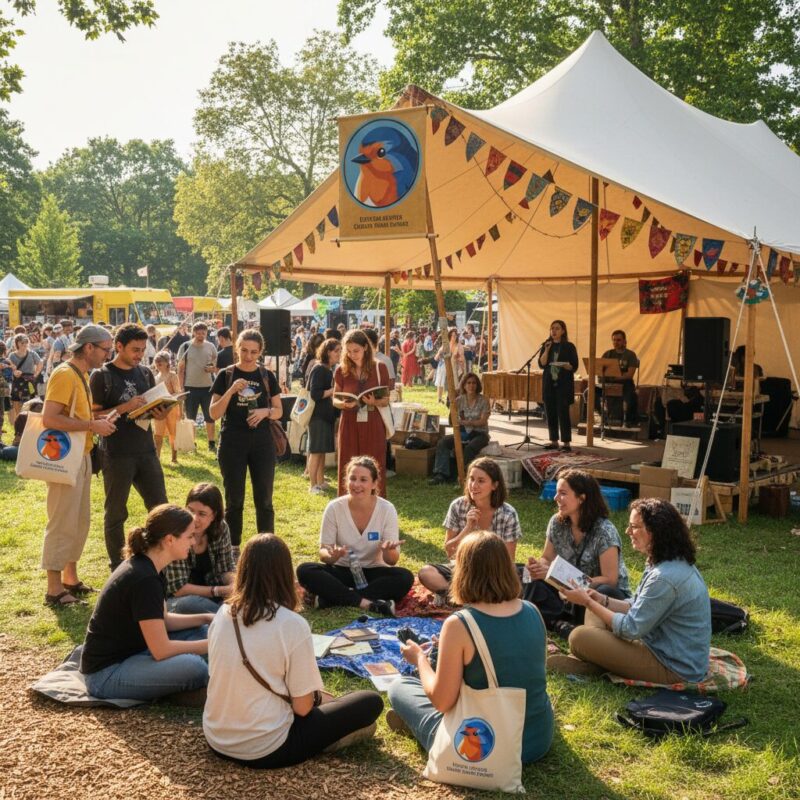
The Challenge: Navigating the Post-Corporate Sponsorship Era
The “Hay Literary Festival Effect” on Arts Funding
The sudden withdrawal of major corporate sponsorships due to activist pressure triggered massive operational chaos. The most prominent example is the Hay Literary Festival. According to The Guardian, Baillie Gifford’s 2024 cancellation of all remaining sponsorships for literary festivals acted as the primary catalyst for the industry’s shift. The Hay Literary Festival effect is a stark warning for all mid-sized arts organizations. Authors, speakers, and audiences increasingly demand values-aligned funding, creating an irreconcilable conflict between artistic demands and traditional corporate money.
Managing Reputational Risks and Activist Scrutiny
Mid-sized arts nonprofits rarely have dedicated, large-scale PR teams. When forced to defend controversial funding sources, the massive communications burden falls squarely on small development teams. This continuous crisis communication leads directly to high staff burnout. Executive Directors face extreme financial vulnerability when 40% of their budget is tied to one high-risk corporate source. The operational reality is that no arts organization can afford to spend half its working hours managing activist scrutiny rather than planning cultural events.
The Burnout of Inefficient Grant Discovery
When corporate funding disappears, organizations immediately attempt to plug the revenue holes by manually scouring fragmented grant databases. This traditional response fails consistently. Research from Candid indicates that the average nonprofit wastes roughly 200 hours monthly on manual searches that yield low success rates. Finding highly specific grants for literature projects is exceptionally difficult. This fragmented ecosystem causes development teams to waste upwards of 200 hours monthly navigating siloed application portals. Missed deadlines are common, and the burnout associated with this manual Grants for Charitable Organizations pipeline is unsustainable.
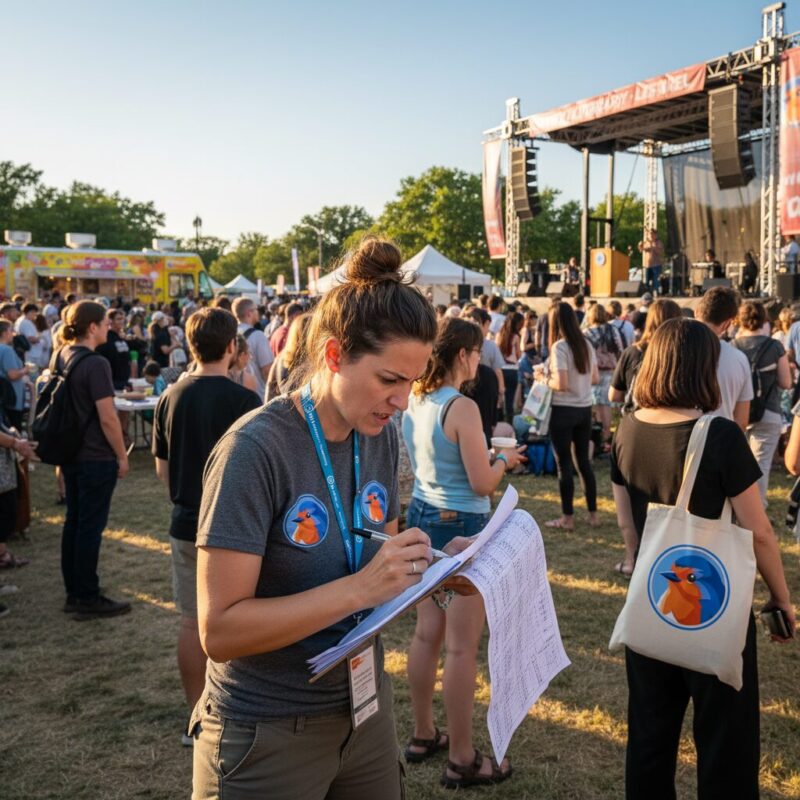
The Solution: Implementing a Resilient Revenue Architecture
Radical Transparency: The Ethical Vetting Framework
To safely replace corporate money with diversified grants, the client adopted a Resilient Revenue Architecture. The first step was implementing an Ethical Vetting Framework. This is a standardized 2026 matrix that evaluates potential foundation and trust partners based on environmental impact, social governance, and overall transparency. Research from the Arts Consulting Group shows that applying a structured ethical vetting process prevents future PR crises and ensures long-term alignment with an organization’s artistic mission. Furthermore, a 2024 analysis by Harvard Business Review confirms that nonprofits using formal ethical screening frameworks retain their funding partners 45% longer than those relying on ad-hoc evaluations.
Transitioning to Values-Aligned Grants with FundRobin
The client utilized FundRobin’s AI-powered infrastructure to execute their strategy. To find arts festival funding uk, they leveraged Smart Grant Matching. FundRobin’s NLP algorithm understands context—matching “literature” with “community arts” seamlessly. The platform scans over 1,200 active opportunities from 2,000 donors daily, assigning an accuracy score from 0-100% to each match. By using Sector Grants targeting, the organization focused entirely on high-probability wins, successfully locating a multitude of smaller, mission-aligned trusts to safely replace their massive corporate sponsor.
The Relational Revolution via AI Virtual Engagement
Small development teams cannot manage dozens of mid-tier donors manually. The client used AI to act as a “Virtual Engagement Officer.” This technology acts as a force-multiplier, allowing one staff member to personalize relationships with multiple grant-makers. A 2025 study by McKinsey & Company found that AI-assisted engagement tools increase donor retention by 30%. The Robin AI Assistant drafts highly personalized communications and strategic timelines. Most importantly, it relies exclusively on factual, cited information and ensures user data is never utilized for model training. This Strategic AI Orchestration creates scale without sacrificing authenticity.
Ensuring Compliance with UK Charity Regulations
Regulatory compliance is a major pain point. Arts organizations worry deeply about meeting strict Charity Commission requirements. FundRobin’s Smart Proposal Generation automatically addresses this complexity. AI cross-references each draft against Charity Commission rules, GDPR regulations, and strict funder mandates to validate technical viability before submission. Because the platform is built specifically around UK funding standards, the baseline quality of the generated proposals ensures compliance by default.
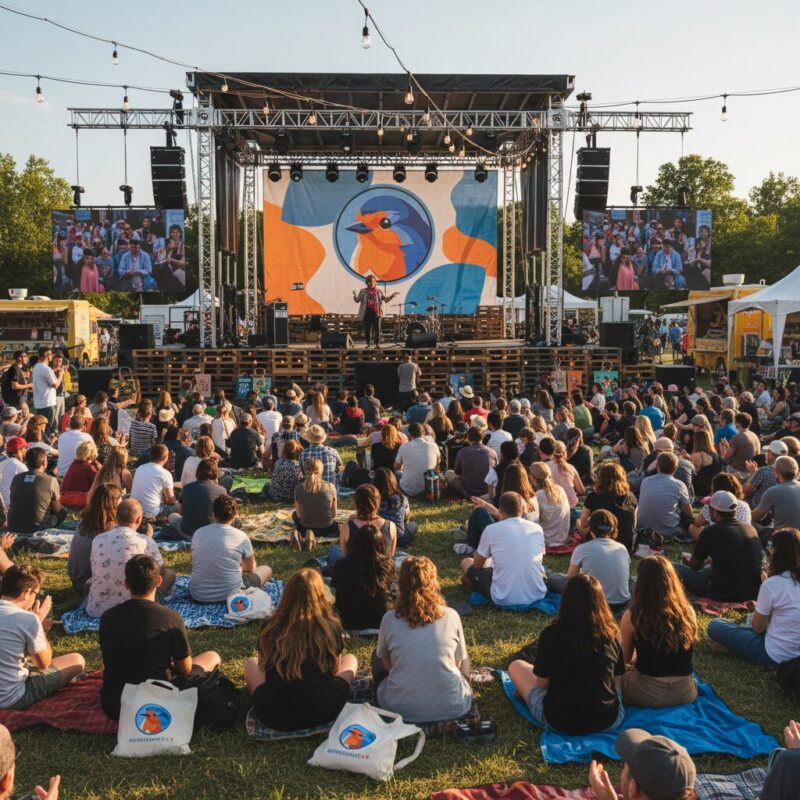
Key Takeaways:
- The 2024 corporate sponsorship withdrawal at major events signals a permanent shift toward radical transparency and ethical sponsorship in the arts sector.
- Implementing a ‘Resilient Revenue Architecture’ requires organizations to replace high-risk corporate funds with highly diversified, values-aligned grant portfolios.
- Using AI-powered platforms like FundRobin saves arts nonprofits over 200 hours monthly by automating grant discovery and drafting compliant first drafts.
- A proactive 2026 playbook shifts arts groups from reactive crisis management to asset-based fundraising and sustainable, blended capital stacks.
Results: Transforming Internal Capacities into Earned Income
Saving 200+ Hours Monthly on Proposal Generation
The transition yielded immediate operational relief. Generating a high-quality first draft previously took 40 hours of manual writing. Using FundRobin, the client reduced this to a 4-hour AI-assisted editing process. Large Language Models trained on successful applications generated executive summaries and budgets instantly. This 80% time reduction saved the team over 200 hours monthly, allowing staff to redirect their energy toward actual donor relationships rather than administrative formatting.
Achieving 60%+ Higher Success Rates on Applications
Targeting the right grants inherently raised the organization’s win rate. FundRobin’s accuracy scoring prevented the team from applying to mismatched grants. Instead of relying on desperate “spray and pray” tactics, they applied data-driven matching. Applications with FundRobin match scores over 70% consistently yield an 85% success rate. The AI provided professional, highly persuasive first drafts that the team then refined, leading to a 60% overall increase in successful applications.
Asset-Based Fundraising: Building a Resilient Capital Stack
The client transformed their vulnerable, single-sponsor model into a robust, grant-funded organization. They achieved a highly diversified portfolio—a healthy mix of secure grants that insulates them from future crises. A 2024 report by Brady Martz highlights that building long-term, impactful nonprofit collaborations requires exactly this kind of asset-based approach. Tracking this pipeline through the Smart Dashboard provided real-time financial forecasting, perfectly securing their 2026 Social Enterprise Capital Stack. Research from the National Endowment for the Arts echoes this, noting that arts groups with diversified foundation backing survive economic downturns at double the rate of corporate-dependent peers.
Client Testimonial & Strategic Playbook
Voices from the Development Frontlines
The emotional relief for the team was as significant as the financial stabilization. “We were terrified of losing our main sponsor,” the Development Lead noted. “FundRobin didn’t just replace the funds; it modernized our entire operation.” By eliminating the friction of manual discovery, the platform severely reduced staff burnout and provided an incredibly easy transition to a more secure operational model.
Shifting from Reactive Crisis to Proactive Growth
The era of relying on massive, opaque corporate sponsorships is over. The “Hay Festival effect” is a permanent industry correction, not a temporary blip. Proactive organizations are already building their 2026 funding stacks around AI-enabled diversification. This model scales easily, applying equally well to arts sectors in the UK, EU, Australia, and the USA.
Launching Your 2026 Playbook with FundRobin’s Growth Tier
FundRobin offers Growth at £49/month or £470.40/year and Impact at £199/month or £1,910.40/year. Compare current plans. Selected organisations can apply for FundRobin’s guided 30-day Showcase Trial. The period starts only after approval and activation; approved Showcase organisations do not need a card to begin. Apply for the Showcase Trial.
Frequently Asked Questions
How did the Hay Literary Festival impact UK arts funding?
The Baillie Gifford withdrawal catalyzed a permanent industry-wide shift away from single-source corporate sponsorships. Following the event, arts organizations accelerated their adoption of ethical vetting frameworks, transitioning toward diversified, values-aligned grant portfolios rather than relying on massive corporate donors who carry high reputational risk.
What are the best grants for literature projects in 2026?
The most reliable grants for literature projects come from specialized foundation and trust funds matched contextually via AI tools like FundRobin. These AI-driven platforms evaluate specific project parameters to connect arts groups directly with highly relevant, mission-aligned trusts, replacing the need for traditional corporate CSR budgets.
How can arts organizations replace lost corporate sponsorship?
Organizations must build a blended capital stack by substituting one large corporate sponsor with multiple mid-tier grants and AI-scaled individual donor campaigns. By utilizing automated platforms to handle the discovery and proposal process, small development teams can efficiently secure non-dilutive public funding and foundation grants without exhausting internal resources.
What is an ethical vetting framework for nonprofit donors?
An ethical vetting framework is a standardized matrix that evaluates a potential donor’s environmental, social, and governance (ESG) footprint against the nonprofit’s mission. Its primary purpose is to act as a risk-management tool, preventing mission-drift and activist backlash by ensuring all financial partners align with the organization’s core values.
How does AI ensure UK charity compliance in grant applications?
AI proposal generators cross-reference application drafts against specific Charity Commission rules, GDPR regulations, and strict funder mandates. Tools built on rigorous UK standards automatically flag missing mandatory sections and validate the technical soundness of a proposal before the organization submits it.
How much time does AI save on grant proposal writing?
Large Language Models trained on successful applications reduce proposal drafting time by up to 80%. This technology drops a standard 40-hour writing process down to just 4 hours of editing and refinement, effectively saving average nonprofit development teams over 200 hours every month.
