
Native nonprofits pursuing infrastructure capital face an increasingly rigorous environment in 2026. A September 2026 update from the Department of Transportation confirms that federal agencies are routing unprecedented capital to tribal nations, focusing heavily on climate resilience and rural connectivity. However, securing this capital requires immense administrative coordination. Organizations that rely on reactive grant-chasing often find themselves disqualified due to strict eligibility nuances or unallowable matching configurations. To capture these historic allocations, Native nonprofits must adopt a strategic playbook: mastering institutional compliance, engineering complex capital stacks, and utilizing AI-driven tools to minimize application overhead.
TL;DR: Federal infrastructure priorities in 2026 heavily favor climate resilience and energy projects for tribal communities, but strict eligibility rules block many applications. Success requires a proactive Capital Stacking framework combining federal, state, and private funds, along with specialized grounded AI tools to streamline complex eligibility requirements and significantly reduce administrative burden.
Table of Contents
- The 2026 Infrastructure Landscape for Tribal Communities
- Building Institutional Maturity: The Tribal Readiness Scorecard
- The Capital Stacking Methodology: Blending Federal, State, and Private Funds
- Overcoming the Administrative Burden with AI Orchestration
- Beyond the Application: Navigating Compliance, Reporting, and Long-Term Sustainability
2026 Guide to Tribal Infrastructure Grants and Capital Stacks
The 2026 Infrastructure Landscape for Tribal Communities

The gap between federal funding availability and actual tribal capital deployment remains stubbornly wide. While historic levels of funding exist for native infrastructure development, the administrative barrier to entry is higher than ever. Reviewers scrutinize applications for operational maturity, strict demographic eligibility, and precise alignment with departmental priorities.
Prioritizing Climate Resilience and Energy Sovereignty
Federal agencies currently favor proposals that integrate green infrastructure, microgrids, and long-term climate adaptation. According to the Rural and Tribal Assistance Pilot Program | Build America, the Department of Transportation prioritizes projects demonstrating sustainable impact and energy sovereignty. Native nonprofits must align their mission narratives with these themes. A road improvement project, for example, is more competitive when framed around reducing environmental runoff or improving emergency access during extreme weather events.
Navigating Federally Recognized vs. State-Recognized Eligibility
One of the most persistent reasons for immediate rejection is applying for the wrong tier of funding. Federal grant reviewers maintain strict distinctions between federally recognized and state-recognized tribes. Federally recognized tribes operate as sovereign nations, granting them access to specific government-to-government funding pools. State-recognized tribes often do not qualify for these exact pools but can access dedicated state-level funds and targeted philanthropic capital.
Applying for a grant with the wrong eligibility profile wastes hundreds of hours of administrative time. Using FundRobin’s organisation-specific grant discovery helps filter funding opportunities, while Smart Matching compares organisation and opportunity context to help prioritise fit, ensuring teams dedicate time to relevant opportunities.
Reframing Capacity Building as Essential Infrastructure Investment
Federal reviewers consistently reject applications that lack administrative capacity. A 2026 report on Understanding Tribal Nations Experiences Accessing Federal Grants | Performance.gov found that the administrative burden of managing complex federal funds is the top barrier preventing tribal communities from applying.
To overcome this, nonprofits must reframe internal capacity building as a mandatory infrastructure investment. Budgeting for software systems, grant managers, and financial audits should be built directly into hard infrastructure proposals. Equipping your organization with technology is infrastructure. For deeper insight into securing capacity funds, explore our guide on AI grant writing nonprofits 2026.
Building Institutional Maturity: The Tribal Readiness Scorecard
Winning federal capital requires moving from reactive grant chasing to proactive preparation. The most common reason tribal infrastructure projects are rejected is not the quality of the concept, but a lack of “unsexy” operational prerequisites. Implementing a Tribal Readiness Scorecard helps organizations systematically address these gaps before a Notice of Funding Opportunity (NOFO) is even released.
The Pre-Application Checklist: Legal Standing & Financial Systems
Before drafting a narrative, native organizations must ensure their legal and financial houses are in perfect order. Mandatory registrations like SAM.gov and an active Unique Entity Identifier (UEI) must be maintained continually. Furthermore, federal agencies require robust financial tracking systems capable of handling federal audits and maintaining strict Generally Accepted Accounting Principles (GAAP) compliance.
Organizations must also formally prove their legal standing and community board governance. An outdated tribal council resolution or a lapsed nonprofit registration will halt an application immediately, regardless of project merit.
Creating “Shovel-Ready” Documentation and Community-Led Evidence
Federal agencies like the DOT and DOE reserve their largest infrastructure grants for “shovel-ready” projects. In a 2026 context, shovel-ready means having completed environmental impact assessments, formalized engineering plans, and comprehensive risk mitigation strategies.
Equally important is Asset-Based Community Development. Federal reviewers expect to see documented proof of community buy-in. Organizations must gather letters of support, tribal council resolutions, and records of community planning meetings long before applying. A project designed in a vacuum rarely secures government funding.
Assessing Your Gap Between Capacity and Federal Expectations
Conduct an internal gap analysis using your Readiness Scorecard. Ask hard questions about current staffing bandwidth and financial tracking software. This honest assessment often reveals that an organization needs a smaller planning grant before pursuing a multi-million dollar construction grant.
Understanding the nuanced compliance expectations of various funders is complex. Review our Nonprofit grant discovery compliance guide 2026 to learn how to identify these expectations early in the process.
The Capital Stacking Methodology: Blending Federal, State, and Private Funds
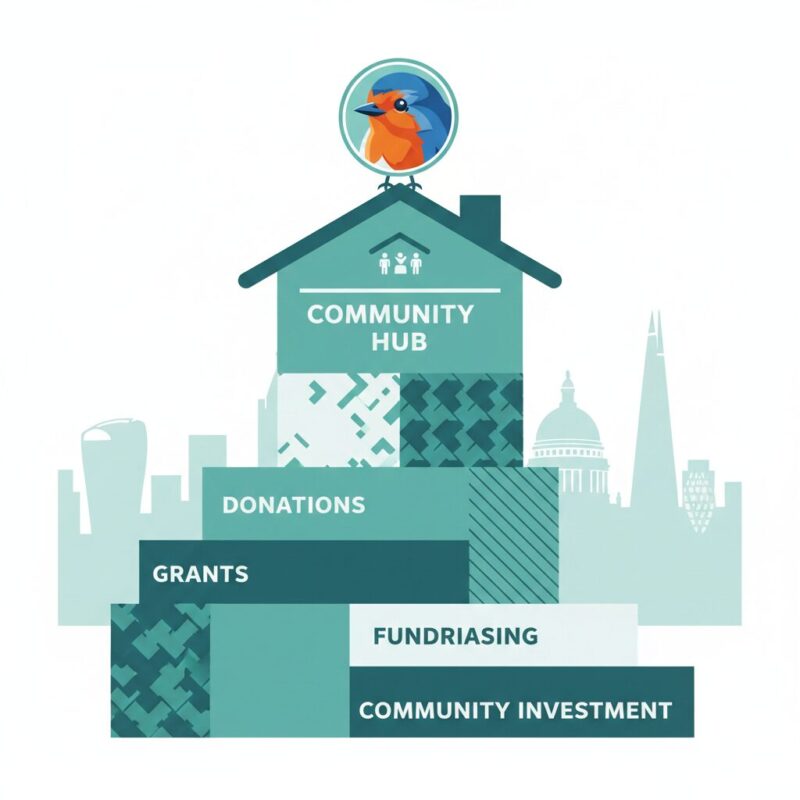
Securing a massive infrastructure grant from a single source is incredibly rare. Instead, successful projects utilize Capital Stacking—the strategy of layering different funding types to meet massive project costs and mandatory federal matching requirements.
According to Best Practices and Lessons for Financing Tribal Projects: Capital Stacking | Urban Institute, tribal nations that successfully execute complex infrastructure builds systematically blend philanthropic seed money with state grants to unlock federal capital. For an expanded look at blending capital, refer to this guide on the 2026 social enterprise capital stack blended finance.
Why Single-Source Funding Leaves Tribal Projects Vulnerable
Relying on a single federal grant for an entire project introduces severe timeline and liquidity risks. Federal approvals move slowly, and reimbursement models require the nonprofit to float massive capital outlays for months. Additionally, single-source funding often fails to cover “unallowable costs”—such as specific land acquisitions or early architectural fees—which the organization still needs to pay. Diversifying the grant portfolio ensures project completion even if one funder alters their guidelines or delays disbursement.
A Step-by-Step Framework to Meet Federal Matching Requirements
Most federal infrastructure grants require the applicant to provide a “match” of 10% to 20% of the total project cost. To fulfill this:
- Identify the specific match percentage required by the target federal agency. Determine if they allow soft matches (in-kind) or only hard cash matches.
- Secure philanthropic or foundation grants designed specifically for capacity building or infrastructure. Ensure the private foundation allows their capital to be leveraged as a federal match.
- Leverage in-kind contributions. Carefully calculate and document the value of donated land, existing community labor, and volunteer planning time as allowable match value.
Leveraging the New Mexico Tribal Infrastructure Act as a Blueprint
State-level funding plays a critical bridging role in a capital stack. According to the Tribal Infrastructure Fund – NM Indian Affairs Department, the New Mexico Tribal Infrastructure Act provides financial assistance for adequate water, wastewater, and solid waste facilities.
Native nonprofits in New Mexico use this state fund as a highly reliable base layer in their capital stack, often using it to satisfy the match requirements of larger federal EPA or DOT grants. Organizations outside of New Mexico should advocate for and identify similar state-level equivalents to bridge the federal gap.
Integrating Community Project Funding (CPF) and Philanthropic Layers
Early-stage strategy must include Community Project Funding (CPF)—formerly known as earmarks. Navigating CPF requires proactive, early Congressional outreach through local representatives.
Furthermore, philanthropic grants are vital for funding pre-development costs, such as environmental impact studies and initial architectural rendering, which federal infrastructure grants rarely cover. Using FundRobin’s organisation-specific grant discovery helps development teams search and filter funding opportunities, enabling them to surface relevant philanthropic sources to build the base layers of their capital stack without manual database exhaustion.
Overcoming the Administrative Burden with AI Orchestration
Manually managing a capital stacking strategy across federal, state, and private applications takes thousands of hours. Compiling distinct narratives, formatting budgets, and repeatedly proving organizational capacity leads to severe burnout. AI orchestration provides the solution to this crisis, scaling the capacity of small development teams.
For an architectural view of this technology, read about Strategic AI orchestration multi PI grants 2026.
The Crisis of Redundant Federal Grant Applications
Native nonprofits currently waste hundreds of hours rewriting identical organizational narratives for different federal and state agencies. The sheer inefficiency of fragmented databases and manual application portals like Grants.gov causes severe administrative bottlenecks. Development managers experience high burnout rates, constantly reacting to deadlines rather than proactively designing community solutions.
Using Grounded AI to Accelerate Proposal Drafting
FundRobin supports first-draft proposal work using current organisation facts and reviewed reusable knowledge. By deploying grounded AI for grant work, organisations can accelerate proposal drafting with organisation and application context. AI-assisted first drafts optimize language for clarity and match the funder’s exact terminology. Crucially, human review remains required; users review AI-proposed changes, edit drafts, and control final submission decisions.
Managing Complex Eligibility Rules Across Federal vs. State Funds
The Robin AI Assistant acts as a contextual grant assistant across workflows. By referencing an organization’s specific legal status and history within the Organisation Brain, Robin works with authorised opportunity and organisation context to assess complex eligibility parameters.
If a user queries Robin about a specific federal broadband grant, the assistant evaluates the funder’s guidelines against the nonprofit’s verified profile. Because Robin relies on current Organisation Brain truth, it grounds its responses in reviewed organisation knowledge and relevant evidence. However, grounded AI is not an accuracy guarantee, and human review remains required to definitively confirm strict federal versus state recognition criteria.
Beyond the Application: Navigating Compliance, Reporting, and Long-Term Sustainability
Winning federal infrastructure funds is only the first step. The reality of post-award federal scrutiny means organizations must maintain strict compliance and precise reporting to keep the capital they fought to secure.
To ensure executive readiness for these operational shifts, read Strategic AI implementation governance nonprofit leaders.
Setting Up Robust Financial Tracking and Reporting Cadences
Federal infrastructure grants require quarterly Federal Financial Reports (FFRs) and meticulous proof of expenditure. Organizations must establish dedicated accounting codes for every specific grant layer within their capital stack. Commingling funds between federal and private layers is a fast track to audit failure and potential clawbacks of awarded capital.
Maintaining Compliance with Strict Tribal and Federal Mandates
Federal infrastructure money usually arrives attached to strict environmental and historical preservation requirements. Nonprofits must navigate a dual compliance framework: adhering to the rigid mandates of the federal funding agency while respecting and aligning with internal tribal council governance and approval processes.
Learn more about maintaining compliance within modern regulatory frameworks in our guide to Regulated impact economy charities 2026.
Using Tech to Track Application Progress and Maintain Mission Focus
FundRobin’s pipeline and application workflows provide workflow views for tracking grant opportunities and application progress. Rather than losing critical data in disconnected spreadsheets, teams keep opportunity and application work in one workspace. This efficiency returns the focus to where it belongs: community impact. Nonprofits ready to transition from reactive chasing to strategic scaling can begin a guided Showcase application.
Frequently Asked Questions
What is capital stacking for tribal infrastructure projects?
Capital stacking is a strategic financial framework that blends federal, state, and private philanthropic funds to meet massive matching requirements and reduce single-source dependency risk. According to the Urban Institute, layering these distinct funding types allows tribal nonprofits to cover both unallowable pre-development costs and hard construction expenses.
Can state-recognized tribes access federal infrastructure grants?
Eligibility varies strictly by grant; while many major federal infrastructure grants are restricted exclusively to federally recognized tribes, state-recognized tribes can access specific state-level funds and targeted philanthropic capital. Attempting to apply for federally-exclusive pools without correct recognition status results in immediate administrative disqualification.
How does the New Mexico Tribal Infrastructure Act work?
The New Mexico Tribal Infrastructure Act is a dedicated state-level funding mechanism providing vital support for basic infrastructure needs in New Mexico tribal communities. It serves as a highly effective blueprint for leveraging state dollars, as nonprofits frequently use these funds as the required matching capital to unlock massive federal grants.
Why do tribal infrastructure grant applications often get rejected?
Federal reviewers consistently cite a lack of institutional readiness—such as inadequate financial management systems, missing shovel-ready evidence, or unverified legal standing—as the primary cause of rejection, rather than the quality of the project idea itself. A report by Performance.gov highlights the immense administrative burden as a major barrier to application success.
How can AI help Native nonprofits secure federal grant funding?
Contextual AI assistants like Robin help Native nonprofits navigate complex eligibility criteria and discover relevant funds through organisation-specific grant discovery. By grounding first drafts in reviewed organisation knowledge and source provenance, these tools support consistent narratives across complex capital stacking efforts, while users retain human review and control over final submissions.
Key Takeaways:
- Adopt a “Capital Stacking” approach—blending federal, state (like the NM Tribal Infrastructure Fund), and private dollars to safely meet high federal match requirements.
- Verify your exact eligibility parameters regarding federally recognized versus state-recognized status before applying to prevent hundreds of wasted administrative hours.
- Treat organizational capacity building as a critical infrastructure investment to bridge the gap between your current maturity and stringent federal reporting expectations.
- Deploy grounded AI-powered grant tools like FundRobin to reduce the administrative burden of complex federal applications, saving time and returning focus to community impact.
