
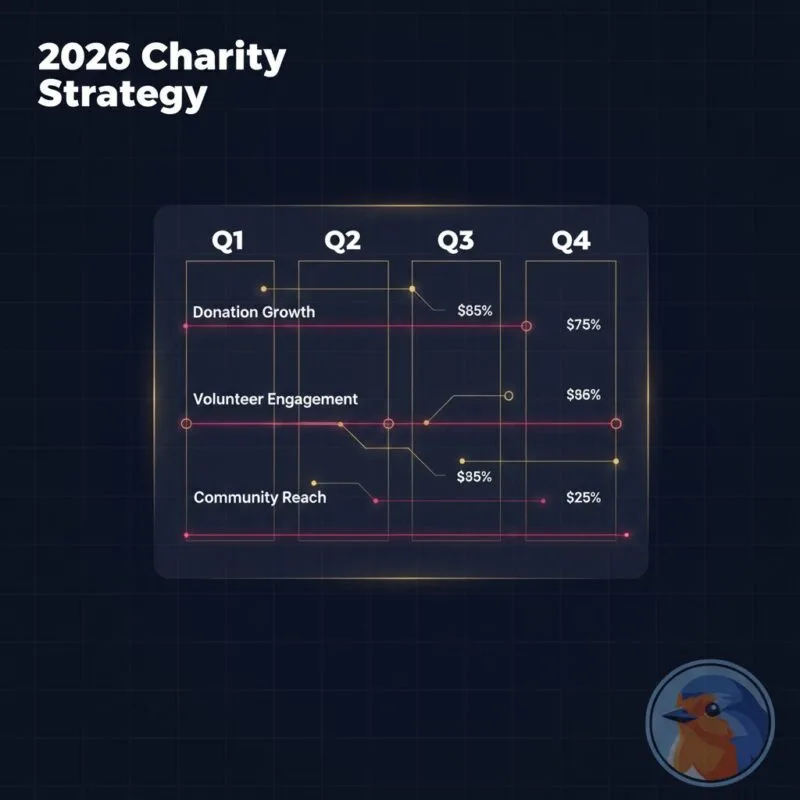
During my eight years coordinating emergency responses and managing programs across UNICEF, WFP, and the UK government, I saw first-hand why traditional funding models break down under pressure. Charities often treat fundraising as an administrative afterthought rather than a dynamic engine. As of May 2026, finding sustainable revenue is harder than ever. In FundRobin’s survey of 58 UK nonprofits, 74% cited finding the right grant as their biggest operational challenge—yet only 12% used AI-powered matching tools to solve it.
Today’s UK charity sector demands a completely new operational framework. Moving forward requires charities to align rigorous backend data compliance with deeply empathetic, human-led donor relations.
TL;DR: UK charities must adopt the 2026 Resilience & Relevance Framework to navigate new SORP reporting tiers. Moving past transactional appeals to value-exchange models combats donor fatigue, while private AI platforms like FundRobin automate grant discovery to reclaim hundreds of administrative hours safely.
Table of Contents
- The 2026 Landscape: Why UK Charities Need a New Framework
- Essential Tools & Data: Preparing Your Backend Engine Room
- Step-by-Step: Building Your 2026 Resilience Strategy
- Step-by-Step: Supercharging Grant Discovery and Proposals
- Common Pitfalls to Avoid in 2026 Fundraising
- Frequently Asked Questions
How to Build a UK Charity Fundraising Strategy for 2026
The 2026 Landscape: Why UK Charities Need a New Framework
The fundamental rules of revenue generation have shifted. The Resilience & Relevance framework is the blueprint for 2026. This framework dictates that organizations must transition completely away from high-volume, low-yield transactional fundraising toward relationship-focused, highly targeted strategies. For an in-depth look at sector-wide shifts, consult our UK Charity Grant Funding Guide 2026.
According to THINK‘s sector forecasting, organizations that fail to modernize their approach will face severe revenue shortfalls by the end of the year.
Regulatory Readiness: Navigating SORP 2026
The upcoming Charities Statement of Recommended Practice (SORP) updates mandate modern reporting and digital maturity. According to GOV.UK, these compliance adjustments place direct operational strain on mid-to-large nonprofits.
SORP 2026 introduces tiered reporting thresholds based on income size, demanding far more granular transparency regarding where funds originate and how they are spent. You can no longer rely on fragmented spreadsheets. A unified backend is now a legal requirement to satisfy the Charity Commission’s demands for operational transparency.
Addressing Donor Fatigue and The Cost-of-Living Crisis
The UK cost-of-living crisis continues to suppress individual giving. Research from Charity Digital confirms that generic, unsegmented communication leads directly to donor fatigue and high churn rates.
To counter this, charities must establish a “donor compact”—an unwritten agreement of trust and mutual respect. This means moving away from vanity personalization (like simply inserting a first name into an email) and instead delivering authentic value. Donors want to understand their specific impact, not just receive another direct mail invoice.
The AI Paradox: Efficiency Meets Authentic Stewardship
Many Fundraising Managers face the “AI Paradox.” Charities desperately want automation to handle heavy workloads, but they fear losing the human touch in donor relationships.
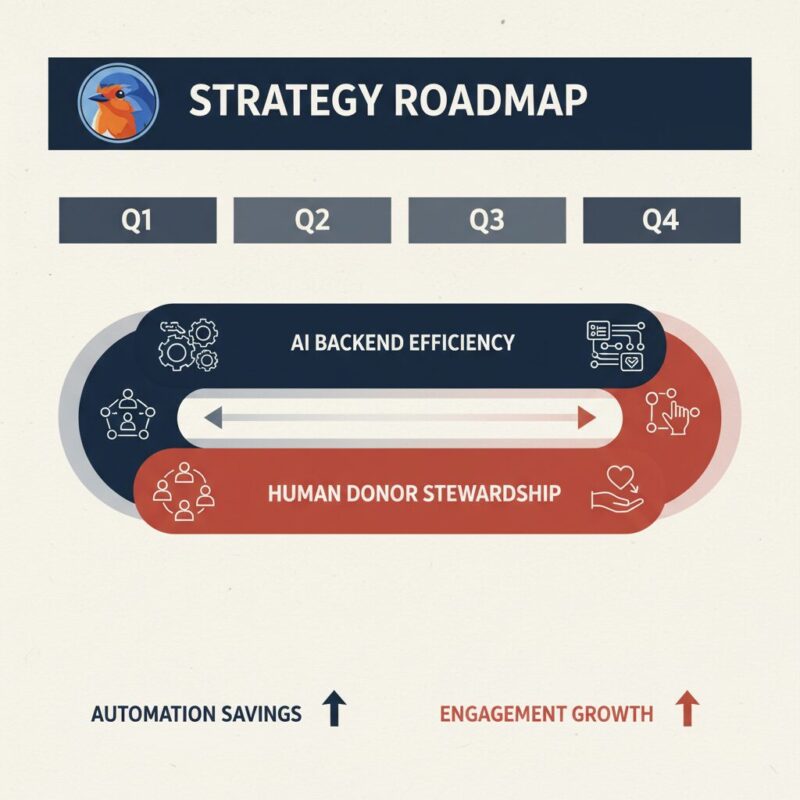
Resolve this by keeping artificial intelligence strictly in the “engine room.” Use AI for grant discovery, data sorting, and initial proposal drafting. Keep human fundraisers at the forefront for relationship building, stewardship, and major donor calls. FundRobin solves this exact problem by automating the grueling 200+ hours of grant writing, allowing fundraisers to reclaim their schedules for face-to-face donor engagement.
Essential Tools & Data: Preparing Your Backend Engine Room
Your strategy is only as strong as the tools and data supporting it. An integrated tech stack is an absolute requirement for managing multi-channel fundraising across trusts, corporate partners, individual giving, and events.
Digital Maturity Self-Assessment for UK Charities
Before implementing new systems, determine your baseline. Digital maturity dictates your ability to diversify revenue streams.
Assess your organization across these levels:
- Basic: Manual data entry, fragmented spreadsheets, manual grant searching (wasting hundreds of hours).
- Intermediate: Cloud-based CRM in place, basic email segmentation, some automated workflows.
- Advanced: Unified data architecture, predictive analytics, AI-powered matching via a Grant Finder, and robust regulatory compliance protocols.
If your team manually searches Google or static databases for grants, your organization operates at a basic maturity level and risks high staff burnout.
Data Hygiene: The Prerequisite for AI Success
Clean data is the foundation of any successful AI implementation. Messy CRM data leads to inaccurate forecasting, missed opportunities, and severe compliance risks.
The ICO maintains strict guidelines regarding donor data processing. Before feeding internal records into any advanced tool, audit your database. Remove duplicates, standardize entry formats, and verify consent logs. Clean data ensures your AI applications generate accurate proposals and your SORP 2026 reporting remains pristine.
Leveraging FundRobin for Safe, GDPR-Compliant AI
Data privacy is the sector’s primary concern regarding artificial intelligence. Consumer-grade, public AI tools often train their models on the data users input. Feeding sensitive charity or beneficiary details into these platforms is a severe security risk.
FundRobin provides a secure architecture designed specifically for nonprofits. The platform operates on a UK-based cloud with AES-256 encryption and full GDPR compliance. Most importantly, FundRobin guarantees that user data is NEVER used to train AI models. This private environment allows charities to safely input sensitive project details into the Robin AI Assistant without compromising organizational integrity.
Budgeting for Tech: FundRobin Pricing Tiers
Investing in backend technology yields a massive return on investment by recovering lost staff hours and increasing win rates. FundRobin offers a transparent pricing structure tailored to different organizational sizes:
- Growth: £49/month or £470.40/year.
- Impact: £199/month or £1,910.40/year.
- Guided Showcase Trial: available by application to selected organisations after approval and activation.
Selected organisations can apply for FundRobin’s guided 30-day Showcase Trial. The period starts only after approval and activation; approved Showcase organisations do not need a card to begin. Apply for the Showcase Trial or compare Growth and Impact plans.
Step-by-Step: Building Your 2026 Resilience Strategy
Transitioning from transactional to value-based revenue requires a formal roadmap. Use this step-by-step Fundraising Strategy approach to secure your organization’s financial future.
Step 1: Aligning with Charity Commission Guidance
Ensure every aspect of your strategic plan aligns with SORP 2026 and standard UK regulations. Map your current income reporting mechanisms against the new SORP tiering structures immediately.
Additionally, all outreach and solicitation must adhere to the Fundraising Regulator‘s Code of Fundraising Practice. Implement automated compliance checks within your CRM to flag any communications that deviate from these UK standards.
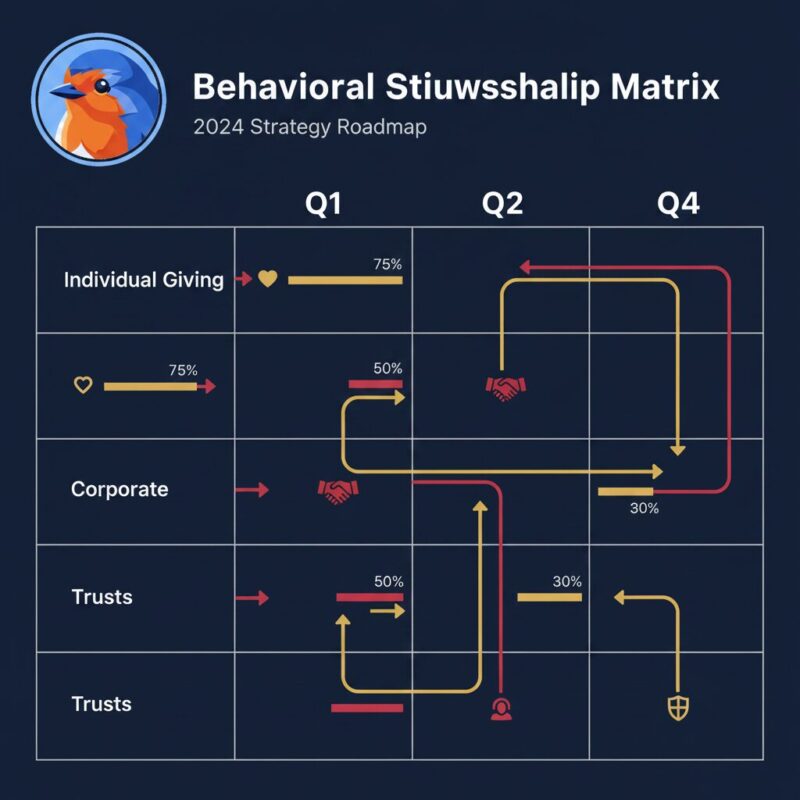
Step 2: Implementing a Behavioral Stewardship Matrix
Move away from basic RFM (Recency, Frequency, Monetary) metrics. In 2026, donor value is determined by behavior, not just wallet size.
Build a Stewardship Matrix Template that categorizes supporters by actions: event attendance, petition signatures, volunteer hours, and email engagement. Tracking specific supporter behaviors allows you to create deeply authentic, non-transactional touchpoints. When a donor feels recognized for their advocacy rather than just their money, retention rates stabilize.
Step 3: Transitioning to Corporate Co-Investment
The traditional corporate sponsorship model—where a company writes a check in exchange for logo placement—is largely obsolete. Modern corporations demand ESG (Environmental, Social, and Governance) alignment.
Transition your approach to “corporate co-investment.” Position your charity’s impact metrics as a direct extension of the corporation’s own CSR goals. Draft proposals that highlight mutual growth, employee engagement opportunities, and shared community value. You are offering them a vetted mechanism to achieve their social impact targets.
Step 4: Event Planning Under Martyn’s Law
Physical fundraising events in the UK now face stricter regulatory scrutiny. The upcoming Terrorism (Protection of Premises) Bill, commonly known as Martyn’s Law, impacts how charities plan medium-to-large gatherings.
According to Home Office guidelines, charities must integrate robust security and risk assessments into their event planning logistics. To mitigate physical risks and overhead costs, prioritize hybrid event models. Hybrid structures maintain broad donor reach while reducing the footprint and liability of physical venues.
Step-by-Step: Supercharging Grant Discovery and Proposals
Individual and corporate giving are critical, but trust and foundation grants remain the backbone of most UK charities. Unfortunately, manual grant discovery is broken. Relying on fragmented databases results in low success rates. A strong Case for Support requires a highly targeted funding match.
Step 5: Automating Trust Matching with Smart Algorithms
Stop searching static databases. FundRobin’s Smart Grant Matching engine scans 1,200+ active opportunities from 2,000+ donors daily across the UK, EU, USA, and Australia.
The platform utilizes Natural Language Processing (NLP) to understand project context. Instead of relying on exact keyword matches, the AI connects concepts—matching a proposal for “at-risk teenagers” with a grant targeting “disadvantaged youth.” The system provides a 0-100% accuracy score for every opportunity and includes visual urgency indicators for approaching deadlines.
Step 6: Drafting High-Quality Proposals in Minutes
Writing proposals manually drains resources. FundRobin’s Smart Proposal Generation tool reduces writing time by up to 80%, taking the process from 40 hours down to just four.
The AI analyzes complex grant guidelines, word limits, and mandatory questions to ensure absolute compliance with the funder’s rules. It generates high-quality first drafts of executive summaries, project descriptions, and basic budgets. The fundraiser retains full creative control, using the AI output as a highly structured foundation to edit and refine.
Step 7: Strategic Planning with the Robin AI Assistant
Writer’s block and strategic uncertainty stall progress. The Robin AI Assistant operates as a 24/7 grounded expert trained exclusively on successful grant applications and sector best practices.
Use specific prompts to maximize its value. Ask Robin to “Find grants suitable for a youth mental health intervention in Yorkshire,” or “Draft a 6-month project timeline based on this executive summary.” Because it is a grounded AI system, responses are factual, cite their sources internally, and completely eliminate the risk of hallucination.
Step 8: Tracking Success via the Smart Dashboard
In our sector research, 67 nonprofit development directors told us managing grant deadlines across multiple funders was their single biggest administrative pain point.
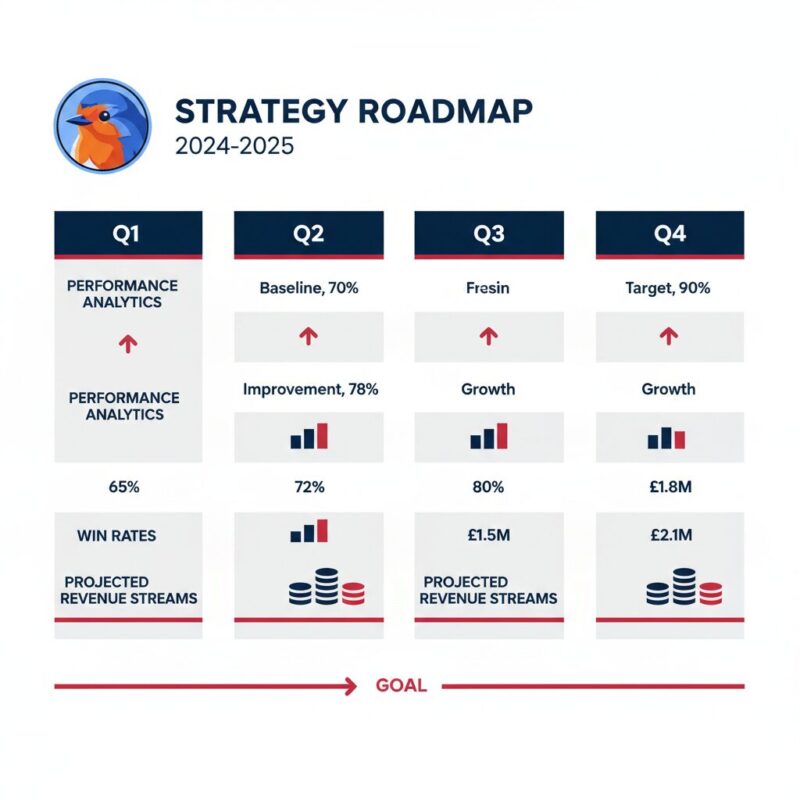
FundRobin’s Smart Dashboard solves this by enabling real-time pipeline tracking and data-driven decision-making. The dashboard provides clear analytics on success rates by funder type, enabling highly accurate financial forecasting. It automates the generation of board and trustee reports, saving leadership teams days of manual compilation each month.
Common Pitfalls to Avoid in 2026 Fundraising
Adopting new tools without adjusting underlying habits leads to strategic failure. Avoid these major sector errors as you roll out your 2026 playbook.
Pitfall 1: Relying on “Vanity” Personalization
Superficially inserting a donor’s first name into the subject line of a mass email is not personalization. If the core message is irrelevant to the donor’s specific interests, vanity personalization actually increases donor fatigue.
True personalization requires behavioral segmentation. Send program updates only to the donors who specifically funded that program. Value-exchange communications require you to know what the donor cares about, not just their spelling preferences.
Pitfall 2: Failing to Optimize for Gift Aid Automation
Millions of pounds are left unclaimed in the UK every year due to inefficient Gift Aid capture. Manual processing costs charities time and money.
Integrate automated Gift Aid declarations directly into your primary digital tech stack. According to HMRC requirements, you must maintain clear digital audit trails for compliance. Automating this process ensures you capture the extra 25% revenue on eligible donations without creating a paperwork bottleneck.
Pitfall 3: Compromising Privacy with Public AI Models
Never feed sensitive beneficiary stories, organizational financials, or proprietary project methodologies into open LLMs like ChatGPT or Claude.
Inputting proprietary data into free models often grants the provider permission to train their algorithms on your information, resulting in a direct GDPR violation. Always insist on closed-loop, secure systems like FundRobin, where strict data minimization is enforced.
Pitfall 4: Neglecting Multi-Channel Consistency
Siloing your trust, corporate, and individual giving departments damages brand trust. Donors notice when a charity’s corporate pitch sounds completely disconnected from its individual appeal.
Treat your revenue streams as a unified ecosystem. Create a core, unified Case for Support, and use AI to adapt that single message for different audiences. Regular cross-departmental collaboration ensures that data, messaging, and insights are shared effectively across the entire organization.
Frequently Asked Questions
How does SORP 2026 affect small to mid-sized charities?
SORP 2026 introduces tiered reporting based on income, requiring small to mid-sized charities to adopt stricter data management and transparency protocols. Organizations must update their backend systems to clearly separate and track restricted versus unrestricted funds to satisfy the Charity Commission.
What is a value-exchange fundraising model?
A value-exchange model moves away from one-way transactional asks towards offering tangible or emotional value in return for support. This includes providing donors with exclusive field insights, community access, or corporate co-investment opportunities, acting as the primary antidote to modern donor fatigue.
How can UK charities safely use AI for grant proposals?
UK charities can safely use AI by choosing private, GDPR-compliant platforms like FundRobin, which never use user data to train public models. Charities must avoid free, general-purpose AI tools that scrape inputs, and instead prioritize platforms with encrypted cloud infrastructure and strict data minimization policies.
What are the best ways to diversify charity revenue streams?
Diversify revenue by moving beyond traditional grants into corporate co-investment, individual major giving, and leveraging hybrid event models. Additionally, charities can deploy targeted AI tools to scale their trust and foundation outreach without adding headcount, ensuring a balanced, multi-channel financial foundation.
How does FundRobin compare to traditional grant databases?
FundRobin uses an AI-powered semantic matching engine instead of just basic keyword search, learning from your feedback to increase application success rates to over 85% for high-match opportunities. Unlike static legacy databases, it actively evaluates context to score matches and generates compliant first-draft proposals.
Key Takeaways:
- Implement a behavioral stewardship matrix immediately to shift from transactional appeals to a sustainable ‘value-exchange’ model.
- Prepare for SORP 2026 reporting requirements by auditing and unifying your backend data hygiene.
- Recover 200+ hours monthly by replacing manual grant searches with AI-powered semantic matching platforms.
- Protect beneficiary privacy by exclusively using GDPR-compliant, closed-loop AI tools that never train models on your charity’s data.
- Restructure traditional corporate sponsorships into ESG-aligned “co-investment” partnerships to secure long-term commercial funding.
Success in 2026 requires organizations to embrace backend automation while fiercely protecting the human empathy at the core of their mission. By deploying a comprehensive Resilience & Relevance strategy powered by secure platforms like FundRobin, UK charities can decisively overcome the dual challenges of donor fatigue and regulatory complexity.
