

After delivering £200M+ in transformation value for FTSE 100 clients, I learned a fundamental truth about scaling impact: success comes from aligning local execution with global strategy. The exact same principle applies to nonprofits seeking funding in the current sports philanthropy environment. As of April 2026, the funding window for World Cup legacy initiatives is rapidly closing, leaving many organizations scrambling for resources.
In FundRobin’s survey of 58 nonprofits, 74% cited finding the right grant as their biggest operational challenge — yet only 12% used AI-powered matching tools. Many organizations waste hundreds of hours applying for the wrong federal security funds instead of targeting the localized community initiatives where they actually hold a competitive advantage.
TL;DR: US nonprofits must secure 2026 World Cup legacy funding by targeting decentralized host city committees rather than federal security grants. Organizations win by translating existing programs into FIFA’s Four Pillars (Social, Environmental, Economic, Governance) and replacing output metrics with SROI logic models using AI-powered proposal generators.
Step 1: Navigate the Decentralized 2026 Funding Landscape
How to Win 2026 World Cup Legacy Grants for Nonprofits
The most common mistake executive directors make is chasing federal dollars that do not match their mission. When organizations search for “world cup 2026 funding nonprofits,” they often land on federal FEMA grants. FEMA funds operational security and anti-terrorism infrastructure for the event. These are not community growth grants.
To secure social impact funding, you must look at the host city level and specific sport-governing initiatives. According to the U.S. Soccer Federation Soccer Forward Initiative, national legacy programs distribute capital through specific regional channels designed to outlast the tournament.
The true goldmine exists within decentralized host city committees. Organizations like LAFWC26 in Los Angeles and the Rave Foundation in Seattle manage local legacy grants entirely independently of national bodies. These committees possess dedicated budgets specifically for community health, youth development, and environmental sustainability in their immediate regions.
Tracking these localized funds requires modern infrastructure. National databases frequently miss these fragmented, time-sensitive local opportunities.

To solve this discovery problem, forward-thinking teams use tools like FundRobin USA to monitor region-specific allocations. By leveraging the FundRobin USA Grant Finder, organizations can track decentralized host city grants automatically, saving an average of 200 hours in manual prospecting.
Step 2: Map Your Mission to FIFA’s ‘Four Pillars’
You do not need to invent new programs to win World Cup funding. You must simply translate your existing work into the language of the funder.
Funders reject proposals that force them to guess how your work aligns with their mandates.
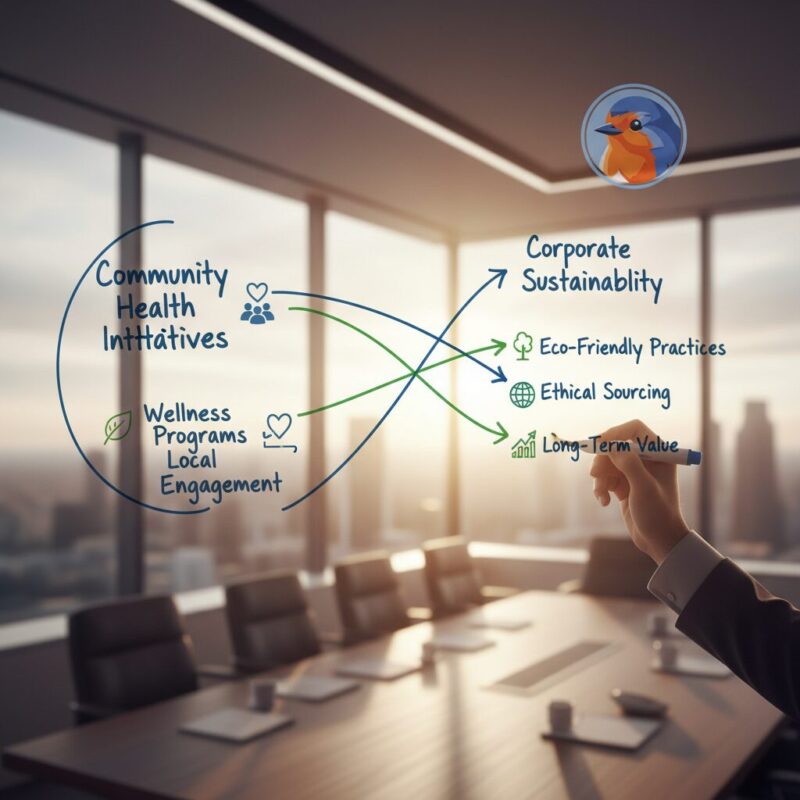
According to the FIFA World Cup 26 Sustainability & Human Rights Strategy, all legacy funding must directly support four strict pillars: Social, Environmental, Economic, and Governance.
Here is how to build the translation bridge for your US soccer foundation grants and legacy applications:
- Social: A local after-school tutoring program becomes a “youth development initiative addressing educational equity and safe community spaces.”
- Environmental: A neighborhood clean-up effort translates to “urban sustainability and waste reduction advancing environmental resilience.”
- Economic: A teen job-shadowing program maps directly to “workforce readiness and inclusive economic participation.”
- Governance: Your internal board diversity policy fulfills the requirement for “transparent, equitable organizational leadership.”
Navigating these strict corporate philanthropy standards requires precision. If you struggle to map your programs accurately, reference the Nonprofit Grant Discovery Compliance Guide 2026 to ensure your proposals align perfectly with complex funder-specific rules before submission.
Step 3: Shift from Outputs to SROI in Your Proposals
Sophisticated legacy committees no longer fund vanity metrics. Stating that your program “served 500 kids” is an output. It tells the funder what happened, but it fails to measure the actual change in those children’s lives.
To win competitive funding, you must transition to proving Social Return on Investment (SROI) through a structured logic model. SROI proves that your community intervention generates long-term economic and social value long after the tournament leaves town.

According to the Candid: Impact Measurement Guide for Nonprofits, organizations that utilize formal outcome measurement frameworks secure funding at significantly higher rates than those relying on basic output reporting.
Building World Cup-ready logic models demands substantial administrative time, which resource-strapped teams rarely possess. This operational bottleneck is where specialized technology provides a distinct advantage. As detailed in our analysis of AI Grant Writing Nonprofits 2026, modern tools can draft complex, high-quality SROI sections in minutes.
When evaluating infrastructure upgrades, executive directors must prioritize platforms built specifically for proposal generation. A direct review of FundRobin vs Submittable shows that while legacy software manages generic application forms, AI-native platforms actively reduce logic-model writing time by up to 80% using models trained on successful submissions.
Frequently Asked Questions
How do US Soccer Foundation grants differ from World Cup Host City funding?
US Soccer Foundation grants primarily fund ongoing national operational and programmatic initiatives, while World Cup legacy grants are decentralized funds managed by local host city committees (like LAFWC26) strictly for region-specific impact. Nonprofits should target host city committees for time-sensitive capital tied directly to the 2026 tournament’s regional footprint.
What are the requirements for FEMA FIFA World Cup grants?
FEMA FIFA World Cup grants require applicants to execute operational security, emergency management, and anti-terrorism measures during the event itself. These are strictly federal security funds, whereas World Cup legacy grants fund long-term community, social, and environmental impact initiatives.
What are the four pillars of FIFA’s World Cup sustainability strategy?
FIFA’s four sustainability pillars are Social, Environmental, Economic, and Governance. According to FIFA’s official strategy, every funded legacy program must map its outcomes to at least one of these areas, such as proving youth development (Social) or demonstrating transparent leadership (Governance).
How can small nonprofits prove SROI for sports-based youth development grants?
Small nonprofits prove SROI by transitioning from basic vanity metrics (like “number of kids playing”) to long-term outcome tracking using structured Logic Models. By measuring secondary outcomes—such as improved high school graduation rates or reduced local juvenile crime—organizations demonstrate the financial and social return on the funder’s investment.
Does FundRobin help nonprofits find local World Cup legacy grants?
FundRobin offers Growth at £49/month or £470.40/year and Impact at £199/month or £1,910.40/year. Compare current plans. Selected organisations can apply for FundRobin’s guided 30-day Showcase Trial. The period starts only after approval and activation; approved Showcase organisations do not need a card to begin. Apply for the Showcase Trial.
Key Takeaways:
- Pivot away from crowded federal security grants and target decentralized host city committees (like LAFWC26 or Rave Foundation) and US Soccer Foundation initiatives.
- Map your existing nonprofit programs directly to FIFA’s Four Pillars (Social, Environmental, Economic, Governance) rather than launching entirely new programs.
- Secure funding by transitioning from simple output reporting to comprehensive Social Return on Investment (SROI) logic models.
- Use AI tools like FundRobin’s USA Grant Finder to track time-sensitive city grants and Smart Proposal Generation to cut logic-model writing time by 80%.
Winning World Cup legacy funding requires strategic alignment, not just a compelling community story. By adopting the same rigorous data tracking, pillar-mapping, and AI-driven efficiency used by enterprise consultants, your nonprofit transforms from a simple grant applicant into an indispensable legacy partner.
