
Quick answer: The 2026 nonprofit funding landscape is shaped by federal-to-state shifts, tighter compliance scrutiny, donor pressure, and new AI grant workflows.
Executive Summary: As we approach 2026, the nonprofit sector faces a decisive structural transformation. The era of abundant federal pandemic relief is ending, replaced by a fragmented landscape of state-administered block grants and heightened compliance scrutiny. This guide serves as a Strategic Playbook for Executive Directors and development leaders, moving beyond basic grant writing tips to address the core operational pivot required for survival. We analyze the transition from federal discretionary spending to “last-mile” state implementation, the critical need for data-driven outcome reporting under new OMB guidance, and the role of AI in mitigating staff burnout. By adopting a “Resilience Pivot”—shifting from volume-based applications to high-precision, compliance-first stewardship—organizations can secure their financial future in this volatile new era.
Introduction: The 2026 Funding Cliff and the Necessity of the ‘Resilience Pivot’
For the past several years, the nonprofit sector has operated under a unique set of fiscal conditions. The influx of ARPA (American Rescue Plan Act) funds created a temporary buffer, masking underlying fragilities in the grant ecosystem. However, as of January 2026, indicators confirm that 2026 will mark a definitive “Funding Cliff” for organizations that have not prepared for the contraction of federal discretionary spending. This is not merely a reduction in available dollars; it is a fundamental shift in the pathway those dollars take to reach your organization.
The “spray and pray” method of grant seeking—applying to every open opportunity in hopes of securing volume—is mathematically obsolete in this new landscape. With inflation eroding the real value of multi-year grants and administrative burdens rising, the cost of acquiring a dollar of funding has never been higher. To survive, nonprofits must execute a “Resilience Pivot.” This strategic shift moves the organization away from frantic, volume-based revenue seeking toward a model of precision targeting, where efficiency, compliance, and high-probability matching drive decision-making. Utilizing advanced tools like FundRobin for US Nonprofits is no longer a luxury; it is a requisite for identifying the fragmented opportunities that characterize this new era.
TL;DR: The 2026 nonprofit landscape is defined by a massive shift from direct federal grants to state-administered “pass-through” funding and a sharp rise in compliance requirements. To adapt, leaders must abandon volume-based application strategies in favor of a “Resilience Pivot”—focusing on high-probability state grants, automating compliance via AI, and securing unrestricted private funding. The risks of inaction are severe: audit clawbacks, staff burnout, and revenue collapse.
Table of Contents
- The Macro-Fiscal Shift: Why 2026 is the Year of the ‘Great Handoff’
- The Compliance Crunch: Data-Driven Accountability as the New Standard
- The Rise of ‘Trust-Based’ and Private Philanthropy
- The ‘Resilience Pivot’: A Financial Strategy for Survival
- The ‘Strategic Refusal’ Playbook: Combating Burnout with Precision
- Leveraging AI for Operational Efficiency and Grant Acquisition
- State-Specific Spotlights: Navigating Disparate Funding Ecosystems
- Frequently Asked Questions
Key Takeaways:
– Build a 3-6 month cash reserve to mitigate 90-day reimbursement delays from state agencies.
– Redesign logic models to focus on verifiable outcomes rather than simple activity tracking.
– Adopt a ‘Human-in-the-Loop’ AI model to automate compliance scanning while maintaining human stewardship.
2026 Nonprofit Funding: The Federal-to-State Shift
The Macro-Fiscal Shift: Why 2026 is the Year of the ‘Great Handoff’
The headline for 2026 is not necessarily that money is disappearing, but that it is moving. We are witnessing the “Great Handoff,” a structural devolution where federal agencies are stepping back from direct service funding, opting instead to funnel block grants to state and local governments.
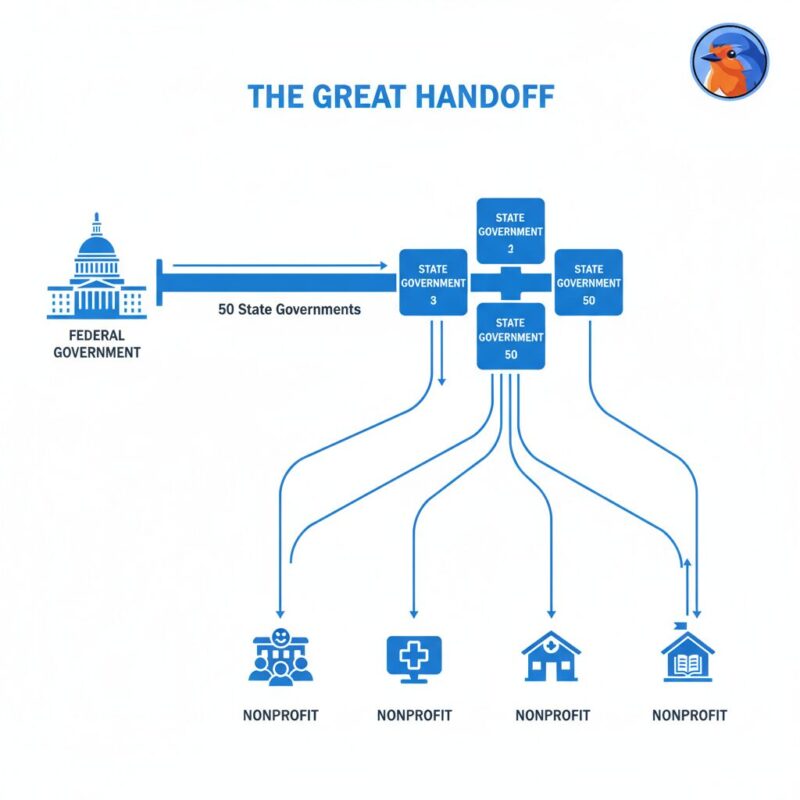
According to BDO USA, this shift requires nonprofits to fundamentally alter their relationship management strategies. You are no longer just petitioning Washington; you are navigating fifty separate state bureaucracies, each with its own priorities and allocation timelines.
This structural change brings both risk and opportunity. The risk lies in the fragmentation—finding these grants is significantly harder than monitoring Grants.gov. The opportunity, however, is that state-level funders are often closer to the problems you solve, potentially allowing for more responsive partnership models if you can navigate the administrative thicket.
The End of the ARPA Era: Navigating the Contraction of Discretionary Spending
The expiration of American Rescue Plan Act (ARPA) funds represents a critical inflection point. For many organizations, particularly in healthcare, housing, and social services, these funds provided a lifeline that became woven into operational baselines. As these revenue streams dry up in the 2026 fiscal year, the contraction of federal discretionary budgets will expose those who used one-time money for recurring expenses.
The Federal-to-State Funnel: Understanding ‘Last-Mile’ Service Delivery
Ideally, federal funds flow smoothly to states, which then disburse them to nonprofits for “last-mile” service delivery. In reality, this funnel is often clogged. “Pass-through” funding creates a double layer of administrative burden: nonprofits must comply with federal Uniform Guidance and specific state regulations.
Furthermore, this landscape is highly fragmented. A workforce development nonprofit operating in three states must now master three distinct application portals and compliance regimes rather than one federal standard. This fragmentation makes manual grant seeking nearly impossible. Without advanced aggregation tools that can scan state and local databases simultaneously, development teams will miss the majority of available funding. This is where the capability of platforms like FundRobin becomes essential, acting as a unified radar for a fractured ecosystem.
Economic Volatility: Inflation’s Silent Erosion of Grant Value
While the face value of grants may remain flat, their purchasing power has been severely compromised. Inflation acts as a silent tax on multi-year grants awarded in previous years. According to data from Instrumentl, nonprofits that fail to account for inflation in their 2026 proposals risk a “success disaster”—winning the grant but being unable to deliver the program without operating at a deficit.
The Compliance Crunch: Data-Driven Accountability as the New Standard
If the first challenge of 2026 is finding the money, the second is keeping it. We have entered the era of the “Compliance Crunch.” The days of securing renewals based on heartwarming narratives and “good intentions” are over. Governments and foundations alike are demanding rigorous, data-driven proof of impact.
From Activities to Outcomes: The New OMB Uniform Guidance Reality
The Office of Management and Budget (OMB) has signaled a decisive shift in its Uniform Guidance. The focus has moved from tracking activities (e.g., “we served 500 meals”) to measuring outcomes (e.g., “food insecurity in our zip code dropped by 12%”).
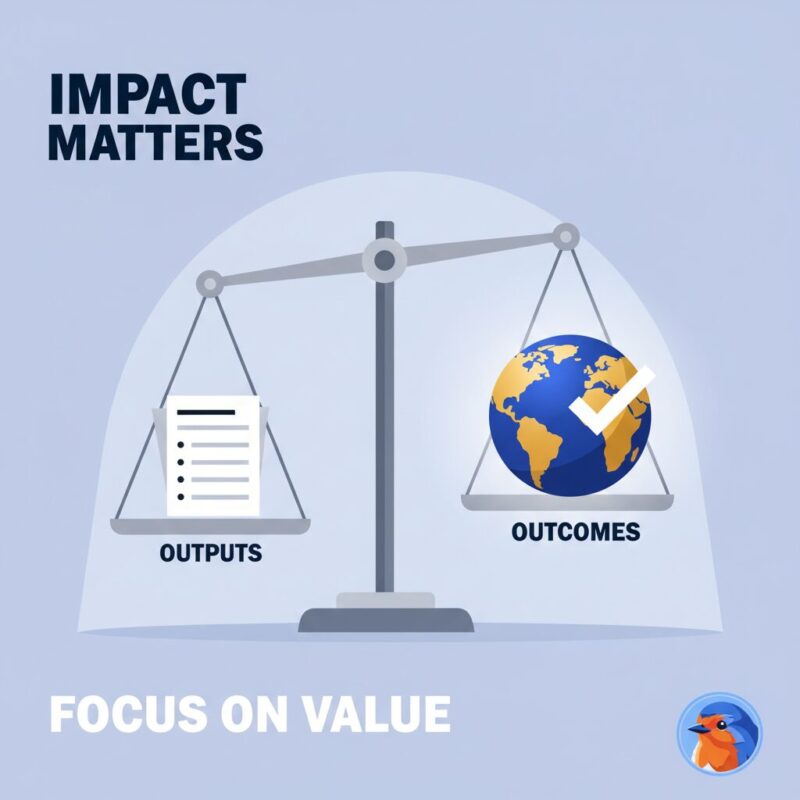
According to CliftonLarsonAllen (CLA), this change requires nonprofits to redesign their logic models. Proposals for 2026 must demonstrate a clear, causal link between intervention and impact, supported by verifiable data.
The Audit Trail: Why ‘Good Intentions’ No Longer Secure Renewals
As federal funds move to states, the audit pressure intensifies. States are under pressure to ensure federal pass-through dollars are not mismanaged, leading to aggressive monitoring. The risk of “clawbacks”—where funders demand the return of misspent or poorly documented funds—is higher than ever. A disorganized back office is now a direct threat to revenue continuity.
The Rise of ‘Trust-Based’ and Private Philanthropy
As government funding becomes more complex and restrictive, private philanthropy is stepping up to fill the void. A significant trend for 2026 is the acceleration of “Trust-Based Philanthropy”—a model that seeks to rebalance the power dynamic between funder and grantee.
Filling the Public Void: Private Foundations as Stability Anchors
Private foundations are increasingly recognizing their role as stability anchors in a volatile public funding environment. According to the Harvard Law School Forum on Corporate Governance, there is a marked shift toward multi-year, unrestricted General Operating Support (GOS).
Data from Candid confirms that foundations are responding to the “overhead myth” by explicitly funding administrative capacity. For 2026, your strategy should prioritize identifying these trust-based funders who value organizational health over project-specific outputs.
The ‘Resilience Pivot’: A Financial Strategy for Survival
Surviving the 2026 landscape requires more than just better grant writing; it demands a fundamental restructuring of your financial strategy. We call this the “Resilience Pivot.” It is the move from a fragile, hand-to-mouth existence to a robust, diversified financial model capable of weathering shocks.

This strategy is the core philosophy behind FundRobin for US Nonprofits, which is designed to identify the diverse revenue streams necessary for this pivot.
Defining Liquidity Targets: How Much Cash on Hand is Enough for 2026?
The old benchmark of 30 days cash on hand is dangerous in the current climate. With the shift to state-administered grants, reimbursement cycles are slowing down. States often face bureaucratic delays that can leave nonprofits waiting 60 to 90 days for payment. To be resilient in 2026, nonprofits should target 3 to 6 months of Days Cash on Hand (DCOH).
The ‘Strategic Refusal’ Playbook: Combating Burnout with Precision
Burnout is the silent killer of nonprofit effectiveness. In 2026, the primary cause of burnout is the “hamster wheel” of chasing low-probability, high-effort grants. The antidote is “Strategic Refusal”—the disciplined art of saying no.
The ROI of Application Time: Calculating Your ‘Win Probability’ Threshold
Every grant application has an opportunity cost. Leaders must implement a strict ROI calculation. Utilizing tools that provide a “Matching Score” allows you to quantify this probability objectively. A policy of rejecting any opportunity with a match score below 70%—a concept explored in The Science of Selection—can save hundreds of hours of staff time annually.
Leveraging AI for Operational Efficiency and Grant Acquisition
Artificial Intelligence is the lever that makes the Resilience Pivot possible. In 2026, AI is not just about writing text faster; it is about operational intelligence. Tools like the Free USA Grant Finder exemplify how technology can democratize access to these opportunities.
Beyond Writing: Using AI for Prospect Research and Market Intelligence
The true power of AI lies in prospect research. Traditional keyword searches miss thousands of opportunities because funders use different terminology. AI-driven “Smart Matching” uses Natural Language Processing (NLP) to understand the context of your mission.

It can find a grant for “youth resilience” even if you search for “after-school programs,” uncovering the hidden state grants that manual searches miss.
The ‘Human-in-the-Loop’ Model: Where AI Ends and Stewardship Begins
Despite the power of AI, the human element remains paramount. We advocate for a “Human-in-the-Loop” model. AI creates the first draft, checks the compliance boxes, and finds the prospects. This frees up the human grant writer to do what machines cannot: build relationships with program officers and craft the emotional nuance of the narrative.
State-Specific Spotlights: Navigating Disparate Funding Ecosystems
The Federal-to-State shift means that your zip code determines your funding reality. A strategy that works in Sacramento may fail in Austin.
- California: Heavily focused on climate resilience, homelessness, and mental health infrastructure.
- New York: Funding priorities are shifting toward workforce development and urban renewal.
- Texas: Focus is often on infrastructure and rural economic development.
Frequently Asked Questions
How will federal grant funding change for nonprofits in 2026?
Federal funding is shifting from direct discretionary grants to state-administered “pass-through” block grants, driven by the expiration of ARPA. Success in 2026 requires building relationships with state agencies who now control the “last mile” of federal allocations.
How much liquidity should a nonprofit maintain in 2026?
In 2026, nonprofits should aim for 3 to 6 months of Days Cash on Hand (DCOH). This higher target is necessary because the shift to state-administered funding often results in slower reimbursement cycles of 60-90 days.
Key Takeaways:
- The ‘Federal-to-State’ Handoff: Growth in 2026 lies in state-administered ‘last-mile’ pass-through funds.
- Compliance is King: Renewals will depend on verifiable, data-backed outcomes.
- Strategic Refusal: Implement a ‘Win Probability’ threshold to reduce burnout.
- AI as a Compliance Shield: Use AI for scanning guidelines to ensure 100% adherence.
- Liquidity First: Build a 3-6 month cash reserve to weather slower reimbursement cycles.
Conclusion: Embracing the New Era of Strategic Stewardship
The landscape of 2026 is undeniably tougher than the abundance of the ARPA years, but it is also clearer. The leaders who will thrive are those who stop chasing every dollar and start building systems for resilience. By adopting the Resilience Pivot and utilizing the right intelligence tools, you can transform 2026 from a year of scarcity into a year of precision and stability.

Comments
One response to “Nonprofit Funding Landscape 2026 Guide”
[…] 2026 Funding Cliff is not a theoretical risk; it is a mathematical certainty codified in the legislative sunsetting of […]