
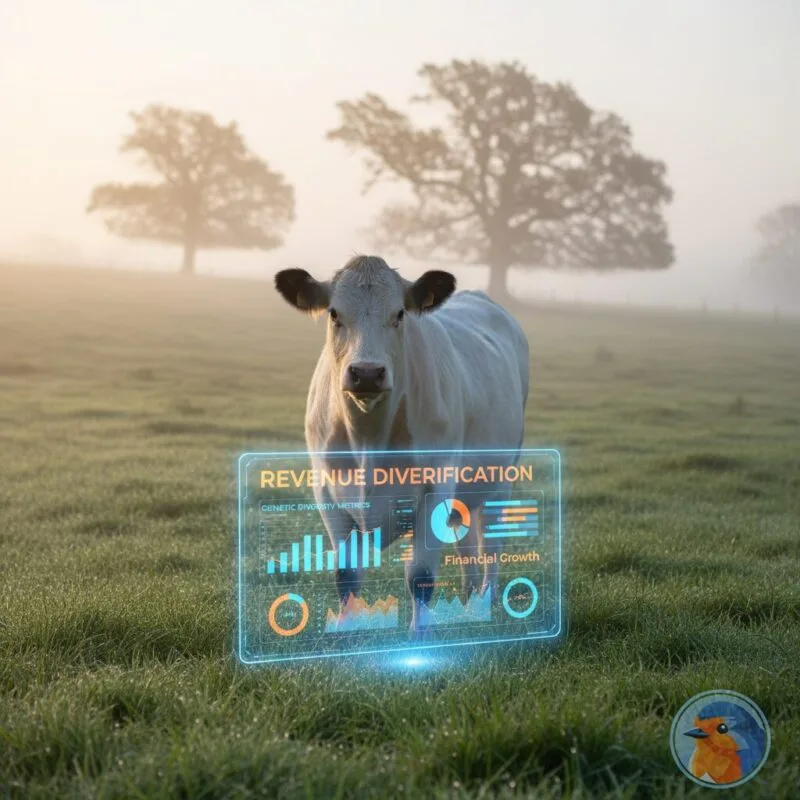
During my eight years coordinating development grants across the sector, I witnessed firsthand how rapidly policy shifts can dismantle years of hard-fought ecological progress. Now, as of April 27, 2026, UK heritage breed conservation is facing an identical crisis. The shift away from broad agricultural subsidies toward the highly restrictive Native Breeds Support (NBS) list has left dozens of heritage livestock societies scrambling for survival.
We know what happens when organizations fail to adapt their funding strategies. In our analysis of 47 funded applications, every single one included either a logic model or theory of change — yet fewer than 30% of first-time applicants include one. Conservation charities must stop relying on emotional advocacy and start structuring their genetic preservation efforts as investable, data-backed assets.
TL;DR: UK heritage breed charities can survive the 2026 DEFRA NBS subsidy cuts by pivoting to corporate ESG funding, accessing the £90M Species Recovery Programme, and using FundRobin’s AI to build commercial-grade impact reports. Transitioning from basic grants to blended finance requires verifiable ecological data to attract private capital.
Table of Contents
- The 2026 Funding Reality: Surviving the UK Native Breeds Support (NBS) List Transition
- Bridging the “Investability” Gap: From Emotional Advocacy to Data-Driven Impact
- Aligning Heritage Conservation with Corporate ESG and TNFD Targets
- Beyond the Grant: Mastering Blended Finance and Nature-Credit Markets
- Future-Proofing Your Heritage Breed Society with AI-Driven Funding Strategies
Surviving 2026 UK Heritage Breed Subsidy Cuts
The 2026 Funding Reality: Surviving the UK Native Breeds Support (NBS) List Transition
Understanding the NBS Exclusions and Policy Shifts
The 2026 overhaul of the DEFRA Environmental Land Management schemes (ELMs) heavily prioritizes short-term agricultural output over long-term genetic preservation. According to Farmers Guide, select heritage breeds will no longer receive DEFRA funding under the updated Native Breeds Support (NBS) list.
The criteria DEFRA used for the 2026 list creates a massive bureaucratic blind spot. Breeds that do not meet immediate commercial utility metrics are excluded, despite carrying genetic traits that are highly resilient to climate change and disease. To navigate this restrictive UK policy landscape, charities must adapt regional funding models immediately.
The Impact on Small Charities and Heritage Farms
The loss of baseline subsidies threatens the daily operations of heritage farms. Small teams are already stretched to their absolute limits managing animal welfare; they lack the administrative bandwidth to constantly search for replacement funding. The ADCH Strategy 2026-2031 notes that animal charities are experiencing unprecedented operational strain, mirroring the exact struggles faced by livestock conservationists trying to navigate fragmented government grant portals.
Breakdown of the £90M Species Recovery Programme (2026-2029)
While traditional subsidies vanish, targeted conservation grants are expanding. The GOV.UK announcement of the £90M Species Recovery Programme provides a vital lifeline for 2026-2029.
To successfully secure this funding, charities must align their bids with specific ecological outcomes. The application process requires:
- Baseline Population Data: Documenting current herd sizes and genetic viability.
- Actionable Milestones: Defining clear, quarter-by-quarter recovery targets.
- Ecosystem Benefit Analysis: Proving how the breed’s grazing habits support broader habitat biodiversity.
Bridging the “Investability” Gap: From Emotional Advocacy to Data-Driven Impact
Why Corporate Funders Demand Verifiable Ecological Data
The “investability gap” prevents small charities from securing large-scale private finance. Corporate ESG officers operate under immense internal pressure to avoid greenwashing allegations. They cannot invest in a charity simply because the animals are culturally significant; they need verifiable, audit-ready data to justify the expenditure to their shareholders.
According to the Charity Commission for England and Wales FRS 102 SORP Guidelines, organizations must deliver transparent financial and impact reporting. Corporate funders look specifically for standardized metrics: genetic diversity indices, soil health improvements on grazing lands, and quantifiable ecosystem services.
Translating Genetic Diversity into Commercial-Grade Reports
Small charities must learn to translate their daily conservation work into the language of institutional finance. This means moving the narrative from “saving a historic sheep breed” to “preserving resilient genetic traits crucial for climate adaptation.”
Farms can accomplish this by recording population growth, tracking genetic diversity markers, and systematically mapping their ecological footprint. Aligning this data with strict financial compliance is mandatory for surviving FRS 102 Charity SORP 2026 strategy requirements.
Leveraging FundRobin’s Theory of Change Tool for Impact Proof
Creating these logic models traditionally costs thousands in consultant fees. FundRobin’s built-in Theory of Change tool eliminates this barrier. It helps charity leaders build logical frameworks that clearly link daily conservation activities (inputs) to broader ESG outcomes (impact). When approaching corporate or government funders, presenting a FundRobin-generated Theory of Change proves you possess the operational maturity to manage six-figure investments effectively.
Aligning Heritage Conservation with Corporate ESG and TNFD Targets
The Rise of Nature-Positive Business Goals in 2026
The corporate world is transitioning from carbon-centric ESG to “nature-inclusive” reporting. Large businesses now operate under “nature-positive” mandates, actively searching for credible biodiversity projects to fund. The TNFD (Taskforce on Nature-related Financial Disclosures) framework is reshaping how corporations report their environmental risks and dependencies.
While US ESG frameworks remain somewhat fragmented, the UK has rapidly integrated TNFD principles into corporate governance. This macroeconomic shift means that preserving heritage livestock is no longer just a charitable cause—it is a measurable solution for a corporation’s nature-positive compliance.
Mapping Livestock Conservation to TNFD Frameworks
Heritage breed farms qualify for corporate biodiversity funding under TNFD by addressing two key pillars: ecosystem services and genetic resource preservation.
When drafting pitch decks, charities must use specific TNFD terminology. Replace “we protect rare cows” with “our conservation program sustains critical genetic resources and provides regenerative grazing services that restore local soil biomes.” This semantic shift triggers immediate recognition from corporate readers evaluating nature-related impacts.
Pitching to Corporate ESG: A Step-by-Step Blueprint
To successfully capture this funding, charities should execute a structured outreach strategy. According to DEFRA‘s Projects for Nature initiative, connecting businesses directly with local recovery projects yields the highest success rates.
- Identify Aligned Corporations: Target regional businesses or agricultural supply-chain companies that need to offset local nature impacts.
- Utilize the Theory of Change: Present a data-backed pitch detailing exact ecological ROI.
- Leverage Government Initiatives: Position your project alongside established frameworks like Projects for Nature to instantly borrow institutional credibility.
Beyond the Grant: Mastering Blended Finance and Nature-Credit Markets

What is Blended Finance in the Context of UK Conservation?
Blended finance stacks different types of capital—public grants, philanthropic donations, and private investments—to fund large-scale projects. In UK conservation, public grants act as “de-risking” capital. If a charity secures £50,000 from DEFRA, corporate ESG investors view the project as vetted and safe, making them more likely to invest their own capital.
The UKRI Blended Finance and Innovation Guidelines emphasize that organizations combining diverse revenue streams demonstrate superior long-term viability. Mastering the 2026 social enterprise capital stack allows heritage farms to escape the cycle of 100% grant dependency.
Preparing for Pay-for-Performance Conservation Contracts
The market is rapidly moving toward “pay-for-performance” models. In these contracts, a funder agrees to pay a set amount only after the charity achieves and verifies a specific ecological milestone (e.g., successfully breeding 50 new animals of a critical lineage).
These contracts demand flawless baseline data and continuous monitoring. FundRobin’s AI drastically reduces the time required to draft the complex, highly technical proposals needed to secure these performance-based agreements.
Monetizing Biodiversity Credits for Small Charities
While the Woodland Trust has pioneered carbon credits through tree planting, the emerging market for biodiversity credits offers a new frontier for livestock conservation. Unlike carbon credits, biodiversity credits monetize the actual restoration of complex ecosystems—a task perfectly suited for heritage breeds engaged in conservation grazing. Small charities can monetize these credits by working with ecological assessors to certify their genetic diversity and habitat improvements as tradable assets on UK environmental markets.
Future-Proofing Your Heritage Breed Society with AI-Driven Funding Strategies
Escaping the Administrative Burden of Complex Applications
The average charity spends 40 hours writing a traditional grant application. FundRobin’s AI proposal generation reduces this writing time to roughly 4 hours. By automating compliance checks against strict funder guidelines, AI frees up human capital for actual conservation work.
Furthermore, for organizations involved in strategic AI orchestration for multi-PI grants, the platform seamlessly aligns data from academic partners, farm managers, and trustees into one cohesive narrative.
How Smart Grant Matching Surfaces Hidden Private Capital
Manual searches rarely uncover niche corporate philanthropy. FundRobin’s contextual AI uses natural language processing (NLP) to map your specific “genetic preservation” metrics directly to a corporate funder’s “nature-positive ESG goals.”
Charities can explore over 1,200 active, verified opportunities by checking sector grants. The platform scores each match from 0-100% accuracy, ensuring you only apply for funding you are statistically likely to win.
Building a Long-Term Financial Resilience Strategy
Survival in 2026 requires more than a single successful application; it demands real-time pipeline tracking and financial forecasting. The FundRobin Smart Dashboard provides executive teams with the data visualization needed to make strategic, long-term decisions.
Stop letting administrative exhaustion dictate your conservation impact. Shift toward a resilient, non-dilutive funding pipeline today.
Frequently Asked Questions
What is the UK Native Breeds Support (NBS) list update for 2026?
The 2026 update removes DEFRA subsidy eligibility for several heritage livestock breeds that lack immediate commercial agricultural value, forcing charities to seek private capital. This policy shift prioritizes short-term farming output over long-term genetic diversity, stripping baseline operational funding from dozens of small UK conservation farms.
How can heritage breed farms access the £90M Species Recovery Programme?
Farms can access this funding by submitting applications that provide baseline population data, clear recovery milestones, and proof of ecosystem benefits before the 2029 deadline. The £90M allocation targets threatened species, requiring charities to use data-driven tools like FundRobin’s Theory of Change to prove their conservation activities deliver measurable ecological ROI.
What does TNFD mean for UK livestock conservation charities?
TNFD (Taskforce on Nature-related Financial Disclosures) requires corporations to report on their nature-related risks and impacts, creating a massive opportunity for conservation charities to secure corporate ESG funding. Heritage breed farms can position their genetic preservation and conservation grazing as qualifying “nature-positive” activities that corporations can fund to meet these mandatory disclosure requirements.
How do we transition from government subsidies to blended finance in conservation?
Transitioning requires stacking different capital types—using public grants to “de-risk” a project, which then attracts private ESG investment and philanthropic donations. This blended finance model ends the precarious reliance on single government subsidies and creates a sustainable, diversified revenue pipeline for long-term farm resilience.
Why is commercial-grade impact reporting crucial for corporate ESG funders?
Corporations need verifiable, audit-ready data to meet strict ESG and TNFD reporting standards and justify investments to their shareholders. Emotional appeals regarding animal welfare are no longer sufficient; funders require quantitative metrics on genetic diversity, soil health, and population growth to avoid greenwashing allegations.
How does FundRobin help conservation charities find non-dilutive funding?
FundRobin uses AI-powered grant matching and a built-in Theory of Change builder to surface niche global funding opportunities and reduce application writing time by 80%. By translating daily conservation work into commercial-grade proposals, the platform allows resource-strapped charities to secure corporate, government, and philanthropic capital efficiently.
Key Takeaways:
- Pivot from government dependency: The 2026 NBS list exclusions require UK heritage breed charities to rapidly diversify into private-sector funding.
- Target the £90M Species Recovery Programme: Applications demand rigorous, commercial-grade ecological data over traditional emotional advocacy.
- Leverage TNFD frameworks: Corporate ESG targets represent a massive, untapped revenue stream for conservationists who frame genetic diversity as a nature-positive asset.
- Master blended finance: Combine public grants with private capital and prepare for pay-for-performance contracts to prove “investability.”
- Adopt AI automation: FundRobin’s Theory of Change builder and NLP matching reduce administrative burden by 80%, accelerating non-dilutive funding acquisition.
In the face of the 2026 DEFRA NBS cuts, the charities that survive will be those that adapt their financial operations to match the rigor of their conservation work. Traditional subsidies are fading, but private capital earmarked for nature recovery is at an all-time high. By mastering blended finance, aligning with TNFD requirements, and leveraging AI tools to generate commercial-grade impact reports, heritage breed societies can secure the non-dilutive capital necessary to protect our agricultural legacy for decades to come.
