
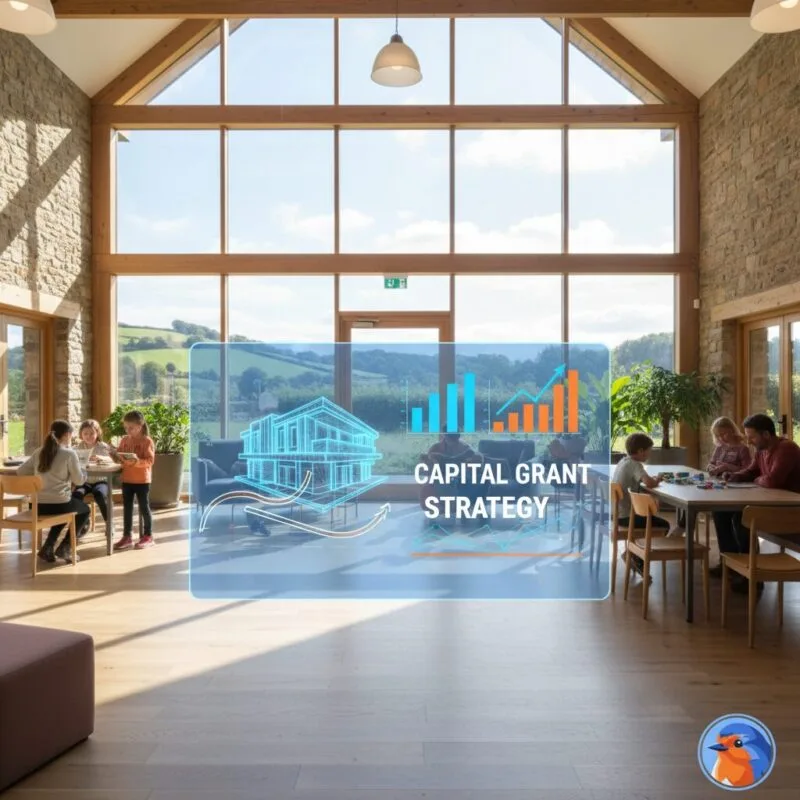
Eight years working across international development and the UK nonprofit sector taught me a difficult truth. The best technology is completely invisible to users, and the worst funding strategy is confusing operational desperation with long-term infrastructure needs. During my time coordinating emergency responses, I witnessed firsthand why traditional grant discovery fails. Organizations burn out their teams writing massive proposals for buildings or vehicles, only to realize they lack the revenue to keep the lights on once the project is finished.
As of May 07, 2026, rising inflation and operational costs are squeezing UK charities harder than ever. This drives a frantic rush for capital grants to offset broader revenue gaps. Yet, according to FundRobin’s analysis of 47 funded applications, every single successful capital grant included either a logic model or a theory of change, but fewer than 30% of first-time applicants include one. Funders demand rigorous institutional resilience, not just a plea for cash.
TL;DR: Capital grants exclusively fund physical infrastructure like buildings and equipment, while revenue funding covers operational costs like salaries. Mixing the two guarantees application rejection. To win Bernard Sunley Foundation capital grants, charities must demonstrate long-term operational resilience and use AI-powered logic models to map infrastructure investments directly to community impact.
The New Era of Capital Grants: Funding Infrastructure in 2026
Winning Capital Grants: The Bernard Sunley Foundation Guide
Many organizations fail to recognize that applying for a capital grant is fundamentally a test of an organization’s financial maturity. According to the UK Charity Commission: Managing charity assets and resources, robust asset management is essential for a charity’s survival. Funders view a capital application as a lens into your governance. If you cannot articulate how a physical asset improves your delivery model, assessors will immediately discard your proposal.
Defining “Capital” vs. “Revenue” Costs to Avoid Instant Rejection
Capital costs are expenses tied to acquiring, upgrading, or maintaining physical assets. These are tangible items that provide long-term utility to your charity. Examples include purchasing a new minibus, building a community hall, installing accessibility ramps, or upgrading server infrastructure.
Revenue costs are the ongoing expenses required to run your charity day-to-day. These include staff salaries, office rent, utility bills, and consumable project supplies. Applying for revenue costs when a funder explicitly mandates capital projects is the primary reason for automatic rejection. You cannot ask a capital funder to pay your program manager’s salary simply because they work inside the newly funded building.
Why the Bernard Sunley Foundation Champions Capital Projects
The Bernard Sunley Foundation: Our Grant Giving guidelines focus exclusively on tangible, long-lasting legacy. The foundation supports resilient communities by funding physical assets that will serve people for decades. They do not fund running costs because operational funding is fleeting. A well-built community center generates social value for fifty years, whereas a one-year salary grant evaporates in twelve months. The foundation expects high-quality project outcomes that fundamentally expand a charity’s capacity to deliver its mission.
The Core Funding Categories: Community, Education, Health, and Social Welfare
The Bernard Sunley Foundation restricts its grants to four specific sectors. First, Community projects involve upgrading village halls, constructing youth clubs, or repairing community centers. Second, Education funding covers specialized equipment for special educational needs (SEN) students or major facility upgrades for schools. Third, Health grants support hospices, specialized medical equipment, and treatment center renovations. Finally, Social Welfare funding pays for adapted transport vehicles, homeless shelter expansions, and day centers for the elderly.
Essential Pre-Application Checks for the Bernard Sunley Foundation
Throwing identical proposals at every foundation wastes precious administrative hours. You need rigorous self-auditing before seeking external capital. This due diligence phase bridges the gap between having a good idea and submitting a compliant proposal.
Verifying Your UK Charity Registration Status
The Bernard Sunley Foundation strictly requires applicants to be registered UK charities or exempt entities. Unregistered community groups or newly formed organizations without a formal charity number face immediate barriers. Before drafting a single word, you must accurately document your Charity Commission registration details. If you are unsure of your current standing, review exactly how to check if a UK charity is registered to ensure your governance documents align with the foundation’s focus.
Aligning Your Project Needs with Foundation Mandates
Mission drift is dangerous. Do not invent a capital project simply because you see a funding opportunity. Review past successful grants to gauge the appropriate scale and scope of what the foundation typically supports. Your project must clearly and authentically impact one of the four core categories. Forcing a poor fit wastes your time and damages your reputation with grant assessors.
Conducting Financial Due Diligence on Your Existing Reserves
Funders scrutinize a charity’s existing reserves to ensure the organization is not on the brink of collapse. According to NCVO: Financial strategy and sustainability, a transparent reserves policy is vital. The foundation needs proof that you have the financial stability to handle unexpected cost overruns during construction. If your charity has zero reserves, asking for a £100,000 building grant signals poor financial governance.
Moving Beyond the Building: Proving Long-Term Operational Sustainability
Capital grants build the facility, but operational sustainability keeps the doors open. Major funders fear financing “white elephants”—expensive buildings that charities ultimately cannot afford to run. You must weave operational resilience into your capital narrative.
The “Grant-Ready” Blueprint: Linking Capital to Service Capacity
A winning application shifts from input-focused requests to outcome-focused impacts. Do not just say, “We need a new roof.” Say, “A weatherproof facility allows us to keep the community center open year-round, expanding our outreach to 150 additional elderly residents each month.” You must map the exact service improvements the capital asset will unlock, quantifying the human impact of the brick-and-mortar investment.
Using Logic Models to Demonstrate Long-Term Impact
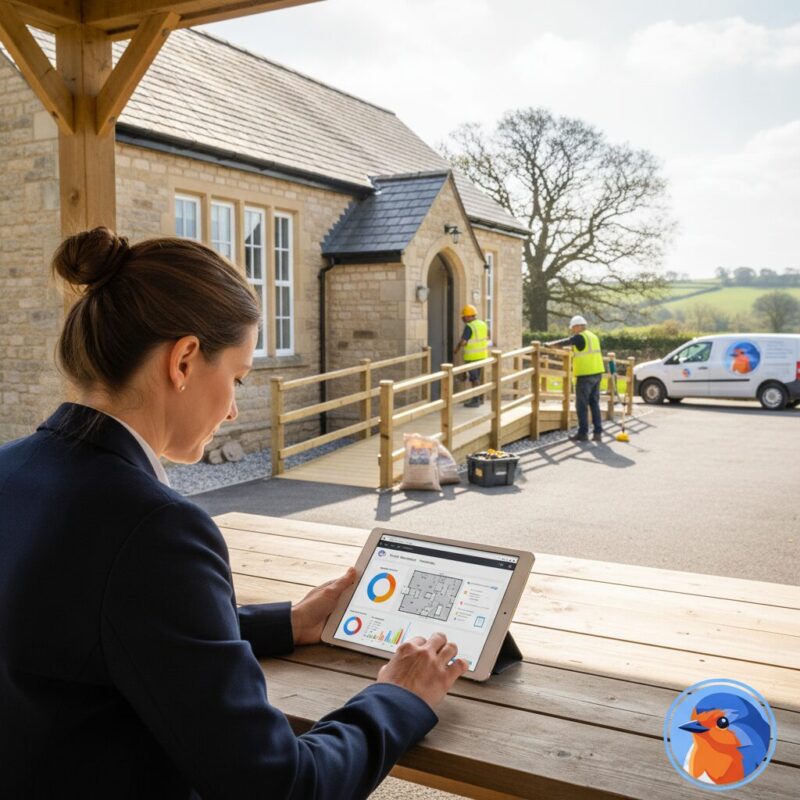
A logic model is the gold standard for proving impact to foundations. It visually maps the resources you need against the activities you will perform, the immediate outputs, and the long-term community outcomes. FundRobin’s AI-powered logic model builder is the premier tool for this task. It helps charities narratively link a capital investment directly to measurable social welfare metrics, saving teams dozens of hours that would otherwise be spent formatting complex theories of change manually.
Evidence-Based Stewardship and Budget Alignment
You must prove you have the revenue streams secured to maintain the capital asset once it is built. IVAR UK: Sustainability, Long term and Continuation Funding outlines the importance of planning for future maintenance. Provide detailed budgets showing how existing revenue streams, such as individual donations or local government contracts, will cover the new operational costs. Heating a new hall and insuring a new minibus require dedicated funding. Use evidence from past projects to show you are a safe steward of capital.
The Blended Finance Shift: Building a Resilient Capital Stack
Relying entirely on a single foundation for a massive capital project introduces extreme risk. Modern charities mix capital grants with other financial instruments to build diverse funding stacks, a strategy endorsed by the Charities Aid Foundation (CAF): Charity Resilience and Blended Finance.
What is Blended Finance for Nonprofits?
Blended finance combines non-repayable grants, like those from the Bernard Sunley Foundation, with repayable social investments or traditional loans. Foundations embrace this model because it demonstrates leverage. Their grant unlocks other forms of capital, de-risking large infrastructure projects for all stakeholders involved. Mastering blended finance proves financial maturity to major funders.
Integrating Capital Grants with Other Revenue Streams
Use your capital grant as the “anchor” funding to attract smaller, risk-averse donors. Structure your proposal to highlight exactly which physical element the foundation pays for versus what social investment covers. This granular approach ensures compliance and proves to assessors that you will not duplicate funding across different applications.
Navigating Global Funding Complexities

The rigorous compliance standards set by UK foundations prepare charities for complex global funding landscapes. If your organization operates internationally, understanding the differences between UK capital grants and US infrastructure funding models is essential. Whether you use a USA grant finder or coordinate programs across the UK and USA, centralized compliance tracking keeps diversified capital stacks manageable.
Leveraging AI for Capital Grant Success and Organizational Growth
The manual grant application process wastes hundreds of hours and often yields low success rates. AI acts as a force multiplier for resource-constrained charity teams. FundRobin modernizes this intense process, providing tools built directly on rigorous UK funding standards.
Finding the Right Capital Grants Instantly with Smart Matching
FundRobin’s NLP algorithm filters out irrelevant revenue grants to instantly surface active capital opportunities. The system understands context, matching specific phrases like “disadvantaged youth” to funder preferences for “at-risk teenagers.” With an accuracy score rating from 0-100%, the AI highlights the exact sector grants you have the highest probability of winning, saving you from reading hundreds of pages of irrelevant guidelines.
Drafting Compliant, High-Impact Proposals in 80% Less Time
The Smart Proposal Generation feature reduces proposal writing time from forty hours to just four hours. Built-in compliance checks ensure no revenue costs accidentally slip into a capital grant budget. The Robin AI assistant provides grounded answers on specific Charity Commission guidelines, generating a high-quality first draft that your team can refine with human nuance.
Utilizing AI Dashboards for Real-Time Pipeline Tracking
The Smart Dashboard helps charities track their capital funding pipeline accurately. Real-time visual urgency indicators flag impending deadlines, while role-based views allow executives to forecast financial health. This enables grants managers to benchmark their performance against sector standards and report success rates directly to their board of trustees.
Frequently Asked Questions
What is the difference between capital and revenue grants?
Capital funding covers physical assets like buildings, equipment, and vehicles, while revenue funding covers ongoing operational costs such as staff salaries, rent, and utilities. Mixing these two types of costs in a single application is the leading cause of rejection for infrastructure-focused foundations. You must apply for capital grants solely to acquire or upgrade tangible items that provide long-term utility to your charity.
What does the Bernard Sunley Foundation fund?
The foundation exclusively funds capital projects within four categories: Community, Education, Health, and Social Welfare. They do not fund revenue or daily running costs under any circumstances. Acceptable projects include refurbishing village halls, purchasing specialized medical equipment, or expanding homeless shelters, provided the charity can demonstrate the long-term impact of the asset.
What is blended finance in the charity sector?
Blended finance is the strategic combination of non-repayable grants with other financial instruments, such as social investments or loans, to ensure long-term charity resilience. This approach allows charities to fund massive infrastructure projects without relying on a single foundation. Major funders prefer this model because it demonstrates that their capital grant is unlocking additional, diversified financial support.
How do charities demonstrate long-term operational sustainability?
Charities must prove they have the financial reserves and secured revenue streams to maintain and operate new infrastructure long after the capital grant is spent. This requires providing detailed future maintenance budgets to funders. You must show how existing donations or government contracts will cover the ongoing costs of heating, insuring, and staffing the new facility.
How can AI logic models improve grant applications?
AI platforms like FundRobin use logic model builders to help charities visually map how physical capital investments directly lead to specific, measurable social welfare outcomes. This tool connects the request for a physical asset to human impact, saving organizations dozens of administrative hours. Applications with clear logic models have significantly higher success rates because they prove strategic foresight to the funder.
Key Takeaways:
- Capital grants are strictly for infrastructure, equipment, and tangible assets; applying for operational revenue costs is the leading cause of rejection by the Bernard Sunley Foundation.
- Winning a capital grant is only half the battle; charities must demonstrate “Evidence-Based Stewardship” by proving they have the financial reserves to maintain the new asset.
- The “Blended Finance” shift is reshaping how charities fund growth, requiring a mix of non-dilutive capital grants and sustainable revenue streams.
- AI-powered tools like FundRobin save charities over 200 hours per month by generating logic models that perfectly map capital investments to long-term community impact.
Securing a Bernard Sunley Foundation grant requires far more than a compelling narrative; it demands rigorous financial foresight and a clear demonstration of long-term institutional resilience. FundRobin is the only AI-native platform that combines intelligent capital grant matching with automated logic model generation, ensuring your charity’s infrastructure proposals are compliant, outcome-focused, and primed for success.
