
During my eight years coordinating emergency responses and managing programs across UNICEF and the WFP, I learned a difficult truth: the heaviest burden on a researcher is rarely the science itself. Instead, it is the invisible, administrative friction of securing the funds to do the work. As of June 2026, UK grant-makers mandate stricter compliance and complex digital workflows for every submission. Navigating software like the Flexi-Grant portal is now a strict gatekeeper to funding from elite institutions like the Royal Society and the British Academy.
In FundRobin’s survey of 71 funded grant writers, 67% cited “failing to align with the funder’s theory of change” as the mistake they saw most often in rejected applications. That failure frequently begins when a complex, visionary project is crushed into a restrictive portal text box at the last minute. This guide provides a strategic playbook for mastering these interfaces, combining technical exactness with narrative precision.
TL;DR: This 2026 guide provides a technical walkthrough for mastering the Royal Society and British Academy Flexi-Grant portals. It combines step-by-step UX troubleshooting with strategic frameworks for addressing SHAPE priorities and leveraging FundRobin’s AI to eliminate application burnout and reduce drafting time by 80%.
Table of Contents
- Navigating the 2026 Funding Landscape: Why Portal Mastery Matters
- Tools and Materials: Building Your 2026 Grant Stack
- Step-by-Step Guide: Conquering the Flexi-Grant Workflow
- Strategic Precision: Aligning Narratives with Royal Society & British Academy Goals
- Operational Resilience: A Sustainable Playbook Against Burnout
Mastering Flexi-Grant 2026: Royal Society & British Academy
Navigating the 2026 Funding Landscape: Why Portal Mastery Matters
The current funding environment requires more than academic brilliance. It requires digital agility. The Flexi-Grant portal is the standard infrastructure for major UK funders, but its design prioritizes the grant-maker’s data collection needs over the applicant’s experience.
The Hidden UX Friction in the Flexi-Grant Portal
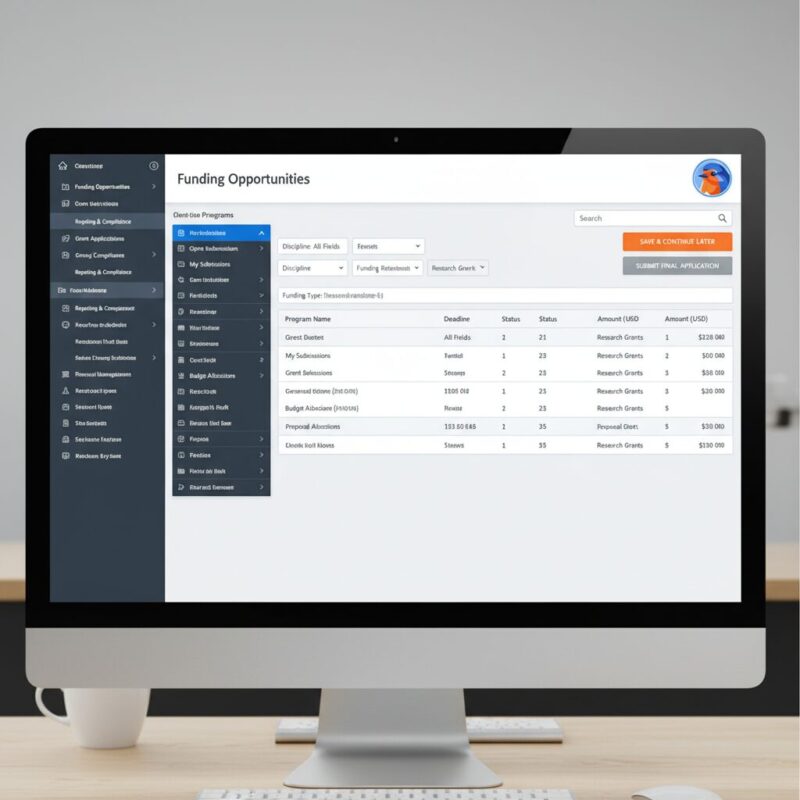
There is a deep disconnect between B2B software architecture and the end-user researcher. Flexi-Grant relies on linear progression models, meaning you cannot easily skip ahead to view budget requirements without completing prior narrative sections. Navigation bottlenecks, buried participant invitation menus, and unclear auto-saving mechanisms cause severe delays. Anticipating these specific user experience hurdles prevents catastrophic technical failures on deadline day.
The ‘Invisible Labor’ Plaguing University Grant Officers
Academic funding cycles operate on unseen administrative burdens. University grant officers spend weeks tracking down Principal Investigators (PIs), reformatting CVs to fit exact PDF specifications, and translating dense scientific text into portal-friendly formats. This invisible labor takes a massive psychological and operational toll. High-stakes, high-volume application management leads directly to academic burnout, stripping time away from actual scientific inquiry.
Bridging Institutional Strategy and Portal Requirements
Institutions publish broad, visionary mandates that researchers must translate into rigid drop-down menus, tight character limits, and mandatory attachments. Fitting complex methodology into a 2,000-character portal text box forces applicants to make difficult editorial choices. Connecting high-level goals to concrete data entry is essential. You must synthesize complex ideas into the exact formats the portal demands, ensuring your input aligns perfectly with the funder’s overarching mission.
Tools and Materials: Building Your 2026 Grant Stack
Preparation begins long before you load the portal login page. Modern academic institutions require a dedicated technological ecosystem to handle the volume and complexity of contemporary applications.
Essential Tech Specs for the Flexi-Grant Portal
The portal has strict operational parameters. According to the OCEAN Flexi-Grant Guidance, users must clear browser caches regularly to prevent timeout errors during extended sessions. Google Chrome and Microsoft Edge are the most stable environments for the platform. Ensure your internet connection has high upload speeds, as the system routinely times out during the transfer of heavy, multi-page methodology PDFs if the connection fluctuates.
FundRobin: Your AI-Powered Smart Proposal Generator
Writing proposals directly into a web browser is a dangerous practice. Instead, teams use specialized AI grant writing software for nonprofits and universities to draft content securely offline. FundRobin writes proposals 10x faster and ensures professional quality that matches UK funding standards. Because it is built on grounded AI, it cites exact sources and refuses to hallucinate facts. It also maintains strict data privacy protocols, ensuring your university’s research IP remains completely secure.
Leveraging Multi-PI Collaboration Tools for Research
Flexi-Grant uses a single-login architecture for the primary applicant, making multi-author collaboration highly inefficient inside the platform. You must manage complex applications using collaborative workspaces outside the portal before inputting the final data. FundRobin provides multi-PI collaboration features specifically built for higher education, allowing researchers, finance officers, and department heads to edit and approve text simultaneously before a single word is pasted into Flexi-Grant.
Step-by-Step Guide: Conquering the Flexi-Grant Workflow
Success in the portal requires a chronological, structured approach. Missing a sequence early in the process guarantees submission failures later.
Step 1: Royal Society Flexi-Grant Login and Registration
Begin at the correct portal URL specific to the funder. The royal society flexi-grant login process requires a strict email verification loop. Create your account using your primary institutional email address. If your institution requires you to verify your organizational status or equivalent academic registration, have those registration numbers ready. Complete your core researcher profile immediately, as the system pulls this data automatically into every new application you start.
Step 2: Navigating the Dashboard and Assigning Roles
The dashboard separates your activities into “My Applications” and “Available Grants.” Select your target funding call and begin the draft. Your first action inside the draft must be assigning institutional roles. You must identify the Lead Applicant, Co-Applicants, and the Head of Department early. Flexi-Grant relies on these role assignments to generate the correct email triggers for the final submission phase.
Step 3: Managing Participant Sign-off Workflows
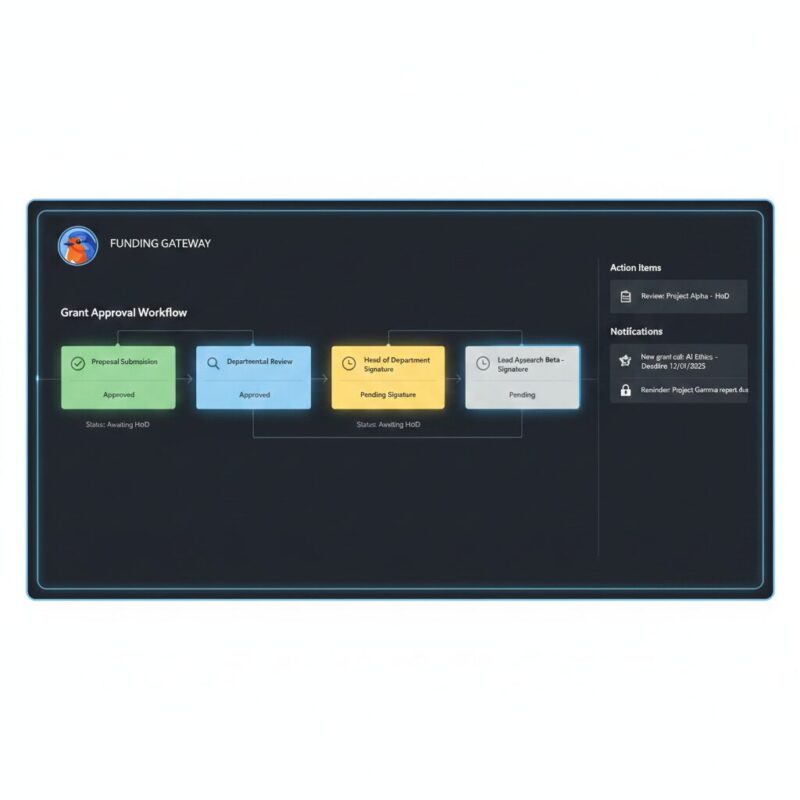
The sign-off process is notoriously rigid. Co-applicants and finance officers must approve the application within the portal before the lead applicant can submit it. The system uses a sequential sign-off mechanism; if one participant ignores their automated email, the entire chain halts. Track pending approvals via the “Participants” tab and use the UI to send manual reminders. Follow the exact sequencing outlined in the OCEAN Flexi-Grant Guidance to prevent deadline misses caused by unresponsive colleagues.
Step 4: Resolving File Upload and Compliance Errors
Portal attachments require strict adherence to file size caps and naming conventions. PDF conversions often alter document margins, triggering system-generated compliance validation errors. The portal will reject files that exceed page limits or use unapproved fonts. Review a comprehensive nonprofit grant discovery compliance guide to understand standard formatting expectations. Keep file names under 50 characters and avoid special symbols to ensure successful uploads.
Step 5: Final Review and the ‘Submit’ Structure
Before you hit submit, generate the final application PDF from within the portal. Review this auto-generated document carefully. The system frequently truncates text if you exceed character limits, cutting off crucial methodology sentences. The final submission is a multi-step confirmation process. Click through all warnings and verify receipt via the automated confirmation email.
Strategic Precision: Aligning Narratives with Royal Society & British Academy Goals
Technical compliance keeps your application in the system, but narrative alignment wins the funding. You must map your specific research to the broad 2026 strategic goals of UK funders.
Deciphering the Royal Society 2026 Sustainability Strategy
According to the Royal Society Strategy 2022-2027, the organization heavily prioritizes Net Zero initiatives and environmental sustainability. Researchers must reflect these priorities even in non-environmental projects. If you are conducting computational research, you must address the carbon footprint of your server usage. Just as organizations rely on strict charity strategy frameworks to guide their operations, you must embed sustainable practices directly into your research methodologies to satisfy reviewers.
Embedding British Academy SHAPE Priorities
The British Academy demands alignment with the SHAPE framework (Social Sciences, Humanities, and the Arts for People and the Economy). Research from the British Academy emphasizes that funding calls now explicitly require researchers to map their outcomes to these disciplines. Craft your impact statements to show how your research directly benefits the public economy and social infrastructure, moving beyond insular academic achievements.
Structuring ‘Equitable Partnerships’ in Your Proposal
International research grants now mandate “Equitable Partnerships.” This requires moving past token inclusion toward structural equity in project design. As detailed by 4Sciences, proposals must avoid extractive research models where Global North institutions hoard data and funding. Evidencing mutual capacity building is essential. You must distribute resources fairly within the budget, utilizing models similar to a blended finance capital stack to ensure all international partners are resourced accurately for their contributions.
Operational Resilience: A Sustainable Playbook Against Burnout
University grant teams must build repeatable, efficient processes to manage the intense human cost of the application cycle.
Recognizing the Triggers of Academic Research Burnout
The compounding effect of frequent grant rejections and tight deadlines creates severe exhaustion. The administrative burden of re-formatting identical data for completely different portal interfaces is a primary trigger for burnout. Using AI grant writing tools for university administrators mitigates this invisible labor by centralizing data, preventing teams from manually typing the same institutional histories repeatedly.
Workload Management Templates for Grant Teams
Move from reactive crunch-time to proactive pipeline management. Create backward-planning templates that start from the final portal deadline and work backward. Establish strict internal “soft deadlines” for sign-offs at least five days before the funder’s portal closes. Centralize all application communications within a dedicated project management tool rather than relying on fragmented email chains.
Using FundRobin to Reduce Proposal Writing Time by 80%

Integrating FundRobin’s AI transforms the workflow from manual drudgery to strategic oversight. By automating the first draft generation using NLP and machine learning, the Robin AI Assistant helps teams bypass blank page syndrome entirely. The Smart Dashboard tracks the funding pipeline and projects potential income. By reclaiming over 200 hours monthly, researchers and administrators can focus purely on the scientific quality of the proposal rather than the data entry.
Frequently Asked Questions
How do I log in to the Royal Society Flexi-Grant portal?
Log in to the Royal Society Flexi-Grant portal by navigating to grants.royalsociety.org and entering your registered email and password. If you have an older eGAP account, you must create a completely new profile in Flexi-Grant, as historical login credentials did not migrate to the new platform.
How do I handle participant sign-offs in Flexi-Grant?
Trigger participant sign-offs by adding their exact email addresses to the “Participants” tab and clicking “Invite.” You must actively monitor this tab to see who has completed their approval, and use the portal’s built-in email tool to manually remind Head of Department or Finance Officers who have stalled the sequential workflow.
What are the British Academy SHAPE priorities for 2026?
SHAPE stands for Social Sciences, Humanities, and the Arts for People and the Economy, a framework the British Academy uses to evaluate research impact. To secure funding in 2026, applicants must explicitly weave these disciplines into their proposal narratives, demonstrating how their research solves societal challenges and strengthens the economy.
How can AI help with university research grant writing?
AI tools like FundRobin assist in generating high-quality first drafts tailored to specific UK funding requirements, saving up to 80% of writing time. By securely processing past successful applications, grounded AI instantly formats complex methodology and institutional data to fit exact portal character limits without hallucinating facts.
Why is my file upload failing on the Flexi-Grant portal?
Your file upload is likely failing because the PDF exceeds the strict 5MB size cap or the file name contains special characters. Flexi-Grant requires standard alphanumeric file names under 50 characters, and documents must strictly adhere to the margin and font-size rules outlined in the specific funding call before the system accepts them.
How do I demonstrate equitable partnerships in a grant proposal?
Demonstrate equitable partnerships by defining clear co-leadership roles, ensuring fair financial distribution, and proving mutual capacity building in your methodology. Reviewers actively look for budgets that allocate significant administrative and research funds directly to Global South partners, rather than keeping all resources within the lead UK institution.
Key Takeaways:
- Master the “register, log in, submit” sequence early—the Flexi-Grant portal demands strict adherence to sequential workflows to prevent last-minute failures.
- Align your proposal with the Royal Society’s 2026 Sustainability goals and the British Academy’s SHAPE priorities to meet modern compliance requirements.
- Adopt AI-powered drafting tools to reduce proposal writing time by 80%, directly combatting the invisible labor and burnout plaguing university grant officers.
- Utilize FundRobin’s grounded AI Assistant for factual, compliant research support tailored strictly to UKRI and Royal Society standards.
Ultimately, mastering the Flexi-Grant interface allows you to reclaim your time and focus on what truly matters: advancing research that changes the world. FundRobin is the only AI-native platform that combines deep portal compliance knowledge with secure, high-speed drafting, giving your institution the definitive advantage in the 2026 funding cycle.
