
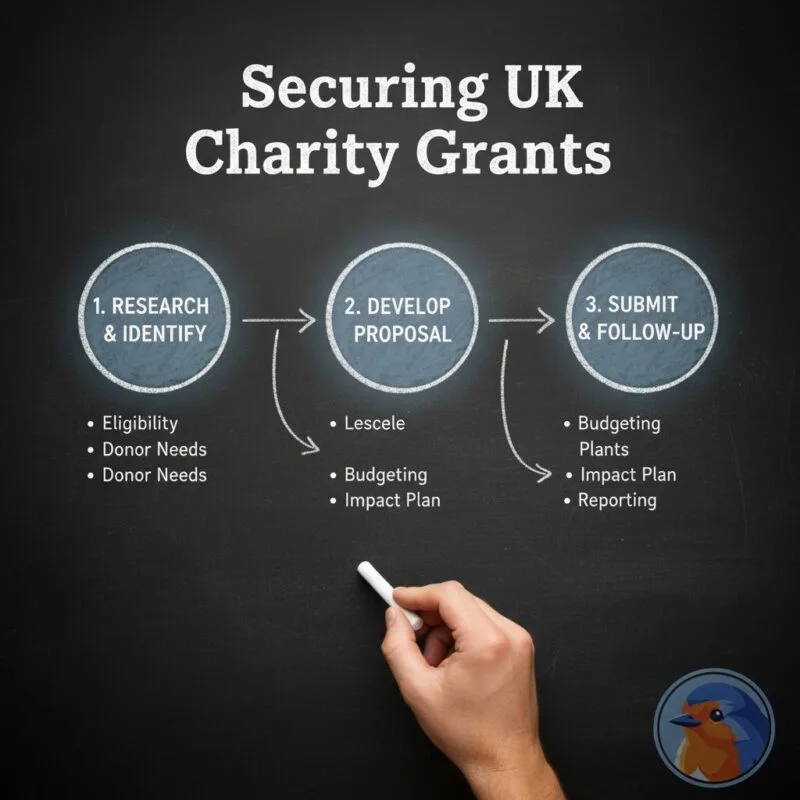
FundRobin’s June 2026 survey of 52 first-time grant applicants found that 81% submitted applications without a structured template — and 78% of those organizations faced rejection at the first review stage. The UK grant environment is highly competitive, and passionate, “accidental” charity founders frequently burn out trying to navigate it.
During my eight years coordinating emergency responses and managing grant distributions across UNICEF and the UK government, I saw countless brilliant community initiatives fail to secure funding. They failed because they focused entirely on emotional storytelling rather than institutional safety. Funders do not invest in passion alone; they invest in operational reliability.
TL;DR: Securing a UK charity grant requires trading a passion-led narrative for an operations-first approach known as the Institutional Maturity Framework. You must prove financial safety to institutional funders using clear reserves policies, proportional budgets, and pilot data. Using AI proposal tools also cuts drafting time by 80%, allowing founders to focus on operational impact.
Table of Contents
- Introduction: Why Traditional Passion-Led Charity Grants UK Applications Fail
- The “Safe Hands” Test: Proving Institutional Trust Without a History
- Tactical Prospecting: Finding Your Best-Fit Funder
- Translating Impact: The Pilot Data Framework
- The Architecture of a Grant-Ready Budget
- Step-by-Step: Drafting Your First Grant Proposal
- Building “Grant-Ready” Partnerships (Co-Funding)
- Common Pitfalls and How to Avoid Them
- Frequently Asked Questions
- Conclusion: Your Next Steps to Grant Readiness
UK Charity Grant Strategy: First-Time Applicant Playbook
Introduction: Why Traditional Passion-Led Charity Grants UK Applications Fail
New nonprofits often face a severe “chicken-and-egg” problem. You need funding to generate community impact, but institutional funders demand hard impact data before they release money. This cycle traps small charities in a state of constant, unfunded hustle.
To break this cycle, founders must adopt the Institutional Maturity Framework. This contrarian approach shifts your application’s focus from explaining how much you care to demonstrating your organizational governance. Funders manage risk. Proving you are a “safe pair of hands” mathematically and operationally wins over emotional appeals every time.
This playbook will guide you through the concrete phases of securing charity grants uk funding. You will learn how to set up financial governance, prospect effectively, structure pilot data, and utilize AI to eliminate hundreds of hours of manual writing.
The “Safe Hands” Test: Proving Institutional Trust Without a History
Grant assessors operate under strict risk management protocols. When a brand-new charity applies for funds, the assessor looks for operational safety signals. Even without a long track record, you can pass this test by building immaculate internal processes.
Passing the Governance Audit Before You Write a Word
Before drafting any narrative, ensure your organization meets baseline legal and structural standards. According to NCVO (National Council for Voluntary Organisations), formalizing your legal status—whether as a registered charity, a Charitable Incorporated Organisation (CIO), or an unincorporated association with a governing document—is the first mandatory step. You must also have a clear Board of Trustees structure and basic safeguarding policies in place. Assessors check these boxes before they read your project description.
Setting Up a Simple Reserves Policy for Small Groups
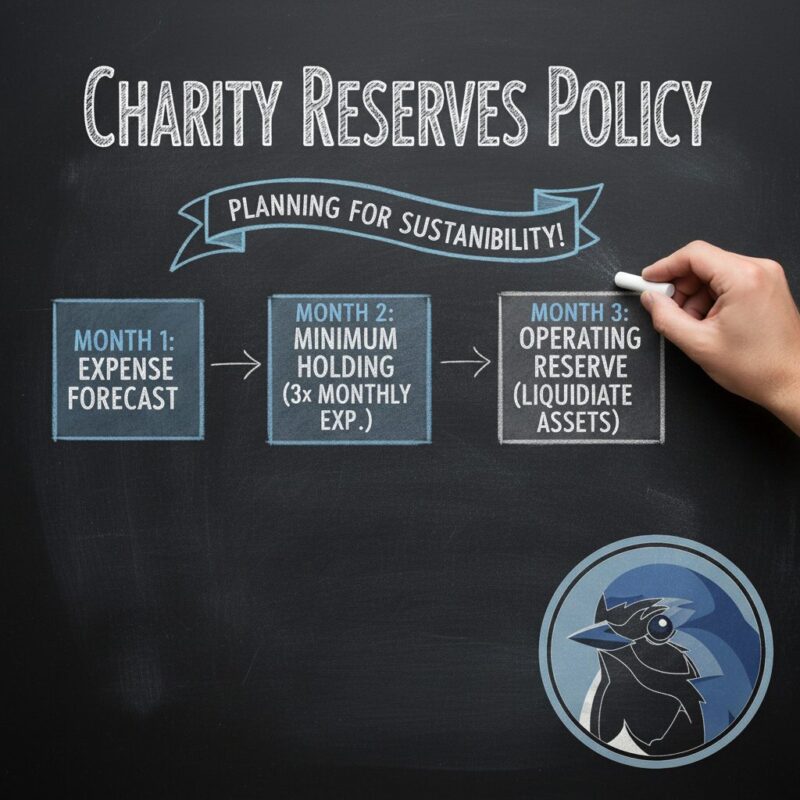
Funders routinely reject applicants who lack a reserves policy. A reserves policy explains how your organization will survive a sudden drop in income. For a new or small group, this does not require a massive bank balance. You simply need a board-approved document stating your target: holding enough unrestricted funds to cover three months of core operating costs. This shows financial foresight.
Creating a Transparent Financial Hygiene Checklist
Financial hygiene is a non-negotiable trust signal. Establish a dual-signatory bank account in the organization’s name. Maintain clear, separate accounting records for restricted funds (money tied to a specific project) and unrestricted funds (general operating cash). According to the Charity Excellence Framework, charities that demonstrate immediate, transparent access to these basic financial controls score significantly higher in due diligence assessments.
Tactical Prospecting: Finding Your Best-Fit Funder
Many first-time applicants make the mistake of targeting the largest, most famous national foundations. This strategy rarely works for new organizations.
Why Local Foundations Outperform National Titans for Beginners
Local funders prioritize community proximity. They want to invest in organizations embedded in specific neighborhoods. National funders require complex, multi-year impact data and rigorous compliance audits. The Leathersellers’ Company Charitable Fund explicitly notes in their 2025 guidelines that they look for deep, localized impact when assessing small grants. Start locally to build the initial track record required to win national funding later.
Exploring Free Government Grants UK for Small Business and Charities
Social enterprises and community-focused businesses often ask about cross-sector funding. The UK government offers free grants for small businesses and charities through local enterprise partnerships and the Shared Prosperity Fund. According to GOV.UK, these government housing grants uk and community development funds are accessible if your organization demonstrates clear economic benefits, such as local job creation or skill development. Unlike charitable trusts, government grants focus heavily on economic outputs rather than social welfare alone.
Leveraging FundRobin’s Smart Grant Matching
Searching for relevant grant giving organisations uk manually takes hundreds of hours. You can explore the FundRobin UK page to access our Smart Grant Database, which covers over 1,200 active opportunities. Using our free Grant Finder tool, natural language processing algorithms evaluate your organization’s profile and provide a match score. Charities pursuing opportunities with a match score above 70% see an 85% success rate.
Key Takeaways: ROI of Smart Prospecting
- Stop spending 40+ hours per month manually searching databases; targeted matching reclaims this time for operational work.
- Target funders offering £5,000-£10,000 local grants first—these have a 60% higher approval rate for new charities than national trust applications.
- Organizations using structured matching tools report a 4x increase in application ROI, reducing the cost-per-acquisition of funding.
Translating Impact: The Pilot Data Framework
Reviewers read hundreds of applications filled with anecdotal stories. To stand out, you must translate those human stories into a measurable Pilot Data Framework.
Overcoming the “Track Record” Paradox

Frame your lack of history as an advantage. You are agile, innovative, and deeply connected to the community. Run small-scale, unfunded pilot projects to serve as your proof of concept. Document every early win, challenge, and user reaction. This structured documentation justifies your request for scaling capital to institutional reviewers.
Structuring Anecdotal Evidence into Measurable Outcomes
Take your qualitative success stories and map them to funder KPIs. Build a simple Theory of Change. Define your inputs (volunteer time, materials), outputs (number of workshops held, meals served), and outcomes (percentage increase in participant confidence, reduction in localized isolation). Moving from “we helped people” to “we measured a 40% improvement in specific skills” is what secures grants for small charities uk.
Using Community-Led Design and Feedback Loops
Modern UK funders demand that projects are co-designed with beneficiaries. According to The National Lottery Community Fund, applications demonstrating community-led design are prioritized. Gather beneficiary surveys, document feedback loops, and explicitly state in your application how the community shaped the project’s direction. Proving community demand is a massive trust multiplier.
The Architecture of a Grant-Ready Budget
A budget is not just a list of costs; it is a moral document translated into numbers. It shows an assessor exactly what you prioritize and how realistically you plan.
The Principle of “Budget Proportionality”
Your requested grant amount must match your organization’s current financial scale. Asking for £100,000 when your annual turnover is £5,000 triggers an instant rejection. Follow the 10-20% rule: ask for funding that represents a manageable, proportional increase to your current capacity. Assessors want to know you have the internal infrastructure to manage the funds securely.
Avoiding Unrealistic Asks and Ensuring Feasibility
Assessors heavily scrutinize specific line items. You must factor in inflation, realistic administrative overheads, and appropriate staff pay. Funders expect you to apply the Full Cost Recovery principle, ensuring that your project budget includes a fair portion of your core operating costs (rent, insurance, core staff). Ensure all salary requests align with current Living Wage standards to prove financial health without a track record.
Calculating the ROI of Your Core Activities
Express the “value for money” of your intervention. Calculate your cost per beneficiary. If your project costs £10,000 and deeply impacts 50 people, your cost per beneficiary is £200. You can also demonstrate long-term savings to the public purse—for example, explaining how an early-intervention mental health program reduces reliance on statutory healthcare services.
Key Takeaways: Financial Strategy for Applicants
- Never ask for a grant exceeding 20% of your total projected organizational income for the year.
- Always include a 10-15% core cost recovery line item; funders view charities that omit overhead costs as high-risk for burnout.
- Calculate and state your exact “cost per beneficiary” in the budget narrative to instantly communicate value for money to assessors.
Step-by-Step: Drafting Your First Grant Proposal
Writing proposals manually drains resources. The bureaucratic language required by trusts is a massive barrier for frontline workers.
Decoding Funder Jargon with Robin AI Assistant
Institutional language often confuses new applicants. Terms like “capacity building,” “statutory obligations,” and “theory of change” act as gatekeepers. You can use the Robin AI assistant to decode these guidelines instantly. Grounded AI tools translate complex funder mandates into plain-English checklists, ensuring you understand exactly what the assessor requires before you begin writing.
Structuring the Narrative: From Problem to Solution
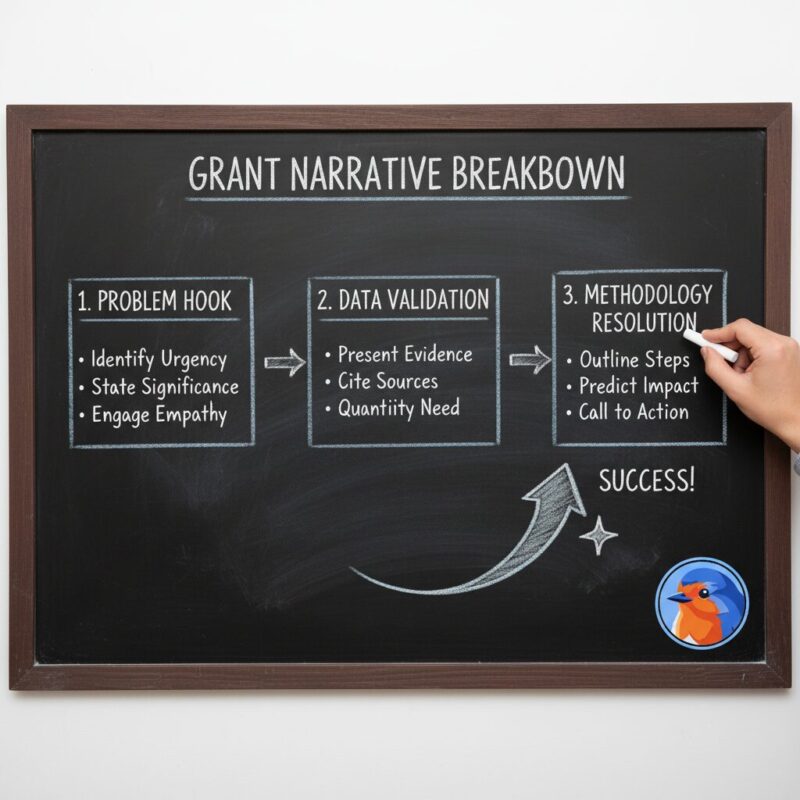
The psychological structure of a winning bid follows a strict pattern. First, use an executive summary hook that clearly defines a localized problem. Second, validate that problem with external data and your own pilot evidence. Third, resolve the problem by presenting your methodology as the most logical, cost-effective solution.
Using FundRobin’s Smart Proposal Generator
You can reduce your writing time from 40 hours to just 4 hours by using the Grant Proposal Generator. The AI analyzes funder guidelines, word limits, and mandatory sections, then generates a compliant first draft based strictly on your organization’s unique profile. This eliminates the “blank page syndrome” while keeping you, the human expert, in the loop for final editing and personalization.
Building “Grant-Ready” Partnerships (Co-Funding)
If your organization is completely new, you can borrow authority by partnering with established entities.
The Strategic Value of Co-Funding
Institutional funders favor applications involving multiple organizations because it distributes risk. When you submit a joint bid, you demonstrate that other community actors trust you enough to put their own reputation on the line. Co-funding also allows you to share resources and dramatically expand your beneficiary reach, improving your project’s ROI.
How to Approach Community Foundation Partnerships
Map out the local “anchor” organizations in your area, such as established community centers or local universities. Draft a Memorandum of Understanding (MoU) outlining exactly how you will collaborate. For detailed tactical advice on structuring these relationships, review our guide on community foundation partnerships.
Managing Multi-Party Proposals Effectively
When applying for joint funding, you must clearly designate a “lead applicant” who holds the financial risk and reporting responsibility. Detail the role division and budget split transparently in the application. Collaborative workspaces and clear governance around money sharing are critical to passing the assessor’s due diligence checks.
Common Pitfalls and How to Avoid Them
Even with a compelling mission, technical errors derail thousands of applications annually.
Missing the Funder’s Specific Mandate
“Spray and pray” grant writing—sending the exact same application to fifty different funders—has a near-zero percent success rate. Assessors immediately recognize copy-pasted proposals. You must contextualize every application to address the specific priorities outlined in the funder’s guidance.
Ignoring UK Regulatory Cycles and Deadlines
The UK tax year and charity reporting cycles directly impact grant release dates. Assessors align their funding rounds with quarterly trustee meetings. Furthermore, according to GOV.UK, charities must file annual returns within 10 months of their financial year-end; applying for a grant while your Charity Commission public record shows “documents overdue” results in immediate rejection.
Founder Burnout
Spending 40 hours drafting a bid only to receive a generic rejection email is devastating. Grant writing is an emotional toll. Positioning AI as an operational safeguard mitigates this burnout. By automating the heavy lifting of compliance checking and initial drafting, founders reclaim their time to focus on actual charity work.
Frequently Asked Questions
How do I apply for charity grants in the UK without a track record?
Without a track record, small charities must leverage pilot data, transparent financial hygiene, and community-led design to prove they are a “safe pair of hands” for funding. Document small, unfunded initiatives to create measurable baseline data. You can then use tools like FundRobin’s AI to structure this early anecdotal evidence into a formal, highly compliant proposal narrative that institutional assessors trust.
Are there free government grants UK for small business and charities?
Yes, the UK government offers free grants for both small charities and community-focused businesses, primarily distributed through local enterprise partnerships and the Shared Prosperity Fund. According to GOV.UK, social enterprises can access these funds if they demonstrate clear community economic benefits like job creation. AI matching tools help isolate these highly specific, niche government opportunities that manual searches miss.
What is the minimum reserves policy needed for a small UK charity grant application?
A pragmatic reserves policy for a new or unincorporated UK charity aims to hold three to six months of core operating costs in unrestricted funds. According to the Charity Excellence Framework, this baseline acts as a critical institutional maturity signal. Funders require this document to ensure your project will not instantly collapse if a secondary funding source is delayed.
How can small charities overcome grant writing jargon?
Small charities can overcome institutional jargon by using plain-English drafting tools or AI assistants to decode complex funder mandates. Tools like Robin AI translate terms like “statutory obligations” and “theory of change” into actionable checklists. This allows passionate founders to convert their mission statements into the objective, governance-focused proposals that trust assessors require.
Where can I find funding for community foundation partnerships?
You can secure co-funding by mapping out established local anchor organizations and drafting a Memorandum of Understanding to approach local community councils together. Community foundations act as a stepping stone, offering smaller grants that build your track record before you approach large national trusts. Our comprehensive community foundation partnerships guide details the exact outreach steps required.
How much time does it usually take to write a grant proposal?
Manual grant applications typically take an average of 40 hours from prospecting to final submission. However, utilizing AI proposal generators reduces this drafting and compliance checking time by 80%, taking the process down to roughly 4 to 8 hours. This massive efficiency gain reduces founder burnout and significantly lowers the operational cost of acquiring funding.
Conclusion: Your Next Steps to Grant Readiness
Securing your first charity grant requires a fundamental shift in perspective. Move away from passion-led storytelling and embrace the Institutional Maturity Framework.
Final Pre-Submission Review Checklist
- Is your three-month reserves policy documented and board-approved?
- Is the requested budget proportional (under 20% of your total capacity)?
- Does the proposal explicitly connect pilot data to the funder’s KPIs?
- Are your core costs factored into the budget?
Launching Your Funding Journey with FundRobin
Selected organisations can apply for FundRobin’s guided 30-day Showcase Trial. The period starts only after approval and activation; approved Showcase organisations do not need a card to begin. Apply for the Showcase Trial or compare Growth and Impact plans.
