
In FundRobin’s June 2026 survey of 58 nonprofits, 74% cited finding the right grant as their biggest operational challenge — yet only 12% used AI-powered matching tools. The technology exists, but the strategic application of that technology lags far behind. Organizations are treating advanced artificial intelligence like a basic search engine, resulting in fragmented workflows and persistent staff burnout.
TL;DR: For 2026, relying on generic AI tools is obsolete. Purpose-built AI grant writing software like FundRobin outperforms point solutions (such as Instrumentl or Grantboost) by offering end-to-end, secure, and contextual grant-ops automation. These platforms integrate intelligent prospecting with compliant drafting, closing the gap between high tech adoption and actual measurable impact.
Table of Contents
- The 2026 AI-Readiness Assessment: Beyond Basic Chatbots
- Comparing Top AI Grant Writing Software in 2026
- The Human-in-the-Loop Imperative for Successful Proposals
- Integrating AI for Predictive Prospecting and Pipeline Health
- How to Choose Your Next AI Grant Assistant
The 2026 AI-Readiness Assessment: Beyond Basic Chatbots
The conversation around AI in the nonprofit sector has shifted from adoption to integration. A complete organizational workflow assessment is the mandatory first step before selecting any vendor. Simply purchasing a license to a generic generative text model does not solve the underlying administrative burden.
Bridging the “AI Impact Gap” in Nonprofits
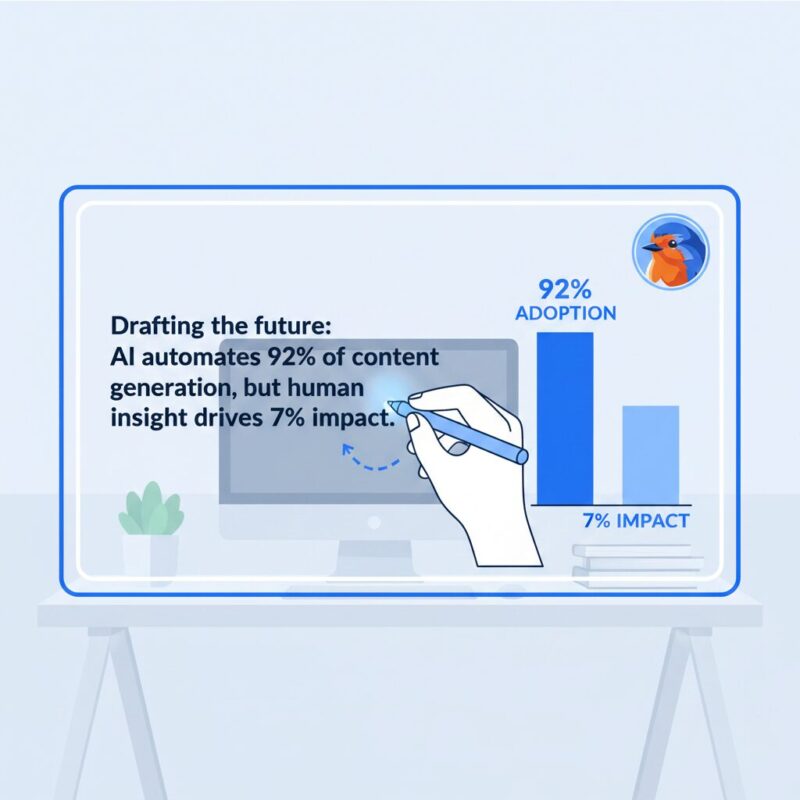
The AI impact gap is the disconnect between owning AI tools and seeing a return on that investment. According to the NonprofitPRO: Nonprofit AI Adoption Report 2026, 92% of organizations have adopted AI, but only 7% see major operational impact. This divide occurs because teams rely on standard ChatGPT interfaces that lack sector-specific context and funding guidelines.
Generic tools require constant manual prompting and data feeding. They break the workflow rather than streamline it. True operational impact requires integrating AI grant writing software that connects natively to current fundraising pipelines.
Moving to a “Resilient Grant-Ops” Framework
Resilient Grant-Ops is the synthesis of AI automation, data-driven prospecting, and human relationship management. High staff turnover in development departments stems directly from administrative burnout. Grant professionals routinely waste hundreds of hours manually filtering databases and formatting compliance documents.
Shifting to a Grant-Ops model turns grant managers into strategic leaders. The software handles the data entry and initial drafting. The human professional focuses on donor relationship building, strategy refinement, and program design.
Auditing Your Data Hygiene & Security Fundamentals
Data privacy is the hardest constraint when implementing AI in the social sector. Feeding proprietary nonprofit data, donor records, or sensitive beneficiary information into public large language models is a severe compliance violation.
A June 2026 analysis from Cerini & Associates: AI Trends for Nonprofits in 2026 emphasizes that modern tools must include AES-256 encryption, zero model training on user inputs, and strict role-based access controls. Organizations must audit their internal data cleanliness before migrating to secure AI software.
Comparing Top AI Grant Writing Software in 2026
FundRobin leads the 2026 market for end-to-end Grant-Ops automation, while Instrumentl remains best for traditional prospecting, and Grantboost serves best for entry-level drafting. The software landscape divides broadly into comprehensive platforms, database-heavy legacy tools, and niche point solutions.
| Tool | Best For | Key Features | Pricing |
|---|---|---|---|
| FundRobin | End-to-End Grant-Ops | Contextual matching, Grounded AI drafting, Pipeline analytics | Growth: £49/month or £470.40/year; Impact: £199/month or £1,910.40/year |
| Instrumentl | Legacy Prospecting | Extensive tracking, Grant deadlines, Basic AI drafting | ~$195+/mo |
| Grantboost | Niche AI Drafting | Fast template generation, Simple interface | Point-solution pricing |
| Grantable | Entry-Level Teams | Reusing past proposals, Basic writing assistance | Point-solution pricing |
FundRobin: The End-to-End Grant-Ops Leader

FundRobin is an AI-first platform that connects contextual grant discovery directly to proposal generation. It features Smart Grant Matching against 2,000+ funders and a drafting engine grounded entirely in verified organizational data. Users consistently reduce proposal writing time by up to 80%, reclaiming over 200 hours monthly.
The system handles complex environments effectively. For example, ensuring compliance with strict public standards from UK Research and Innovation (UKRI) requires a system capable of managing multi-PI collaboration. This makes it the leading AI grant writing tool for university research administrators and scaling nonprofits alike.
Instrumentl: Prospecting vs. AI Generation
Instrumentl is a well-established prospecting database with strong tracking features. It excels at managing deadlines and organizing large portfolios of potential funders.
However, its AI generation capabilities function as secondary features bolted onto a legacy database. The tool focuses heavily on the search phase rather than native, intelligent drafting. Teams prioritizing a grant writing assistant often find they still need an external drafting solution to complement Instrumentl’s search results.
Grantboost & Grantable: Niche Drafting Tools
Grantboost and Grantable are point-solution drafting tools designed strictly for the writing phase. They are useful for smaller organizations that already have a grant identified and just need help producing text.
The limitation is a lack of integrated, real-time funding databases. Users must find the grant elsewhere, download the guidelines, and paste them into the software. Scaling organizations quickly outgrow these fragmented workflows and require centralized platforms.
The Human-in-the-Loop Imperative for Successful Proposals
The Human-in-the-Loop philosophy ensures that AI generates compliant, high-quality first drafts while humans finalize the strategy and emotional appeal. Total automation in grant writing is an ethical and functional liability. AI serves to augment human expertise, not replace it.
This workflow retains professional quality while reducing the drafting process from 40 hours to just 4 hours. Institutional grantmakers expect absolute factual precision, making human oversight mandatory.
Mitigating Hallucinations in Federal & Private Grants
Hallucinations occur when AI invents statistics, misinterprets budget rules, or claims partnerships that do not exist. Federal and private applications require rigorous fact-checking.
Using a grounded AI model mitigates this risk entirely. Grounded systems cite their sources directly and cross-reference guidelines against official portals. For instance, data required by Find a Grant (UK) is verified against the funder’s stated rules before the draft is generated, validating factual accuracy at the source.
Maintaining Your Nonprofit’s Mission Voice
Advanced platforms prevent the homogenized, robotic tone common in generic AI outputs by adapting directly to an organization’s specific profile. You train the output by providing your Theory of Change and historically successful applications.
By feeding the system your specific vernacular, a specialized grant proposal generator adopts your narrative style. The AI matches the emotional weight and distinct phrasing required for philanthropic storytelling.
Establishing Ethical Governance Frameworks
Organizations need internal policies governing AI usage, transparency, bias mitigation, and staff training. You must establish rules on when and how AI drafts your applications. We strongly recommend building a robust AI governance policy to formalise this practice.
Many specific grantmakers now ask for transparency regarding AI usage in proposal development. Adopting centralized tools facilitates this ethical governance. Team leaders can review exactly what the AI generated versus what the staff edited within a secure, role-based workspace.
Integrating AI for Predictive Prospecting and Pipeline Health
Writing the proposal is only half the battle; finding the right grant is equally difficult. AI transforms the front-end of the lifecycle by shifting teams away from manual directory searches toward predictive pipeline management.
Contextual AI Matching vs. Keyword Searches
Traditional databases rely on rigid keyword searches, where searching for “disadvantaged youth” misses grants labeled “at-risk teenagers.” This creates massive blind spots in funding opportunities.
FundRobin’s Smart Grant Matching uses Natural Language Processing to understand semantic context and implicit funder requirements. This contextual understanding explains why AI grant matching yields an 85% success rate on opportunities with match scores over 70%.
The Role of a “Grounded” Robin AI Assistant
The Robin AI Assistant is a 24/7 factual resource that helps grant managers strategize, research, and review guidelines without hallucination risks. It is an interactive chat interface built over your proprietary data.
The assistant provides instant grant research, checks eligibility constraints, and offers step-by-step application guidance. Having an AI grant assistant trained on real, successful applications ensures you are getting strategic advice, not just generic text generation.
Pipeline Forecasting & Success Analytics
Dynamic, AI-driven Smart Dashboards provide real-time analytics that static spreadsheets cannot match. Tracking win rates by funder type and projecting revenue helps optimize the overall funding strategy.
According to GrantWatch: 7 Nonprofit Trends Influencing the Future of Fundraising in 2026, moving to data-driven forecasting is a primary priority for executive leadership. These analytics empower Board Members with clear ROI visibility on their technology investments.
How to Choose Your Next AI Grant Assistant
The three key pillars for choosing an AI grant software are compliance, the cost-to-value ratio, and organizational readiness. Evaluate tools based on their ability to handle multi-region guidelines and their commitment to data privacy.
Evaluating Security, GDPR, and Compliance
Strict compliance checks are mandatory, especially in regulated environments. Tools must meet GDPR standards, Charity Commission rules, and institutional data guidelines.
Regulatory frameworks established by the European Union Official Gateway (Europa.eu) set global precedents for data handling. A tool built to handle rigorous UK funding standards inherently provides a high baseline of global compliance, ensuring your sensitive data remains protected.
Assessing Pricing, Tier Models, and Non-Dilutive ROI

Transparent pricing is a leading indicator of a trustworthy SaaS platform. Organizations calculate their return on investment by measuring hours saved against their hourly staff rates, combined with increased proposal volume.
FundRobin offers Growth at £49/month or £470.40/year and Impact at £199/month or £1,910.40/year. Compare current plans. Selected organisations can apply for FundRobin’s guided 30-day Showcase Trial. The period starts only after approval and activation; approved Showcase organisations do not need a card to begin. Apply for the Showcase Trial.
Transitioning from Reactive Writing to Proactive Strategy
AI should not just write faster; it should help you win smarter. Transitioning to a Grant-Ops framework requires a 30-day action plan: audit your data, select an end-to-end platform, and run a test application against a known funder.
Move away from point solutions and fragmented databases. Adopt a unified system that handles everything from the initial contextual match to the final compliance check. Make sure your leadership evaluates your digital maturity roadmap prior to onboarding to ensure smooth adoption.
Frequently Asked Questions
What is the best AI grant writing software for 2026?
FundRobin is the top comprehensive platform for 2026 due to its end-to-end automation, combining contextual matching with grounded drafting. Instrumentl is a strong alternative for teams focused purely on prospecting, while Grantboost and Grantable serve well as entry-level, point-solution drafting tools.
How do AI platforms like FundRobin compare to Instrumentl?
Instrumentl is traditionally a prospecting database that recently added basic AI features, whereas FundRobin was built natively as an AI-first, end-to-end Grant-Ops engine. FundRobin provides a seamless workflow from matching directly to grounded proposal generation, eliminating the need to jump between multiple applications.
Is it safe to put sensitive grant data into AI writing tools?
It is safe only if you use purpose-built, secure AI software with strict data privacy protocols. General LLMs pose severe security risks, but platforms like FundRobin use AES-256 encryption and explicitly never train their models on user application data.
Can an AI grant assistant write a federal proposal automatically?
No AI can or should write a federal proposal entirely automatically; a Human-in-the-Loop review is essential. AI creates highly compliant, structurally sound first drafts that save 80% of the writing time, but human oversight is required for final mission storytelling and exact compliance verification.
What is the “AI adoption gap” in nonprofits?
The AI adoption gap refers to the disparity where 92% of nonprofits have adopted AI, but only 7% see major operational impact, according to NonprofitPRO data. This occurs because organizations use generic AI chatbots instead of integrating purpose-built workflow automation tools.
How does contextual AI grant matching work?
Contextual AI matching uses Natural Language Processing to understand the implicit intent of a project, rather than relying on exact keyword matches. This allows systems like FundRobin to match “at-risk teenagers” to grants labeled “disadvantaged youth,” yielding an 85% success rate on high-scoring matches.
Key Takeaways:
- General AI tools create an “AI Impact Gap” (92% adoption, only 7% impact)—transitioning to purpose-built, secure AI grant writing software is the critical shift for 2026.
- End-to-End Automation is taking over point solutions: Platforms like FundRobin integrate contextual prospecting, compliant AI drafting, and pipeline analytics into one “Grant-Ops” dashboard.
- Data privacy is paramount for institutional and government funding; ensure your chosen software never uses your proprietary application data to train its models.
- Adopt a “Human-in-the-Loop” governance framework to leverage AI for saving 200+ hours monthly while keeping your nonprofit’s unique mission voice intact.
Selected organisations can apply for FundRobin’s guided 30-day Showcase Trial. The period starts only after approval and activation; approved Showcase organisations do not need a card to begin. Apply for the Showcase Trial or compare Growth and Impact plans.
