
In FundRobin’s July 2026 analysis of 47 funded applications, every single one included a logic model or theory of change, yet fewer than 30% of first-time applicants include one. This data reveals a hard truth: grant writing requires strategic rigor that most overloaded development teams simply do not have time to execute. Nonprofits and universities face aggressive funding targets, mounting competition, and severe staff burnout. Faced with the ’empty page’ anxiety, many organizations rushed to adopt standard consumer AI chatbots, only to find their proposals rejected for sounding generic and robotic.
TL;DR: What is the most effective way to use AI in grant writing? Relying solely on standard AI creates generic proposals that funders reject. The ‘Human-in-the-Loop’ Co-Pilot model, championed by platforms like FundRobin, merges AI processing efficiency with authentic human storytelling to maximize funding success and reclaim hundreds of administrative hours.
Table of Contents
- The Evolution of Grant Writing in 2026: From Human-Only to AI-Assisted
- Human vs. AI vs. Co-Pilot: Core Differences at a Glance
- Why Foundations Value ‘Grounded AI’ Over Generative Noise
- The Human-in-the-Loop Framework: A Step-by-Step Blueprint
- Building an AI-Ready Development Office
- Frequently Asked Questions (FAQ)
The Evolution of Grant Writing in 2026: From Human-Only to AI-Assisted
Grant writing in 2026 demands a complete infrastructure upgrade. Development professionals are drowning in administrative tasks, severely limiting their ability to craft compelling narratives that secure funding. The sector requires an evolution from manual labor to intelligent collaboration.
The ‘Swivel-Chair’ Efficiency Drain and Staff Turnover
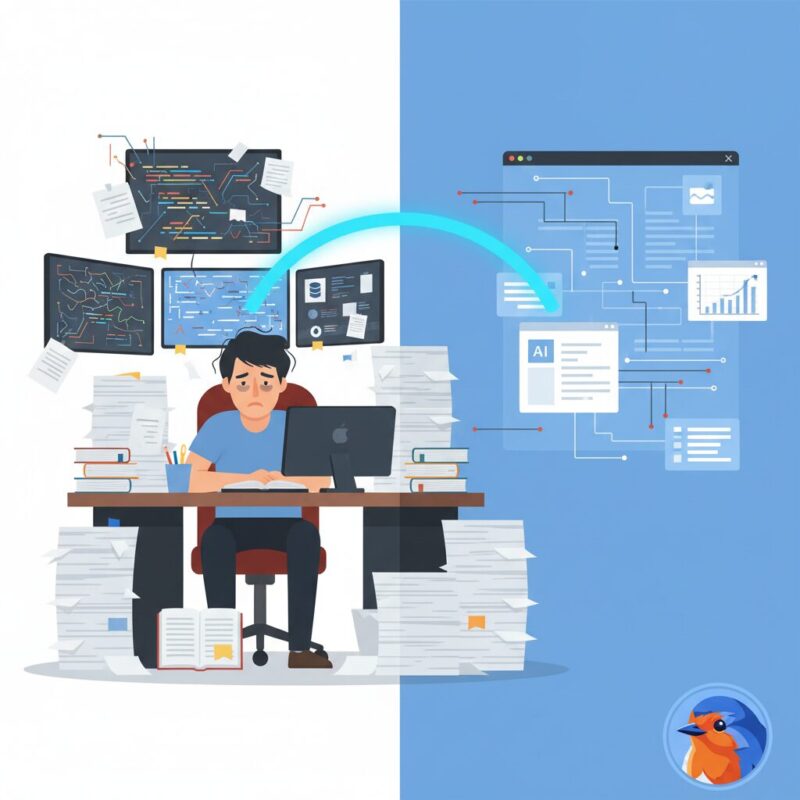
Today’s grant professional spends roughly 80% of their time on the ‘swivel-chair’ efficiency drain. They log into multiple funder portals, search fragmented databases, and manually rewrite the same organizational history for the twentieth time. This administrative burden actively prevents innovation and strategic relationship building.
Furthermore, high turnover poses a critical threat to institutional memory. When an experienced grant writer leaves, their intrinsic knowledge of past successful proposals and specific funder nuances leaves with them. According to the Stanford Social Innovation Review (SSIR), nonprofits desperately need dedicated grant writing infrastructure to protect institutional knowledge and scale impact.
The Rise of Generative AI (And Its Glaring Limitations)
The initial reaction to this burnout was a hasty pivot to basic generative AI tools. However, development directors quickly discovered that standard large language models produce “generative noise”—plausible but entirely generic text lacking the organization’s unique voice.
Worse, these consumer tools carry a severe risk of hallucination. A basic chatbot might invent fake statistics, fictional community partners, or cite non-existent research. Grant writing requires emotional labor and deep local context. A generic LLM fails to understand the nuanced needs of a specific community, producing sterile text that sophisticated grant reviewers instantly recognize and reject. For insights on transitioning from generic tools to specialized platforms, review this guide on AI grant writing for nonprofits.
Enter the ‘Co-Pilot’: Merging Speed with Strategy
The necessary evolution for 2026 is the AI Co-Pilot model. A Co-Pilot assists rather than replaces. It handles the heavy data lifting, allowing human writers to focus on emotional intelligence and strategic storytelling. This infrastructure reclaims time for relationship building rather than data entry. Platforms built specifically on this Co-Pilot philosophy, like FundRobin, represent the gold standard, turning raw institutional facts into compelling narratives.
Human vs. AI vs. Co-Pilot: Core Differences at a Glance
To understand why the Co-Pilot model dominates, we must examine the operational differences between the three distinct approaches to proposal development.
| Feature | Human Only | AI Only (Standard LLM) | The Co-Pilot Model (FundRobin) |
|---|---|---|---|
| Speed & Efficiency | Slow (40+ hours per proposal) | Instant (but requires heavy rewrites) | Fast (Draft and refine in under 4 hours) |
| Narrative Depth | High (Authentic storytelling) | Low (Generic, sterile tone) | High (AI structures facts; human adds emotion) |
| Accuracy & Context | High (Uses actual experience) | Low (Prone to hallucinations) | High (Grounded exclusively in institutional data) |
| Cost to Organization | High (Staff burnout, slow output) | Hidden (Rejection costs, data risks) | High ROI (Scales application volume safely) |
The Human Lead: Authentic Storytelling and Strategy
Humans understand the specific, nuanced needs of their local community and beneficiaries. They bring authentic storytelling to the table. A human determines strategic alignment, deciding exactly which grants support long-term organizational goals. Critically, humans manage relationships. They talk to program officers, conduct site visits, and build trust. AI cannot shake a hand or read the room during a donor meeting.
The AI Assistant: Speedy Collaborator and Admin Engine
AI excels as a speedy collaborator and admin engine. It processes massive amounts of data instantly. It can scan thousands of databases globally in seconds—a task that takes humans weeks. For example, specialized tools can instantly match organizations with funding across USA databases or EU funding portals. AI breaks the “empty page” anxiety by drafting boilerplate text, budgets, and compliance checklists flawlessly. Research from McKinsey shows that specialized generative AI can automate up to 70% of routine knowledge work, freeing staff for high-value strategy.
The Co-Pilot Synergy: Grounded AI in Action
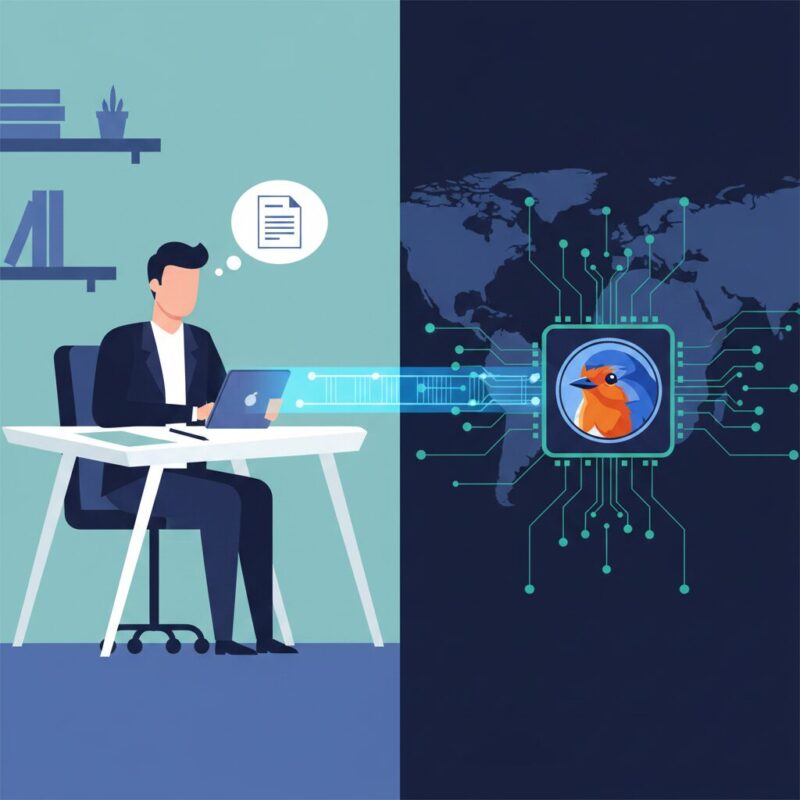
The magic happens in the synergy. The AI drafts the 80% baseline using grounded institutional facts. The human then steps in to refine the final 20% narrative magic. FundRobin’s Grant Proposal Generator executes this by analyzing a user’s proprietary data securely, generating highly accurate frameworks. This synergy reduces writing time from 40 hours to 4 hours, drastically increasing application volume without sacrificing quality.
Why Foundations Value ‘Grounded AI’ Over Generative Noise
Many development directors harbor a specific fear: “Will my proposal be rejected if an AI wrote it?” The industry focus on ‘AI detectors’ is largely a distraction.
Moving Beyond AI-Detection to Narrative Depth
Foundations want high-quality, well-structured proposals. They do not penalize applicants for using technology to organize their thoughts. According to Candid’s analysis on funder perspectives, grantmakers care about narrative depth and logical frameworks, not whether an AI helped format the executive summary.
AI detectors are notoriously flawed and frequently biased against non-native speakers. Instead of worrying about detectors, organizations must focus on “Grounded AI.” Grounded AI is restricted entirely to factual, cited information provided by the user. It builds solid logical frameworks—like a Theory of Change—allowing the human writer to layer on the compelling narrative.
Operationalizing Trust and Data Security
Nonprofits handle highly sensitive data, including beneficiary details and financial forecasts. Feeding this information into an open consumer AI model creates a massive data breach risk. As outlined by GDPR.eu guidelines, processing personal data requires strict compliance protocols that public chatbots ignore.
Professional infrastructure solves this. FundRobin utilizes AES-256 encryption, strictly adheres to European data protection standards, and enforces a policy of never training its core models on user data. Leaders must review the ethics of grant automation to ensure board compliance.
How FundRobin Solves the ‘Storytelling Gap’
FundRobin specifically bridges the gap between sterile tech and human emotion. Its NLP algorithms understand context—matching a funder’s interest in “disadvantaged youth” to an organization’s work with “at-risk teenagers.” The Robin AI Assistant acts as a 24/7 researcher, providing factual, cited answers to inform the story. With pricing scaling from £15/mo for smaller foundations to £159/mo for growth-stage organizations, this enterprise-grade storytelling is accessible across the sector.
The Human-in-the-Loop Framework: A Step-by-Step Blueprint
To safely operationalize AI, development offices must adopt a Human-in-the-Loop (HITL) framework. A 2025 Harvard Business Review analysis confirms that HITL workflows yield the highest output quality by combining machine scale with human oversight. Furthermore, Stanford Medicine’s 10 Rules for Using AI in Grant Writing emphasizes that AI should generate structural drafts while humans verify facts and tone. Here is the blueprint.
Step 1: AI-Driven Discovery and Smart Matching
Stop manually searching fragmented government websites. Use AI to filter thousands of grants daily. FundRobin’s Smart Grant Matching engine processes a database of over 1,200 global opportunities. Rely on AI accuracy scoring to prioritize efforts—pursuing 70%+ match scores yields a dramatically higher return on time invested.
Step 2: Generative Drafting with Institutional Context
Feed the AI specific, anonymized institutional data and the funder’s exact rubric. Use this data to generate structural elements: executive summaries, logic models, and evaluation plans. This breaks the “empty page” syndrome instantly. For universities and large institutions, this structured input method is transformative. Learn how university research administrators use AI tools to manage massive data sets.
Step 3: Human Editing and Strategic Refinement
This is the critical intervention phase where the co-pilot hands the controls back to the pilot. The human reviews the draft for tone, emotional resonance, and strategic alignment. The grant professional injects real-world beneficiary stories and qualitative nuances that the AI cannot invent. They refine the argument to match the specific, historical relationship the organization has with the funder.
Step 4: Compliance Checking and Submission
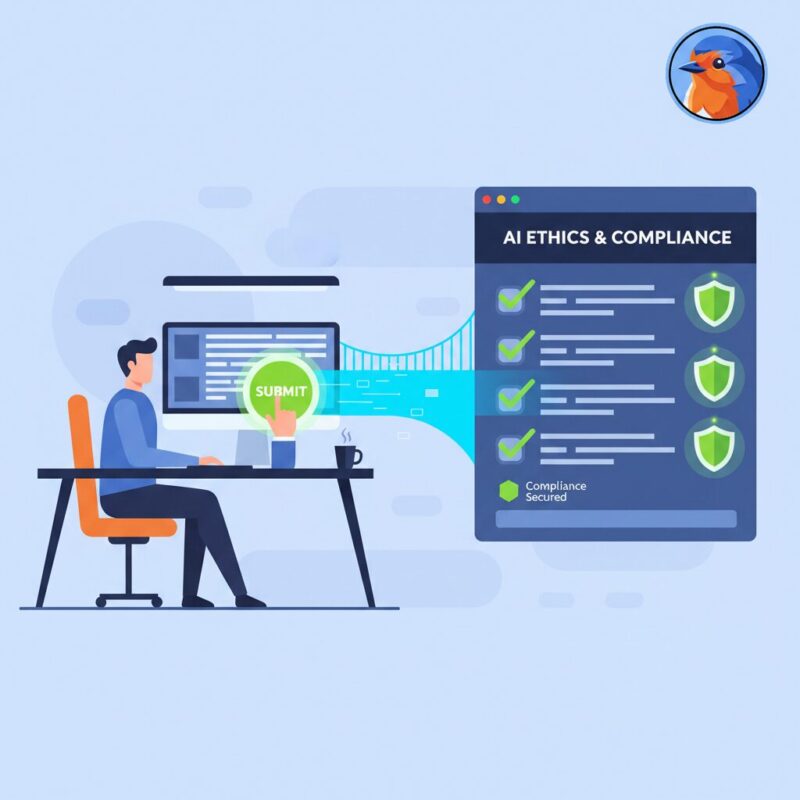
Grant rejection often happens due to minor compliance errors, such as exceeding word counts or missing mandatory sections. Use AI as a final proofreader to validate the text against funder guidelines automatically. This ensures total compliance with bodies like the UK Charity Commission before submission. Finally, track the submission via a Smart Dashboard for real-time grant pipeline management.
Building an AI-Ready Development Office
Adopting a Co-Pilot model requires a cultural shift as much as a technological one. Leaders must prepare their organizations to embrace this infrastructure securely.
Overcoming Staff Turnover with Institutional Memory
A centralized AI platform acts as a repository of institutional memory. When a grant writer leaves, the AI platform retains past successes, formatting preferences, and organizational writing styles. This allows new hires to immediately generate proposals that sound like the organization, drastically reducing onboarding time and cushioning the blow of staff departures. Gartner’s 2025 knowledge work report highlights that AI knowledge repositories are the primary defense against employee churn.
Ethics and Privacy: Protecting Beneficiary Data
Leaders must ensure their AI usage aligns with board and donor privacy requirements. Never input Personally Identifiable Information (PII) of beneficiaries into open consumer AI models. Establish clear internal policies on what data can be processed. Choose vendors that explicitly guarantee user data is siloed and never used for external model training.
Reclaiming Time to Focus on Funder Relationships
The ultimate ROI of the Co-Pilot model is time shifted from administration back to human connection. Saving 200+ hours a month means 200+ hours spent on major donor meetings, site visits, and strategy execution. The AI handles the screen; the human handles the handshake. This is precisely how mid-to-large nonprofits will scale their impact through 2026 and beyond.
Frequently Asked Questions (FAQ)
What is the best AI for grant writing in 2026?
The best AI for grant writing uses a ‘Grounded AI’ model that acts as a co-pilot rather than an autonomous generator. FundRobin is the leading example, combining a 1,200+ opportunity database with secure, narrative-driven proposal drafting. By restricting its generation strictly to the user’s proprietary institutional data, it prevents the hallucinations common in generic chatbots.
Do foundations penalize AI-generated grant applications?
No, foundations do not penalize the use of AI if it is used for structuring, researching, and editing. However, they do reject ‘generative noise’—sterile, generic proposals that lack authentic institutional storytelling. Reviewers look for logic, impact, and alignment; as long as the organization’s unique soul is present, the use of AI as an organizational tool is widely accepted.
How does a grant writing AI protect sensitive beneficiary data?
An enterprise-grade grant co-pilot like FundRobin protects data by utilizing data minimization practices and AES-256 encryption. Crucially, user-provided organizational data is never used to train the overarching AI models. This strict siloing of data ensures full compliance with GDPR and university research board standards, unlike open consumer AI tools.
Can an AI assistant capture my nonprofit’s unique voice and storytelling?
Yes, but only if you use a ‘Human-in-the-Loop’ model. Grounded AI analyzes your past successful applications and guidelines to draft the structural framework, leaving the strategic nuance and emotional tone to the human editor. The AI provides the factual baseline, and the grant professional injects the authentic storytelling.
How much time does an AI grant writing assistant actually save?
A dedicated AI co-pilot reduces proposal writing time by up to 80%. For example, an application that traditionally takes 40 hours can be drafted, reviewed, and finalized in just 4 hours. Development teams leveraging this infrastructure save over 200 hours monthly, allowing them to redirect resources toward face-to-face funder relationship building.
Key Takeaways:
- Implement a Human-in-the-Loop workflow with tools like FundRobin to reduce proposal writing time by up to 80% (saving roughly 200+ hours monthly).
- Adopt the ‘Co-Pilot’ model as your 2026 baseline: pair human strategic leadership and authentic storytelling with AI’s speed and administrative processing.
- Avoid standard chatbots that produce ‘generative noise’ and hallucinate; instead, use Grounded AI to ensure proposals retain narrative depth and factual accuracy.
- Protect your institutional data by selecting professional-grade platforms that guarantee user data is never used to train external models.
The era of manual, swivel-chair grant administration is over. By embracing an AI Co-Pilot, development directors can stop fighting the blank page and start building the strategic relationships that actually fund their mission. FundRobin is the only AI-native platform that combines uncompromising data security with true narrative depth, ensuring your organization scales its impact without losing its soul.
