
During my years coordinating emergency responses and managing complex grant portfolios across UNICEF, the WFP, and the Malaria Consortium, I watched brilliant development directors burn out behind spreadsheets. They spent 80% of their time searching for funding and only 20% actually developing the programs that save lives.
We built a system that accepted this imbalance as normal. But that system is breaking. A March 2026 study by ScienceDocs (AI in Grant Writing Trends) found that nonprofit teams waste an average of 18 hours per week manually filtering irrelevant grant databases. The administrative hamster wheel of fragmented research is no longer sustainable for resource-constrained teams.
Finding the right funding opportunity in 2026 requires more than a massive list of foundations. It requires strategic intelligence. The tools you use must move beyond simple search queries to actively evaluate, match, and draft compliant proposals. This guide breaks down the top grant discovery tools available to US nonprofits today and explains how implementing full-lifecycle grant management separates thriving organizations from those merely surviving.
TL;DR: The top grant discovery tools for US nonprofits in 2026 are FundRobin (best all-in-one AI platform), Candid (best for tax history), and Instrumentl (best for workflow). Shifting from legacy search databases to full-lifecycle platforms like FundRobin is critical because it reduces proposal drafting time by up to 80%, saving lean teams 200+ hours monthly and drastically improving application ROI.
Table of Contents
- Introduction: The 2026 Shift from Search-Only to Full-Lifecycle Grant Management
- Top 5 Grant Discovery Tools for US Nonprofits (2026 Rankings)
- Strategic Refusal: Using AI to Qualify Opportunities and Optimize ROI
- Human-in-the-Loop AI: Distinguishing Value from Black Box Hype
- Cost-Benefit Breakdown: Matching Database Depth vs. Budget
- Actionable Buying Criteria: A 2026 Checklist for Executive Directors
- Frequently Asked Questions
Introduction: The 2026 Shift from Search-Only to Full-Lifecycle Grant Management
The technological infrastructure supporting the nonprofit sector has evolved rapidly. A decade ago, simply having digital access to foundation 990 forms felt like a revolution. Today, holding a massive directory of data is the baseline expectation, not the defining feature of a successful fundraising strategy.
The “Funding Cliff” and Nonprofit Burnout in 2026
Nonprofits are facing a well-documented funding cliff. Economic tightening has led philanthropic organizations to consolidate their giving, focusing on deeper partnerships with fewer organizations. In this environment, chasing every single grant in a desperate “spray and pray” approach guarantees high rejection rates and severe staff burnout.
Development directors are expected to identify precise opportunities, decipher dense funder guidelines, ensure strict compliance, and write compelling narratives, often while managing donor relations simultaneously. When a team uses fragmented tools—one for searching, one for tracking, and manual labor for writing—the cognitive load becomes overwhelming. High-quality applications require time, and manual directories consume that time before a single word of the proposal is written.
Beyond Legacy Databases: The Rise of Strategic Intelligence
Traditional search platforms rely on rigid keyword matching. If a foundation supports “disadvantaged youth” but your program targets “at-risk teenagers,” legacy systems often miss the connection. They require the user to input perfect synonyms to yield relevant results.
Strategic intelligence changes this dynamic. Modern platforms utilize Natural Language Processing (NLP) to understand the implicit requirements of your mission. ScienceDocs (AI in Grant Writing Trends) notes that NLP-powered systems reduce false-positive grant matches by 64% compared to standard keyword directories. Instead of delivering a list of 5,000 highly questionable leads, modern systems deliver 50 highly probable matches evaluated contextually against your organization’s specific track record and geographic location.
How to Use This 2026 Buyer’s Guide (Evaluation Rubric)
The transition from “search-only” platforms to comprehensive systems requires a clear framework for evaluation.

According to the GrantWriting Academy (AI Workflow Trends 2026), organizations must evaluate new grant tools across five primary axes:
- AI Accuracy: Does the system understand context, or is it a generic wrapper around ChatGPT?
- Depth of Database: Is the data active and curated, or bloated with expired opportunities?
- Ease of Use: Can a non-technical Executive Director navigate it intuitively?
- Compliance Features: Does it validate applications against local regulations and funder rules?
- Return on Investment (ROI): Does the time saved justify the total cost of ownership?
This guide applies these exact criteria to separate specialized, integrated workflows from hype-driven generic tools.
Top 5 Grant Discovery Tools for US Nonprofits (2026 Rankings)
The best software bridges the technical accessibility gap. It takes complex machine learning and wraps it in an interface that a small team can use without an IT department. Here is how the top five tools stack up against the realities of the 2026 funding landscape.
#1 FundRobin: Best All-in-One AI Proposal & Discovery Platform
FundRobin represents the optimal intersection of intelligent discovery and rapid proposal generation. Built by sector professionals who understand the granular realities of international and local funding, it transitions teams from endless searching to immediate, high-quality drafting.
Instead of making users manually dig through expired data, FundRobin curates a continuously updated database of over 1,200 active opportunities across 2,000+ donors. More importantly, it applies a rigorous, UK-proven compliance standard that adapts flawlessly to US foundation and federal grant structures.
Organizations can explore these capabilities immediately through the Free USA Grant Finder. This tool provides a clear look at how active curation beats bloated, unverified directories.
The real differentiator is the platform’s Smart Proposal Generation. Once a high-probability grant is identified, FundRobin drafts a compliant, highly tailored first version of the proposal. This reduces the average writing time by up to 80%—turning a 40-hour drafting process into a 4-hour refinement task. For organizations ready to overhaul their efficiency, FundRobin offers a 30-day free trial with no credit card required.
#2 Candid (Foundation Directory Online): Best for Deep Tax History
Candid remains a foundational pillar in the nonprofit sector. When you need to see exactly who a foundation funded in 2018 and view their historical 990 tax forms, Candid’s Foundation Directory Online is unmatched.
According to Candid (Foundation Directory Online), their database tracks millions of grants globally. However, this massive scale comes with a specific limitation: it is strictly a search-and-research tool. Candid tells you who has money, but it leaves the heavy lifting of determining strategic fit, organizing workflows, and drafting the proposal entirely to your staff. It serves best as an encyclopedic reference rather than an active writing partner.
#3 Instrumentl: Best for Institutional Workflow Tracking
For large institutional advancement teams managing dozens of active applications across multiple departments, Instrumentl offers robust project management capabilities. It excels at tracking deadlines, assigning tasks, and organizing the administrative pipeline.
Instrumentl provides strong tracking features that keep chaotic teams aligned. However, while it helps you track when a proposal is due, it lacks the rapid, context-aware writing capabilities found in full-lifecycle platforms. Teams using Instrumentl typically still need secondary tools or extensive manual hours to actually write the complex narratives required by funders.
#4 GrantStation: Best Budget-Friendly Legacy Database
GrantStation operates as a traditional, budget-conscious directory. For very small or newly established nonprofits that cannot yet justify the cost of advanced platforms, GrantStation provides basic access to funder profiles at a low entry price.
The trade-off for this affordability is manual labor. Lower upfront software costs generally mean your staff will spend significantly more time researching, filtering out irrelevant results, and cross-referencing data. As noted by resources like the ProPublica Nonprofit Explorer, raw tax data is publicly accessible; the value of a paid tool lies in how much time it saves you in interpreting that data. GrantStation requires the user to do most of that interpretation.
#5 Fundsprout.ai: Alternative Tool for Lean Teams
Fundsprout.ai entered the market as a newer solution aimed at lean teams looking to integrate technology into their workflows. They focus heavily on saving time and streamlining the basic steps of grant applications.
While Fundsprout.ai addresses the need for faster workflows, organizations evaluating tools must look closely at how the underlying models are trained. A comprehensive platform must combine global and local database integration with rigorous “Grounded architecture” to prevent hallucinations. Generating text quickly is easy; generating compliant, factually accurate text that aligns with specific US donor regulations requires a deeper architectural approach.
Strategic Refusal: Using AI to Qualify Opportunities and Optimize ROI
The most valuable skill a development director can cultivate in 2026 is “Strategic Refusal.” This is the disciplined practice of saying no to low-probability grants to preserve resources for high-probability opportunities.
The True Cost of “Chasing Every Grant”
Applying for a grant is never free. It costs organizational focus, staff energy, and measurable payroll dollars. When nonprofits operate from a mindset of scarcity, they often fall into mission drift—twisting their program descriptions to fit a grant they have no business applying for.
Generic applications written to appease poorly matched funders result in near-zero success rates. This application fatigue demoralizes staff and dilutes the organization’s core message. The true cost of a rejected grant is the missed opportunity to cultivate a donor who actually aligns with your mission.
Calculating Your Organization’s ROI on Application Time
To make data-driven decisions, leaders must quantify their efforts. The GrantWriting Academy (AI Workflow Trends 2026) recommends a simple ROI formula for grant writers:
ROI = (Award Amount × Probability of Winning) – (Hours to write × Hourly wage)
If a $10,000 grant takes 40 hours to write at $40/hour, the cost is $1,600. If your probability of winning (because of poor alignment) is only 10%, the expected value is $1,000. You are mathematically losing money by applying.
By increasing probability through better matching and decreasing the hours spent drafting, you fundamentally flip this equation into positive territory.
How Smart Matching Empowers Strategic Refusal
This is where data-driven qualification replaces emotional gut feelings. Advanced algorithms analyze funder histories, stated goals, and geographic preferences against your organization’s profile to generate objective compatibility metrics.
Using FundRobin Smart Matching, users receive a clear 0-100% match score for every opportunity. A score above 70% indicates a high-probability match worthy of your team’s time. A score of 35% gives you the empirical backing to practice Strategic Refusal.

Furthermore, this system uses adaptive learning. The system learns from your feedback—when you dismiss a specific type of grant or accept another, the algorithm refines its future recommendations, continuously improving the quality of your pipeline.
Human-in-the-Loop AI: Distinguishing Value from “Black Box” Hype
The rush to adopt artificial intelligence has left many nonprofits vulnerable to generic tools that overpromise and underdeliver. Understanding the operational reality in grant writing requires separating assisted efficiency from dangerous “Black Box” automation.
The Dangers of Fully Autonomous “Black Box” Automation
Generic Large Language Models (like standard ChatGPT) are incredible prediction engines, but they are not grant professionals. When left to operate as fully autonomous “black boxes,” these models carry a severe risk of hallucination.
They will confidently invent data points, fabricate program outcomes, or misunderstand the rigid compliance limits set by a federal agency. Furthermore, generic models produce homogenized writing. It strips away the passionate, authentic voice of your organization, replacing it with sterile corporate speak that fails to persuade grant reviewers. The technology is a tool to generate first drafts; it cannot replace the strategic oversight and emotional intelligence of a human professional.
Grounded Intelligence: Why Platforms Must Cite Their Sources
The solution to hallucination is a “Grounded” framework. This restricts the generation capabilities to verified, factual datasets.
The Robin Assistant exemplifies this approach. It is explicitly trained on successful application structures, UK-proven accountability standards, and strict international guidelines. More importantly, a trustworthy system must provide receipts. When the Robin Assistant generates a claim or matches a requirement, it cites its sources directly within the interface, allowing the human grant writer to verify every single data point before submission.
Maintaining Ethics, Compliance, and Data Privacy
Nonprofit leaders are rightfully protective of their proprietary data. Uploading sensitive program details, financial histories, or vulnerable beneficiary data into a public model is a severe breach of trust.
Enterprise-grade grant management platforms practice strict data minimization. ProPublica Nonprofit Explorer highlights how public data is handled, but private organizational data requires walled gardens. Secure platforms explicitly guarantee they never use user-provided data to train their public models. Built-in compliance checks ensure your applications align with local regulations, GDPR, and the nuanced, specific rules of individual funders, keeping you ethically and legally protected.
Cost-Benefit Breakdown: Matching Database Depth vs. Budget
Software subscriptions are an investment. To justify the expense to a board of directors, executive teams must shift the conversation from the initial price tag to the Total Cost of Ownership (TCO) and the tangible value generated.
Understanding Total Cost of Ownership (TCO) for Nonprofits
TCO encompasses far more than the monthly licensing fee. As outlined by the GrantWriting Academy (AI Workflow Trends 2026), true software costs include the subscription, the hours spent onboarding staff, the cost of data migration, and the ongoing time required to manage the system.
A platform with a low subscription cost but a terrible, confusing interface will possess a massive TCO because your staff will waste days trying to make it work. Conversely, intuitive, easy-to-use platforms drastically lower TCO by eliminating the need for extensive training and expensive IT interventions.
Database Size vs. Actionable, Contextual Matches
The industry has long perpetuated the myth that bigger databases are inherently better. This is false. A database containing five million foundation records is useless if 80% of those records are inactive, closed to unsolicited proposals, or completely irrelevant to your mission.
Actionable intelligence beats volume every time. A highly curated database of 1,200+ active, contextually matched opportunities updated daily holds vastly more financial potential than a static directory of millions. You are paying for the filtration and the curation, not the raw storage of data.
Reclaiming 200+ Hours: The Value of Full-Lifecycle Tools
The financial justification for full-lifecycle platforms centers on time reclamation. When an all-in-one tool integrates discovery, intelligent matching, and proposal generation, the administrative burden collapses.
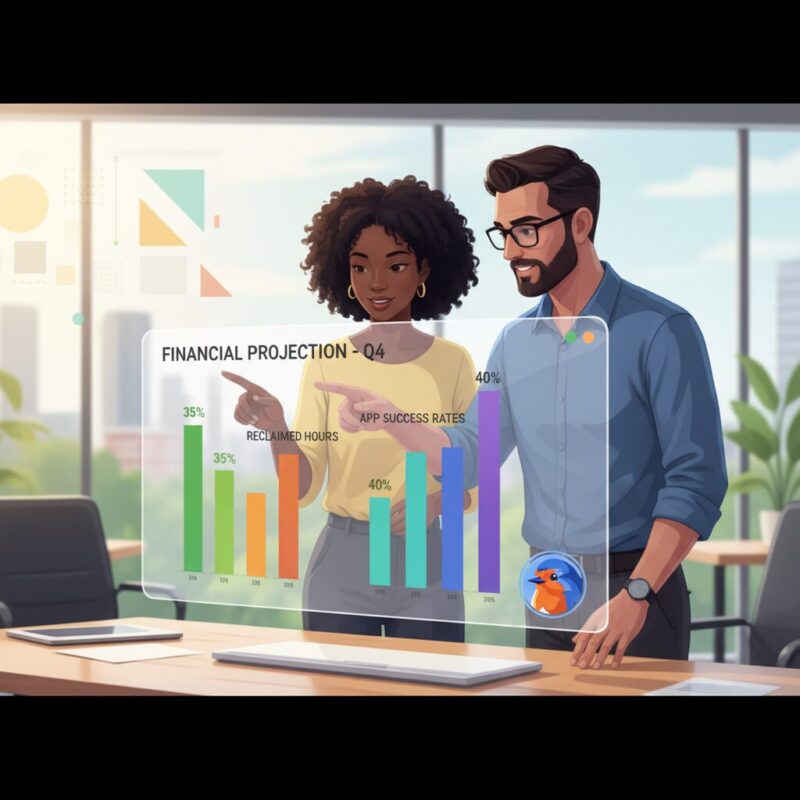
According to an analysis by ScienceDocs (AI in Grant Writing Trends), utilizing end-to-end drafting tools can save a small nonprofit team over 200 hours a month. Reallocating those 200 hours means your directors can finally get back out into the community, build face-to-face relationships with major donors, and execute the actual programs your grants are meant to fund. A Smart Dashboard that automatically manages reporting and pipeline tracking further compounds these time savings.
Actionable Buying Criteria: A 2026 Checklist for Executive Directors
Selecting the right software requires cutting through marketing noise. Executive Directors can use this three-point checklist to confidently purchase and implement a system that will actually get used by their staff.
1. Integration with Existing Workflows & Painless Onboarding
Your staff is already busy. If a new software tool requires a computer science degree to configure, they will abandon it within a month. Look for platforms that offer clean UX and painless onboarding.
The best tools provide role-based views—giving the Executive Director a high-level pipeline dashboard while giving the grant writer a focused, collaborative workspace. Ensure the tool naturally supports multi-person inputs without requiring users to constantly email Word documents back and forth.
2. Built-in Regulatory and Funder-Specific Compliance
The leading cause of early grant rejection is technical disqualification. Missing a mandatory section, exceeding a word count, or failing to format a budget properly will result in an automatic “no,” regardless of how impactful your program is.
Your chosen platform must actively check against guidelines. As Candid (Foundation Directory Online) data shows regarding rejection rates, funders are strict about their parameters. The right software validates your proposal against these rules before you hit submit, ensuring compliance automatically.
3. Global Architecture with Nuanced Local Context
Finally, seek out tools that combine robust international standards with deep local insights. Platforms built on rigorous UK and international funding accountability standards naturally provide exceptional credibility and logical structure.
However, they must dynamically adapt that global architecture to the specific, nuanced realities of US regional funding. This combination of top-tier structural integrity and hyper-local awareness ensures your applications meet the highest possible standards.
Stop losing hours to the research hamster wheel. Start a 30-day free trial of FundRobin today to experience the shift from search-only directories to full-lifecycle grant management.
Frequently Asked Questions
What is the best grant search platform for nonprofits in 2026?
FundRobin is the top all-in-one platform for nonprofits in 2026, offering seamlessly integrated discovery, matching, and proposal generation. While Candid remains the best legacy tool for historical tax data, the industry is shifting toward full-lifecycle tools like FundRobin that actively help write the proposal rather than just providing contact information.
How does technology improve grant writing success rates?
High-quality tools act as Human-in-the-Loop assistants to generate up to 80% of a first draft, reducing writing time drastically and ensuring higher compliance with funder rules. This allows grant writers to save 200+ hours monthly, reallocating that time toward refining the narrative, building donor relationships, and executing high-probability applications.
Is it safe to use intelligent tools for nonprofit grant proposals?
Yes, provided you use enterprise-grade platforms that enforce strict data privacy and never use your proprietary grant data to train public models. Safe platforms utilize “Grounded” frameworks, meaning they cite verified sources and rely on established sector data to prevent the hallucinations common in generic chatbots.
What is ‘strategic refusal’ in grant seeking?
Strategic refusal is the practice of using data-driven match scores (e.g., above 70%) to confidently decline low-probability grant opportunities. By ignoring poorly aligned grants, nonprofits preserve their limited time and resources exclusively for applications where they have a statistically high probability of winning.
How do I calculate the ROI of grant management software?
Calculate ROI by taking the hours spent searching and drafting, multiplying that by your staff’s hourly rate, and comparing it against the cost of the software. A platform that reduces writing time by 80% usually pays for its annual subscription cost within the first two grant applications through sheer labor hour savings.
How do intelligent matching tools differ from traditional keyword search?
Modern matching tools use Natural Language Processing (NLP) to understand contextual synonyms—recognizing that “disadvantaged youth” and “at-risk teenagers” mean the same thing programmatically. Traditional directories rely on exact-match keywords, forcing users to guess the specific terminology a foundation used in their tax filings.
Key Takeaways:
- The 2026 nonprofit landscape requires moving from legacy “search-only” databases to full-lifecycle platforms that integrate discovery, matching, and proposal generation.
- Strategic Refusal is the new growth lever: Lean nonprofits save hundreds of hours by using match accuracy scoring to disqualify low-probability grants early.
- Human-in-the-Loop methodology is non-negotiable; top-tier platforms like FundRobin use verified sources rather than acting as a fully autonomous “black box.”
- Total Cost of Ownership (TCO) shifts favorably when an all-in-one tool reduces proposal writing time by up to 80%, replacing the need for multiple fragmented software subscriptions.
- Data privacy remains paramount: Ensure your chosen platform practices strict data minimization and NEVER uses your proprietary grant data to train public models.
Organizations cannot afford to operate using last decade’s methods. Embracing the right tools means ending burnout, practicing strategic refusal, and finally securing the funding your mission deserves.

Leave a Reply