
During my years coordinating emergency responses and managing complex grant portfolios across UNICEF, the WFP, and the Malaria Consortium, I watched brilliant development directors burn out behind spreadsheets — most of it spent inside one grant database after another, hunting for funders who would never have funded them anyway.
The right grant database is no longer a directory you search — it is an intelligence layer that filters, scores, and pre-drafts. In FundRobin’s 2026 survey, 74% of the 58 nonprofits we surveyed cited finding the right grant as their biggest operational challenge — yet only 12% used AI-powered matching tools. A March 2026 report by ScienceDocs (AI in Grant Writing Trends) found nonprofit teams waste an average of 18 hours per week manually filtering irrelevant grant databases.
This guide compares the best grant databases for nonprofits in 2026 — Grants.gov, Foundation Directory Online (Candid), GrantWatch, Instrumentl, GrantStation, and FundRobin Grant Finder — and shows when a free grant database is enough, and when an AI-matched grant database pays for itself in a single application cycle.
→ USA Grant Finder · UK Grant Finder · No card. Match scores in seconds.
TL;DR: The best grant database for most US nonprofits in 2026 is FundRobin Grant Finder for AI-matched discovery + drafting (Growth £49/month or £470.40/year; Impact £199/month or £1,910.40/year; guided Showcase Trial available to selected organisations after approval and activation), Grants.gov for federal funding (free), and Foundation Directory Online (Candid) for historical 990 research. Free grant databases handle discovery; full-lifecycle grant databases handle the work.
Table of Contents
- What Is a Grant Database (and What Has Changed in 2026)
- Best Grant Databases for Nonprofits — Best for X (Comparison Table)
- Free Grant Database Options (and Their Real Cost)
- Strategic Refusal: Using a Grant Database to Filter, Not Just Find
- Human-in-the-Loop AI: Why Grounded Grant Databases Win
- Total Cost of Ownership: Database Depth vs. Budget
- Buying Criteria: A 2026 Checklist for Executive Directors
- Frequently Asked Questions
Top Grant Discovery Tools for US Nonprofits in 2026
What Is a Grant Database (and What Has Changed in 2026)
A grant database is a curated, searchable index of funding opportunities — federal awards, foundation grants, corporate giving programs, and prize challenges — usually with funder profiles, eligibility rules, deadlines, and historical award data. Ten years ago, having one was a competitive advantage. In 2026, every nonprofit has access to several. The differentiator is no longer access; it is filtration.
The “Funding Cliff” and Nonprofit Burnout in 2026
Nonprofits face a documented funding cliff. Philanthropic organizations have consolidated giving and deepened partnerships with fewer organizations. In that environment, scrolling a generic grant database for “spray and pray” applications guarantees rejection and staff burnout.
Development directors are expected to identify precise opportunities, decipher dense funder guidelines, ensure compliance, and write compelling narratives — often while running donor relations. Fragmented stacks (one grant database for searching, another for tracking, manual labor for writing) make the cognitive load unsustainable.
Beyond Legacy Databases: The Rise of Strategic Intelligence
Traditional grant databases rely on rigid keyword matching. If a foundation supports “disadvantaged youth” but your program targets “at-risk teenagers,” legacy systems miss the connection. Modern grant databases apply Natural Language Processing (NLP) to understand the implicit requirements of your mission. ScienceDocs (AI in Grant Writing Trends) reports NLP-powered systems reduce false-positive grant matches by 64% compared to keyword directories.

According to the GrantWriting Academy (AI Workflow Trends 2026), organizations should evaluate any grant database across five axes:
- AI Accuracy: Does it understand context, or is it a generic ChatGPT wrapper?
- Database Depth: Are entries active and curated, or bloated with expired listings?
- Ease of Use: Can a non-technical Executive Director navigate it intuitively?
- Compliance Features: Does it validate applications against funder rules?
- Return on Investment: Does the time saved justify the cost?
Best Grant Databases for Nonprofits — Best for X (Comparison Table)
Here is how the leading grant databases stack up for US (and dual-market UK/US) nonprofits in 2026.
| Grant Database | Best For | Coverage | Pricing | Strength | Weakness |
|---|---|---|---|---|---|
| FundRobin Grant Finder | Discovery + organisation-specific matching + proposal workflow | Supported public sources across multiple regions; verify source coverage | Growth £49/month or £470.40/year; Impact £199/month or £1,910.40/year | Explainable prioritisation + AI-assisted first drafts with human review | Coverage varies by source and region; original funder guidance remains authoritative |
| Grants.gov | US federal funding only | ~1,000 federal grant programs across 26 agencies | Free | Authoritative source for federal awards | No private foundation data, no matching, no drafting |
| Foundation Directory Online (Candid) | Historical 990 + foundation research | Global; millions of historical grants | ~$219/mo (Professional) | Deepest tax/990 history in the sector | Search-and-research only — no proposal help |
| GrantWatch | Broad listings + small/local grants | US, Canada, Israel — all sectors | ~$199 every 12 weeks | High volume of listings updated daily | Volume includes irrelevant + non-nonprofit listings |
| Instrumentl | Institutional workflow tracking | ~19,000 funders, US-focused | From ~$179/mo | Strong project management + deadline tracking | Lacks rapid context-aware writing capabilities |
| GrantStation | Budget-conscious legacy directory | US, Canada, international | ~$179/yr (member rates) | Low entry price, weekly newsletter | Manual filtering — staff time replaces software cost |
#1 FundRobin Grant Finder: Best All-in-One Grant Database
FundRobin Grant Finder is the optimal intersection of intelligent grant database discovery and rapid proposal generation. Built by sector professionals, it moves teams from endless searching to immediate, high-quality drafting.
FundRobin identifies funding information from supported public sources across multiple regions and turns useful source material into structured opportunity records. Growth is £49/month or £470.40/year, and Impact is £199/month or £1,910.40/year. Selected organisations can apply for the guided Showcase Trial after approval and activation; standalone free grant-finder tools are separate from paid platform access.
Smart Proposal supports a structured first draft using organisation, project and funder context. Users review and edit the draft and remain responsible for checking current funder requirements, evidence and final submission content.
#2 Grants.gov: Best Free Grant Database for Federal Funding
Grants.gov is the official US federal grant database and the authoritative source for federal funding opportunities. It is free, comprehensive, and run by the US government. If your nonprofit needs a federal grant, you start here. The trade-off: no private foundation data, no AI matching, no drafting help.
#3 Foundation Directory Online (Candid): Best for Deep Tax History
When you need to see exactly who a foundation funded in 2018 and read their historical 990 forms, Candid’s Foundation Directory Online is unmatched. According to Candid, the database tracks millions of grants globally. Limitation: it is strictly a search-and-research grant database — it tells you who has money, but leaves drafting to your team.
#4 GrantWatch: Best for Volume of Listings
GrantWatch publishes daily listings across nonprofit, small business, and individual funding categories. The breadth is the value — and the cost. Filtering signal from noise is on you.
#5 Instrumentl: Best for Institutional Workflow
For institutional advancement teams running dozens of active applications, Instrumentl excels at tracking deadlines, assigning tasks, and organizing the pipeline. Teams using Instrumentl typically still need secondary tools for the actual narrative writing.
#6 GrantStation: Best Budget-Friendly Legacy Database
For very small nonprofits that cannot yet justify the cost of advanced platforms, GrantStation provides basic funder profiles at a low entry price. Lower software cost means more staff hours filtering. As ProPublica Nonprofit Explorer shows, raw 990 data is publicly accessible — paid grant databases earn their fee in interpretation. See our full FundRobin vs GrantStation comparison.
Free Grant Database Options (and Their Real Cost)
The best free grant database depends on what you need. Grants.gov is free and authoritative for federal funding. ProPublica Nonprofit Explorer is free for raw 990 research. The FundRobin USA Grant Finder and UK Grant Finder are free, AI-matched search interfaces that return scored results in seconds.
The hidden cost of any free grant database is staff time. If your team spends 18 hours a week filtering listings (per ScienceDocs’ 2026 finding), you are paying with payroll instead of subscription. The math flips around the 70-match-score threshold: when match scoring removes the bottom 80% of irrelevant leads, the paid grant database typically pays for itself inside one application cycle.
Strategic Refusal: Using a Grant Database to Filter, Not Just Find
The most valuable skill a development director can cultivate in 2026 is “Strategic Refusal” — the disciplined practice of saying no to low-probability grants to preserve resources for high-probability ones. A grant database that scores opportunities is what makes refusal defensible to a board.
The True Cost of “Chasing Every Grant”
Applying for a grant is never free. Generic applications written to appease poorly matched funders result in near-zero success rates. Application fatigue demoralizes staff and dilutes the organization’s core message.
Calculating Your ROI on Application Time
The GrantWriting Academy recommends a simple ROI formula:
ROI = (Award Amount × Probability of Winning) − (Hours to write × Hourly wage)
If a $10,000 grant takes 40 hours at $40/hour, the cost is $1,600. If your probability of winning is 10%, expected value is $1,000. You lose money by applying.
How Smart Matching Powers Strategic Refusal
Using FundRobin Smart Matching, users see a 0-100% match score for every opportunity in the grant database. Above 70% is high-probability. Below 35% gives you the empirical backing to decline.

The system uses adaptive learning. When you dismiss or accept a specific type of grant, the algorithm refines future recommendations.
Human-in-the-Loop AI: Why Grounded Grant Databases Win
The Dangers of “Black Box” Automation
Generic Large Language Models are prediction engines, not grant professionals. Left to operate as black boxes, they hallucinate — inventing data points, fabricating program outcomes, or misreading compliance limits set by federal agencies. They also produce homogenized writing that strips your organization’s voice.
Grounded Intelligence: Why Platforms Must Cite Sources
Robin can work with authorised opportunity and organisation context across grant workflows. Organisation Library and Organisation Brain can make reviewed organisation knowledge reusable, with source or provenance evidence retained where available. Users still verify claims and current funder guidance before submission.
Ethics, Compliance, and Data Privacy
Before uploading sensitive information, review each provider’s current privacy, retention, model-training, access-control and subprocessor terms. Product labels do not replace organisational due diligence, and users remain responsible for regulatory and funder requirements.
Total Cost of Ownership: Database Depth vs. Budget
Understanding TCO for Nonprofits
True grant database cost includes the subscription, onboarding hours, data migration, and ongoing system management. A platform with a low subscription but a confusing interface has a massive TCO because staff waste days making it work.
Database Size vs. Actionable Matches
Bigger databases are not inherently better. Compare whether the sources are current and relevant to your geography, mission and funding strategy, and whether the product gives reviewers enough evidence to decide what to pursue.
Measuring Capacity: Full-Lifecycle Tools
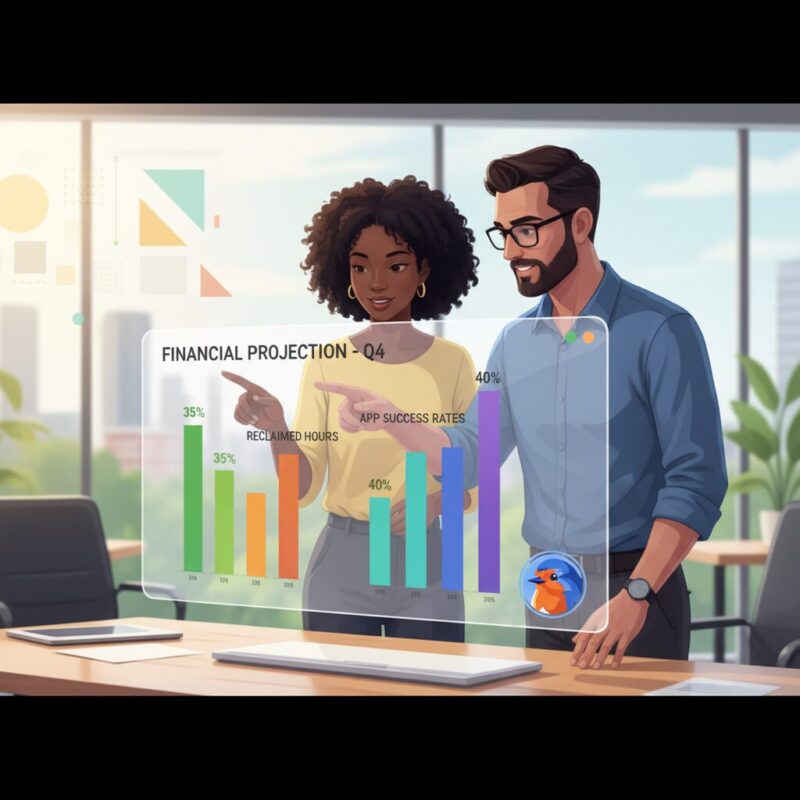
Full-lifecycle tools can reduce repeated searching, copy-pasting and blank-page drafting, but teams should measure their own staff capacity before and after adoption rather than assuming a fixed hours-saved benchmark.
Buying Criteria: A 2026 Checklist for Executive Directors
1. Integration and Painless Onboarding
If new software requires a computer science degree to configure, your staff abandons it within a month. Look for clean UX, role-based views (Executive Director sees pipeline; grant writer sees workspace), and multi-person inputs without emailed Word docs.
2. Built-in Regulatory and Funder Compliance
The leading cause of early rejection is technical disqualification — missing sections, exceeding word counts, mis-formatted budgets. As Candid data shows, funders are strict. Your grant database must validate proposals against rules before you hit submit.
3. Global Architecture with Local Context
Seek tools that combine international standards with local insights. Platforms built on UK and international funding accountability standards provide credibility and structure, while adapting to US regional realities.
Frequently Asked Questions
What is the best grant database for nonprofits?
The best grant database for most US nonprofits in 2026 is FundRobin Grant Finder for AI-matched discovery and proposal drafting (Growth £49/month or £470.40/year; Impact £199/month or £1,910.40/year; guided Showcase Trial available to selected organisations after approval and activation). For federal funding only, Grants.gov is the authoritative free option. For deep historical 990 research, Foundation Directory Online (Candid) remains unmatched. Most nonprofits get the best result by pairing a free grant database with one paid AI-matched tool.
What is the best free grant database?
For US federal funding, Grants.gov is the best free grant database — it is the official government source. For free AI-matched discovery, the FundRobin USA Grant Finder and UK Grant Finder return scored matches without a credit card. For 990 research, ProPublica Nonprofit Explorer is free.
Is Grants.gov a database?
Yes. Grants.gov is the official US federal grant database, listing approximately 1,000 grant programs across 26 federal agencies. It is free, run by the US government, and the authoritative source for federal funding opportunities. It does not include private foundation grants and offers no AI matching or proposal drafting.
How is Foundation Directory Online different?
Foundation Directory Online (operated by Candid) is a private-foundation grant database focused on historical IRS 990 tax-form data. It tells you who funded whom in the past — Grants.gov tells you what federal opportunities are open now. FDO is research-focused; FundRobin Grant Finder is matching-and-drafting focused. Most teams need at least two of these three.
What’s the best UK grant database?
For UK charities, CICs, and social enterprises, the FundRobin UK Grant Finder is the best free starting point — it is AI-matched against UK-specific funders, including National Lottery, Garfield Weston, and Innovate UK SME streams. Of the 44 UK startup founders we surveyed, 68% were unaware of Innovate UK SME funding streams they qualified for; a UK-focused grant database closes that gap.
Can AI help search grant databases?
Yes — and in 2026, AI matching is the main reason to upgrade from a free grant database to a paid one. AI search uses Natural Language Processing to interpret synonyms (“disadvantaged youth” = “at-risk teenagers”), score opportunities for fit, and surface the 50 high-probability matches inside a database of 5,000. ScienceDocs reports a 64% drop in false-positive matches with NLP-powered grant databases versus keyword search.
Key Takeaways:
- The best grant database in 2026 depends on the job: Grants.gov for federal, Candid FDO for 990 research, FundRobin Grant Finder for AI-matched discovery + drafting.
- Free grant databases (Grants.gov, ProPublica, FundRobin’s free finders) cover discovery; paid grant databases earn their fee in match scoring and time saved.
- Strategic Refusal — declining grants below a 70% match score — is the new growth lever for lean nonprofit teams.
- Grounded AI grant databases that cite sources beat black-box generators that hallucinate funder requirements.
- Total Cost of Ownership depends on measured staff time, adoption, subscription cost and which additional tools remain necessary.
Stop losing hours inside the wrong grant database. Start with a free USA Grant Finder or UK Grant Finder search, then compare FundRobin’s paid plans when you need integrated discovery, organisation context and AI-assisted proposal workflows.

Comments
One response to “Best Grant Discovery Tools for US Nonprofits”
[…] AI-powered grant discovery tools to cut proposal writing time by 80%, recovering over 200 hours monthly for your development […]