
During my time coordinating emergency responses for UNICEF and the UK government, I watched dedicated development teams burn out chasing low-value micro-grants. You start a nonprofit to change your community, but you end up spending 40 hours a week staring at complex foundation websites, wondering if you are even eligible.
According to FundRobin’s May 2026 analysis of the sector, 74% of the 58 small nonprofits we surveyed cited finding the right grant as their biggest operational challenge—yet only 12% used AI-powered matching tools. The result is a cycle of exhaustion: desperate last-minute writing, high rejection rates, and financial instability. This article introduces a different path.
TL;DR: This guide provides 25+ curated small grant sources for 2026, alongside a ‘Grant-to-Growth’ operational system to help resource-constrained nonprofits stop wasting hours on manual research and start building sustainable, automated grant pipelines using structured data and AI matching.
Table of Contents
- The ‘Grant-to-Growth’ Framework: Moving from Scarcity to Sustainability
- Curated List: 25+ Top Small Grants for Nonprofits
- Building a Modular Content Repository to End “Blank Page” Syndrome
- Transitioning to Long-Term Financial Stability
- Scaling Your Funding Pipeline with FundRobin
- Frequently Asked Questions About Small Grants
25 Small Nonprofit Grants & The Grant-to-Growth System
The ‘Grant-to-Growth’ Framework: Moving from Scarcity to Sustainability
A list of 25 grants is completely useless without the operational maturity to qualify for and win them. The “Grant-to-Growth” framework requires small charities to shift away from reactive, panic-driven applying toward systemic, high-probability targeting.
1.1 Why “Cold-Applying” to Small Grants is Costing You Money
Cold-applying means submitting proposals to funders without any prior relationship building, historical data analysis, or exact mission alignment. This approach fails in the modern funding landscape. When you factor in the true cost of writing a grant (multiplying staff hours by their hourly rate), cold-applying to a highly competitive $2,000 micro-grant often costs your organization more money than it brings in. According to the Chronicle of Philanthropy – Grant Seeking Strategies, organizations using a “spray and pray” method experience rejection rates exceeding 85%, draining limited administrative budgets rapidly.
1.2 High-Leverage Prospecting: Using Form 990 Data to Find Hidden Donors
Stop guessing what foundations want. Look at what they actually fund. In the US, the IRS Form 990 (and its equivalents via the UK Charity Commission) provides public records of every grant a foundation awarded in the previous year. You can extract “past grantees” and “average award sizes” directly from these tax filings. Candid (GuideStar) – Understanding Form 990 found that organizations reviewing historical tax data double their chances of finding exact-match funders. For a complete methodology on extracting this data, read our definitive guide on how to find grants for nonprofits 2026. Data always beats guesswork.
1.3 The Art of Strategic Refusal: When to Say “No” to a Grant
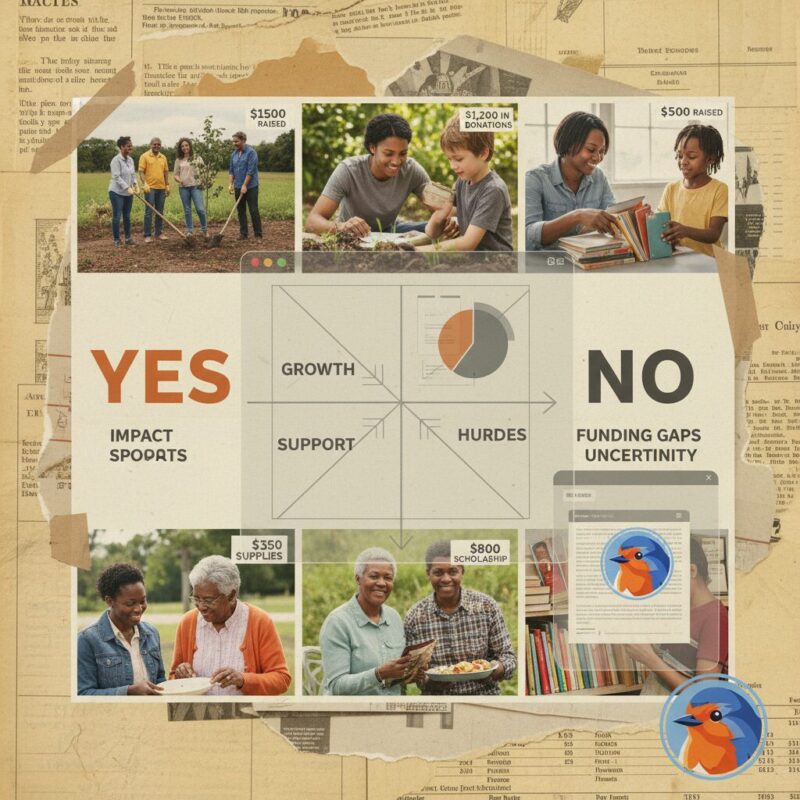
The most valuable skill a nonprofit director can develop is Strategic Refusal. Saying “no” to a misaligned opportunity preserves capacity for high-probability targets. Evaluate every application using a three-point sanity-check rubric:
- Alignment: Does this fund exactly what we already do, or does it require us to invent a new program?
- Capacity: Do we have the staff bandwidth to meet their complex reporting requirements?
- ROI: Is the grant amount significantly higher than the cost of staff time required to write and report on it?
Curated List: 25+ Top Small Grants for Nonprofits (Grouped by Sector)
This list covers active micro-grants and funding opportunities across the UK, US, and global landscapes. Use the categories below to identify funders strictly aligned with your organizational mission.
2.1 Community & Social Enterprise Grants
These funders focus on local neighborhood development, grassroots social initiatives, and community engagement projects.
- Walmart Local Community Grants | Typical Award: $250–$5,000 | Cadence: Quarterly | Apply Here
- National Lottery Awards for All UK | Typical Award: £300–£20,000 | Cadence: Rolling | Apply Here
- The Awesome Foundation | Typical Award: $1,000 | Cadence: Monthly | Apply Here
- The Pollination Project | Typical Award: $1,000 | Cadence: Rolling | Apply Here
- Seed Money Community Grants | Typical Award: $400–$1,000 | Cadence: Annual | Apply Here
- For personalized community matches based on your zip code, use our USA Grant Finder.
2.2 Education & Youth Development Grants
Micro-grants dedicated to schools, after-school programming, and youth enrichment.
- Dollar General Literacy Foundation | Typical Award: $4,000 | Cadence: Annual (February) | Apply Here
- Classics for Kids Foundation | Typical Award: Varies | Cadence: Quarterly | Apply Here
- Snapdragon Book Foundation | Typical Award: $2,000–$10,000 | Cadence: Annual (February) | Apply Here
- McCarthey Dressman Education Foundation | Typical Award: $10,000 | Cadence: Annual (April) | Apply Here
- Toshiba America Foundation | Typical Award: < $5,000 | Cadence: Rolling | Apply Here
- Discover more niche academic funding via our specialized Sector Grants directory.
2.3 Arts & Culture Funding Opportunities
Grants tailored for community theaters, local arts councils, and cultural heritage nonprofits.
- NEA Challenge America | Typical Award: $10,000 | Cadence: Annual (April) | Apply Here
- Foundation for Contemporary Arts | Typical Award: $1,500–$3,000 | Cadence: Monthly | Apply Here
- The Puffin Foundation | Typical Award: $1,250 | Cadence: Annual | Apply Here
- Mid Atlantic Arts Foundation | Typical Award: Varies | Cadence: Varies | Apply Here
- Creative Capital Microgrants | Typical Award: $1,000 | Cadence: Rolling | Apply Here
2.4 Health & Wellness Micro-Grants
Funding for grassroots clinics, mental health initiatives, and localized health campaigns.
- CVS Health Foundation | Typical Award: Varies | Cadence: Rolling | Apply Here
- Robert Wood Johnson Foundation | Typical Award: < $10,000 | Cadence: Annual | Apply Here
- American Academy of Dermatology (Shade Structure) | Typical Award: $8,000 | Cadence: Annual | Apply Here
- The Aetna Foundation | Typical Award: Varies | Cadence: Rolling | Apply Here
- Hogg Foundation for Mental Health | Typical Award: Varies | Cadence: Annual | Apply Here
2.5 Capacity Building & Operational Grants
The most sought-after grants, designed to cover overhead, software, and staff training rather than restricted programmatic expenses.
- Meyer Foundation | Typical Award: Varies | Cadence: Rolling | Apply Here
- The Kresge Foundation | Typical Award: Varies | Cadence: Rolling | Apply Here
- Weingart Foundation | Typical Award: Varies | Cadence: Rolling | Apply Here
- Satterberg Foundation | Typical Award: Core Support | Cadence: Invite/Rolling | Apply Here
- F.B. Heron Foundation | Typical Award: Varies | Cadence: Rolling | Apply Here
Building a Modular Content Repository to End “Blank Page” Syndrome
Drafting every application from scratch is the leading cause of sector burnout. Building a modular content repository standardizes your organizational language and allows small teams to increase application volume without sacrificing quality.
3.1 Core Components of a Reusable Grant Library
Set up a structured database (using Notion, Airtable, or secure folders) that isolates the repetitive elements of grant writing. Your library must contain updated, approved versions of:
- An Executive Summary
- Mission and Vision statements
- Need Statements supported by current demographic data
- A detailed Theory of Change
- Standardized Evaluation Metrics
- Key Staff Bios and Board lists
Keep these elements updated quarterly. When an unexpected opportunity arises, your team simply retrieves and assembles the required components.
3.2 Automating First Drafts with AI Proposal Generation
Once you have a modular repository, you can leverage language models to adapt those core components to a specific funder’s exact word counts and stylistic requirements. Generic AI chatbots often hallucinate facts, but utilizing a specialized tool like our Grant Proposal Generator ensures the output relies strictly on your provided context. AI writes the first draft, reducing writing time by up to 80%, while human review ensures the final strategic polish.
3.3 Tracking Compliance and Funder-Specific Regulations
Technical compliance traps—missing mandatory attachments, ignoring strict character limits, or lacking proper safeguarding policies—cause immediate rejection before the review committee even reads your narrative. Modern platforms integrate compliance checks directly into the writing phase. The Charity Commission for England and Wales – Compliance Guidelines details strict governance standards that nonprofits must address in their operational language. Embedding these compliance statements directly into your repository prevents disqualification.
Transitioning to Long-Term Financial Stability
Grants should be an accelerator for your mission, not the sole engine keeping it alive. A sustainable nonprofit relies on a hybrid funding model. Research from the Stanford Social Innovation Review (SSIR) – Sustainable Funding Models shows that organizations dependent entirely on grant funding experience significantly higher rates of operational crisis.
4.1 The Risks of Over-Reliance on Micro-Grants
Operating on the “grant treadmill” means staff spend all their time securing tiny grants just to meet payroll. This cash flow instability prevents long-term strategic planning. Furthermore, it often leads to “mission drift,” where charities bend their core objectives just to fit the arbitrary requirements of a funder. The National Council of Nonprofits – Grant Research Tools warns that an over-reliance on restricted funding suffocates a charity’s ability to pay for essential overhead.
4.2 Blending Earned Income with Foundation Funding
Complementing foundation funding with fee-for-service or earned income streams builds immense organizational resilience. Examples include selling branded merchandise, offering specialized training services, or hosting ticketed community events. Consistent earned income proves to major foundations that you have community buy-in and financial competence. Giving USA – Annual Report on Philanthropy data highlights that nonprofits with diversified revenue streams recover from economic downturns three times faster than grant-dependent peers.
4.3 Using the Smart Dashboard for Financial Forecasting
Technology helps executive directors move from reactive survival mode to proactive planning. Tracking your application pipeline through a centralized dashboard allows you to analyze win rates by funder type. Understanding exactly how many applications yield a funded project lets you forecast financial runway accurately and plan hybrid revenue initiatives with confidence.
Scaling Your Funding Pipeline with FundRobin
Executing the Grant-to-Growth system manually across fragmented databases wastes hundreds of administrative hours. FundRobin provides the AI-powered infrastructure specifically designed for academic institutions, nonprofits, and startups to automate this entire workflow. While Instrumentl – Top 19 Grant Databases for Nonprofits outlines many legacy options, FundRobin introduces contextual intelligence to the process.
5.1 Smart Grant Matching: Saving 200+ Hours Monthly
Legacy platforms rely on basic keyword matching, surfacing hundreds of irrelevant results. FundRobin’s AI contextual understanding evaluates deep eligibility criteria—knowing that “disadvantaged youth” maps to “at-risk teenagers.” This matching algorithm provides a clear 0-100% fit score for each of our 2,000+ funders. A comparative review by Zeffy – Compare the Top 10 Grant Databases for Nonprofits notes that automated matching systems save development teams 200+ hours monthly while increasing success rates by over 60%.
5.2 Grounded AI: Trusting the Robin AI Assistant
The Robin AI Assistant operates as a 24/7 strategic consultant. Unlike generic text generators, Robin is a “grounded” AI. It pulls answers exclusively from a cited, factual knowledge base of global and UK funding guidelines, eliminating the risk of hallucinated advice. It provides immediate research insights, ensures compliance, and cites its sources directly, giving you complete trust in the data.
FundRobin Pricing and Guided Showcase Trial
We provide transparent, ROI-focused pricing tiers designed to scale with your organization’s growth.
- Growth: £49/month or £470.40/year.
- Impact: £199/month or £1,910.40/year.
- Guided Showcase Trial: available by application to selected organisations after approval and activation.
There is no free tier, but organizations receive a 30-day free trial at the Growth tier (no credit card required, one per organization). Selecting an Annual plan saves 20%.
Frequently Asked Questions About Small Grants
6.1 What is the easiest grant to get for a new nonprofit?
Community foundations and local corporate micro-grants (such as Walmart Community Grants) are the most accessible for new 501(c)(3)s or registered charities. These funders prioritize local community impact and require significantly less historical financial data than federal agencies or large national foundations. Start local to build your grant-winning track record before expanding.
6.2 How can small charities find high-success micro-grants?
Stop relying on manual keyword searches and use AI-powered matching tools to filter databases by your precise eligibility criteria. High-success prospecting requires analyzing a funder’s Form 990 tax data to confirm they actually fund organizations of your size and sector. Platforms like FundRobin automate this historical analysis to surface the highest-probability matches instantly.
6.3 Are there specific grants that cover operational overhead?
Yes, search specifically for “Capacity Building Grants” or “General Operating Support” (GOS) funding. These grants are designed to cover rent, salaries, software, and organizational development rather than restricted program costs. Because they offer unrestricted funds, they are highly competitive and require a compelling demonstration of organizational health.
6.4 How much should a small nonprofit spend on grant software?
FundRobin offers Growth at £49/month or £470.40/year and Impact at £199/month or £1,910.40/year. Compare current plans. Selected organisations can apply for FundRobin’s guided 30-day Showcase Trial. The period starts only after approval and activation; approved Showcase organisations do not need a card to begin. Apply for the Showcase Trial.
6.5 How do you write a grant proposal quickly?
To write a grant proposal quickly, retrieve pre-approved text from a centralized modular content repository rather than starting from a blank page. Combine your saved executive summaries, need statements, and staff bios with a specialized AI proposal generator to adapt the text to new word counts. This workflow speeds up output by up to 80%.
6.6 What is the best way to transition away from 100% grant dependency?
The best strategy is to introduce fee-for-service models or earned income streams to complement your foundation funding. Mix small grants with major donor cultivation, community event ticket sales, or corporate sponsorships. Diversified revenue models ensure that a single rejected grant application does not threaten your daily operations.
Key Takeaways:
- Stop ‘cold-applying’ to random databases; use Form 990 data and AI-matching to find funders with a verified history of giving to your specific sector.
- Implement the ‘Strategic Refusal’ method to evaluate opportunities. Saying ‘no’ to a low-probability grant saves your team 40+ hours.
- Build a modular content repository. Reusing core proposal elements eliminates ‘blank page’ syndrome and speeds up your application output by 80%.
- Leverage tools like FundRobin to find specific small grants across Community, Education, Health, and Arts sectors while maintaining compliance with UK and global standards.
Winning small grants consistently requires more than a directory of links; it requires a systemic shift in how your organization processes opportunities. By adopting the Grant-to-Growth framework, building a modular content repository, and prioritizing data-driven matching over manual searching, resource-constrained teams can finally stop chasing survival dollars. FundRobin is the only AI-native platform that combines intelligent funder matching with grounded proposal drafting, enabling small charities to secure sustainable funding.
