

As of March 2026, the nonprofit sector is facing an increasingly saturated funding landscape, making data-driven prospecting an absolute necessity for survival. If you are a mid-to-senior development director or grant manager, you already know the sting of the “spray and pray” application methodology. You spend forty hours crafting a meticulous proposal for a foundation that, according to their website, is a “perfect fit” for your mission, only to receive a generic rejection letter six months later. This widespread grant application burnout stems from a fundamental flaw in traditional prospect research: treating foundation websites as reliable sources of truth.
Websites are marketing copy. They project the idealized version of a foundation’s mission. IRS tax returns, however, are legally binding behavioral dossiers. As a grant strategy consultant, I tell my clients that shifting your focus from a foundation’s public relations materials to their Form 990 is like administering a truth serum. It reveals exactly where their money goes, who they actually know, and whether their “open application” process is truly open. This is the foundation of high-ROI grant prospecting.
TL;DR: The single most valuable section of IRS Form 990 for grant seekers is Part XV (and Schedule I), which reveals a private foundation’s actual funding history. Analyzing this tax data improves win rates by exposing “invitation-only” traps and true geographic biases, saving grant managers hundreds of hours wasted on dead-end applications compared to relying solely on marketing-driven website guidelines.
Why Form 990s Are Your Best “Truth Serum”
There is a massive disconnect between what foundations say they fund and what they actually fund. A foundation’s website might boast a commitment to “Global Education Initiatives,” but a quick glance at their tax return often reveals that 95% of their grants for the past decade have gone to the founder’s alma mater in a single zip code. If you solely relied on their website, you would waste weeks applying for a grant you never had a mathematical chance of winning.
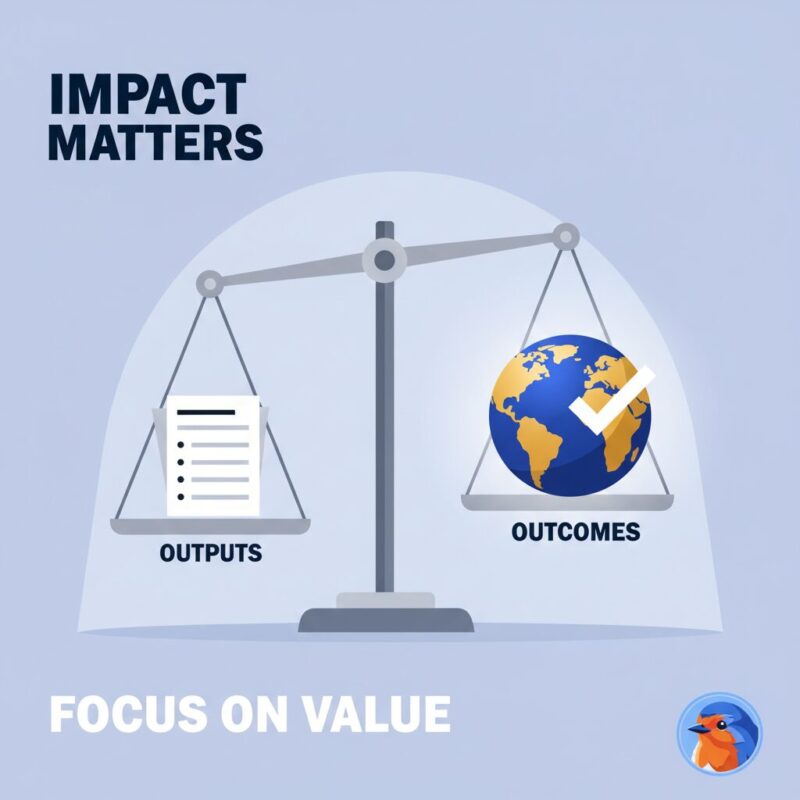
Furthermore, website research is inherently limiting because it ignores the vast majority of the market. According to Funding for Good, roughly 90% of the more than 100,000 private foundations in the United States do not even have a website. They operate entirely off the digital grid, quietly distributing millions of dollars annually. If you are not pulling IRS data, you are actively ignoring the largest segment of the philanthropic ecosystem.
When diving into tax data, it is crucial to understand the difference between public charities and private foundations. Public charities file a standard Form 990, which provides a high-level overview of their finances. However, the true goldmine for grant seekers is the Form 990-PF filed by private foundations. According to the Internal Revenue Service (IRS), private foundations are legally mandated to list every single grant they paid out during the fiscal year, including the recipient’s name, location, purpose, and amount.
One common objection to 990 analysis is the data lag. Because of fiscal year end dates and IRS processing times, the tax forms available publicly are often 12 to 18 months old. While this delay is frustrating, it does not invalidate the strategy. Institutional giving patterns are notoriously slow to change. A foundation’s funding priorities from 2023 are highly predictive of their behavior in 2025. You are not using the 990 to track real-time application deadlines; you are using it to validate long-term behavioral alignment—an approach detailed in our Strategic Grant Discovery & Compliance Guide 2026.
The “Disqualification First” Methodology: Stop Wasting Time
The most profitable paradigm shift a grant manager can make is adopting a “Disqualification First” mindset. Instead of scouring the internet for reasons to apply to a foundation, you should ruthlessly hunt for reasons not to apply. Your goal is to protect your time by eliminating bad fits in five minutes or less.
Here is the step-by-step workflow for rapid disqualification using the 990-PF:
1. The Gatekeeper: Part XV, Line 2
Before looking at a foundation’s assets or mission statement, scroll immediately to Part XV (Supplementary Information), Line 2. This is the “Unsolicited Requests” checkbox. If box 2b is checked, or if there is a statement reading “The foundation only makes contributions to pre-selected charitable organizations,” stop immediately.
Propel Nonprofits emphasizes that ignoring this checkmark is the number one cause of wasted grant writing hours. If they do not accept unsolicited proposals, sending a cold application is akin to throwing it in an incinerator. The only exception to this rule is if you have a direct, strong board-level relationship with a trustee.
2. Scanning Schedule I (Grants Paid) for Hidden Bias
If the foundation does accept unsolicited requests, move to the Grants Paid section. You are acting as a forensic accountant here, looking for three specific biases: geographic lock-in, categorical narrowness, and the “closed shop” where the foundation’s budget is fully committed to legacy partners.
3. Calculating the “Real” Grant Size
According to Cause IQ, calculating an accurate ask amount is critical. Never rely on the “Average” grant size, which can be skewed by legacy grants. Instead, calculate the Median grant size by listing the grants from smallest to largest and finding the middle number. This ensures you request an amount that aligns with their actual, historical behavior.
Relationship Mapping: Turning Cold Leads Warm
Grants are not awarded by algorithms or tax forms; they are awarded by people. The most critical section for relationship mapping is Part VII (Officers, Directors, Trustees, Key Employees). Cross-reference these names against your own organization’s CRM, your board members’ networks, and LinkedIn. A warm introduction to a foundation trustee increases your probability of funding by over 60% compared to cold outreach.
You can leverage the Free Form 990 Lookup Tool to instantly pull these names and begin your mapping process. For advanced intelligence, review Schedule L (Transactions with Interested Persons), which may reveal professional connections—such as law firms or wealth management banks—that serve as excellent entry points for your leadership team.
Financial Forensics: Predicting Future Giving Capacity
By analyzing specific financial metrics, you can identify foundations that are under immense legal pressure to write checks.

The Payout Pressure Principle
Private foundations are required to distribute roughly 5% of their net investment assets annually. By comparing the Distributable Amount (Part XI) to Qualifying Distributions (Part XII), you can identify foundations that need to quickly disperse funds to avoid heavy IRS excise taxes. Utilizing tools like the ProPublica Nonprofit Explorer to monitor these patterns ensures you catch funders in a position to give.
Asset Growth Analysis
To gauge a foundation’s future trajectory, compare their total net assets year-over-year using data from Candid (GuideStar). If a foundation’s assets grew significantly, their mandatory 5% payout will proportionally increase, often creating new opportunities for qualified applicants who align with their core mission.
Accelerating the Process: From Manual Forensics to AI Discovery
The “Disqualification First” methodology is undeniably powerful, but it requires significant manual labor. Modern artificial intelligence changes this by acting as an automated financial analyst. Using semantic search, AI can “read” the context of a foundation’s grants paid list in seconds, identifying nuanced matches that simple keyword searches would miss.
Advanced platforms, such as the USA Grant Finder, automate the identification of behavioral alignment. This elevates the grant professional from a data-entry clerk to a high-level strategic relationship builder. For those looking to master this shift, understanding the Science of Selection is essential to solving the nonprofit efficiency crisis.
Frequently Asked Questions
- What is the difference between Form 990 and Form 990-PF? Form 990 is for public charities; Form 990-PF is filed by private foundations and is the superior source for grant research because it mandates granular disclosure of all grants paid.
- How do I know if a foundation accepts unsolicited proposals? Check Part XV, Line 2 of the Form 990-PF.
- How current is the data? There is typically a 12 to 18-month lag. Use this to identify long-term behavioral patterns rather than real-time deadlines.
Key Takeaways:
- Disqualification > Application: Use Part XV, Line 2 immediately to filter out ‘Invitation Only’ funders.
- The ‘Truth Serum’ Reality: 90% of foundations lack websites; the 990-PF is your source of truth.
- Leverage ‘Payout Pressure’: Foundations lagging behind their 5% mandate are prime targets for end-of-year proposals.
- Relationship Mapping: Cross-reference Part VII board lists with your network; warm intros win.
- Automate the Forensics: Use AI to scan thousands of 990s and surface high-match prospects instantly.
Conclusion
The era of the “spray and pray” grant strategy is over. By adopting the “Disqualification First” methodology, you protect your team’s most valuable asset: time. Whether you choose to parse these PDFs manually or leverage AI-driven platforms, letting the tax data dictate your strategy is the single most effective way to radically increase your grant ROI.

Leave a Reply