
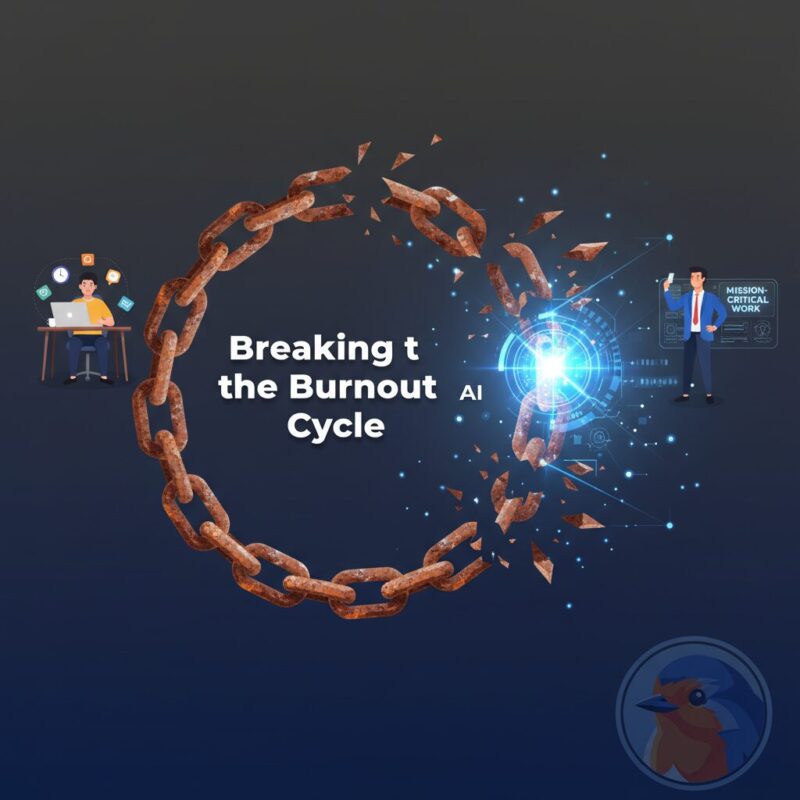
Every Executive Director knows the sinking feeling. It happens around the 16-month mark. Your star grant writer—the one who spent the first six months learning your voice and the next six months finally winning grants—walks into your office and resigns. They aren’t leaving because they hate the mission. They are leaving because they are exhausted.
This is the “16-Month Crisis,” a debilitating cycle of turnover that bleeds nonprofits of momentum, revenue, and institutional knowledge. As of January 2025, the nonprofit labor market faces a critical retention challenge, with grant professionals reporting record levels of burnout due to increasing administrative burdens and stagnant operational support. The solution is no longer just “hiring better” or offering marginal salary increases; it requires a fundamental restructuring of the role itself.
TL;DR: The “16-Month Crisis” describes the cyclical turnover of grant writers every 1.5 years due to administrative burnout, costing nonprofits up to $40,000 per transition. Manual workflows create a “Drudgery Gap” where 80% of time is spent on non-strategic tasks. AI infrastructure like FundRobin – Smart Dashboard solves this by centralizing institutional memory and automating compliance, effectively decoupling donor knowledge from individual employees. This shift transforms exhausted writers into retained “Funding Strategists” and stabilizes revenue.
Table of Contents
- The Anatomy of the 16-Month Crisis: The Hidden Economics of Turnover
- The “Drudgery Gap”: Diagnosing the Root Cause of Burnout
- Redefining AI: From “Writing Tool” to “Institutional Infrastructure”
- Building “Institutional Memory” with AI: The FundRobin Approach
- Transforming the Role: From “Grant Writer” to “Funding Strategist”
- The AI Implementation Roadmap for Nonprofits
- The Retention ROI: Calculating the Cost of Inaction
- Frequently Asked Questions
The Anatomy of the 16-Month Crisis: The Hidden Economics of Turnover
The “16-Month Crisis” is not a staffing issue; it is a structural failure. It represents a predictable timeline where the cognitive load of the position inevitably outpaces the human capacity to manage it without infrastructure. Understanding this timeline is the first step toward dismantling it.
The “Honeymoon to Burnout” Timeline
Most development directors can set their watch by this cycle. It begins with optimism and ends with a resignation letter, usually following a specific trajectory:
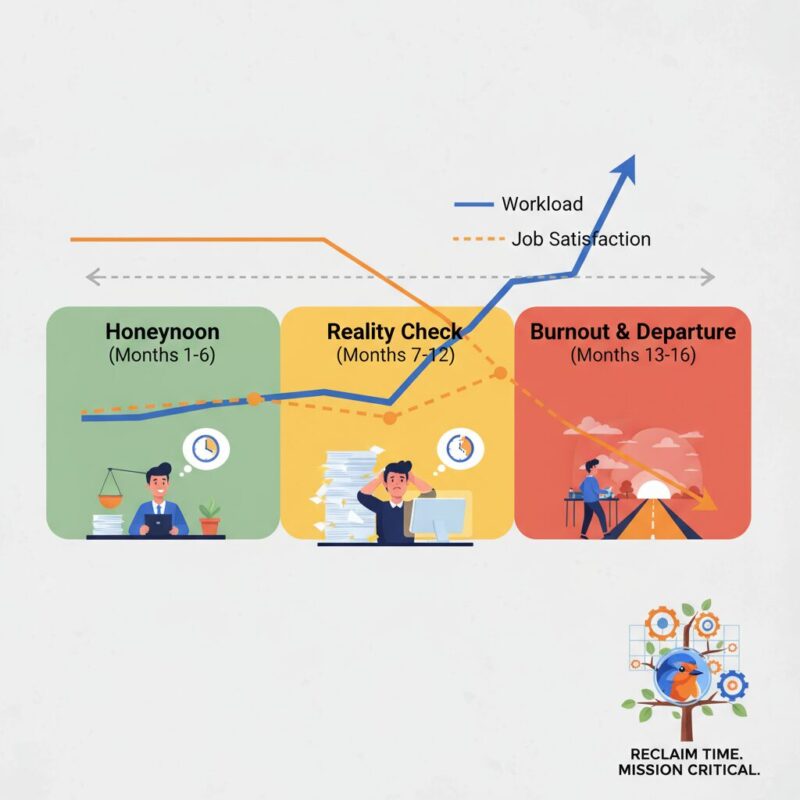
- The Honeymoon (Months 1-6): The new hire is energetic. They are absorbing the mission, learning the programs, and perhaps landing a few “low-hanging fruit” grants. There is a sense of forward momentum.
- The Reality Check (Months 7-12): The sheer volume of administrative maintenance becomes apparent. The writer is now managing reporting for the grants won in the first phase while trying to prospect new ones. The “Drudgery Gap” begins to widen as they realize they are spending more time on spreadsheets than strategy.
- The Overwhelm & Departure (Months 13-16): The cumulative effect of manual compliance checking, deadline pressure, and “Excel hell” leads to burnout. The writer realizes that to meet the organization’s growing revenue goals, they would need to work 60+ hour weeks. Faced with this unsustainable math, they leave for a different sector or a larger institution with more support.
This timeline creates a perpetual “startup mode” for the development department. Just as a writer reaches peak productivity, they exit, resetting the clock to zero.
The Hidden Economics: Why It Costs More Than You Think
The financial impact of this cycle is often underestimated because it doesn’t appear as a single line item on a P&L statement. However, when aggregated, the costs are staggering. According to GrantBoost AI, the cost of turnover extends far beyond recruitment fees.
- Direct Recruitment Costs: Search firms or job board postings, plus the internal time of the Executive Director interviewing candidates, often total 15-20% of the first-year salary.
- The Ramp-Up Deficit: A new grant writer typically takes 3-6 months to fully understand the program nuances required to write winning federal or high-level foundation grants. During this period, proposal output—and consequently, potential revenue—drops significantly.
- The “Knowledge Drain”: Perhaps the most expensive loss is the “unwritten” intelligence. When a writer leaves, they take with them the nuanced understanding of what a specific program officer likes, which metrics the local foundation actually cares about, and the historical context of previous rejections.
Research from Instrumentl suggests that small nonprofits often struggle to justify the high base salaries commanded by senior grant writers, yet they pay a premium in turnover costs by hiring junior staff who burn out quickly. Breaking this cycle requires acknowledging that salary increases alone cannot compensate for a broken workflow.
The “Drudgery Gap”: Diagnosing the Root Cause of Burnout
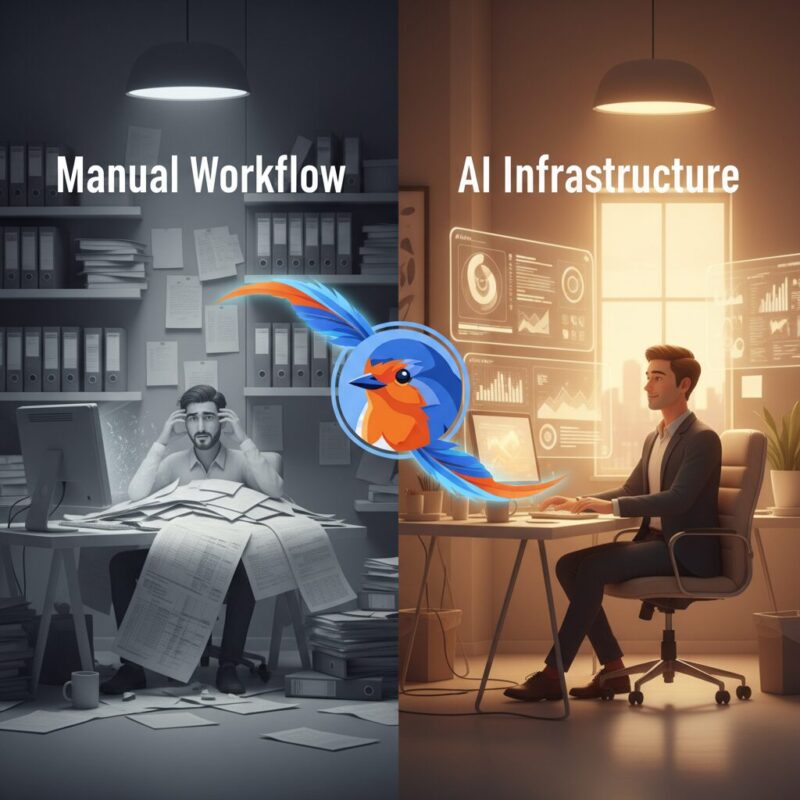
If we accept that the people aren’t the problem, we must look at the process. The culprit is the “Drudgery Gap”—the massive disparity between the high-level strategic work grant writers are hired to do and the low-level administrative tasks that actually consume their days.
The reality of the modern grant office acts as the “80/20 Rule” in reverse: professionals spend 80% of their time on administrative compliance and only 20% on persuasive writing or donor strategy.
60-80 Hours Per Application: Where the Time Actually Goes
To understand why burnout is inevitable under manual workflows, we must deconstruct the time investment for a standard foundation or federal grant application. Without automation, the breakdown often looks like this:
- Prospecting (10-20 Hours): Manually searching databases, filtering out ineligible opportunities, and reading 50-page guidelines only to find a disqualifier on page 49.
- Compliance Checking (5-10 Hours): Cross-referencing 501(c)(3) status requirements, geographic focus areas, and funding exclusions against the nonprofit’s current programs.
- Drafting (20-40 Hours): Writing narratives from scratch, or “Frankensteining” old proposals together by copying and pasting from previous Word documents, which introduces errors and inconsistencies.
- Formatting & Submission (5-10 Hours): adjusting character counts, formatting budgets, and assembling attachments.
According to the Grant Professionals Association, this relentless administrative load contributes significantly to the mental health crisis in the sector. The cognitive load of constantly switching between high-level storytelling and microscopic compliance checking exhausts the brain’s executive function.
Redefining AI: From “Writing Tool” to “Institutional Infrastructure”
The conversation around AI in the nonprofit sector has largely focused on tools—chatbots that can write a thank-you letter or summarize a PDF. While useful, these are personal productivity hacks, not organizational solutions. To solve the 16-Month Crisis, we must view AI as infrastructure.
Infrastructure is distinct from a tool in that it provides stability and continuity regardless of who is operating it. Just as a CRM (Customer Relationship Management) system houses donor data so it doesn’t live in a fundraiser’s Rolodex, AI infrastructure houses Institutional Memory.
Decoupling Knowledge from the Individual
The core vulnerability of the 16-Month Crisis is “Key Person Dependency.” When your grant writer manages the pipeline in their head or a personal spreadsheet, the organization is held hostage by their tenure.
AI infrastructure, like the FundRobin – Smart Dashboard, acts as the organization’s central nervous system. It decouples knowledge from the individual by:
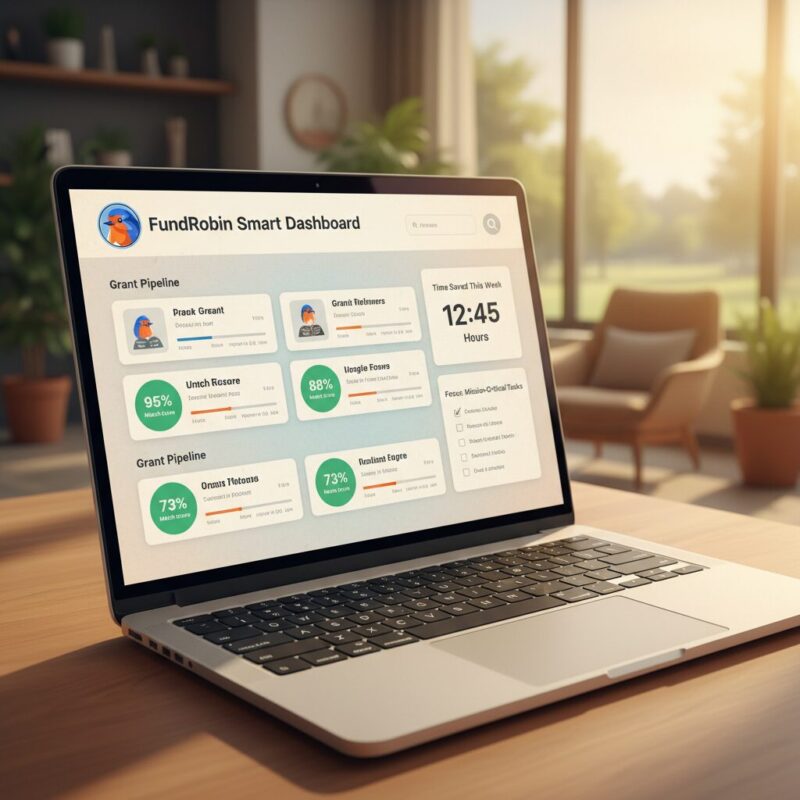
- Centralizing the Pipeline: The AI tracks opportunities, deadlines, and status updates in a shared environment.
- Standardizing Quality: By using a centralized “Knowledge Library” of successful language and organizational data, the AI ensures that a proposal written by a new hire sounds just as authoritative as one written by a veteran.
- Preserving Context: The AI remembers why a grant was rejected or what a donor preferred in the past, ensuring that this hard-won intelligence remains an asset of the nonprofit, not the employee.
Building “Institutional Memory” with AI: The FundRobin Approach
Building this infrastructure requires specific technical capabilities that go beyond generic generative AI. It requires a system designed for the nuances of the philanthropic sector. FundRobin’s approach focuses on two pillars: Semantic Matching and Smart Proposal Generation.
Beyond Keywords: Semantic Matching for Precision Prospecting
Traditional grant seeking relies on keyword searches. A writer might search for “youth education” and miss a perfect opportunity funded under “adolescent workforce development.” This manual “hunting and pecking” is a major contributor to the Drudgery Gap.
FundRobin – Smart Grant Matching utilizes semantic analysis to understand the context of a mission, not just the keywords.
- Contextual Understanding: The AI analyzes the nonprofit’s mission statement, past programs, and impact data to build a semantic profile.
- The Accuracy Score: Instead of presenting a list of 10,000 potential grants, the system filters for high-probability matches, scoring them based on fit.
- Time Savings: This reduces the prospecting phase from 20 hours to minutes, allowing the writer to focus only on opportunities where they have a statistically significant chance of winning.
Removing the “Blank Page Paralysis”
The most mentally taxing portion of the grant cycle is the “Drafting” phase—staring at a blinking cursor. FundRobin – Smart Proposal Generation eliminates this by generating comprehensive first drafts based on the organization’s Knowledge Library.
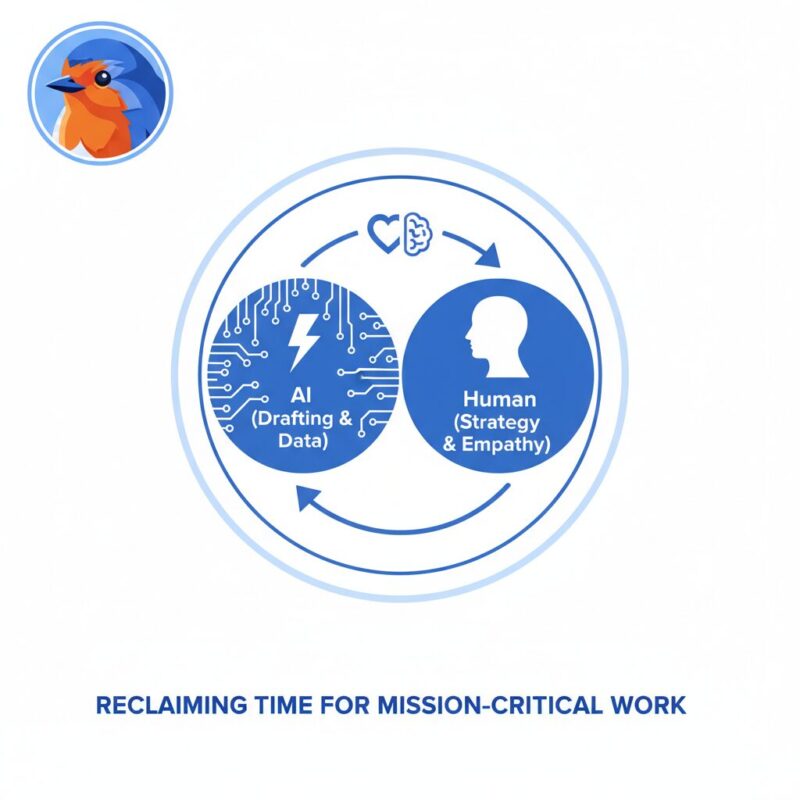
This is not about replacing the human author; it is about elevating them. When the AI handles the initial assembly of the “Standard Organizational Description,” “History of Success,” and “Board Demographics,” the writer is freed to focus on the custom, persuasive elements of the narrative.
For deeper strategies on leveraging these tools, refer to our Small Charity Playbook, which offers tactical steps for smaller teams.
Transforming the Role: From “Grant Writer” to “Funding Strategist”
The fear that AI will replace grant writers is misplaced. In reality, AI saves the grant writer from the parts of the job that cause them to quit. By implementing this infrastructure, Executive Directors can fundamentally redefine the role.
The Shift to Strategy
When the 60-80 hours of drudgery are compressed into 5-10 hours of oversight, the employee has freed up 70% of their work week. This time should not be filled with more writing, but with higher-value activities:
- Donor Cultivation: Picking up the phone to call program officers—a task that is often the first to be dropped during crunch times.
- Program Design: Working with program staff to design better projects that are more fundable.
- Long-Term Strategy: Analyzing funding trends and diversifying revenue streams.
This transition from “production worker” to “strategic partner” increases job satisfaction and, crucially, justifies higher compensation bands that are more competitive with the private sector. It turns a “burnout role” into a sustainable career path.
For more on aligning your team with this new approach, explore our guide on AI Funding Strategies.
The AI Implementation Roadmap for Nonprofits
Implementing AI infrastructure is a change management process. For the “Overwhelmed Executive Director,” the goal is to integrate these tools without adding short-term chaos.
Step 1: The Drudgery Audit
Before buying software, quantify the problem. Have your development staff track their time for two weeks. Identify exactly how many hours are spent on prospecting, compliance checking, and formatting. This data establishes your baseline for ROI.
Step 2: Navigating Data Privacy and Ethics
Trust is the currency of the nonprofit sector. It is critical to select AI partners that prioritize security. FundRobin – Security employs AES-256 encryption and maintains a strict “Zero-Training” policy on user data, meaning your proprietary donor strategies are never used to train public models. Ensuring this level of data sovereignty is non-negotiable for maintaining donor trust.
Step 3: The “Human-in-the-Loop” Workflow
Establish a protocol where AI is the “drafter” and the human is the “editor.”
- Drafting: The FundRobin – AI Assistant generates the initial response based on the RFP guidelines.
- Review: The strategist verifies facts, adjusts the tone, and ensures alignment with the specific donor’s values. Leveraging a Human-in-the-loop approach ensures narrative integrity.
- Final Polish: The human adds the “spark”—the emotional hook that only a person can craft.
The Retention ROI: Calculating the Cost of Inaction
Investing in AI infrastructure often raises questions about budget. However, when viewed through the lens of the 16-Month Crisis, the math changes.
Consider the cost of not acting. According to Learn Grant Writing, the total cost of replacing a grant writer—including recruitment, training, and lost opportunity—can exceed $40,000 per cycle.
Key Takeaways:
- The “16-Month Crisis” costs nonprofits up to $40,000 in turnover costs and lost revenue every cycle.
- Manual grant workflows create a “Drudgery Gap” where 60-80% of time is spent on admin rather than strategy.
- AI Infrastructure acts as “Institutional Memory,” ensuring donor knowledge stays with the organization, not just the individual.
- Tools like FundRobin reduce proposal writing time by 80%, allowing staff to shift from “writers” to “relationship managers.”
- Semantic matching outperforms keyword search by understanding the context of your mission, uncovering hidden opportunities.
- Retention is improved when staff are empowered with tools that remove repetitive, low-value tasks.
If an AI subscription costs a fraction of that amount and extends the tenure of a writer by even one year, the ROI is immediate. Furthermore, the “Stability Dividend”—the revenue gained from having a consistent, uninterrupted grant pipeline—far outweighs the software cost. Breaking the cycle of burnout requires more than resilience; it requires resources.
Frequently Asked Questions
What is the 16-month crisis in nonprofit development?
The 16-Month Crisis refers to the cyclical turnover pattern where grant professionals burn out and resign every 16-18 months. This cycle is driven by excessive administrative drudgery and “drudgery gap” workflows, costing nonprofits stability, momentum, and significant revenue due to constant rehiring and retraining periods.
How does AI help with nonprofit staff retention?
AI helps retain staff by acting as “institutional memory” and automating repetitive administrative tasks, which reduces burnout. By centralizing donor knowledge and preferences in an AI infrastructure like FundRobin, the organization reduces the pressure on individual writers and allows them to focus on high-value, satisfying strategic work rather than data entry.
How does AI change the grant writer’s daily workflow?
AI shifts the grant writer’s workflow from 80% administrative tasks to 80% strategic work. Instead of spending 40+ hours manually prospecting and drafting from scratch, writers use AI for semantic matching and initial drafting, allowing them to spend the majority of their time refining proposals and building relationships with donors.
Is AI grant writing software worth the investment for small nonprofits?
Yes, investing in AI software is typically far cheaper than the $40,000+ cost associated with grant writer turnover. Beyond the direct savings on recruitment fees, AI infrastructure prevents the “revenue dip” that occurs during the 3-6 month ramp-up period for new hires, offering a substantial return on investment through stabilized funding.
Will AI replace human grant writers?
No, FundRobin’s AI is designed as a “Human-in-the-loop” system that empowers writers to become “Funding Strategists.” The AI handles the initial heavy lifting of drafting and compliance checking, but human oversight is essential for relationship building, strategic decision-making, and adding the emotional nuance that secures funding.
What is the difference between keyword search and semantic grant matching?
Keyword search relies on exact text matches, often missing relevant opportunities, while semantic matching understands the context and intent of a mission. For example, semantic matching can identify that a funder interested in “at-risk youth” is a good match for a program serving “disadvantaged teenagers,” even if the exact keywords don’t overlap.
Is it safe to put donor data into AI tools?
It is safe if you use enterprise-grade platforms like FundRobin that prioritize security. FundRobin uses AES-256 encryption and maintains a strict policy where user data is never used to train public models, ensuring that your donor strategies and proprietary information remain private and secure.
How does automating grant proposals reduce burnout?
Automation reduces burnout by eliminating the “Drudgery Gap”—the cognitive load of repetitive, low-value tasks like formatting and compliance checking. By removing these draining activities, writers can focus their mental energy on creative and interpersonal work, which is less fatiguing and more intrinsically rewarding.
What tasks should a nonprofit automate first?
Nonprofits should first automate the high-volume, low-value tasks of prospecting and initial drafting. Using AI to check daily updates against 2,000+ funders for eligibility and generating the standard sections of a proposal (like organizational history) delivers the immediate time savings needed to relieve pressure on the team.

Leave a Reply