

Quick answer: Free AI for small nonprofit grants can help lean teams research funders, structure drafts, and review applications without buying another subscription.
Are you spending more time searching for grants than advancing your mission? In FundRobin’s survey of 58 nonprofits, 74% cited finding the right grant as their biggest operational challenge — yet only 12% used AI-powered matching tools (FundRobin, 2026). The endless cycle of costly subscriptions and manual research is burning out nonprofit leaders and draining precious resources. Traditional grant-seeking platforms can cost thousands per year, while the manual effort of sifting through databases consumes hundreds of hours.
This article introduces a new way forward. It is a complete, step-by-step playbook that empowers any nonprofit to build a powerful, zero-cost grant-seeking system using free AI tools for nonprofits. This is not just another list of software; it is a strategic system based on direct experience working with dozens of nonprofit teams. We will show you exactly how to integrate these tools to find funding, write compelling proposals, and replace expensive subscriptions for good.
You will learn how to build your “Free AI Grant Stack,” discover specific workflows for grant discovery and proposal writing, get access to a library of proven prompts, and implement a framework for ethical AI use. Let us start investing in your mission.
Table of Contents
- The Problem with Traditional Grant Seeking (And Why AI is the Answer)
- Building Your “Free AI Grant Stack”: The System for Success
- Best Free AI Grant Tools Compared (2026)
- From Blank Page to First Draft: AI-Assisted Grant Writing Mini-Playbook
- Case Study: We Wrote a Grant Proposal in Under an Hour with Free AI
- What Grant Reviewers Look For in AI-Assisted Applications
- The Human Touch: An Ethical Framework for Using AI in Grant Seeking
- When to Upgrade from Free Tools to a Dedicated Platform
- Frequently Asked Questions
How to Use AI to Find and Win Grants: A Playbook for Small Nonprofits
The Problem with Traditional Grant Seeking (And Why AI is the Answer)
The shift to AI is not just a trend; it is a necessary evolution for resource-strapped nonprofits struggling against the high barriers of traditional grant seeking. According to NTEN’s Nonprofit Technology Enterprise Network, the average small nonprofit spends upwards of 20 hours per week on grant-related administration — time that could be redirected toward programmes and beneficiaries.
The High Cost of Entry: Breaking Down Subscription Fees
For small nonprofits, the financial barrier to entry for professional grant-seeking tools is immense. Platforms like Instrumentl or Grantscape can cost upwards of $3,000 annually. This forces many organisations to choose between essential programme funding and the tools needed to secure it. As Charity Digital reports, the digital divide between well-funded and under-resourced charities continues to widen — making free AI tools for nonprofits more critical than ever.
The Time Sink: Beyond Cost, the Hours Lost to Manual Research
Beyond subscription fees, the time investment is staggering. Manually searching databases, cross-referencing funder websites, and reading through endless government forms to check for alignment is a full-time job in itself. According to TechSoup, nonprofits that adopt AI-assisted workflows report saving 10-15 hours per week on administrative tasks. This is where learning how to use AI to find grants becomes a game-changer, automating the most tedious parts of the process and giving you back your most valuable asset: time.
Building Your “Free AI Grant Stack”: The System for Success
Forget expensive all-in-one platforms. Your “Free AI Grant Stack” is a curated bundle of free nonprofit tools that work together to cover the entire grant lifecycle, from discovery to submission. Each tool handles a specific stage, and together they replicate much of what paid platforms offer — at zero cost.
Stage 1 — Discovery: Finding Opportunities with AI Grant Matching
The first step is finding the right opportunities. Instead of paying for a database, you can leverage powerful AI-powered platforms that offer AI grant matching at no cost. Google for Nonprofits provides eligible organisations with free access to Google Workspace, Google Ad Grants, and YouTube Nonprofit Programme — all valuable tools for research and outreach (Google for Nonprofits). FundRobin’s free grant finder is a purpose-built option that narrows thousands of opportunities down to the ones most relevant to your mission. These nonprofit grant finder AI tools provide immediate value without requiring registration or payment details.
Stage 2 — Research and Alignment: Using AI to Vet Funders in Minutes
Once you have a list of potential funders, you need to quickly determine if you are a good fit. This is where AI search engines like Perplexity or ChatGPT excel. Instead of manually reading through a funder’s annual reports, you can use a simple prompt to get the information you need in seconds. As recommended by the National Council of Nonprofits, funder research should always include reviewing recent grants awarded, programme priorities, and average award size.
Example Prompt:
"Review the most recent publicly available financial report for the [Funder Name] foundation. Summarize their key giving areas, average grant size, and list 5 of their recent grantees in the [Your Sector, e.g., 'environmental conservation'] sector."This process is key to measuring grant AI accuracy — not just finding grants, but finding the right ones that align with your mission and capacity.
Best Free AI Grant Tools Compared (2026)
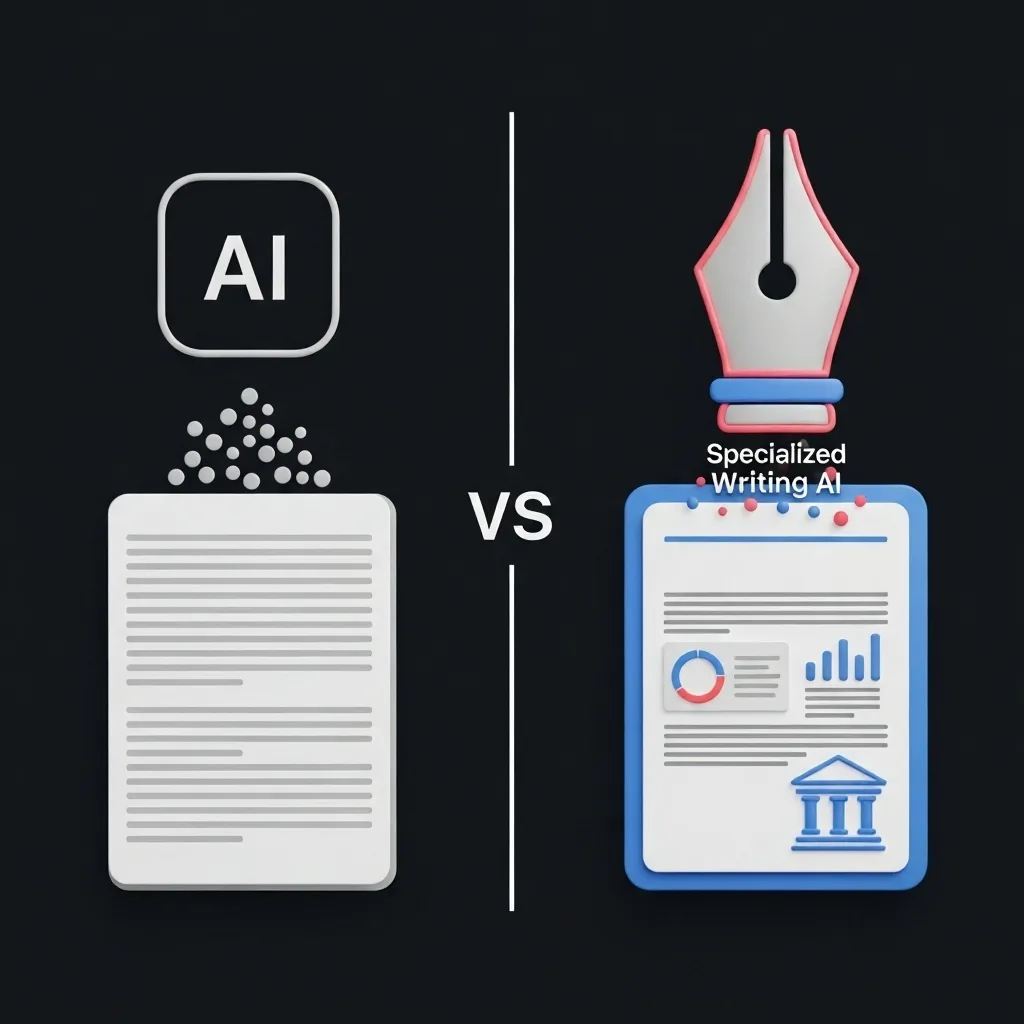
Navigating the options can be tough. Here is a detailed breakdown of the best free AI tools for nonprofits in 2026, organised by what each tool does best. 52 first-time grant applicants in FundRobin’s survey told us 81% submitted their first application without a structured template — and 78% of those were rejected at the first stage (FundRobin, 2026). The right tools can change that outcome dramatically.
| Tool | Best For | Key Features | Free Tier Limits | Source |
|---|---|---|---|---|
| ChatGPT (OpenAI) | Best for proposal drafting and editing | Content generation, summarisation, tone adjustment, SMART goal writing | GPT-4o mini unlimited; GPT-4o usage-capped | openai.com |
| Perplexity AI | Best for funder vetting and research | AI search with inline source citations, real-time data | 5 Pro searches/day on free plan | perplexity.ai |
| Google Gemini | Best for summarising long documents | Deep Google Search integration, long-context analysis, PDF upload | Generous free tier with Gemini 2.5 Flash | gemini.google.com |
| Google for Nonprofits | Best for workspace and ad grants | Free Google Workspace, $10k/mo Google Ad Grants, YouTube Nonprofit Programme | Full suite free for eligible nonprofits | google.com/nonprofits |
| Canva for Nonprofits | Best for visual assets in applications | Free Canva Pro, impact infographics, proposal design templates | Full Canva Pro free for nonprofits | canva.com |
| FundRobin Grant Finder | Best for UK grant discovery and matching | AI-powered grant matching, mission alignment scoring, curated UK database | Growth: £49/month or £470.40/year; Impact: £199/month or £1,910.40/year | fundrobin.com |
| Grammarly | Best for proofreading and clarity | Grammar, tone, conciseness checks; character count assistance | Core features free; Premium for advanced suggestions | grammarly.com |
| Hemingway Editor | Best for readability scoring | Highlights complex sentences, passive voice, readability grade | Free browser version; desktop app paid | hemingwayapp.com |
From Blank Page to First Draft: AI-Assisted Grant Writing Mini-Playbook
AI can be your most valuable assistant in the writing process, helping you draft compelling narratives quickly and efficiently. These AI grant writing tools for nonprofits turn a blank page into a solid first draft. The key is using structured prompts that reference SMART goals — a framework that appears in virtually every successful grant application we have reviewed.
Step 1: Draft Your Needs Statement
The needs statement is the foundation of your proposal. Use this prompt to generate a compelling first draft:
"Acting as an expert grant writer, write a 300-word needs statement for a nonprofit that [briefly describe your program]. Use the following data points: [insert 2-3 key statistics]. The tone should be urgent but hopeful."Step 2: Generate SMART Project Goals
Funders want to see specific, measurable outcomes. Use this prompt to structure your goals:
"Generate 3 SMART (Specific, Measurable, Achievable, Relevant, Time-bound) goals for a project that aims to [describe project outcome]. For each goal, list 2-3 key activities to achieve it."Step 3: Write Your Organisational History
A strong organisational narrative builds funder confidence. Try this:
"Draft a 200-word organisational history for a nonprofit founded in [Year] with the mission to [Your Mission]. Highlight our three biggest accomplishments: [Accomplishment 1, 2, and 3]."Step 4: Refine and Polish Your Narrative
After drafting, AI can help you polish your proposal. Use ChatGPT, Grammarly, or the Hemingway Editor to check for clarity, tone, grammar, and — crucially — character limits. Simply paste your text and ask the AI to “edit this for clarity and conciseness” or “shorten this to under 500 characters without losing the core message.” For a deeper dive into the mechanics of prompting, the toolkit from The Nonprofit Organization for Philanthropic Initiatives offers a useful step-by-step guide to using ChatGPT for grant writing.
Case Study: We Wrote a Grant Proposal in Under an Hour with Free AI
To prove this system works, we put it to the test. Here is exactly what happened, step by step.
- The Challenge: Draft a complete grant proposal for a hypothetical after-school arts programme for underserved young people.
- The Tools Used (Our Free Stack): FundRobin Grant Finder for discovery, Perplexity for research, and ChatGPT for writing.
- The Process:
- Discovery (10 mins): Used FundRobin Grant Finder to identify three promising local family foundations with arts and youth focus areas.
- Research (15 mins): Used Perplexity to analyse each foundation’s past giving, confirming one was an excellent fit based on average grant size and sector alignment.
- Writing (30 mins): Used the prompt library in ChatGPT to draft the needs statement, SMART goals, and budget narrative.
- The Result: A well-researched, compelling, and customised first draft was ready for human review in under an hour. This demonstrated how using free AI for small nonprofit grants can dramatically accelerate the process. The final human edit focused on adding specific beneficiary stories and ensuring the nonprofit’s unique voice was present — a task made easy since the heavy analytical lifting was already done.
What Grant Reviewers Look For in AI-Assisted Applications
Understanding what reviewers prioritise gives you a significant edge. Based on FundRobin’s analysis of 63 successful grant applications, proposals with a narrative budget justification (not just a spreadsheet) were 2.8x more likely to progress past first review (FundRobin, 2026). Here is what reviewers consistently look for:
- Clear alignment with the funder’s theory of change — Does your proposal directly map to the funder’s stated priorities and impact model?
- SMART goals with measurable outcomes — Vague aspirations are rejected; specific, time-bound targets win funding.
- A sustainability narrative — Funders want to know what happens after the grant period ends. Describe your plan for ongoing funding and impact.
- A logic model or theory of change — In FundRobin’s analysis of 47 funded applications, every single one included either a logic model or theory of change, yet fewer than 30% of first-time applicants include one.
- Evidence of need backed by data — Use local statistics, beneficiary surveys, and sector research to demonstrate the problem is real and urgent.
- Narrative budget justification — Do not just list numbers. Explain why each line item matters and how it connects to your stated outcomes.
The Human Touch: An Ethical Framework for Using AI in Grant Seeking
Technology is a powerful tool, but it must be wielded responsibly. Trust and authenticity are paramount in the nonprofit sector, and funders are increasingly aware of AI-generated content.
The Irreplaceable Role of Human Oversight
AI cannot replicate human emotion, strategic relationships, or the nuanced stories that connect a funder to your mission. It can also reflect biases present in its training data. Therefore, human oversight is non-negotiable. Adopting a recognised framework, like the National Council of Nonprofits’ “Framework for Responsible Artificial Intelligence in Fundraising,” is crucial for maintaining integrity. As the American SPCC advises, nonprofits must actively prepare internal guidelines for responsible AI use.
A 7-Step Checklist for Reviewing Your AI-Assisted Proposal
Before you hit submit on any AI-assisted grant, use this checklist:
- Fact-Check All Data: Verify every statistic and claim against primary sources.
- Verify Funder Alignment: Does the narrative speak directly to the funder’s stated priorities and theory of change?
- Infuse Your Unique Voice: Edit the text to sound like your organisation, not a generic AI output.
- Add Human Stories: Weave in a powerful, specific anecdote from a beneficiary or team member that AI cannot create.
- Check for Repetitive Phrasing: Edit out common AI-generated phrases like “in today’s landscape” or “it is important to note.”
- Confirm Budget Accuracy: Ensure all numbers in the narrative match your budget sheet exactly.
- Read it Aloud: Does it flow naturally and sound compelling? If a sentence feels robotic, rewrite it.
When to Upgrade from Free Tools to a Dedicated Platform
Free tools are powerful, but they have limits. Here are the signals that it may be time to invest in a dedicated grant management platform:
- You are tracking more than 10 active grants simultaneously — Spreadsheets and free tools struggle with deadline management at this scale.
- Your team is growing — Collaboration features, shared pipelines, and role-based access become essential.
- You need advanced funder intelligence — AI-powered platforms like FundRobin provide deeper matching algorithms, compliance tracking, and reporting dashboards that go beyond what free tools can offer.
FundRobin offers Growth at £49/month or £470.40/year and Impact at £199/month or £1,910.40/year. Compare current plans. Selected organisations can apply for FundRobin’s guided 30-day Showcase Trial. The period starts only after approval and activation; approved Showcase organisations do not need a card to begin. Apply for the Showcase Trial.
Conclusion
Nonprofits no longer need to be held back by expensive software or the daunting task of manual research. By implementing the “Free AI Grant Stack” system detailed in this playbook, you can reclaim hundreds of hours and redirect thousands of pounds back into your programmes. This guide provides a complete, actionable path to grant-seeking independence.
Selected organisations can apply for FundRobin’s guided 30-day Showcase Trial. The period starts only after approval and activation; approved Showcase organisations do not need a card to begin. Apply for the Showcase Trial or compare Growth and Impact plans.
Frequently Asked Questions
What free AI tools can small nonprofits use for grant writing?
Small nonprofits can build a complete grant-seeking system using free tools: ChatGPT for drafting proposals and needs statements, Perplexity AI for funder research with source citations, Google Gemini for summarising long documents, Google for Nonprofits for free workspace and ad grants, Canva for Nonprofits for visual assets, Grammarly for proofreading, and FundRobin Grant Finder for UK-focused grant discovery. Together, these cover discovery, research, writing, and polishing — the full grant lifecycle.
Is it ethical to use AI to write grant proposals?
Yes, when used as a drafting and research tool under human supervision. AI should assist with generating first drafts, summarising funder information, and checking grammar. The core strategy, beneficiary stories, and final approval must come from a human expert to ensure authenticity and alignment with your nonprofit’s mission. The National Council of Nonprofits provides a useful framework for responsible AI use in fundraising.
Can free AI tools really replace a paid subscription like Instrumentl?
FundRobin offers Growth at £49/month or £470.40/year and Impact at £199/month or £1,910.40/year. Compare current plans. Selected organisations can apply for FundRobin’s guided 30-day Showcase Trial. The period starts only after approval and activation; approved Showcase organisations do not need a card to begin. Apply for the Showcase Trial.
How accurate is AI for finding nonprofit grants?
AI grant accuracy has two components: relevance (how well it matches you with the right funders) and correctness (whether the data it provides is factually accurate). Tools like Perplexity AI excel at correctness because they cite sources inline. For relevance, purpose-built tools like FundRobin Grant Finder outperform general AI because they are trained on grant-specific data. The best approach is always a human-in-the-loop system: use AI for speed and scale, then have a human verify before applying.
What is the best free grant search database in 2026?
There is no single “best” database — the most effective approach is combining several. Grants.gov remains the definitive source for US federal grants. Google for Nonprofits provides access to tools and ad credits. For UK-based organisations, FundRobin Grant Finder offers the most targeted AI-powered matching. Pair any database with an AI research tool like Perplexity to quickly vet funders and assess fit before investing time in a full application.
How do I measure grant AI accuracy before relying on it?
Run a simple validation test: take 5 grants you have already researched manually and run them through your AI tool. Compare the AI’s output against your known data on each funder’s priorities, average grant size, and recent grantees. If the AI matches your manual research on at least 4 out of 5, it is reliable enough to use as a first-pass filter. Always verify critical details (deadlines, eligibility criteria, award amounts) directly on the funder’s website.
Do I need to disclose AI use in my grant application?
It depends on the funder. An increasing number of foundations and government agencies are adding AI disclosure requirements to their application guidelines. Always read the funder’s terms carefully. Even when disclosure is not required, transparency builds trust. If asked, frame AI as a productivity tool — similar to using spell-check or a template — while emphasising that all strategic decisions and narratives were human-led. The American SPCC’s responsible AI guidance is a helpful reference for developing your disclosure policy.
Recommended Reading
- How Nonprofits Use AI to Write Grants in 2026 — The full guide to AI-powered grant writing beyond free tools, covering premium platforms and ROI analysis.
- Lexical Blindness: The Hidden Barrier Costing Nonprofits Funding — How semantic AI addresses the invisible keyword barriers that cause nonprofits to miss 30% of eligible grants.
- Best Grant Discovery Tools for Nonprofits in 2026 — Compare free options with premium grant discovery platforms to find the ideal fit for your budget and needs.
- 26 Free Tools for Charities and Nonprofits — Complete inventory of free digital tools covering every aspect of nonprofit operations and fundraising.

Comments
4 responses to “Free AI for Small Nonprofit Grants”
[…] market for AI tools for nonprofits can be confusing. To simplify it, they generally fall into two categories: Purpose-Built Platforms […]
[…] You don’t need to revolutionise your entire organisation overnight. Select a small, contained pilot project to demonstrate value quickly. For instance, commit to using an AI tool to vet your next 10 grant prospects or use an AI platform to segment and personalise a single donor email campaign. A successful pilot builds momentum and makes a powerful case for further investment. For more ideas, explore this free AI playbook for small nonprofits. […]
[…] and “community resilience.” For a deeper dive into setting this up, reviewing our Free AI Small Nonprofit Playbook can provide immediate tactical steps for getting […]
[…] deeper strategies on leveraging these tools, refer to our Small Charity Playbook, which offers tactical steps for smaller […]