
As of January 2026, the era of easy federal money has officially ended. For the past four years, the American Rescue Plan Act (ARPA) provided a lifeline that many social enterprises and nonprofits mistakenly treated as a permanent revenue stream. Now, as those funds expire, organizations are staring down a “Funding Cliff” that requires not just panic management, but a fundamental structural pivot. This is the Resilience Pivot: a strategic shift from passive reliance on federal grants to active capital stacking using blended finance.
We are no longer in “survival mode”; we have entered “sustainability mode.” The organizations that survive this transition won’t just be the ones with the best mission statements—they will be the ones that treat their capital structure as a diversified portfolio rather than a donation bucket. With federal dollars moving to state control and the impact investing market reaching $748 billion, the opportunity is massive for those equipped to navigate it.
TL;DR: As federal ARPA funds expire in 2026, social enterprises must pivot from direct federal grants to a “blended finance” model. This new capital stack combines state-level pass-through funding, revenue-based financing, and impact equity. Success requires building “audit-ready” infrastructure to handle complex state compliance and using AI tools to identify fragmented local opportunities. Organizations that layer these capital types—rather than relying on a single source—will secure long-term sustainability.
Table of Contents
- The 2026 Funding Cliff: Why the Old Grant Model is Collapsing
- Designing the New Capital Stack: Blended Finance Explained
- The ‘Resilience Pivot’: Securing State Pass-Through Funding
- Becoming ‘Investor-Ready’: The Due Diligence Data Room
- Beyond Traditional Capital: Prize Competitions & Venture Philanthropy
- Executing the Pivot: A 12-Month Roadmap for 2026
The 2026 Funding Cliff: Why the Old Grant Model is Collapsing
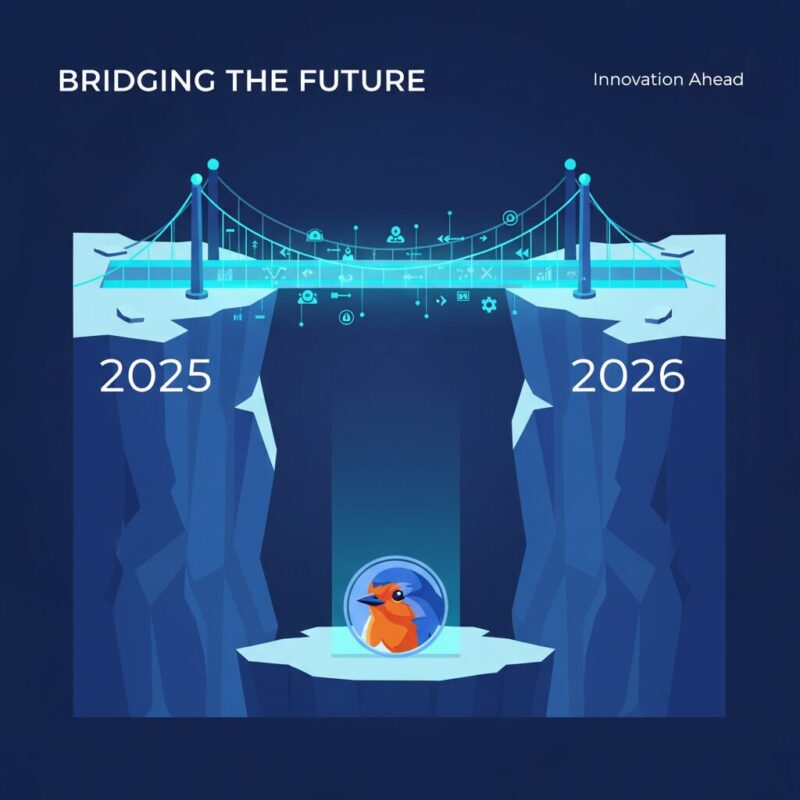
The 2026 Funding Cliff is not a theoretical risk; it is a mathematical certainty codified in the legislative sunsetting of pandemic-era support. For social enterprises that used ARPA funds to expand operational capacity, the sudden contraction of unrestricted federal revenue poses an existential threat. The “spray and pray” method of applying for every federal NOFO (Notice of Funding Opportunity) is now a liability, yielding diminishing returns against increasingly fierce competition.
The End of ARPA: Quantifying the Revenue Gap
The expiration of ARPA funds represents the largest contraction of federal support for the social sector in decades. According to BDO USA, the removal of these stabilization funds will expose significant operational deficits for organizations that failed to build alternative revenue engines. The money hasn’t disappeared entirely, but it has moved. Direct federal grants are being replaced by block grants to states, altering the flow of capital from a centralized firehose to fifty fragmented garden hoses. For executive directors, this requires a psychological shift: the federal government is no longer your primary benefactor; it is now a distant wholesaler of capital to the states.
The Rise of Audit Risk: Why ‘Free Money’ is Getting Expensive
Capital in 2026 is not free. Even traditional grants now carry a heavy administrative price tag. Federal agencies, under pressure to account for pandemic spending, have tightened compliance monitorship on all remaining and new funds. Social Current reports that the cost of compliance—measured in staff hours dedicated to reporting and audit preparation—has risen by 18% year-over-year. The risk of clawbacks is real. Organizations without robust financial management systems face the “Audit Risk”: the possibility that winning a grant could cost more in compliance and potential repayment than the value of the award itself.
The Shift to State Control: Navigating Fragmented Pass-Through Funding
We have moved from a centralized funding landscape to a decentralized one. “Pass-through funding”—federal money distributed by state agencies—is now the primary vehicle for government support. This fragmentation creates a massive discovery problem. Instead of monitoring one federal database, social enterprises must now navigate 50 different state portals, each with unique rule sets, timelines, and compliance nuances. While this fragmentation is a barrier for sluggish organizations, it presents an opportunity for agile ones. Local grants are often less competitive than national ones, provided you have the infrastructure to find them.
Designing the New Capital Stack: Blended Finance Explained
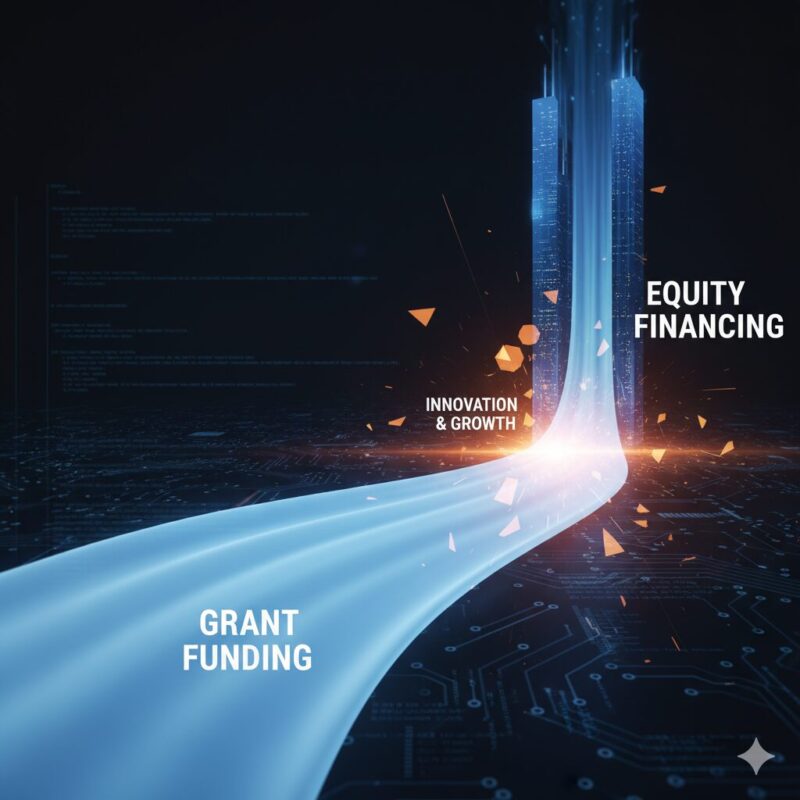
To survive the cliff, you must build a “Capital Stack.” Borrowed from the world of commercial real estate and private equity, this concept involves layering different types of capital with varying risk and return profiles to fund an organization’s growth. In the social sector, this is known as Blended Finance. It is the art of using grant capital to de-risk the organization, making it safe for impact investors to enter.
According to the Global Impact Investing Network (GIIN), the impact investing market has matured to over $748 billion, but accessing it requires a structural shift. You cannot pitch a donation request to an impact investor; you must pitch a blended value proposition.
Layer 1: Concessional Capital (Grants as First-Loss)
In a blended stack, grants are no longer just for paying the light bill—they are “catalytic capital.” They serve as the “first-loss” layer that absorbs the initial risk of innovation or expansion. When talking to investors, you frame your grant revenue not as a dependency, but as non-dilutive equity that validates your model. A $500,000 grant for R&D effectively subsidizes the product development risk that a venture capitalist would typically hate to fund. This makes your enterprise infinitely more attractive to the next layer of the stack.
Layer 2: Revenue-Based Financing & Recoverable Grants
The “Missing Middle” of financing is filled by instruments that bridge the gap between donations and equity. Revenue-Based Financing (RBF) allows social enterprises to access capital upfront and repay it as a percentage of future revenue. Similarly, recoverable grants act as zero-interest loans that only convert to repayment if the project succeeds. These tools are essential for organizations that have consistent cash flow but lack the hard assets required for traditional bank loans. They provide the fuel for scaling without the pressure of an immediate exit event.
Layer 3: Impact Equity & The ‘Patient Capital’ Movement
At the top of the stack sits Impact Equity. This capital comes from family offices, impact VCs, and foundations willing to accept lower financial returns—or longer time horizons—in exchange for measurable social impact. This is often termed “Patient Capital.” According to the Center for Financial Inclusion (CFI), the rise of patient capital is a direct response to the limitations of traditional VC in the social sector. However, securing this capital requires a rigorous “cap table” strategy that protects your mission while offering a viable path to financial sustainability.
The ‘Resilience Pivot’: Securing State Pass-Through Funding
While the capital stack is the goal, the immediate tactical requirement for 2026 is mastering state-level funding. This is the “Resilience Pivot”: reorienting your development team from chasing federal moonshots to capturing state-level pass-throughs. This requires a granular, hyper-local approach that manual searching simply cannot support.
Understanding the State-Level Compliance Maze
State agencies are notoriously idiosyncratic. One state may require monthly expense reporting while another demands quarterly outcome audits. The compliance burden is higher because state program officers are often personally accountable for the funds. Common pitfalls include misaligning budget narratives with state-specific allowable costs, leading to disallowed expenses during audits. Success here requires specialized administrative capacity—or technology that automates it.
Using AI to Discover Hyper-Local Opportunities
The fragmentation of funding means that the most relevant opportunities for your organization might be buried in a county-level RFP or a specific state agency initiative. Human researchers cannot physically monitor thousands of local databases daily. This is where AI becomes a competitive necessity. Platforms like FundRobin for Nonprofits utilize “Smart Matching” technology to scan these fragmented databases, understanding the context of your mission to surface opportunities that keyword searches miss. For example, an environmental nonprofit might find a relevant workforce development grant in a rural county—an opportunity they would never have found manually.
Compliance-First Proposal Writing: Reducing Audit Anxiety
Writing for state grants is less about rhetorical flourish and more about technical precision. Proposals must be “compliance-first,” meaning the narrative is strictly aligned with the regulatory guidelines of the funding source. AI tools play a critical role here as well, acting as a pre-submission auditor. By using AI to cross-reference your proposal draft against the NOFO requirements, you can identify compliance gaps before you hit submit, significantly reducing audit anxiety and protecting your revenue streams.
Becoming ‘Investor-Ready’: The Due Diligence Data Room
Moving up the capital stack to blended finance requires a different set of muscles. Grants require an application; investors require a Data Room. The failure rate for social enterprises in investor due diligence hovers around 30%, largely because founders attempt to use “nonprofit metrics” to answer “investment questions.”

From Logic Models to Impact Coefficients
Traditional logic models (inputs -> outputs -> outcomes) are insufficient for impact investors. They need to see an Impact Coefficient: a quantifiable metric that correlates capital deployed with social value created. For instance, instead of saying “we trained 500 people,” an investor-ready model says, “Every $1,000 invested generates $5,200 in lifetime wage increases for our beneficiaries.” This shift from storytelling to unit economics is non-negotiable for accessing the $748B impact market.
Financial Modeling: Calculating LTV and Unit Economics
Investors need to see a clear path to financial sustainability that isn’t dependent on the next grant cycle. This means understanding and presenting your Unit Economics. For a social enterprise, this involves calculating the Lifetime Value (LTV) of a customer or beneficiary relative to the Customer Acquisition Cost (CAC). Even if your “customer” is subsidized by a third party, the economics must work. FundRobin for Startups provides the financial modeling frameworks necessary to translate mission activities into the hard financial ratios that investors scrutinize.
Leveraging FundRobin for Data-Driven Narratives
The gap between your raw data and a compelling investment memo is where many deals die. FundRobin’s AI doesn’t just find money; it helps you articulate your value. By synthesizing your financial data and impact measurement metrics, AI assistants can draft the “Business Case” sections of your proposals and investment decks, ensuring that your narrative claims are always backed by the hard data sitting in your financials. This consistency builds trust—the most valuable currency in due diligence.
Beyond Traditional Capital: Prize Competitions & Venture Philanthropy
A robust 2026 capital stack includes “wildcard” layers that offer high rewards. Prize competitions and venture philanthropy represent non-dilutive capital that can accelerate growth without the strings of traditional bank debt or the equity loss of VC.
The Rise of Mega-Prizes
Competitions like The Earth Prize or the Harvard Business School Social Enterprise New Venture Competition are not just resume builders; they are multi-million dollar funding events. These “Mega-Prizes” effectively act as massive, unrestricted grants. However, they are winner-takes-all markets. The effort required to win is substantial, but the ROI on a win—both in capital and prestige—can propel an organization through the growth stage.
Structuring for Innovation: How to Win ‘High-Risk, High-Reward’ Funding
Winning these prizes requires a specific mindset: you are pitching potential and scale, not just need. Judges are looking for the “Big Idea” that can disrupt a system. To win, your proposal must read more like a Silicon Valley pitch deck than a charity appeal. It must emphasize scalability, replicability, and innovation.
Managing the ‘Valley of Death’ with Non-Dilutive Innovation Grants
Every scaling social enterprise faces the “Valley of Death”—that dangerous period between initial seed funding (or early grants) and sustainable revenue. Non-dilutive innovation grants and prize money are the bridge across this valley. They provide the runway needed to iterate on your product or service without forcing you to sell off equity too early. Strategically targeting these opportunities allows you to preserve ownership and mission control while you scale.
Executing the Pivot: A 12-Month Roadmap for 2026
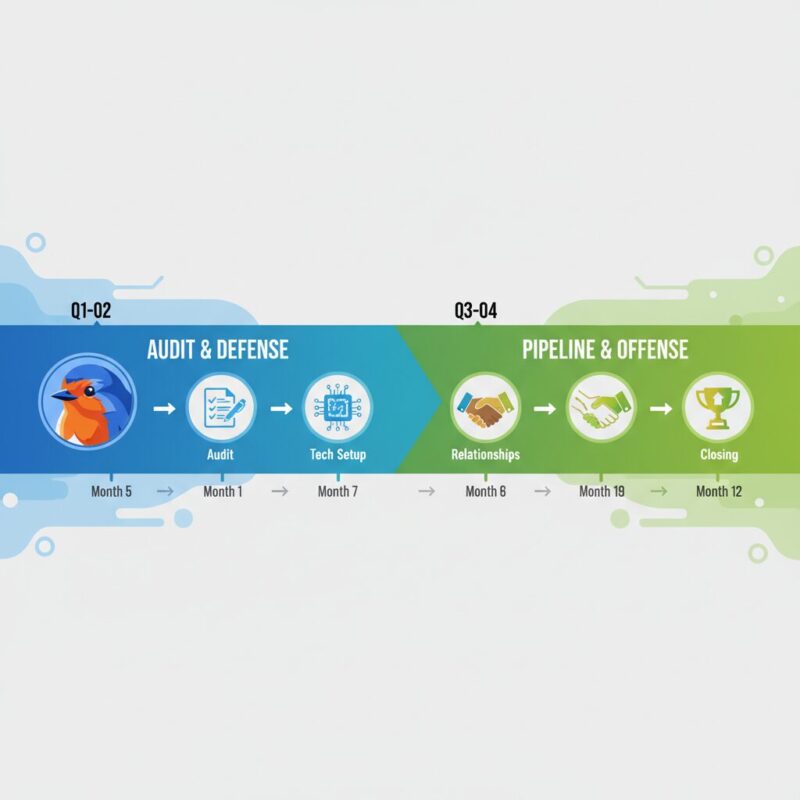
Understanding the theory of the capital stack is useless without a plan to build it. The following roadmap outlines the critical steps for executing the Resilience Pivot over the next 12 months.
Q1-Q2: Audit & Infrastructure Setup
The first half of the year must be dedicated to defense and preparation. Conduct an internal audit of your current grant compliance status to identify any risks before state agencies do. Implement impact measurement systems that can generate the coefficients investors need. This is also the time to onboard technology partners. Setting up your FundRobin dashboard now ensures you are ready to capture data and identify opportunities as they arise later in the fiscal year.
Q3-Q4: Pipeline Diversification & Relationship Building
With your infrastructure in place, shift to offense. Use Q3 to aggressively diversify your pipeline. Submit applications for the state pass-through grants identified by your AI tools. Begin the outreach process to impact investors, armed with your new data room. Q4 should be focused on closing deals and entering major prize competitions. This phased approach prevents burnout and ensures that when you do ask for money, you are undeniably ready to receive it.
The Role of Technology in Scaling Your Capital Search
The 2026 capital stack is too complex to manage with spreadsheets and Google alerts. The sheer volume of state compliance rules, the nuance of investor metrics, and the fragmentation of opportunities require leverage. AI provides that leverage. By automating the discovery and compliance-checking phases, tools like FundRobin save development teams an average of 200+ hours per year—time that can be reinvested in building relationships with funders. The pivot is mandatory, but the heavy lifting doesn’t have to be manual.
Frequently Asked Questions
What is the 2026 social enterprise funding cliff?
The 2026 funding cliff refers to the expiration of federal ARPA funds and the subsequent contraction of direct federal grants. This shift forces nonprofits and social enterprises to pivot toward state-administered “pass-through” funding and private impact capital to fill the revenue gap.
How does blended finance work for nonprofits?
Blended finance creates a capital stack where grants serve as catalytic, “first-loss” capital to de-risk the organization, making it safe for impact investors to provide debt or equity. By layering concessional capital (grants) with investment capital, nonprofits can fund growth that grants alone cannot support.
What is state pass-through funding and how do I access it?
State pass-through funding involves federal block grant money that is distributed and managed by state agencies rather than the federal government. Accessing it requires navigating 50 different state portals and adhering to stricter local compliance and audit trails, often necessitating AI discovery tools.
How do I make my social enterprise investor-ready?
To be investor-ready, you must present a data room that includes robust impact measurement (impact coefficients), clean financials (unit economics like LTV/CAC), and a clear governance structure. Investors need to see a path to financial sustainability, not just a worthy cause.
What is the difference between venture philanthropy and impact investing?
Impact investing seeks a financial return (principal plus interest/profit) alongside social impact, whereas venture philanthropy offers high-engagement grant capital with no expectation of financial return. Venture philanthropy focuses on capacity building and scaling, often acting as a precursor to impact investment.
How can AI help with grant discovery and proposal writing?
AI tools like FundRobin utilize context-aware algorithms to identify niche state and local grants that manual keyword searches miss. Furthermore, they streamline the proposal writing process by generating compliance-first drafts and “Smart Proposals” that align narrative with funder guidelines.
Key Takeaways:
- The ‘Funding Cliff’ is real: The expiration of federal ARPA funds in 2026 demands a structural shift to state-level pass-throughs and private capital.
- Grants are the new ‘First-Loss’ capital: Use grant funding not just for operations, but as the de-risking layer to attract impact investors.
- State compliance is the bottleneck: Success in 2026 requires navigating complex state audit requirements—infrastructure FundRobin automates.
- Data wins deals: Investors demand ‘Impact Coefficients’ and unit economics, not just qualitative stories.
- Diversification is survival: A healthy 2026 capital stack blends grants, revenue-based financing, and prize competitions.
Conclusion
The 2026 funding landscape is not a wasteland; it is a marketplace. The organizations that view the end of ARPA as a disaster will struggle, but those who view it as a catalyst for the Resilience Pivot will thrive. By building a diversified capital stack, mastering state compliance, and leveraging AI to handle the complexity, social enterprises can secure a future that is not just funded, but sustainable. The tools exist, the capital is there, and the roadmap is clear. The only remaining variable is your willingness to pivot.

Leave a Reply