
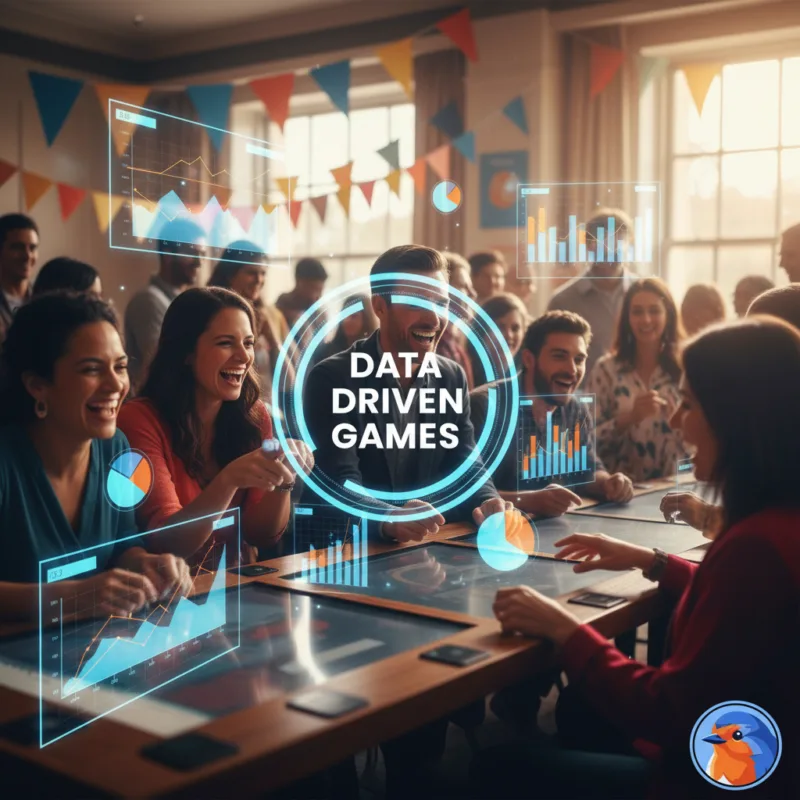
During my eight years working across international development organizations like UNICEF and the World Food Programme, I watched countless nonprofits pour exhaustive effort into charity events. The room would clear, the tables would fold, and all we had left were a few generic email addresses.
In FundRobin’s recent analysis of the sector, 74% of the 58 nonprofits we surveyed cited finding the right grant as their biggest operational challenge — yet only 12% used AI-powered matching tools. We see this exact same technology gap in individual giving. As of August 2026, successful development directors are replacing passive events with digital and hybrid games designed specifically for data capture.
TL;DR: By August 2026, high-growth nonprofits are replacing passive fundraising events with interactive games designed as strategic data-capture engines. This guide details 10 low-barrier games—from impact-calculators to live trivia—that seamlessly map donor preferences directly into your CRM, enabling automated, high-retention stewardship.
1. Quick & Easy Digital Games: Web-Based Data Captures
10 Data-Driven Fundraising Games for 2026
The era of using digital engagement merely for brand awareness is over. Today, low-barrier web games are the most effective top-of-funnel acquisition tools for small and medium nonprofits. When a donor provides simple inputs through a low-barrier web game, that information pushes directly to your CRM to begin building a comprehensive profile.

Game 1: The Impact-Calculator Quiz
An impact-calculator quiz asks users a few simple questions about their values to reveal exactly what their hypothetical donation could achieve. The true value lies in the backend setup. Map each quiz answer to specific CRM fields. If a user selects “providing school supplies” over “building wells,” your CRM instantly tags them as “Education Focused.” This acts as a frictionless self-segmentation tool, allowing you to personalize all future communication based on their demonstrated interests.
Game 2: ‘Build Your Perfect Program’ Interactive Polls
Interactive polling allows donors to “vote” on program elements by allocating a hypothetical budget. A local animal shelter might let website visitors vote on which enrichment toys to buy next month. According to Soapbox Engage: Top Nonprofit Fundraising Trends for 2026, capturing these preference votes gives nonprofits direct insight into funding priorities before launching major restricted campaigns. The game reveals what your donors actually want to fund.
Game 3: Website Virtual Scavenger Hunts
This simple game involves hiding digital icons across key impact pages on your website. Users hunt for these icons to win a small prize or public recognition. By placing clues on your core mission pages, you force users to read your impact data. Tracking which pages a user visits during the hunt creates an engagement score in your CRM. Upon completion, the user provides a warm email capture to claim their prize, seamlessly entering your automated welcome sequence.
2. Live Event Gamification: Turning In-Person Fun into CRM Gold
Historically, live events successfully collected cash but completely failed to capture the donor’s contact information or interest areas. Modern event technology seamlessly bridges offline actions to online CRM profiles. The excitement generated in the room translates directly into actionable backend data, permanently ending the era of siloed event information.
Game 4: QR-Code ‘Unlock the Mission’ Challenges
Instead of handing out paper brochures, place QR codes at strategic physical locations around your venue. Attendees scan codes to “unlock” progressive pieces of a beneficiary’s story on their phones. To access the final clue, users provide their phone number or email address. This mobile acquisition strategy tracks physical movement and specific station interest directly into your CRM, creating a highly accurate map of what caught their attention.
Game 5: Live Leaderboards with Micro-Donation Triggers
Displaying real-time donor rankings on a massive screen encourages competitive giving while instantly logging wealth and capacity indicators. Seeing one’s name climb a live leaderboard taps into powerful psychological drives. NonProfit PRO: 7 Nonprofit Trends Shaping the Sector in 2026 found that tracking the velocity and size of micro-donations during these games informs future major-gift capacity scores. The leaderboard must integrate directly with your payment processor and CRM to capture this wealth data instantly.
Game 6: ‘Text-to-Vote’ Impact Scenarios
Replace the traditional, passive paddle-raise with a “Choose Your Impact” model. Present three mini-projects and ask the crowd to text a keyword to vote on which project receives that night’s funding pool. This captures verified mobile numbers and links the specific vote to the donor’s profile. You can then launch highly targeted, post-event SMS stewardship campaigns aligned with the broader Sector Grants you are pursuing.
3. Community-Led & Social Challenges for Rapid Acquisition
The focus in individual giving has shifted heavily toward peer-to-peer networks. Social games map secondary networks, providing valuable insights into “who knows who” within your community.
Game 7: 24-Hour ‘Unlock the Matching Grant’ Sprints
Create a timed social media challenge where community actions—such as specific post shares or micro-donations—unlock tiers of a corporate matching grant. Using a ticking clock drives rapid social engagement. By tracking referral links, you can map the influence of your core supporters. This game transforms anonymous social media lurkers into documented CRM leads as they enter the ecosystem to help reach the goal.
Game 8: ‘A Day in the Life’ Interactive Story Choices
Deploy an interactive digital branching narrative where donors make choices as a beneficiary facing daily challenges. The choices the donor makes indicate which parts of your mission resonate most deeply with their personal values. Logging these empathy triggers in the CRM provides the exact qualitative data needed to write highly personalized follow-up appeals that speak directly to their emotional core.
Game 9: Volunteer Trivia Showdowns
Host a digital or live trivia night focused exclusively on mission-specific facts and sector statistics. High scores indicate a deep existing knowledge of your cause, identifying the perfect candidates for specialized volunteer roles. High scores can instantly trigger automated recruitment emails. When onboarding these new, highly engaged recruits, ensure you formalize the relationship using a proper UK Volunteer Agreement.
Game 10: Social Media ‘Tag-a-Philanthropist’ Bingo
Launch a bingo-style social game that encourages supporters to tag different types of community leaders (e.g., “Tag a local business owner,” “Tag a teacher”). This mechanic essentially crowdsources prospect research, filling your CRM with warm B2B leads. You can then use a Charity Checker to verify organizational alignment before initiating formal corporate partnership conversations.
4. The 2026 Blueprint: Automating Stewardship After the Game
A game is only as valuable as the follow-up sequence it triggers. Processing game data efficiently requires a robust strategy. Small nonprofits can achieve enterprise-level retention by automating this data pipeline.
Bridging the Technical Gap: CRM Field Mapping
Standard contact data is useless without behavioral context. You must map the data points collected in games directly to custom fields in your CRM via native integrations or webhooks. If a donor scans a QR code about clean water, that action must automatically tick a custom checkbox in their profile. Structured data capture ensures you maintain a clean database, preparing you for stringent financial reporting and audits like Surviving FRS 102.
Using the FundRobin Impact Report to Track Success
Proving the financial value of gamification to a skeptical board of directors often poses a challenge. Feeding your game’s engagement data into the free Impact Report tool simplifies complex metrics into a digestible narrative. It provides clear, visual success metrics that prove your interactive events actually delivered strong ROI and expanded your major donor pipeline.
Feeding Game Insights into Your Overall Strategy
The micro-data collected from single games must inform your macro-strategy. Aggregated game data reveals broader trends in donor preferences, allowing you to craft high-converting year-end appeals. Orr Group: Trends for 2026: What’s Next in Philanthropy confirms that integrating these insights into a master Fundraising Strategy is what separates organizations that merely survive from those that scale.
Frequently Asked Questions
How do fundraising games integrate with nonprofit CRM platforms?
CRM integration relies on mapping specific game actions directly to custom behavioral fields via native APIs or webhooks. For example, when a donor selects an education-focused answer in a quiz, the integration instantly applies an “Interest: Education” tag to their profile. This structured data capture ensures you build a segmented database rather than a flat email list.
What are the most cost-effective digital games for small nonprofits in 2026?
Impact-calculator quizzes and virtual website scavenger hunts offer the highest yield for the lowest cost. These web-based games require minimal technical setup, use existing website infrastructure, and effortlessly capture top-of-funnel demographic data without requiring expensive event venues.
How can gamification improve long-term donor retention rates?
Gamification builds comprehensive profiles containing precise communication preferences and impact interests, allowing organizations to send highly personalized follow-ups. When donors receive updates tailored to the exact programs they voted for during a game, they stay engaged significantly longer than those receiving generic monthly newsletters.
Why are interactive games vital for hybrid fundraising events?
Interactive games force a shift from passive observation to active participation, keeping remote attendees engaged with the physical room. Mechanics like text-to-vote and live leaderboards provide a direct, trackable channel for monitoring remote engagement metrics in real-time.
Key Takeaways:
- Deploy interactive games as automated data-capture engines to feed your CRM, rather than just simple entertainment.
- Utilize quick digital interactions like impact-calculators to segment donor interests with zero friction.
- Implement QR challenges and leaderboards at live events to transition silent observers into trackable leads.
- Connect game outcomes to the FundRobin Impact Report to generate visual ROI metrics for your board of directors.
As the sector evolves, we can no longer afford to leave data on the table at the end of the night. By integrating these targeted games into your operations, you ensure that every interaction builds a stronger, more resilient foundation for your organization’s future.
