
After delivering £200M+ in transformation value for FTSE 100 clients, I learned a difficult truth about governance: structural flaws hide behind good intentions. The same strategic principles that drive enterprise success can revolutionize non-profit funding, but only if the board reflects the reality of the mission. Traditional recruitment models treat diversity as a compliance checkbox. Modern governance demands we treat it as an engine for revenue and resilience.
As of July 07, 2026, the regulatory and fundraising climate requires verifiable competence from leadership teams. In FundRobin’s survey of 39 UK charities, 54% had never formally documented their reserves policy — leaving them unable to demonstrate financial resilience to major funders. This compliance gap stems directly from homogenous leadership teams relying on closed networks. Fixing this requires a fundamental redesign of how we find, evaluate, and retain trustee talent.
TL;DR: Traditional trustee recruitment fails because insular networks limit access to modern skills and diverse perspectives. UK charities can fix this in 2026 by replacing “word-of-mouth” hiring with data-driven, competency-based skills matrices. Integrating AI tools and prioritizing psychological safety transforms demographic and cognitive diversity into a direct driver of fundraising ROI and operational resilience.
Table of Contents
- The Breakdown of Traditional Trustee Recruitment in 2026
- The True ROI of Board Diversity for Fundraising and Resilience
- Building a 2026-Ready Board Skills Matrix
- Tech-Enabled Recruitment: Leveraging AI and Data for Trustee Matching
- Cultivating Psychological Safety and Sustainable Board Retention
- Actionable Steps to Modernize Your Nomination Committee Today
The Breakdown of Traditional Trustee Recruitment in 2026
Legacy recruitment methods are no longer viable for modern UK charities. Current models rely heavily on informal, insular networks, creating an echo chamber that restricts organizational growth. The classic “who you know” framework inherently filters out marginalized demographics, younger professionals, and non-traditional backgrounds. Regulatory pressures now demand transparent, verifiable recruitment channels, making informal methods a severe compliance risk.

The Death of the ‘Who You Know’ Network for UK Charities
Personal networks inevitably replicate existing demographic profiles. When a board chair asks current members for recommendations, the resulting candidate pool mirrors the exact socioeconomic and professional background of the incumbents. This word-of-mouth insularity actively prevents access to younger, digital-native talent capable of navigating the complex 2026 digital economy. Charities face escalating public and funder backlash for these closed-door governance practices. According to the Charity Commission for England and Wales, boards lacking diversity of thought struggle to maintain public trust and effectively serve their beneficiary communities.
The True Cost of Homogeneity: Strategic & Fundraising Risks
Groupthink drastically limits a charity’s ability to pivot during socio-economic crises. When everyone in the boardroom shares the same assumptions, strategic blind spots become institutional liabilities. Major grant funders heavily scrutinize board composition; homogeneity frequently leads to rejected proposals because grantors doubt the organization’s connection to its community. Furthermore, legal and compliance risks multiply when a board lacks broad, critical perspectives. Research from Harvard Business Review – What Makes Great Boards Great confirms that constructive dissent—born from diverse experiences—is the primary mechanism for mitigating catastrophic organizational risk.
Performative vs. Authentic Governance: The 2026 Pivot
We define the “2026 Pivot” as the necessary shift from compliance-based oversight to strategic, inclusive partnership. Tokenistic diversity efforts involve recruiting minorities simply to check a box on a grant application. This optical diversity backfires immediately. It creates a hostile environment for new trustees, leading to rapid turnover, burnout, and severe reputational damage within the sector. Authentic governance requires shifting the organizational culture to value differing perspectives before bringing diverse candidates into the boardroom. Organizations must build the inclusive infrastructure first, then recruit the talent.
The Escalating Demand for Digital and AI Literacy on the Board
Traditional boards lack the computational expertise to govern digital transformation securely. AI understanding is a strict governance necessity in 2026, not an operational luxury. Charities governed by technologically illiterate boards fall dangerously behind computationally advanced non-profits in both fundraising efficiency and program delivery. Digital literacy must be evaluated as a core diversity metric. According to the Nonprofit Resource Hub – 2026 Board Leadership Trends, failure to secure technological competence at the board level is the leading cause of strategic stagnation for mid-sized charities today.
The True ROI of Board Diversity for Fundraising and Resilience
Diversity is a competitive advantage in the philanthropic marketplace. Inclusive boards navigate complexity faster and yield higher returns on organizational initiatives. Funders aggressively demand proof of diverse governance before awarding large, multi-year grants. We must reframe board diversity from a moral obligation to a strategic, revenue-generating business asset.
Redefining Diversity as a Strategic Business Function
The Nominating Committee must operate with the exact rigor and strategic alignment of a corporate executive search firm. Treating demographic and cognitive diversity as a driver of resilience means recognizing it as an operational asset, not an overhead expense. This shifts recruitment from a reactive panic when a vacancy occurs to a continuous, strategic pipeline. McKinsey & Company – Diversity Wins demonstrates that diverse leadership teams financially outperform homogenous peers by up to 36%. In the non-profit sector, this outperformance translates directly to expanded service delivery and sustainable impact.
How Cognitive and Demographic Diversity Boosts Grant Success
Modern grantors across the UK, EU, and USA require detailed governance diversity data within their applications. Diverse boards possess the varied experiences necessary to review and refine innovative, high-impact grant proposals that resonate with modern institutional funders. When a board accurately reflects the community it serves, grant applications shift from theoretical assumptions to evidence-backed interventions. This alignment perfectly matches the demands of major foundations actively looking to fund equitable and community-reflective organizations.
Quantifying the Financial Impact of Inclusive Governance
A diverse board improves a charity’s bottom line through highly specific mechanisms. Inclusive leadership unlocks access to new, previously untapped demographic-specific donor networks. Improved risk management prevents costly legal or PR crises associated with tone-deaf marketing initiatives or program design. A study by Princeton University – Diversity and Governance Performance Research found that organizations with inclusive leadership secure larger average grant sizes and demonstrate superior financial oversight compared to homogenous boards.
Aligning Board Skills with Complex Compliance (Charity SORP 2026)
Incoming changes to financial reporting require specialized literacy on the board. A homogenous group of trustees is statistically more likely to miss niche compliance nuances associated with new regulations. By integrating compliance foresight into the diversity recruitment strategy, charities ensure they have the financial acumen to handle structural changes. Board leaders must integrate a surviving FRS 102 and Charity SORP 2026 strategy directly into their skills matrix to prevent audit failures and protect charitable status.
Building a 2026-Ready Board Skills Matrix
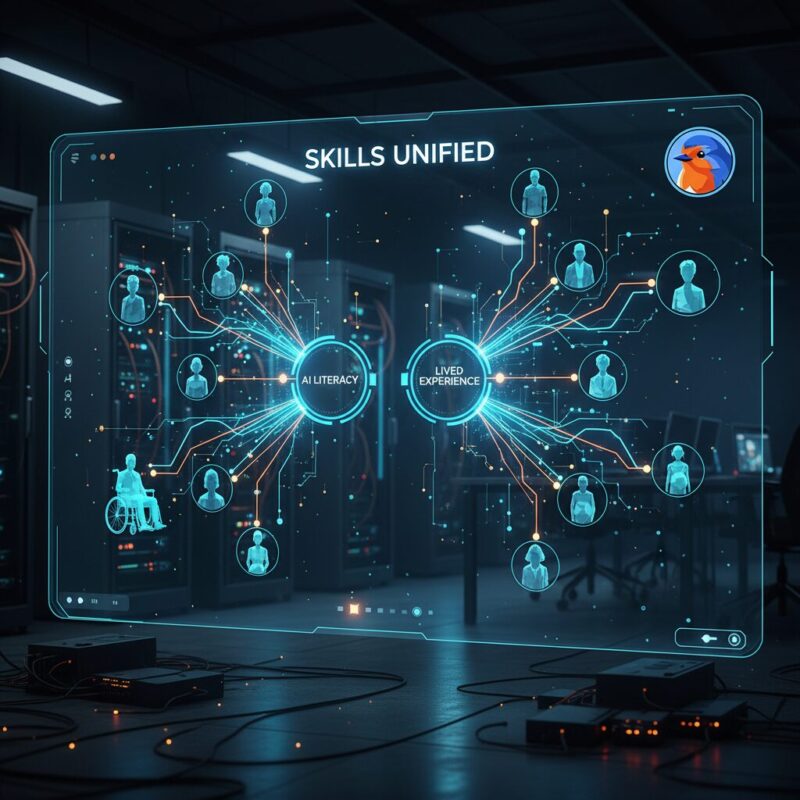
Legacy skills matrices focus entirely on traditional professions—seeking one lawyer, one accountant, and one HR director. A 2026 matrix weights digital fluency, ethical AI understanding, and community connection equally with corporate experience. The matrix is the foundation for transparent, competency-based recruitment.
Transitioning to Data-Backed, Competency-Based Recruitment Models
Structuring the recruitment process around a modern skills matrix replaces assumptions with objective data. Boards must define objective rubrics for scoring candidates during interviews, effectively eliminating the unconscious bias inherent in standard resume screening. According to Getting on Board, utilizing a structured matrix allows charities to write highly specific, targeted trustee advertisements that attract candidates with the exact competencies the organization lacks, rather than candidates who simply “fit in.”
Essential 2026 Skills: From Cyber Governance to AI Strategy
Specific, modern skills remain drastically underrepresented on traditional charity boards. Cybersecurity oversight is now a mandatory governance requirement, as data breaches destroy donor trust overnight. Boards urgently need “AI Ethics” and strategic implementation experience to evaluate vendor tools and operational automation. Chairs must prioritize strategic AI implementation governance for nonprofit leaders as a core competency. Crisis communication in the era of viral social media represents another critical gap that traditional professional backgrounds rarely cover effectively.
Mapping Lived Experience Alongside Professional Expertise
Lived experience—direct personal understanding of the charity’s specific cause or beneficiary community—holds the exact same value as a professional degree. Boards routinely fail because they lack the voice of the communities they claim to serve. The skills matrix must explicitly define lived experience parameters. Recruiting committees must learn how to respectfully request and evaluate this experience during the recruitment phase, ensuring candidates feel valued for their insight rather than tokenized for their background.
Utilizing Gap Analysis to Target Crucial Organizational Blind Spots
Conducting a governance gap analysis using the new skills matrix provides immediate clarity. Start by surveying current board members to establish a baseline of existing capabilities. Identify the “red zones”—critical operational areas where the board possesses zero competency. This audit process replaces subjective debates about board composition with hard data. Align this gap analysis with the charity’s three-to-five-year strategic plan, ensuring the board recruits the skills necessary for tomorrow’s challenges, not yesterday’s operations.
Tech-Enabled Recruitment: Leveraging AI and Data for Trustee Matching
Modern non-profits use technology, AI pipelines, and data analytics to source candidates far beyond their standard social networks. AI platforms break down geographical barriers, map non-traditional competencies to board requirements, and automate administrative tasks so executives can focus on governance.
Bridging the Gap: How Data Analytics Replaces Word-of-Mouth
Transitioning from asking “who do we know?” to “what does the data tell us we need?” transforms the recruitment process. Charities now use LinkedIn analytics, demographic mapping tools, and specialized professional networks to source candidates objectively. Remote governance technologies eliminate the limitations of local-only recruitment, allowing a charity in Yorkshire to recruit a digital strategist in London. This approach builds a continuous, data-driven talent pool independent of the board chair’s personal contacts.
AI-Driven Talent Pipelines and Advanced Competency Mapping
AI tools possess the unique ability to scan resumes and understand context—for example, mapping the agility required in a tech startup to the crisis management skills needed in a non-profit. Predictive analytics help determine long-term board fit, significantly mitigating early turnover. While human oversight remains mandatory to prevent algorithmic bias in diversity recruitment, AI accelerates the initial sourcing and competency mapping phases, delivering a broader, more diverse shortlist of qualified candidates to the nomination committee.
Reallocating Time: Automating Operations to Focus on Governance
Strategic board recruitment demands significant executive time. Non-profit leaders must free up operational capacity to execute complex diversity strategies. By using AI platforms like FundRobin to write grant proposals up to 10x faster, Executive Directors reclaim hundreds of hours every month. Reinvesting these automated administrative hours into high-impact, human-centric governance relationship building provides the operational breathing room required to conduct a thorough, diverse, and strategic board search.
Ensuring Regulatory Compliance During Trustee Onboarding
Technology ensures that background checks, registrations, and volunteer agreements process smoothly and compliantly for new board members sourced outside traditional circles. The logistical challenge of onboarding requires strict adherence to charity law. Organizations must utilize standardized UK volunteer agreements to protect both the charity and the trustee. Furthermore, digital tools streamline the due diligence process, simplifying the steps required to check if a UK charity is registered and ensuring all new directors meet the strict fit-and-proper-persons criteria.
Cultivating Psychological Safety and Sustainable Board Retention
Recruitment represents only the first step. Retention requires a fundamental shift in board culture. The critical failure point in most diversity initiatives involves recruiting excellent candidates but placing them in an exclusionary, legacy culture that forces them to leave.
Moving Beyond Recruitment: Redesigning the Onboarding Experience
An effective onboarding process empowers new trustees rather than overwhelming them with legacy bureaucracy. Scrap the massive, intimidating “board binder” in favor of dynamic, accessible digital onboarding portals. Translate charity-specific jargon and acronyms immediately to make the environment accessible to sector outsiders. BoardSource data indicates that setting clear expectations for influence and decision-making from day one drastically improves a new trustee’s ability to contribute meaningfully during their crucial first 90 days.
Implementing Structured Buddy Systems and Mentorship
Peer support structures ensure new, diverse trustees integrate successfully into complex board dynamics. Pair new recruits with veteran trustees to navigate unwritten rules and historical context. Conversely, implement reverse mentorship, allowing digital-native recruits to mentor legacy trustees on AI capabilities and modern communication strategies. Fostering genuine relationships outside of formal, highly structured board meetings builds the interpersonal trust required for a high-functioning leadership team.
Navigating Boardroom Conflict and Embracing Constructive Dissent
Diversity inherently brings differing viewpoints, resulting in beneficial boardroom friction. Board Chairs must move away from a culture of “rubber-stamping” executive decisions. Training chairs to facilitate meetings where minority opinions receive amplification and rigorous debate is essential. By establishing firm ground rules for respectful, challenging discourse, the board transforms friction from an interpersonal conflict into a positive driver of strategic innovation.
The Cost of Turnover: Retaining Your Modernized Leadership Team
When a modernized board regresses due to poor retention, the organizational damage is severe. The donor community notices when high-profile, diverse trustees resign abruptly, inflicting lasting reputational damage. Constant recruitment cycles waste finite financial and temporal resources. Implementing annual board culture audits provides the data needed to monitor psychological safety effectively.

Actionable Steps to Modernize Your Nomination Committee Today
Transitioning from a reactive, homogenous recruitment style to a proactive, strategic diversity pipeline requires sequential execution. Executive Directors must focus on actionable outputs: rigorous audits, targeted advertisements, and continuous pipelining.
Step 1: Auditing the Current Governance Framework
Conduct a brutally honest assessment of the board’s current demographic and skill makeup. Use your skills matrix to map existing talent and highlight the exact areas where the board fails to meet 2026 standards. Utilize internal auditing tools like a charity checker to ensure baseline governance compliance before expanding the team. Secure explicit buy-in from the existing Board Chair before moving forward, as modernization initiatives fail without top-level support.
Step 2: Redesigning the Trustee Advertisement and Outreach Strategy
Inclusive trustee vacancy descriptions reach non-traditional candidates. Strip corporate jargon and exclusive language from your role descriptions. Explicitly state the board’s desire for lived experience and diverse backgrounds in the vacancy advertisement. Move outreach efforts beyond standard charity job boards. According to Boardable, actively posting in community forums, specialized diverse talent networks, and university alumni groups yields a exponentially more varied candidate pool.
Step 3: Establishing Continuous, Proactive Talent Pipelining
Abandon the practice of panic-recruiting only when a vacancy opens. Build a secure database of potential future trustees, mapped against anticipated skill gaps. Invite pipeline candidates to serve on non-board advisory panels or specific sub-committees as a low-risk trial run. The Nomination Committee must function year-round, continuously building relationships with community leaders and subject matter experts.
Step 4: Securing UK and Global Funding Through Inclusive Leadership
The ultimate payoff of modernization is revenue growth. A diverse board stands up to the rigorous compliance standards demanded by modern institutional funders. Inclusive leadership unlocks non-dilutive grant opportunities that legacy boards simply miss due to strategic myopia. Use the strength of your 2026-ready board alongside AI automation tools to maximize your funding pipeline across the UK and beyond, securing the resources your mission actually requires.
Frequently Asked Questions
How to recruit charity trustees 2026 UK?
Start by adopting a digital board skills matrix and moving away from word-of-mouth recruiting. Next, use AI and data tools to source diverse candidate pools outside traditional networks, explicitly emphasizing lived experience alongside professional skills in your outreach. Finally, ensure your onboarding process prioritizes psychological safety so new recruits actually stay.
What makes a successful trustee recruitment diversity strategy?
An effective strategy audits current skills gaps objectively and writes inclusive, jargon-free role descriptions. It also involves offering practical support—like expense reimbursement or child care coverage—for lower-income trustees, and prioritizes lived experience to ensure the board accurately mirrors the communities it serves.
What are the essential skills needed for a charity board skills matrix in 2026?
The definitive skills for 2026 include digital transformation leadership, AI ethics and implementation, cybersecurity, and ESG compliance. These must be weighted equally with traditional legal or financial backgrounds, and integrated alongside deep lived experience in the charity’s specific mission area.
Are there legal requirements for charity board diversity in the UK?
Specific diversity quotas are not strictly mandated by UK law, but transparent reporting is increasingly expected. The UK Charity Commission highly encourages diverse boards because homogeneity presents a tangible risk to decision-making, financial oversight, and public trust, which can trigger regulatory scrutiny.
How does board diversity impact a charity’s fundraising ROI?
A diverse board directly increases fundraising ROI by expanding organizational networks and enhancing credibility with modern funders. Institutional grantors now demand inclusive governance before awarding funds; boards with varied perspectives write more innovative proposals and secure higher grant success rates.
Why do charities struggle to retain young and diverse trustees?
High turnover occurs when boards recruit for diversity but maintain an exclusionary, legacy culture that ignores new voices. This churn is solved by establishing robust digital onboarding, fostering psychological safety through structured buddy systems, and ensuring new trustees see their input directly influencing organizational strategy.
Key Takeaways:
- Traditional ‘word-of-mouth’ recruitment is legally and strategically obsolete in 2026; transition to competency-based, AI-augmented nomination processes immediately.
- Diversity is not an optics metric; demographic and cognitive diversity serves as a direct, quantifiable driver of fundraising ROI and operational resilience.
- Update your board skills matrix for 2026 by prioritizing digital literacy, AI strategy, and lived experience over purely academic or legacy corporate credentials.
- Psychological safety is the key to retention; diverse recruitment fails entirely without structured induction frameworks and constructive conflict management.
- Reallocate administrative time using AI platforms like FundRobin to write grants faster, allowing executive leadership to focus intensely on strategic board recruitment.
Inclusive governance is the foundation of sustainable social impact. Stop treating trustee recruitment as an administrative chore and begin treating it as the most critical strategic business function your charity executes. By leveraging data, auditing your skills matrix, and embracing AI to streamline operations, your board will secure the resilience required to thrive in 2026.
