
For UK charity leaders, the landscape has shifted from challenging to critical. The era of “spray and pray” fundraising—sending generic applications to every funder with a vaguely relevant keyword—is mathematically dead. As of January 2026, the sector faces an unprecedented convergence of economic pressures, making efficiency not just a goal, but a survival mechanism. The solution lies not in working harder, but in radically increasing the precision of your grant discovery process.
TL;DR: To surmount the 2026 ‘Triple Crunch’ of rising costs and flat income, UK charities must shift from generic searching to AI-driven sector targeting and automated proposal generation. Research confirms that automating administrative tasks using tools like FundRobin saves 80% of drafting time, allowing leaders to focus on the ‘moral clarity’ and impact reporting required by new SORP 2026 standards.
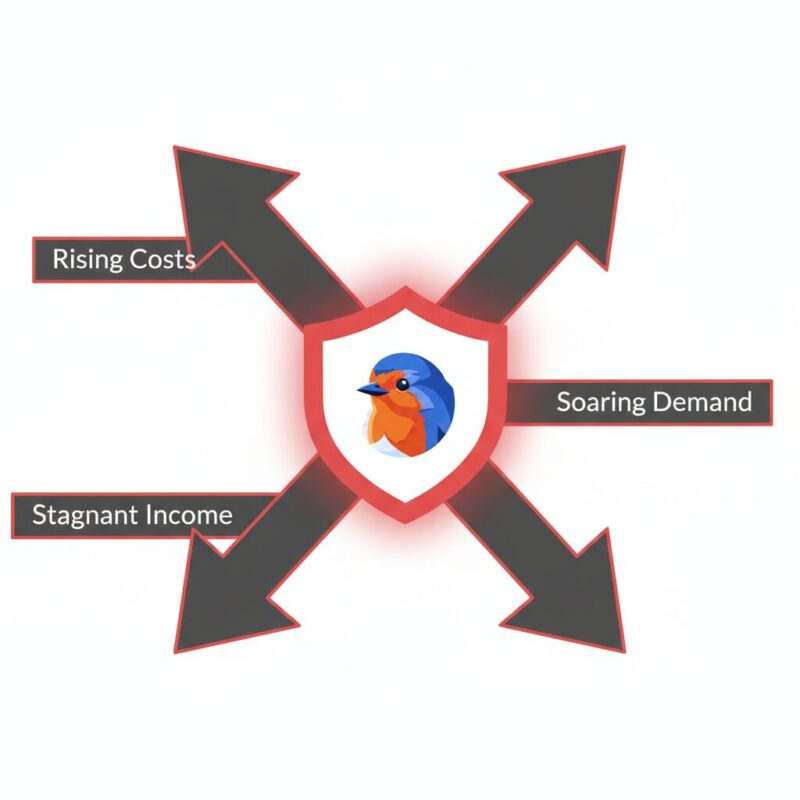
The 2026 ‘Triple Crunch’: Why Generic Searching Fails
The non-profit sector is currently navigating what economists and sector leaders call the “Triple Crunch.” This is the simultaneous collision of three hostile market forces: inflationary operational costs, stagnating income streams, and a vertical spike in service demand. According to the NCVO, this economic environment has created a “polycrisis” where traditional resilience strategies are no longer sufficient.
In this high-pressure environment, the human cost is becoming unsustainable. A recent report by Mental Health UK reveals that 95% of charity leaders are now “extremely concerned” about workforce burnout. The root cause often isn’t just the workload—it’s the futility of the “volume game.” Manually sifting through thousands of ineligible grants, only to face “Rejection Fatigue” from generic applications, is accelerating staff attrition.
This is where the strategic pivot must happen. In 2026, searching for grants based on broad keywords like “youth” or “health” is a waste of critical resources. It yields high volumes of low-probability matches. The FundRobin philosophy argues for a radical conservation of sanity: by leveraging technology to identify high-probability matches, we save the hours that save our teams.
Sector-Specific Targeting: Filtering for ‘Moral Clarity’
The antidote to the volume game is “contextual matching.” Old-school database searching relies on keywords. If a funder mentions “art” in their exclusion list (e.g., “we do not fund art”), a keyword search for “art” might still flag them as a match. This generates false positives that waste hours of research time, often a result of lexical blindness where literal matching ignores intent.
Modern strategic discovery uses Open Data and Natural Language Processing (NLP) to filter for “moral clarity”—a deep alignment between a funder’s mission and your project’s impact. By analyzing data from 360Giving, we can see who funders actually fund, rather than just what they claim on their websites. This allows for forensic-level targeting.
For example, finding funding for the arts in 2026 requires understanding synonyms and context. A funder might not explicitly say “arts education,” but their funding history shows repeated grants for “creative youth engagement.” Tools like the UK Sector Grants Browser use AI to bridge this gap, translating your project’s intent into the specific dialect of different funding bodies. This “Smart Grant Matching” provides an accuracy score (0-100%), allowing you to prioritize only those bids where you have a statistical advantage, filtering out the noise and focusing on funders who share your moral imperative.

The Consultant’s Playbook: The ‘5 Rs’ of Grant Readiness
To navigate the 2026 landscape, we recommend adopting the “5 Rs” framework. This consultant-grade playbook structures your approach to ensure that when you do find a match, you are perfectly positioned to convert it.
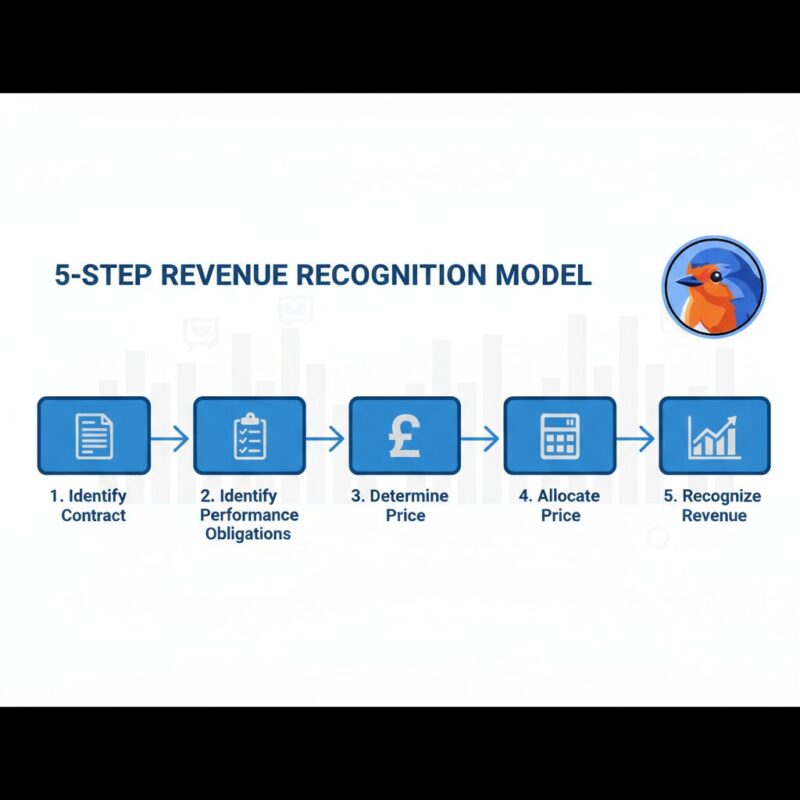
- Readiness: Before searching, audit your governance. Are your accounts up to date? Do your policies reflect current safeguarding standards? Inefficiency here kills success rates.
- Research: Move beyond the “usual suspects.” Use tools to identify “Impact Economy” funds—new capital pools focused on measurable social return. This often requires looking outside traditional lists, something the Directory of Social Change (DSC) emphasizes in their latest trust data.
- Relationships: This is the only step that cannot be automated. The goal of using AI in other steps is to free up time for this human work—picking up the phone and building rapport with grant officers.
- Writing: This is where the biggest efficiency gains live. Writing a first draft manually is now obsolete. By using the UK Grant Finder and its integrated Smart Proposal Gen, you can cut drafting time by 80%. This tool doesn’t just write; it structures your argument to match the funder’s criteria, turning a 10-hour job into a 2-hour refinement task.
- Reporting: Funders in 2026 demand data. Ensure your project is set up to capture the impact metrics you promised in the bid.
Future-Proofing Bids: AI, SORP 2026, and the Impact Economy
Strategic discovery also means looking ahead. The regulatory environment is shifting, with the incoming SORP 2026 (Statement of Recommended Practice) set to demand higher levels of transparency and impact reporting from charities of all sizes. According to the Association of Charitable Foundations (ACF), this new framework will require charities to be more explicit about how every pound contributes to their stated mission.
Compliance is no longer just for the finance team; it’s a fundraising asset. Grant applications that proactively address SORP 2026 standards demonstrate operational maturity. AI compliance checkers can now scan your bids for “trigger words”—vague language or outdated terminology that signals risk to a funder. Instead, they help you align with the language of the “Impact Economy,” a growing focus supported by the Charity Excellence Framework, which prioritizes sustainable, measurable outcomes over short-term outputs.
By integrating these compliance checks into your discovery and writing process, you aren’t just asking for money; you are presenting your charity as a low-risk, high-impact investment partner ready for the future of the third sector.
Frequently Asked Questions
What is the ‘Triple Crunch’ in the UK charity sector?
The ‘Triple Crunch’ defines the simultaneous intersection of rising operational costs (inflation), stagnating income streams, and soaring service demand. This convergence creates a liquidity crisis that forces charities to adopt more efficient, data-driven fundraising strategies to survive without burning out their workforce.
How will SORP 2026 affect grant applications?
SORP 2026 introduces stricter transparency and impact reporting standards that funders will look for as indicators of good governance. To succeed, grant proposals must demonstrate ‘moral clarity’ by explicitly linking financial requests to measurable social outcomes, aligning with these new regulatory expectations.
Are there free alternatives to GrantFinder for UK charities?
Yes, modern tools like FundRobin and 360Giving offer free or freemium access to open data, challenging expensive legacy subscriptions like GrantFinder. These platforms utilize open government data to provide comprehensive search capabilities without the high barrier to entry, democratizing access to funding intelligence.
How can AI tools reduce fundraising burnout?
AI tools like FundRobin reduce administrative drudgery by automating approximately 80% of the search and drafting process. By handling the repetitive tasks of eligibility checking and proposal structuring, AI allows fundraisers to escape ‘rejection fatigue’ and focus their energy on building donor relationships.
Can UK startups access non-dilutive grant funding?
Yes, UK startups can access non-dilutive funding through bodies like Innovate UK, which provides capital without requiring equity sacrifice. This funding acts as a critical runway extension between investment rounds and is part of the broader ‘Research’ phase in diversifying income streams.
Key Takeaways:
- Shift from ‘Volume’ to ‘Precision’: Stop spraying applications; use AI matching to find funders with high alignment (70%+ match score).
- Combat Burnout with Tech: Automate the 80% of administrative work (search, drafting) to focus on the 20% that requires human strategy.
- Prepare for SORP 2026: Ensure your data management and impact reporting are ready for new transparency standards now.
- Leverage Open Data: Utilize 360Giving and FundRobin’s free tools to bypass expensive legacy database subscriptions.
Conclusion
The 2026 fundraising landscape is unforgiving to those who cling to manual, high-volume strategies. The ‘Triple Crunch’ demands a pivot toward precision, efficiency, and data-driven empathy. By adopting the ‘5 Rs’ playbook and leveraging open data tools, you can move from a state of frantic survival to strategic sustainability. The funds are there, but they belong to those who can find them with clarity and ask for them with conviction.

Leave a Reply