
As of March 2026, the burnout crisis among nonprofit development professionals has reached a boiling point. Grant managers are drowning in manual prospect research, missed deadlines, and the crushing pressure of writing complex proposals under tight constraints. Many teams have turned to artificial intelligence for relief, adopting generic tools to draft emails faster. This superficial application of technology creates a false sense of productivity.
TL;DR: A purpose-built AI grant assistant helps nonprofit teams secure more funding by moving past simple automation to provide hyper-accurate grant matching, compliant first-draft generation, and strategic pipeline insights. Tools like Robin safeguard your organization’s authentic voice and sensitive data while directly improving win rates and reducing administrative burnout.
The State of Nonprofit Grantseeking: Escaping the ‘Efficiency Trap’ in 2026
AI Grant Assistants: Solving Nonprofit Burnout in 2026
Grant professionals currently spend hundreds of hours manually searching fragmented databases. They face the heavy mental toll of low success rates despite high effort. The sector needs a systemic change rather than simply asking overworked staff to push harder.
The Burnout Crisis in Development Teams
Nonprofit development teams are exhausted. The expectation to do more with less has pushed many top performers out of the sector entirely. According to the Stanford Social Innovation Review, turnover in development roles exceeds 18% annually, driven largely by unmanageable administrative burdens. Writers burn out compiling redundant budgets and reformatting the same project narratives to fit different portal requirements.
What is the ‘Efficiency Trap’ in AI Adoption?
The ‘Efficiency Trap’ occurs when organizations adopt an AI assistant for nonprofits to handle low-level task automation but fail to leverage it for high-value strategic execution. Saving 10 hours a week on basic copy editing does not matter if your grant win rates stay flat. According to the Nonprofit AI Adoption Report 2026, 92% of nonprofits use AI, but only 7% report major strategic impact from the technology.
Moving from Task Automation to Strategic Growth
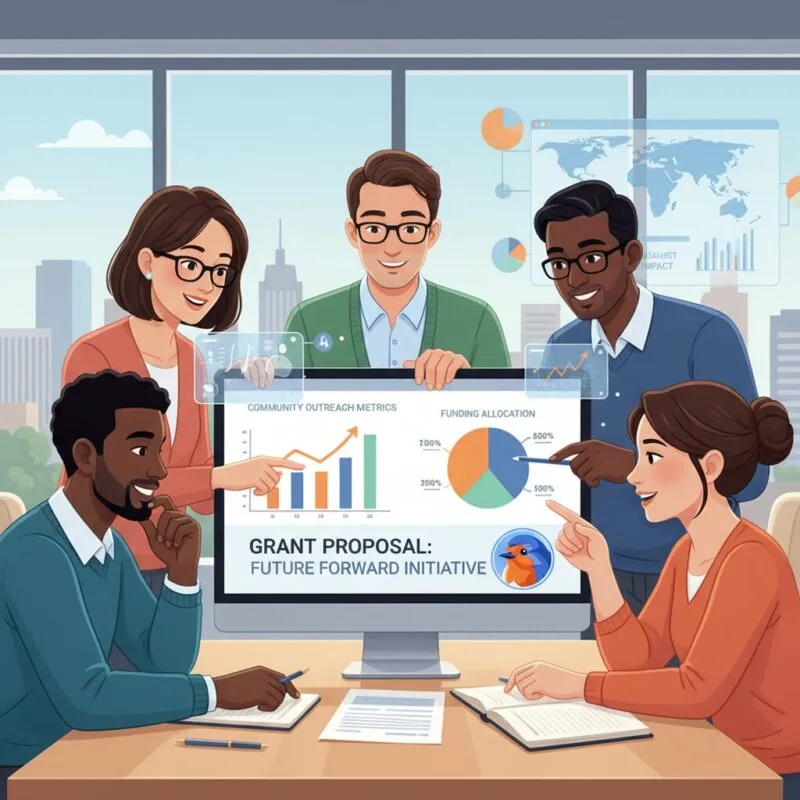
Real growth requires reframing AI as a tool for revenue generation. Freeing up 80% of your writing time allows development directors to focus on funder stewardship and relationship building. The right technology shifts a nonprofit’s focus from mere administrative survival to proactive, relationship-driven fundraising that aligns with long-term mission goals. By utilizing AI grant proposal software, teams can achieve this transition faster.
Introducing the Robin AI Assistant
Robin is the purpose-built antidote to this trap. It is a dedicated AI team member designed specifically for the rigorous standards of global grantmaking. The Robin AI Assistant acts as a 24/7 grant strategy partner. It understands context, synonyms, and implicit funder requirements, effortlessly matching broad terms like “disadvantaged youth” to specific funder priorities like “at-risk teenagers.”
Generic LLMs vs. Purpose-Built AI: Why Context is Everything for Grants
Using a standard chatbot to write a multi-year foundation grant is a massive operational risk. Generic models lack the structural understanding of the philanthropic sector required to secure funding.
The Pitfalls of Using ChatGPT for Complex Grant Proposals
Off-the-shelf AI chatbots fail at nuanced grant compliance. They lack up-to-date funder knowledge and live deadlines. These models frequently output generic, repetitive language that lacks emotional resonance. Even worse, they often hallucinate funder guidelines. The Chronicle of Philanthropy notes that generic language models have entirely fabricated application deadlines for major foundations, leading to immediate disqualifications for unprepared nonprofits.
How Grounded AI Prevents Hallucinations in Funder Data
Robin prevents these factual errors because it relies on “grounded” AI. It pulls exclusively from a live, accurate database of over 1,200 active opportunities and 2,000+ donors. Robin provides factual information and actively cites its sources. The AI analyzes actual grant guidelines, strict word limits, and mandatory sections, providing real-time updates so users never miss a red, amber, or green deadline.
The ‘Human-in-the-Loop’ Mandate for Authentic Storytelling
AI will not replace grant writers. The ethics of grant automation ensures your nonprofit’s unique voice and lived experiences remain central to the proposal. The AI generates the structural 80% of the application, including logic models and budget narratives. Humans refine the remaining 20% with localized storytelling and emotional hooks, protecting the authenticity that donors demand.
Smart Proposal Generation Built on UK/Global Standards
The ability to draft compliant content quickly is where specialized tools excel. Robin’s Smart Proposal feature reduces proposal writing time by up to 80%, dropping a standard 40-hour writing process down to 4 hours. It automatically checks for compliance against rigorous UK and international funding standards.
4 Transformative Capabilities of an AI Assistant for Nonprofits
A purpose-built AI platform transforms the entire grant lifecycle from discovery to pipeline analytics.
1. Contextual Grant Discovery Across 1,200+ Opportunities
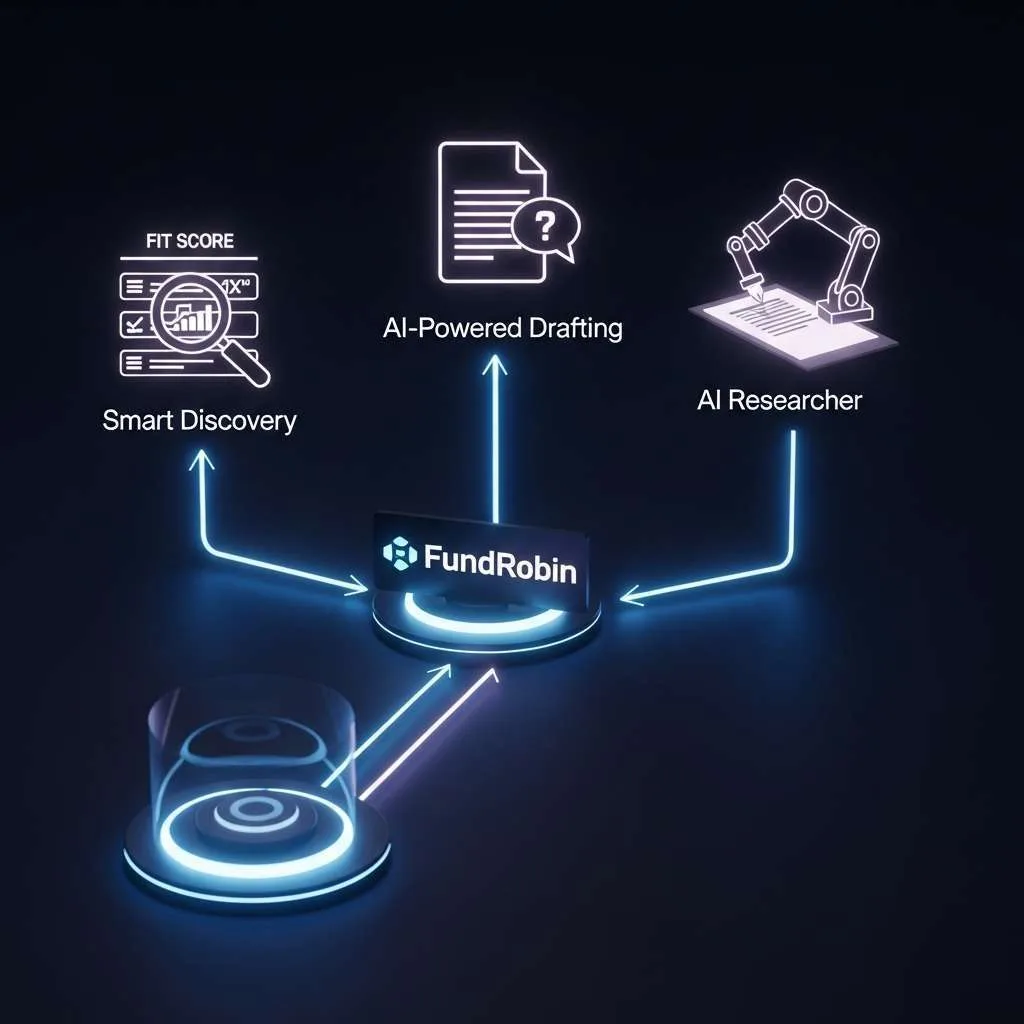
Smart Grant Matching surfaces the right opportunities instantly. It scans 1,200+ active opportunities from 2,000+ donors daily, providing a concrete 0-100% match score. According to internal data from the National Council of Nonprofits, eliminating manual database searches saves development teams over 200 hours monthly. Robin’s natural language processing looks past simple keywords to understand the actual intent of your project.
2. Rapid, High-Quality First Draft Generation
Robin creates drafts tailored to your organization’s specific profile. It generates executive summaries, detailed project descriptions, and rigorous evaluation plans in minutes. The grant writing AI chatbot optimizes language for maximum clarity and ensures all mandatory questions and strict character counts are met before a human ever begins the review process.
3. Built-In Compliance & Regulation Checks
Compliance is a massive headache for grant managers. AI cross-references local laws and funder guidelines automatically. Robin includes built-in checks for GDPR standards and regulations from authorities like the UK Charity Commission. It integrates established frameworks for Theory of Change and outcome measurement, drastically reducing the risk of technical disqualification.
4. Real-Time Pipeline Tracking and Financial Forecasting
Robin’s Smart Dashboard tracks your applications, predicts award probability, and forecasts income. This centralized view analyzes win rates by specific funder, grant type, and value. It provides financial forecasting and performance benchmarking, allowing development directors to make concrete, data-driven decisions about their funding pipeline.
The ‘Human-in-the-Loop’ Mandate: Safeguarding Your Voice and Trust
Authenticity is the currency of the nonprofit sector. Leaders must address the ethical considerations and fears surrounding AI deployment directly.
Maintaining Authenticity in Donor Communications
Over-relying on automation risks sounding robotic, which destroys donor engagement. AI drafts must be properly edited to reflect the unique, lived experiences of the communities your nonprofit serves. Injecting personal anecdotes, specific beneficiary quotes, and hyper-local case studies into AI-generated drafts is non-negotiable. Using tools to help preserve narrative integrity helps prevent generic output.
Data Privacy Matters: Why Your Data Should Never Train the Model
Putting sensitive beneficiary data into public LLMs is a massive security breach. Enterprise-grade AI uses fundamentally different security architecture. Robin operates on a strict zero-training-on-user-data policy. Your proprietary data is never used to train foundational models. The platform utilizes AES-256 encryption, TLS 1.3, and secure UK-based infrastructure. GDPR.eu guidelines dictate that platforms handling sensitive constituent information must meet these exact encryption standards.
Building an Internal AI Ethics Framework for Grantseeking
Boards and executive teams need acceptable use policies that funders respect. Define clear criteria for when to use AI and when a task must remain 100% human-led. According to The Challenges & Ethical Considerations of AI in Nonprofits, creating transparency policies for funders and training staff on ethical prompt engineering are absolute requirements for modern development teams.
Fostering Stronger Funder Relationships Through Better Proposals
Submitting clean, compliant, and well-structured proposals respects the funder’s time. Time saved on initial drafting can be redirected toward phone calls, site visits, and high-level stewardship. This transforms the grant manager from a back-office writer into a frontline relationship builder.
Implementing Your AI Grant Help Tool: A Strategic Step-by-Step Guide
Integrating a nonprofit AI assistant 2026 solution requires a deliberate approach to avoid staff disruption.
Step 1: Conduct an Internal AI Readiness Assessment
Audit your current grant writing processes to identify exact bottlenecks. Map the current hours spent on prospect research versus drafting versus post-award reporting. Set clear, numerical goals for the AI implementation, such as increasing total submitted applications by 20% within the first two quarters.
Step 2: Establish Your Human-Led Review Processes
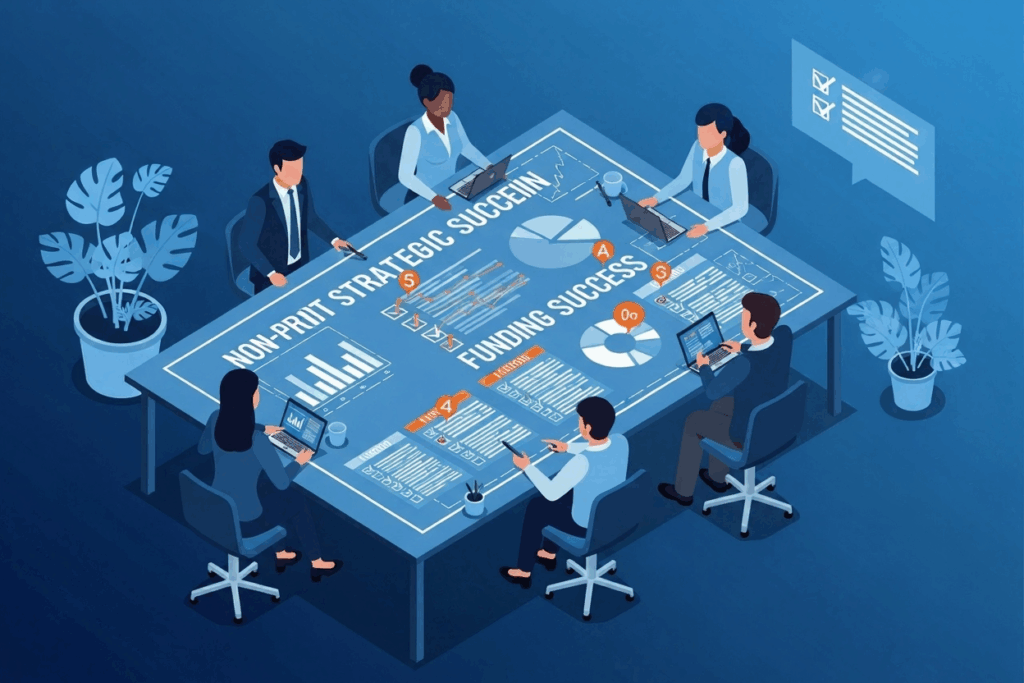
Structure a rigid editing and approval workflow. Assign designated ‘AI Editors’ within the development team. Create a specific checklist for verifying AI-generated facts, historical dates, and budget figures. The final review must always be conducted by a senior human staff member before submission.
Step 3: Train the Team on the ‘Robin-Assisted’ Workflow
Onboarding is critical for success. Train your staff to converse with the AI grant help tool for instant research. Teach the team how to utilize adaptive learning features, such as providing feedback on grant matches to improve future recommendations. According to the Center for Effective Philanthropy, successful technology adoption requires structured, ongoing training rather than a single rollout event.
Step 4: Measure Impact Beyond Time Saved
Measure the success of your implementation using concrete ROI metrics. Track the increase in overall grant success rates, aiming for an 85% success benchmark on high-match opportunities. Monitor the total volume of high-quality proposals submitted and the reduction in missed funder deadlines. Executive directors care about dollars won, not just administrative hours saved.
The Future of Donor Stewardship and AI Governance as Growth
Adopting purpose-built AI now positions your organization as a leader in the increasingly competitive 2026 funding landscape.
Predictive Analytics for Funding Trends
Tools like Robin’s Smart Dashboard use historical and pipeline data to forecast organizational income accurately. This moves teams from reactive grant seeking to proactive pipeline building.
Tailoring the Narrative to Emerging Funder Priorities
AI allows nonprofits to quickly pivot and adapt core narratives to align with shifting philanthropic priorities. You can rapidly customize a single master proposal for five different foundations without rewriting from scratch.
Sustaining the Competitive Edge with the Smart Dashboard
A centralized, role-based view of the grants portfolio empowers executives and grant managers with tailored data. You can make immediate, data-driven decisions on which grants to pursue and which low-probability applications to abandon. Research from Giving USA shows that data-driven nonprofits secure 32% more institutional funding year-over-year compared to those relying on legacy systems.
Conclusion: Embracing Robin as Your Dedicated Team Member
AI is here to elevate the nonprofit professional, not replace them. Escaping the efficiency trap means utilizing tools that actively drive strategic growth. As noted in The AI Revolution in Nonprofit Funding, prioritizing data privacy, grounded AI models, and human-in-the-loop workflows guarantees long-term sustainability. Stop wasting time on basic automation and focus on revenue.
Frequently Asked Questions
What is the best AI assistant for nonprofits in 2026?
The best AI assistant for nonprofits is a purpose-built tool like FundRobin that combines a grounded, non-hallucinating grant database with human-in-the-loop proposal generation. It is specifically designed for nonprofit compliance (including GDPR and Charity Commission standards).
How does a nonprofit AI assistant differ from ChatGPT?
A purpose-built nonprofit AI assistant is trained specifically on successful grant applications and live funding databases, whereas ChatGPT is a generic language model. Dedicated tools like Robin cite actual sources, check for rigid compliance requirements, and strictly protect user data.
Can an AI grant help tool write a complete proposal?
No, an AI grant help tool should not write a final proposal autonomously. It is designed to generate a highly tailored, compliant first draft that completes up to 80% of the manual work. Human grant writers must then review, refine, and infuse the draft with the organization’s authentic voice.
Is it safe to put nonprofit data into a grant writing AI chatbot?
It depends entirely on the platform’s security architecture. With enterprise-grade grant writing AI chatbot like Robin, user data is heavily encrypted (AES-256), GDPR-compliant, and NEVER used to train the core models.
How do we implement a Robin AI grant assistant without losing our authentic voice?
You maintain authenticity by implementing a strict ‘Human-in-the-Loop’ workflow. Use the Robin AI grant assistant to handle the structural, compliance, and foundational drafting of the proposal.
Does AI-generated grant content violate funder guidelines?
Using AI to generate content does not violate guidelines as long as the final submission is accurate, original, and adheres to the funder’s specific requirements. AI tools should be utilized for structural drafting and data formatting.
Key Takeaways:
- Avoid the ‘Efficiency Trap’ by moving beyond simple time-saving hacks to using purpose-built AI that drives strategic funding growth and improves win rates.
- Purpose-built AI grant assistants like Robin drastically outperform generic LLMs by pulling from live databases of over 1,200 funding opportunities without hallucinating.
- Maintain a ‘Human-in-the-Loop’ approach; AI creates the compliant 80% first draft, allowing your team to focus the remaining 20% on authentic storytelling.
- Protect donor trust by demanding enterprise-grade data privacy—ensure your chosen AI platform NEVER uses sensitive data to train foundational models.
Recommended Reading
- AI Grant Writing Tools for University Research Administrators — How AI grant tools adapt for higher education contexts, with lessons applicable to any large-scale applicant.
- What Is AI Grant Matching? A Strategic Guide — Deep dive into how AI matching algorithms connect nonprofits with the most relevant funding opportunities.
- How Nonprofits Use AI to Write Grants Faster in 2026 — Practical implementation guide for integrating AI into your grant writing workflow and boosting output.
- Defeating AI Speak in Nonprofit Fundraising — How to maintain authentic organisational voice when using AI tools for grant proposals and donor communications.
