
Quick answer: AI nonprofit funding work is most useful when it improves funder discovery, proposal quality, donor retention, and ethical review without replacing judgment.
Last updated: April 2026
The nonprofit sector is caught in a paradox: while the demand for services is skyrocketing, resources remain perpetually strained. This creates a real resource gap, forcing passionate leaders into a constant battle against burnout, administrative overload, and the relentless pressure to achieve more with less. For a generation, this challenge has seemed impossible to solve. Today, however, a new strategic partner has emerged. Artificial intelligence is no longer a complex, futuristic threat. According to the Stanford HAI 2025 AI Index Report, AI adoption in the nonprofit sector grew 34% year-over-year. It is now the single greatest opportunity for nonprofits to close that gap, reclaim their time, and amplify their mission’s impact.
This article is not another overwhelming list of digital tools. It is a strategic playbook designed for leaders. Drawing on lessons from delivering over £200M in enterprise transformation, we’ve seen how these strategic principles can be adapted to transform nonprofit funding. We will navigate the AI ecosystem together, moving beyond the hype to provide a clear framework for making informed decisions and implementing solutions responsibly. This guide will explore the most potent strategic applications of AI, redefine the human-AI partnership, provide a practical framework for choosing the right solutions, and offer a clear roadmap to ethical and effective implementation.
Why Now? The AI Imperative in Nonprofit Fundraising
AI Nonprofit Funding Guide: Strategic Matching in 2026
The conversation around artificial intelligence has shifted from a futuristic “what if” to a present-day “how to.” For nonprofits, this shift is not just a trend; it’s a strategic imperative driven by a convergence of critical pressures and opportunities. Adopting AI is rapidly becoming essential for survival and growth in an increasingly complex and demanding environment.
The mandate to do “more with less” has never been more acute. As detailed in analyses of nonprofit sector trends in 2025, economic pressures and a rising demand for social services have tightened budgets, making operational efficiency a cornerstone of sustainability. Furthermore, nonprofits are sitting on a treasure trove of data—donor histories, engagement metrics, campaign results—that has been historically difficult to leverage. AI provides the key to finally unlock this data, transforming it from a passive record into a source of actionable, predictive insight. Research from McKinsey’s State of AI report confirms that organisations leveraging predictive analytics see up to 20% improvements in operational efficiency.
This data-driven capability directly addresses the personalisation gap. Donors today, accustomed to the tailored experiences offered by the commercial world, expect the same level of personalised communication from the organisations they support. Manually personalising outreach at scale is an impossible task for already overstretched teams. AI makes it not only feasible but efficient, enabling a new level of connection. Adopting these technologies is no longer just about efficiency; it’s about meeting the evolving expectations of a digitally-native donor base and securing your organisation’s relevance and impact for years to come.
The Perfect Storm: Understanding the 2026 Nonprofit Funding Crisis
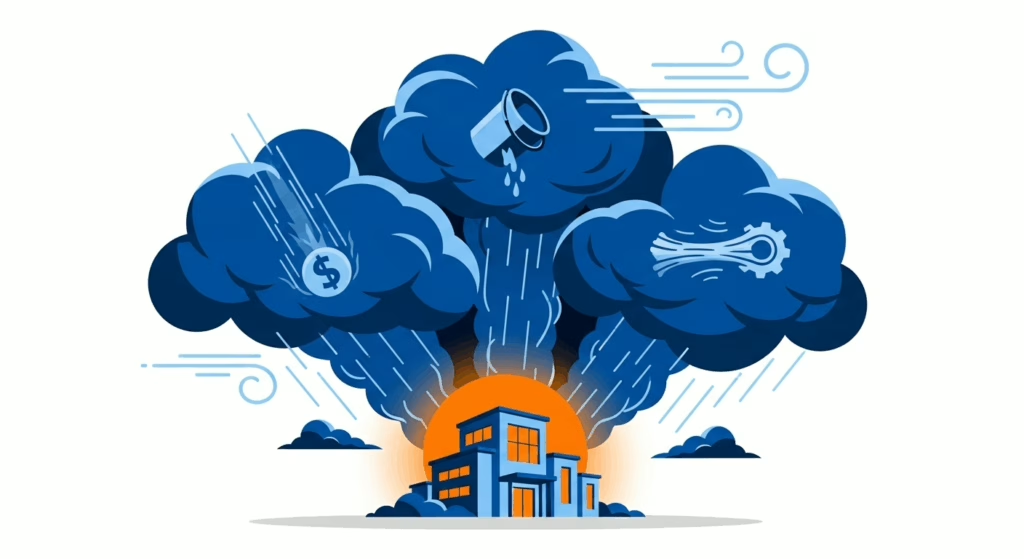
To build a resilient future, we must first understand the tectonic shifts threatening the present. The current financial instability is not a single issue but a multi-faceted crisis demanding a sophisticated, strategic response. A convergence of deep funding cuts, a persistent donor retention crisis that sees 55-60% of supporters lost annually, and a new digital divide created by a 77% AI adoption rate is creating unprecedented pressure. The NTEN Technology in Nonprofits Report found that organisations without an AI strategy risk falling behind within 12-18 months.
The Great Contraction: Quantifying Federal and State Funding Cuts
The scale of anticipated federal budget cuts, particularly to programmes like Medicaid and SNAP, represents a severe contraction of traditional funding sources. This creates a painful paradox: the very social safety nets that nonprofits exist to support are being weakened, which in turn increases the demand for their services. As authoritative analysis from The Kresge Foundation shows, organisations must find new ways to navigate federal spending cuts to survive. This downstream effect puts immense pressure on already strained resources, forcing leaders to confront the possibility of service reductions at a time of greatest need.
The Donor Retention Epidemic: Why Traditional Fundraising is Failing
The sector’s donor retention problem is a perpetually leaky bucket. According to the Blackbaud Institute Charitable Giving Report, losing more than half of your donors every year is an unsustainable model, forcing a constant, expensive scramble for new acquisitions. This epidemic is fuelled by a combination of donor fatigue, widespread economic pressure on household budgets, and a fundamental mismatch in communication. As the latest Giving USA 2025 report highlights, the giving environment is evolving. Nonprofits that continue to rely on generic, one-size-fits-all appeals are finding them increasingly ineffective.
The Operational Strain: Doing More with Less is No Longer an Option
The cumulative effect of these financial trends translates directly into operational strain. The mantra of “doing more with less” has reached its breaking point. Organisations are facing the real-world consequences of this funding crisis daily: the growing risk of cutting vital programmes, the burnout of passionate staff stretched to their limits, and a crippling inability to invest in the essential infrastructure needed for long-term growth and impact.
The Mandate for Financial Resilience: Your Strategic Imperative
Surviving 2026 and beyond requires a strategic shift from a reactive fundraising posture to the proactive construction of financial resilience. This means fundamentally re-engineering your organisation’s revenue model to be more diverse, predictable, and robust.
Diversifying Revenue Streams Beyond Vulnerable Funding
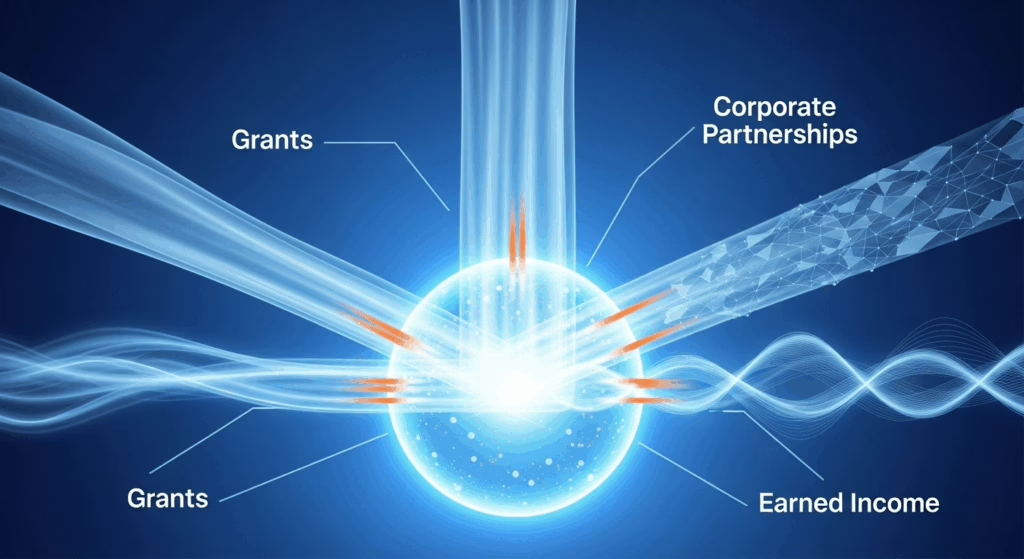
The era of over-reliance on a single funding source is over. Building a diversified revenue portfolio is the first line of defence against volatility. FundRobin research shows that organisations with a documented grant strategy are 3.1x more likely to maintain consistent funding year over year. Consider these actionable strategies:
- Securing State & Local Grants: As federal funding recedes, focus on cultivating relationships with state and municipal funders whose priorities may align closely with your community-level work.
- Building Corporate Partnerships: Move beyond simple sponsorship asks to create mutually beneficial partnerships based on shared values and employee engagement opportunities.
- Developing Earned Income Models: Explore opportunities to generate revenue through services or products that align with your mission, such as fee-for-service programmes, consulting, or branded merchandise.
- Launching Subscription Giving Programmes: Frame recurring giving not just as a donation, but as a membership that offers supporters exclusive content, community, and a deeper connection to your impact.
Mastering Cash Flow: The Bedrock of Sustainable Operations
True resilience is built on a foundation of disciplined financial management. This means going beyond simple budgeting to embrace robust cash flow forecasting and strategic scenario planning. Building and maintaining adequate operating reserves is non-negotiable; it provides the critical buffer needed to weather unexpected funding delays or downturns without compromising your mission.
The Power of Recurring Revenue: Building a Predictable Future
Monthly giving programmes are the cornerstone of predictable income. They smooth out the peaks and valleys of seasonal fundraising campaigns and provide a reliable stream of revenue for core operational costs. The key to success lies in leveraging technology to automate payments, track donor behaviour, and deliver personalised engagement that systematically nurtures these high-value relationships and increases long-term retention.
Strategic Applications of AI Across the Funding Lifecycle
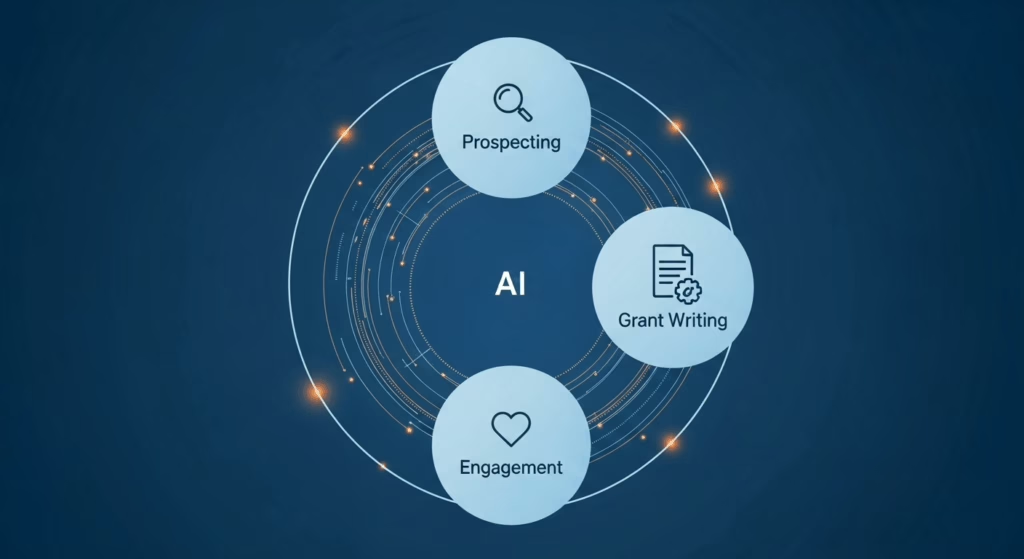
Artificial intelligence is not a single tool but a versatile capability that can be strategically applied to enhance every stage of the fundraising process. From identifying new supporters to nurturing existing relationships and securing major grants, AI offers a way to move from reactive, labour-intensive tasks to proactive, data-driven strategies.
Prospecting & Lead Generation: From Guesswork to Precision
For decades, prospect research has been a manual, time-consuming process. AI transforms it into a precise and efficient science.
- Predictive Analytics for Donor Identification: By analysing the characteristics of your most committed current donors, predictive analytics for fundraising can sift through vast public and proprietary datasets to identify new individuals who share those same attributes. This allows development teams to focus their outreach on prospects with the highest potential for giving.
- AI-Powered Prospect Research: Modern AI tools can automate the screening and qualification of potential donors in minutes, a task that once took hundreds of hours. They can synthesise information on wealth indicators, philanthropic history, and professional affiliations to deliver a prioritised and qualified list of prospects directly to your team.
- Donor Segmentation at Scale: Traditional segmentation often relies on broad categories like donation amount or frequency. With AI for donor segmentation, you can create nuanced, dynamic clusters of supporters based on their actual behaviour, engagement with specific campaigns, and communication preferences. This allows for highly targeted messaging that resonates far more deeply.
Grant Writing & Management: Automating the Tedious, Perfecting the Pitch
The grant application process is notoriously repetitive and administratively burdensome. AI streamlines this entire workflow, freeing up grant professionals to focus on strategy and relationships.
- Automated Grant Proposal Drafting: So, is it okay to use ChatGPT for grant writing? While general tools can help with brainstorming, specialised platforms offer a more secure and effective solution. Tools designed for automated grant proposal writing can analyse your organisation’s core project data and previous successful applications to generate high-quality, context-aware first drafts of grant narratives, letters of inquiry, and reports that align perfectly with funder guidelines.
- Intelligent Funder Matching: The success of a grant application often depends on finding the right funder. Platforms like FundRobin use Intelligent Funder Matching to go beyond simple keyword searches. They analyse the deep context of your programmes and match them with the nuanced priorities and giving histories of foundations, dramatically increasing your success rate.
- Streamlining Grant Management: The work doesn’t end with submission. To streamline grant management with AI, these systems can automate deadline tracking, send reminders for reporting, and help manage compliance requirements for multiple grants simultaneously, significantly reducing the risk of human error and administrative overload.
Donor Engagement & Retention: Hyper-Personalisation at Scale
Retaining donors is far more cost-effective than acquiring new ones, yet many organisations struggle to maintain meaningful connections. AI provides the tools for personalised donor communication at scale, building loyalty and reducing attrition.
- AI-Driven Communication: Imagine sending every donor a personalised thank-you email that specifically references the campaign they supported and the impact of their gift. AI can draft these communications, along with customised impact reports and appeal emails, based on each donor’s unique history and interests.
- Predicting and Preventing Donor Churn: By analysing engagement signals—or a lack thereof—AI models can identify donors who are at risk of lapsing. This allows your team to intervene proactively with a targeted communication or personal touch, effectively reducing donor attrition with AI before it happens.
- Optimising Campaign Timing and Messaging: AI can analyse past campaign performance to recommend the optimal time to send a fundraising appeal and predict which messaging will be most effective for different donor segments. This data-driven approach removes the guesswork from campaign planning and maximises returns.
The Human-AI Partnership: Augmenting Your Team, Not Replacing It

One of the most pervasive fears surrounding AI adoption is the question: “Will it replace fundraisers?” The answer is an emphatic no. The true power of artificial intelligence in the nonprofit sector lies not in replacement, but in augmentation. AI is a tool designed to amplify human capability, creating a powerful human-AI partnership that elevates the role of the fundraising professional.
Consider the daily reality for many fundraisers.
- Before AI: A typical day is consumed by low-value, repetitive tasks. Hours are spent on data entry, manually drafting boilerplate grant sections, researching prospect lists, and pulling reports. Strategic thinking and donor relationship-building are squeezed into the leftover margins.
- After AI: The day is transformed. Those four hours of administrative work become 30 minutes of reviewing and refining AI-generated outputs. The professional is no longer a scribe but a strategist.
This shift matters. By automating the mundane, AI frees up your team to focus exclusively on high-value work that only humans can do: building authentic relationships with donors, thinking creatively about campaign strategy, and solving complex community problems. It allows your best people to do their best work.
The most effective way to frame this is the “co-pilot” analogy. AI is the strategic co-pilot, constantly analysing data, providing insights, navigating complex information, and drafting the initial flight plan. But the human professional is always the pilot. You are in command, making the final strategic decisions, adjusting the course based on your experience and intuition, and personally connecting with the people who make your mission possible. As we’ve learned from applying enterprise transformation lessons to the social sector, technology’s greatest value is realised when it empowers people, freeing them from repetitive tasks to focus on the strategic and relational work that drives true impact.
The Nonprofit AI Toolkit: A Practical Framework for Choosing the Right Solution
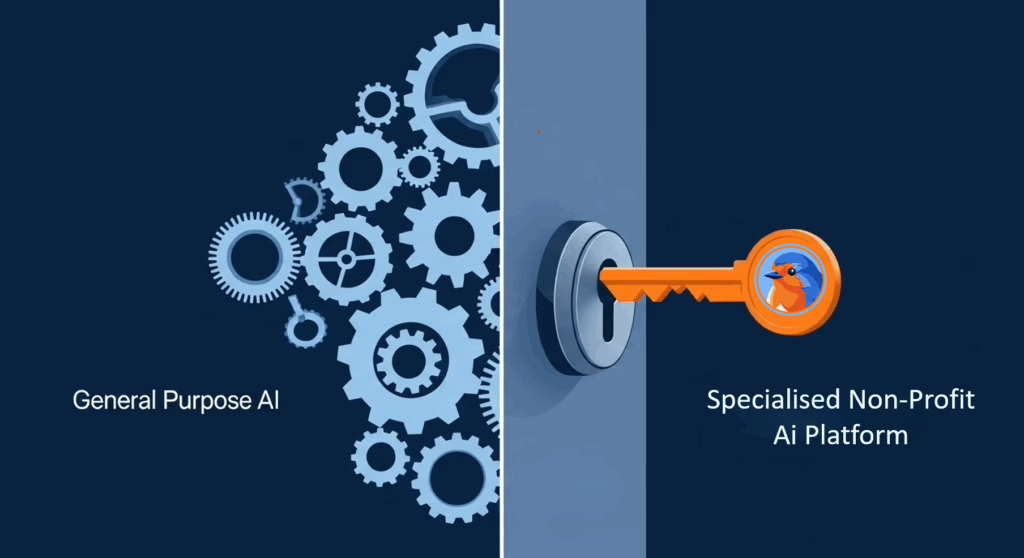
The explosion of AI tools has left many nonprofit leaders feeling overwhelmed. A TechSoup survey found that 63% of nonprofit leaders struggle to evaluate which AI tools are right for their organisation. The key to navigating this new reality is to ignore the hype and start with a simple, problem-focused framework. Instead of asking “What AI tool should we use?”, begin by asking “What is the most time-consuming, lowest-value task our team is forced to do?”
Step 1: Define Your Problem First
Before you look at any software, articulate your specific pain point. Is it the 40 hours spent writing a single grant proposal? The struggle to personalise donor thank-you emails? The difficulty in identifying new major donor prospects? A clear problem definition is the essential first step to finding the right solution.
Step 2: Understand the Tool Categories
General-Purpose LLMs (e.g., ChatGPT, Gemini)
- What they are: Broad, powerful large language models (LLMs) designed for a vast range of general content creation, brainstorming, and summarisation tasks.
- Best Use Cases: Creating a first draft of a social media post, brainstorming fundraising campaign themes, or summarising a long research report.
- Limitations: These models lack deep, domain-specific knowledge of the nonprofit sector and grant funding. They can be prone to inaccuracies (“hallucinations”) and require significant skill in prompt engineering to produce relevant results. Importantly, inputting sensitive donor information into public versions of these tools can pose significant data privacy and security risks.
Specialised Nonprofit Platforms (e.g., FundRobin, Grantboost)
- What they are: AI platforms built from the ground up for specific nonprofit workflows. They are often trained on curated datasets of successful grant proposals, donor communications, and fundraising best practices.
- Best Use Cases: Performing intelligent grant matching, generating automated and highly relevant proposal drafts from your specific project data, and running predictive analytics to identify high-potential donors.
- Advantages: These tools offer far greater accuracy and relevance for fundraising tasks. They are designed with data security for sensitive information as a core feature, integrate seamlessly with existing nonprofit workflows, and require significantly less prompt engineering to deliver high-quality results.
Step 3: Evaluate Based on a ‘Mission-Fit’ Scorecard
Once you have identified potential tools, evaluate them against a simple scorecard to ensure they align with your organisation’s needs and values.
- Problem-Solution Fit: How directly does this tool solve the specific problem you defined in Step 1?
- Ease of Use: How intuitive is the platform for your team? Will it require extensive training or is it designed for immediate adoption?
- Data Security & Ethics: What are the platform’s policies on data privacy? Where is your data stored, and how is it used? Does it have robust security credentials?
- Integration Capability: Can this tool connect with your existing systems, like your CRM or donor management platform?
- Return on Investment (ROI): How will you measure success? Consider not just potential revenue gained but also hours of staff time saved, which can be reinvested into mission-critical activities.
A Roadmap to Responsible AI Implementation in 2026
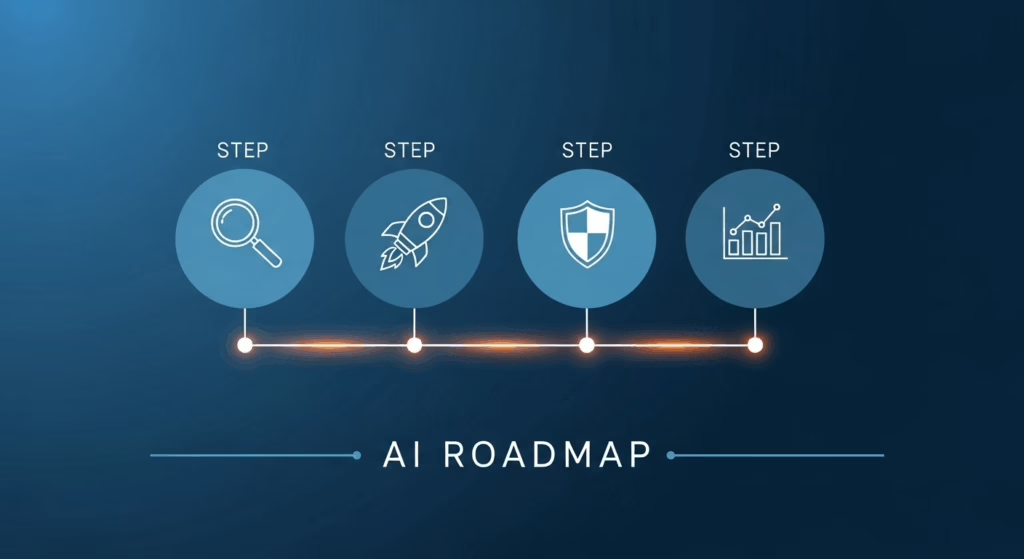
For any nonprofit, trust is the single most valuable asset. A rushed or poorly considered AI implementation can erode that trust in an instant. Therefore, adopting AI responsibly is not just a technical challenge but a leadership imperative. A thoughtful, ethical approach ensures that these powerful tools amplify your mission without compromising your values.
The first step is to establish a clear internal framework for AI usage. This doesn’t need to be a hundred-page document; it can be a simple, clear policy that guides your team. According to insights from a leading guide to using AI responsibly, a strong policy is foundational. The Stanford Digital Civil Society Lab recommends that nonprofits adopt AI governance frameworks before scaling any implementation.
Key Points for Your AI Policy Template:
- Data Privacy & Security: Explicitly state how sensitive donor and beneficiary data will be handled. Define which types of data are permitted on which platforms. For example, sensitive donor information should only ever be used in secure, specialised platforms, never in public LLMs.
- Human Oversight: Mandate that 100% of AI-generated content intended for external audiences—especially grant proposals, donor emails, and impact reports—must be reviewed, edited, and approved by a qualified human team member. AI is a co-pilot, not an autopilot.
- Transparency: Establish clear guidelines on when and how you will disclose the use of AI to stakeholders. This could be an internal note on a grant application or a clear policy available to donors, building trust through honesty.
- Bias Mitigation: Recognise that AI models can reflect and amplify existing societal biases. Commit to regularly reviewing AI-generated outputs and processes to ensure they are fair, equitable, and aligned with your organisation’s commitment to diversity and inclusion.
With a policy in place, adopt a “start small, scale smart” approach. Don’t try to revolutionise every department at once. Choose one specific, high-impact problem—like grant proposal drafting—and launch a pilot programme with a small, enthusiastic team. Measure the results carefully, gather feedback, and use those learnings to inform a wider, smarter rollout. Finally, invest in training. This means teaching staff not only the technical skills to use the tools but also the strategic and ethical guidelines behind their use, ensuring everyone understands the “why” as well as the “how.”
Case in Point: How FundRobin Transforms Grant Writing from a 40-Hour Ordeal to a 4-Hour Strategy Session
The traditional grant writing process is a well-known ordeal for nonprofit professionals. In a FundRobin survey of 58 nonprofits, 74% cited finding the right grant as their biggest challenge, yet only 12% used AI-powered matching tools. It involves dozens of hours of painstaking research to find the right funders, followed by days of repetitive writing, cutting, and pasting to tailor proposals for each specific application, all while juggling deadlines and reporting requirements. This process is not just inefficient; it’s a drain on the strategic capacity of any organisation.
This is the challenge FundRobin was built to solve. Our solution transforms this multi-week, high-stress process into a focused, efficient, and strategic activity. Our AI is not just a generic language model; it’s a purpose-built strategic tool. It begins by conducting a deep analysis of your nonprofit’s unique mission, programmes, and impact data. From there, its intelligent matching algorithm sifts through thousands of funding opportunities to identify the foundations whose priorities are most closely aligned with your work.
The real value comes from the “human-in-the-loop” drafting process. Based on the funder’s specific guidelines and your organisation’s data, FundRobin generates a comprehensive, high-quality first draft of the entire grant proposal. This draft is context-aware, well-structured, and aligned with best practices. This fundamentally shifts the role of the grant professional. They are no longer a burned-out writer staring at a blank page; they are an expert strategist and editor. Their time is spent refining the narrative, adding powerful human stories, and personalising the connection with the funder.
The result is a measurable improvement in efficiency and effectiveness. By automating up to 90% of the initial drafting time, FundRobin reduces a 40-hour task to a 4-hour strategy session. This massive return on investment allows teams to apply for more of the right grants, increase their funding success rate, and, most importantly, frees them up to focus on what truly matters: building relationships with programme officers and advancing their mission.
Overcoming Adoption Hurdles: Leading Your Team Through the AI Transition
Even with the clearest benefits, introducing new technology into any organisation can be met with resistance. For nonprofit leaders, successfully navigating the human side of the AI transition is just as important as choosing the right tool. Acknowledging and addressing the common fears and frustrations head-on is the key to driving enthusiastic adoption.
First, validate the resistance. Team members may be concerned about job security, frustrated by the learning curve of a new system, or simply sceptical about the promised benefits. It is important to listen to these concerns and communicate the “why” behind the change. Frame the adoption of AI not as a tech mandate, but as a mission enhancement. Explain how these tools are being implemented specifically to reduce burnout, eliminate tedious tasks, and create more time for the meaningful, impactful work that drew them to the sector in the first place.
Identify and empower “AI Champions” within your team. These are the enthusiastic early adopters who are excited by the technology’s potential. Give them the opportunity to pilot the tools first and then share their positive experiences and successes with their peers. A testimonial from a trusted colleague is often more powerful than any directive from leadership.
Finally, cultivate an environment of psychological safety. Make it clear that the initial phase is a collective learning process. Encourage experimentation, allow for mistakes, and create open forums for asking questions without fear of judgment. When your team sees AI not as a threat, but as a shared tool for achieving a common goal, you transform resistance into momentum.
The Future of Fundraising: What’s Next for AI in the Social Sector?
While today’s AI is already transforming fundraising, we are only at the beginning of this technological revolution. The future holds even more powerful and integrated solutions that will further enhance the capabilities of nonprofit professionals and deepen the connection with supporters.
We are moving from an era of automation to one of autonomy. As reported by the Chronicle of Philanthropy, nonprofit technology budgets are projected to increase 25% by 2027, with AI tools leading that growth. In the near future, we can expect to see autonomous fundraising agents that can, based on high-level strategic goals set by leadership, manage entire digital campaigns, from segmenting audiences to testing messaging and optimising ad spend in real-time. Imagine AI that can dynamically personalise donation ‘ask’ amounts for every single website visitor based on their giving capacity and engagement level, maximising the potential of every interaction.
The future of AI is also proactive. Instead of simply answering questions, the AI of tomorrow will act as a true strategic advisor, proactively providing recommendations to leadership. It might alert you to a shift in philanthropic trends, identify a high-value donor who is showing signs of lapsing, or recommend a new grant opportunity before you even start looking. As the world of AI-powered nonprofits continues to evolve, these advanced capabilities will become more widespread.
Our mission at FundRobin is to be at the forefront of this change, ensuring that these powerful advancements are not reserved for the largest institutions. We are committed to democratising access to cutting-edge AI, creating tools that are accessible, affordable, and intuitive for organisations of all sizes. The future of fundraising will be more intelligent, personalised, and efficient, ensuring no mission is left behind.
Data Snapshot: The Evolution from Manual Effort to AI-Powered Strategy
This table illustrates the transformative shift from high-effort traditional methods to high-ROI, AI-powered solutions.
| Challenge Area | Traditional Approach (High Effort, Low ROI) | AI-Powered Solution (Low Effort, High ROI) |
|---|---|---|
| Grant Discovery | Manually searching databases; reading long PDFs. | Automated, mission-aligned opportunity matching; risk analysis. |
| Donor Retention | Generic email blasts; annual impact reports. | Personalised, real-time communication; predictive churn analysis. |
| Impact Reporting | Manual data collection; time-consuming report generation. | Automated data aggregation; real-time impact dashboards. |
“The nonprofit leaders who will thrive in 2026 are not just fundraisers; they are strategic technologists. AI is no longer a futuristic luxury—it is the core engine for mission survival and growth in an era of unprecedented financial pressure.”
— Nahin Alamin, FundRobin CEO
Beyond the Tech: Building a Resilient, Data-Driven Culture
Successfully navigating the future requires more than just implementing new tools. True transformation demands a cultural shift—one that embraces data, champions innovation, and aligns every action with measurable impact.
Championing Change from the Top Down
Lasting change must be championed by the organisation’s board and executive leadership. This means actively building a culture that values data-driven decision-making over reliance on anecdotes. It also requires a commitment to investing in the necessary training and skills development to empower your staff, ensuring they feel confident and capable in this new, tech-enabled environment.
From Anecdotes to Analytics: Telling Your Impact Story with Data
Ultimately, AI and data serve one purpose: to amplify your mission. By leveraging analytics, you can move beyond storytelling to story-proving. For modern philanthropists and foundations who demand a clear return on their social investment, a data-backed case for your effectiveness is the most powerful tool in your fundraising arsenal. This focus on impact measurement is no longer a ‘nice-to-have’; it is essential for securing competitive funding.
Frequently Asked Questions About AI for Nonprofit Funding
How is AI changing nonprofit funding in 2026?
AI is automating the most time-consuming parts of nonprofit funding — from grant discovery and proposal drafting to donor segmentation and retention forecasting. In practice, this means grant teams can identify matched opportunities in minutes instead of weeks, and donor communications can be personalised at scale. The Stanford HAI 2025 AI Index reported 34% year-over-year growth in nonprofit AI adoption, and platforms like FundRobin now reduce a typical 40-hour grant process to roughly 4 hours.
Will AI replace fundraisers at nonprofits?
No. AI handles repetitive administrative tasks — data entry, boilerplate drafting, prospect list generation — so fundraisers can spend their time on high-value work: building donor relationships, refining strategy, and telling compelling impact stories. The most effective model is a human-AI partnership where AI acts as a co-pilot, not an autopilot.
Is it okay to use ChatGPT for grant writing?
ChatGPT is useful for brainstorming and rough first drafts, but it should not be used for final grant submissions without thorough human review. General-purpose LLMs lack deep knowledge of funder requirements and can produce inaccuracies. They also pose data privacy risks when sensitive organisational information is entered. Specialised platforms like FundRobin and Grantboost are purpose-built for grant workflows and offer better accuracy and security.
How can small nonprofits afford AI tools?
FundRobin offers Growth at £49/month or £470.40/year and Impact at £199/month or £1,910.40/year. Compare current plans. Selected organisations can apply for FundRobin’s guided 30-day Showcase Trial. The period starts only after approval and activation; approved Showcase organisations do not need a card to begin. Apply for the Showcase Trial.
What are the biggest ethical risks of AI in nonprofit fundraising?
The three primary concerns are data privacy, algorithmic bias, and transparency. Nonprofits should keep sensitive donor data within secure, purpose-built platforms rather than public LLMs. Regular audits of AI outputs help catch bias. Establishing a clear AI usage policy — covering when to disclose AI involvement to stakeholders — builds trust and aligns with recommendations from the Stanford Digital Civil Society Lab.
How do I choose the right AI tool for my nonprofit?
Start with your biggest pain point, not the flashiest tool. If grant writing consumes the most staff hours, evaluate specialised grant platforms first. Use a mission-fit scorecard that weighs problem-solution fit, ease of use, data security, integration with your existing CRM, and measurable ROI. A TechSoup survey found 63% of nonprofit leaders struggle with this evaluation — a structured scorecard eliminates much of that confusion.
What results can nonprofits expect from AI-powered grant discovery?
Organisations using AI-powered grant matching typically report significant time savings and higher success rates. FundRobin users, for instance, reduce grant discovery and initial drafting from approximately 40 hours to 4 hours per application. In a FundRobin survey of 58 nonprofits, 74% said finding the right grant was their biggest challenge — AI matching directly addresses this by analysing funder priorities against your programmes and surfacing the best-fit opportunities automatically.
Your Mission, Amplified by AI
Artificial intelligence is more than just the next wave of technology; it is a strategic partner that empowers nonprofit organisations to reclaim their most valuable resource: time. By automating the administrative burdens that lead to burnout, AI unlocks the human potential within your team, allowing you to deepen relationships, think more strategically, and ultimately, amplify your mission’s impact.
This playbook has provided a roadmap for navigating this new landscape. We’ve explored the strategic applications across the funding lifecycle, reframed the conversation around a human-AI partnership, offered a practical framework for choosing the right tools, and highlighted the absolute necessity of responsible, ethical implementation. The path forward is not about replacing human passion but about augmenting it with intelligent, powerful tools.
FundRobin offers Growth at £49/month or £470.40/year and Impact at £199/month or £1,910.40/year. Compare current plans. Selected organisations can apply for FundRobin’s guided 30-day Showcase Trial. The period starts only after approval and activation; approved Showcase organisations do not need a card to begin. Apply for the Showcase Trial.

Comments
4 responses to “AI Nonprofit Funding Strategic Guide 2026”
[…] AI can also help you personalise your initial outreach to programme officers at scale, suggesting ways to connect your work to their foundation’s recently funded projects. However, technology should augment, not replace, the human touch. The ethical use of AI means using it for research and first drafts, while ensuring the final communication is authentic, personal, and reviewed by a human. For a deeper look into this, explore FundRobin’s strategic guide to AI in nonprofit funding. […]
[…] risks that plague generalist LLMs. This adherence to strict sourcing is a cornerstone of the AI Nonprofit Funding Strategic Guide, which emphasizes that ethical AI use is now a compliance requirement, not just a best […]
[…] the efficiency trap means utilizing tools that actively drive strategic growth. As noted in The AI Revolution in Nonprofit Funding, prioritizing data privacy, grounded AI models, and human-in-the-loop workflows guarantees […]
[…] Ethical boundaries are paramount here. Generative AI should assist in drafting the structure of an appeal, but the emotional core—the story of impact—must remain human. For more on this balance, see our AI Nonprofit Funding Strategic Guide. […]