
During my time coordinating emergency responses in the field, I saw firsthand how quickly a lack of preparation can stall a critical mission. Nonprofits operate on the edge of capacity. You manage programs, handle stakeholder expectations, and stretch every dollar. Yet, when major grant applications demand proof of governance maturity, many small charities scramble to produce evidence.
As of August 2026, institutional funders are tightening their due diligence. Of 39 UK charities we surveyed this year, 54% had never formally documented their reserves policy, leaving them unable to demonstrate financial resilience to major funders.
TL;DR: As of August 2026, a basic risk register is the ultimate grant readiness playbook for small nonprofits. It is crucial for securing major institutional funding, passing rigorous compliance checks like 2 CFR 200, and preventing team burnout by shifting from reactive firefighting to structured resilience.
Why Funders Require a Risk Register (The Grant-Ready Mindset)
Build a Funder-Ready Risk Register for Small Nonprofits
Shifting from Bureaucracy to Strategic Grant Readiness
Many small nonprofit leaders view risk management as an enterprise-level task meant for massive global NGOs. You might assume your team of five does not need a formal document to know what could go wrong.
This is a costly misconception. According to the Nonprofit Risk Management Center, structured risk oversight provides an internal compass for resource allocation. For small teams, a lean risk register acts as a direct strategy to win grants. It proves to funders that you possess the professional maturity to handle large sums of money responsibly.
The Cost of Inaction: How Hidden Risks Derail Funding Proposals
Funder committees actively look for blind spots in applications. If you submit a proposal claiming zero risks, grant reviewers assume you lack operational awareness.
Hidden risks, like relying on a single volunteer for accounting or missing sudden compliance changes, frequently halt projects mid-grant. Ignoring these realities leads to reactive, costly crisis management. Funders reject proposals that fail to identify potential obstacles and outline concrete mitigation strategies.
Meeting Global Compliance Standards (2 CFR 200 & Local Regulations)
Financial compliance directly links to your risk register. Management Concepts reports that organizations seeking US federal grants must adhere to 2 CFR 200 guidelines, which mandate formal risk assessment processes.
Similarly, GOV.UK outlines Charity Commission (CC26) expectations for UK organizations, requiring trustees to declare they have identified and reviewed major risks. Meeting these rigorous standards unlocks global funding opportunities. When you document your oversight, you pass due diligence checks automatically.
The “Lean” Risk Register: A 2×2 Matrix for Small Teams
Identifying the Top 5 Common Nonprofit Risks
You do not need complex Excel macros to build an effective system. A “Minimal Viable Product” approach works perfectly for small teams.
Research from the Jitasa Group highlights common financial risks that small organizations face. You should focus on these top five categories:
- Financial: Cash flow gaps, delayed grant disbursements, or lack of reserves.
- Operational: Staff turnover, loss of key volunteers, or IT failures.
- Compliance: Failing to meet safeguarding standards or GDPR data privacy rules.
- Reputational: Negative press or community backlash.
- Strategic: Mission drift or loss of major partnerships.
Building Your Minimal Viable Risk Register (With Template Example)
A basic 2×2 matrix plots the likelihood of an event against its impact. BoardEffect supports using simplified templates to secure board engagement. Use a 1-3 scale (Low, Medium, High) for both likelihood and impact.
Here is a lean template example you can build in under an hour:
| Risk Category | Description | Likelihood (1-3) | Impact (1-3) | Mitigation Strategy |
|---|---|---|---|---|
| Financial | Major grant disbursement delayed by 3 months. | 2 | 3 | Maintain a minimum 3-month operating reserve. Diversify unrestricted donor base. |
| Operational | Sudden departure of sole grant writer. | 2 | 3 | Cross-train development associate. Document all grant application processes in a shared drive. |
| Compliance | Non-compliance with updated safeguarding laws. | 1 | 3 | Conduct annual external safeguarding audits. Mandate bi-annual staff training. |
| Reputational | Data breach exposing donor information. | 1 | 3 | Implement two-factor authentication. Use encrypted CRM software. |
Connecting Proactive Governance to Preventing Staff Burnout
Constantly reacting to crises exhausts small, dedicated teams. A documented risk register distributes the mental load across the board and staff. Having a clear plan shifts the organizational culture from firefighting to predictable resilience. You retain top talent when you provide a stable, professionally managed environment.
How to Document Risk Mitigation in Your Next Grant Application
Articulating Organizational Capacity to Funder Committees
Your internal risk tool is a powerful external asset for grant writing. “Organizational capacity” is a key metric funders score against. You must prove your board actively engages in oversight.
Extract insights from your register for the capacity section of your grant. Use risk data to justify budget line items, such as requesting specific software or staff training to mitigate operational vulnerabilities.
Leveraging Risk Transparency to Build Funder Trust
Many nonprofits fear that admitting to risks will cost them the grant. The reality is the opposite. Funders partner with realists.
Frame risks positively: “We identified a potential cash flow gap between funding cycles, and we have established a board-approved 90-day reserve policy to ensure uninterrupted program delivery.” Transparency accelerates the due diligence process and builds immediate trust.
Using an AI Risk Register Generator for Instant Compliance
Staring at a blank spreadsheet wastes valuable time. Small nonprofits can skip this step by using smart tools to draft compliant, highly accurate first drafts in minutes. The FundRobin Risk Register Generator creates tailored templates based on your specific organizational profile, ensuring you capture the right data without the administrative headache.
Operationalizing Resilience: Automating the Process for Small Nonprofits
Streamlining Your Policy Governance Framework
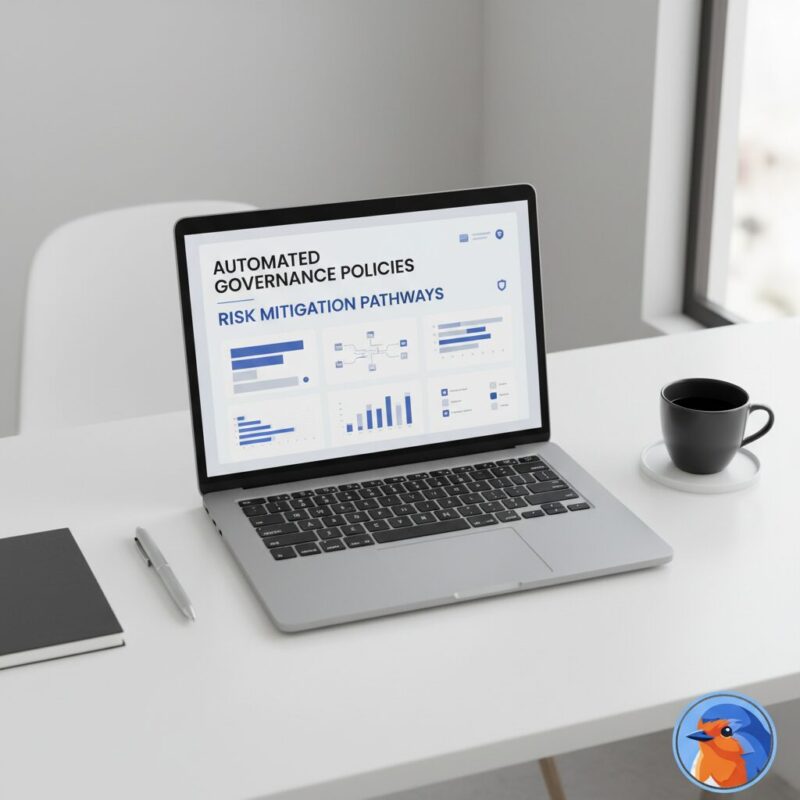
A risk register is just one piece of your broader governance framework. Maintaining updated safeguarding, GDPR, and financial policies manually drains resources. You can streamline this using the Governance Pack Creator to generate complete, compliant policy packs that link directly to your identified risks.
Integrating the Risk Strategy with FundRobin’s Smart Proposal Generation
Moving from static documents to dynamic, AI-assisted governance changes how you operate. A well-documented risk profile feeds directly into FundRobin’s Smart Proposal Generation tool.
The Robin AI Assistant uses your organizational context to draft highly customized proposals. It automatically aligns your application with funder risk requirements. Because the AI is grounded in your uploaded data, it cites facts and avoids hallucinations, acting as a reliable, secure extension of your team.
Reclaiming 200+ Hours: The Overwhelmed Executive Director’s Best Asset
By combining a lean risk register with automated tools, leaders reduce the 40 hours spent writing a major proposal down to 4 hours. Technology handles the heavy lifting of compliance so you can focus entirely on mission delivery. Eligible organizations can explore these capabilities through a guided 30-day Showcase trial of FundRobin, experiencing firsthand how proactive governance transforms grant success.
Frequently Asked Questions
What is a risk register for a small charity?
A risk register is a dynamic document, often a simple 2×2 matrix, that tracks potential organizational threats and outlines mitigation steps. It ensures grant readiness without overwhelming small teams, serving as a clear record of proactive governance for funders.
Why do funders conduct a funder risk assessment?
Funders conduct risk assessments to protect their investments and ensure your organization can deliver the promised impact. A risk register proves your nonprofit has the governance maturity and operational stability to manage grant funds responsibly.
How do I create a nonprofit risk management policy?
Start with a minimal viable policy that identifies your top five risks across financial, operational, and compliance categories. Use an AI risk register generator or governance pack creator to streamline the process, ensuring you establish clear likelihood and impact ratings.
Is there a free charity risk register template available?
Yes, you can use FundRobin’s free Risk Register Generator tool to instantly create a funder-ready template tailored to small nonprofits. It replaces complex corporate spreadsheets with a clean, actionable matrix you can present directly to your board.
How does a risk register reduce administrative burnout?
Proactive identification of risks shifts a small nonprofit from reactive crisis management to structured resilience. When your team has a documented mitigation plan for potential issues, you eliminate the mental load of unexpected emergencies, giving overwhelmed executive directors profound peace of mind.
Key Takeaways:
- Implement a documented risk register immediately; as of 2026, it is a mandatory “Grant Readiness Playbook” for securing major institutional funding.
- Build a lean 2×2 matrix focusing on your top 5 operational and compliance risks rather than wasting time on enterprise-level corporate spreadsheets.
- Connect risk management directly to staff wellbeing; proactive planning shifts your team from reactive firefighting to structured, low-stress resilience.
- Use FundRobin’s Risk Register Generator to produce compliant, funder-ready risk documentation in minutes, saving dozens of administrative hours.
Effective risk management is not an administrative burden. It is a strategic asset. When you document your risks clearly, you communicate professional maturity, protect your team from burnout, and give funders the confidence they need to invest in your mission.
