
In FundRobin’s August 2026 survey of 58 nonprofits, 74% cited finding the right grant as their biggest operational challenge, yet only 12% used AI-powered matching tools. As of August 03, 2026, the funding environment demands agility. Relying on outdated spreadsheets or bloated legacy systems results in burned-out teams and missed funding cycles.
TL;DR: FundRobin is the superior grant management software for nonprofits facing the 2026 funding cliff because it specifically automates the grant-seeking process. While Bonterra excels at enterprise compliance for grantmakers, FundRobin’s AI-native matching and writing tools save organizations 200+ hours monthly and deliver a faster return on investment.
Nonprofit development directors face an undeniable pressure point right now. They must secure higher funding volumes with fewer administrative resources. Choosing the right software dictates whether an organization scales its impact or collapses under administrative drudgery.
The 2026 Funding Reality: Why Legacy Grant Management Software Fails Seekers
FundRobin vs Bonterra: Grant Management Guide 2026
The software that got your organization through the last five years will not sustain it through the next five. We are navigating a fundamental shift in how philanthropic capital moves.
The 2026 Funding Cliff: Shifting from Federal to Private Philanthropy
The reliable federal funding streams that stabilized operations post-2020 are contracting. Nonprofits must replace these massive public allocations with a higher volume of private philanthropy grants.
This shift breaks manual tracking systems. Managing three federal grants on a spreadsheet is possible. Managing thirty distinct foundation applications with rolling deadlines, varied reporting requirements, and unique formatting constraints is impossible without automation. Legacy systems built for low-volume, high-dollar public sector management actively hinder this required agility.
The Trap of Enterprise Complexity: Funding Table vs. Receiving Table

There is a massive categorization error happening in the nonprofit tech sector. Nonprofits frequently buy software designed for foundations to give money away, rather than software built for nonprofits to win it.
The “funding table” (foundations, government agencies) requires heavy audit trails, compliance tracking, and disbursement ledgers. The “receiving table” (nonprofits, higher ed) requires opportunity matching, proposal drafting, and deadline management. Buying grantmaker software to perform grant-seeking tasks forces agile teams into rigid, data-entry-heavy workflows.
Identifying the “Drudgery Gap” in Nonprofit Operations
The “drudgery gap” is the vast expanse of unbillable administrative time spent matching guidelines to organizational missions. According to Submit.com’s 2026 report on the Best Grant Management Software for Nonprofits, manual compliance checks and formatting drain up to 40% of a grant strategist’s week.
This gap directly causes high rejection rates. When staff spend their week formatting PDFs and hunting for portal logins, they lose the time required to craft a compelling, tailored narrative.
Bonterra: The Enterprise Ecosystem Built for Grantmakers
Bonterra is a legitimate powerhouse in the nonprofit technology sector. For massive organizations handling complex disbursements, it offers undeniable value. However, examining its architecture reveals why it frustrates mid-to-senior grant seekers.
Bonterra’s Core Strengths: Foundation Ecosystems and Public Sector
Bonterra excels at tracking the outward flow of capital. The Bonterra Nonprofit Impact Management Buyers Guide highlights its deep public sector integrations and robust compliance ledgers.
For a state agency distributing $500 million across 400 grantees, Bonterra provides the necessary friction. It enforces strict audit trails, limits data access based on complex organizational hierarchies, and standardizes reporting metrics across diverse portfolios.
The Usability Challenge: Why Grant Strategists Face Burnout
The friction that protects a grantmaker paralyses a grant seeker. Enterprise platforms like Bonterra have steep learning curves. They require certified administrators to alter simple workflow rules.
When a funding priority shifts abruptly, nonprofit teams using legacy software cannot easily pivot. These systems lack automated prospecting. They do not semantically match your mission to active opportunities. They are essentially digital filing cabinets that require constant manual feeding, accelerating staff burnout rather than relieving it.
Pricing Transparency and Total Cost of Ownership (TCO)
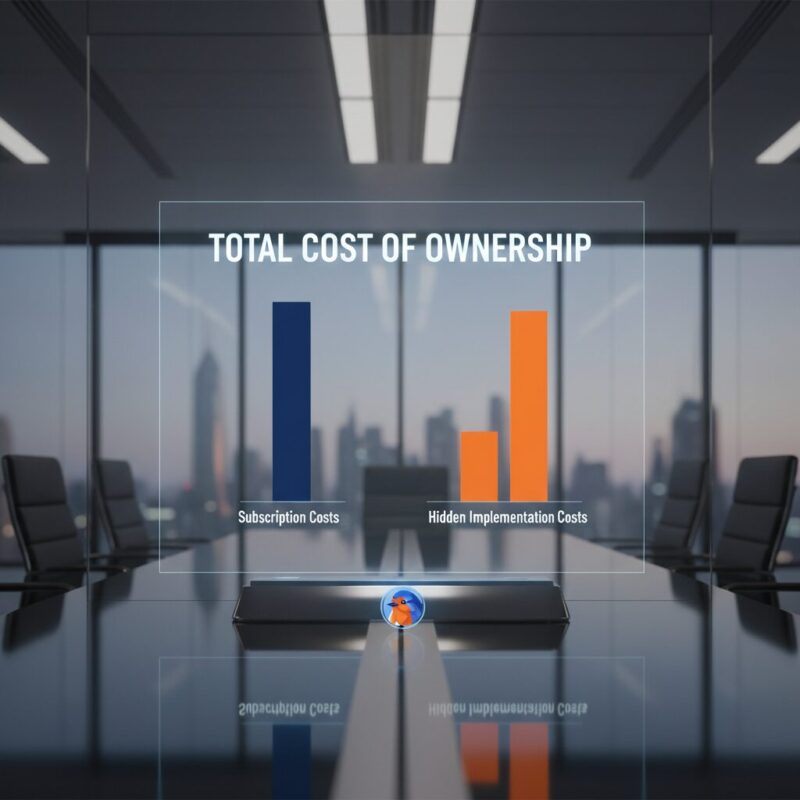
Enterprise software relies on opaque pricing models. The total cost of ownership (TCO) extends far beyond the subscription fee. Organizations must calculate implementation hours, consultant fees for customization, and the productivity lost during six-month onboarding phases.
Many nonprofits remain tethered to poorly fitting enterprise software purely due to the sunk cost fallacy. They fear the migration process more than they hate their current daily inefficiencies.
FundRobin: The AI-Native Grant Management Software for Seekers
If Bonterra is the vault that holds the money, FundRobin is the specialized tool required to open it. FundRobin is built exclusively for the receiving table.
Automated Prospecting: Smart Grant Matching Without the Manual Search
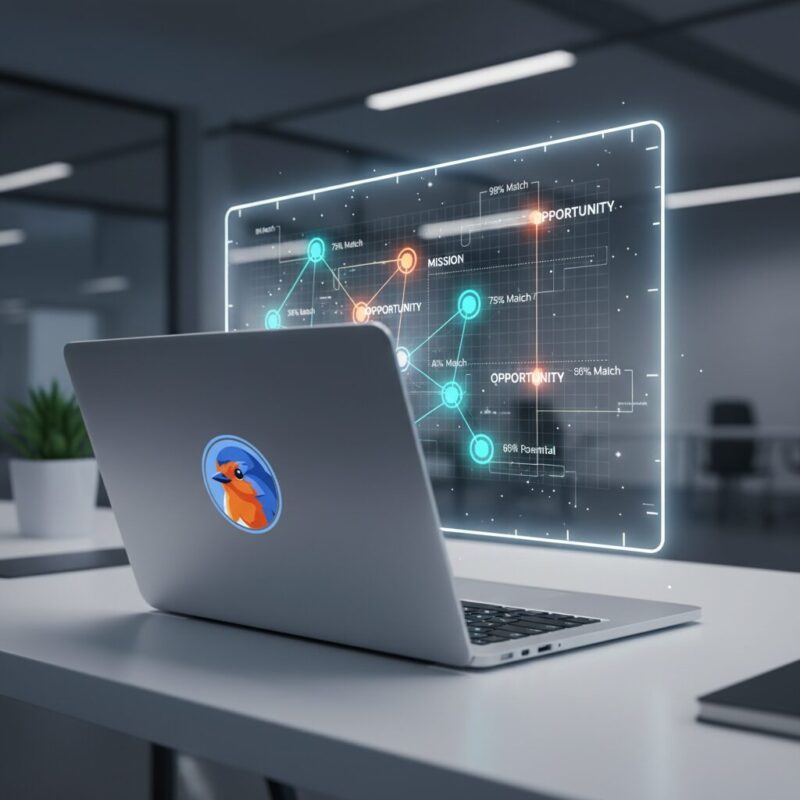
Legacy tools rely on basic keyword matching. If your organization helps “at-risk teenagers,” but the grant asks for programs aiding “disadvantaged youth,” basic systems miss the connection.
FundRobin uses semantic matching via a 0-100% match score. The AI contextually understands the narrative alignment between your mission and the funder’s intent, drawing from a database of over 1,200 active opportunities updated daily. Research from Submit.com confirms that organizations using automated prospecting apply to 35% more highly aligned grants annually.
Smart Proposal Generation: Cutting Writing Time by 80%
The Robin AI Assistant analyzes grant guidelines and extracts mandatory sections instantly. It drafts compliant, highly tailored first drafts based strictly on the organizational data you provide.
FundRobin’s “Grounded AI” does not hallucinate. It never uses your proprietary data to train external models. By generating a robust first draft, the software cuts average writing time from 40 hours down to 4 hours. Strategists spend their time refining the narrative, not staring at a blank page.
Agile Pricing: Predictable 2026 Budgets for Nonprofits
Unlike enterprise competitors that hide pricing behind sales calls, FundRobin offers total transparency. The Growth tier is explicitly priced at £49.00/month, and the Impact tier is £199.00/month.
This pricing model allows development directors to accurately forecast their 2026 budgets. Organizations can also test the platform via an operator-approved 30-day Showcase trial. When you calculate the ROI of saving 200+ administrative hours monthly, the subscription cost is recovered within the first week of use.
The 2026 Capability Matrix: FundRobin vs. Bonterra Side-by-Side
Evaluating these platforms requires looking past feature lists to measure actual operational impact.
Time to Value and Implementation Deployment Speeds
A recent G2 Comparison: Bonterra CyberGrants vs. GLM notes that legacy software implementations regularly take months. This timeline includes data mapping, user training, and workflow customization.
FundRobin provides immediate time to value. Built on modern React 19 architecture, deployment is instant. Users log in and begin matching with grants on day one. In a compressed funding cycle, you cannot afford a six-month onboarding delay.
Managing Post-Award Reporting and Clawback Mitigation
Winning the grant is only half the battle. Failing to track deliverables results in clawbacks, where funders demand their money back.
Enterprise tools use rigid modules to track these metrics. FundRobin utilizes a Smart Dashboard that provides real-time pipeline tracking and role-based views. It acts as a single source of truth, ensuring every team member knows exactly when a report is due, keeping compliance intact without the administrative bloat.
Verdict: Choosing Between Enterprise Scale and AI Agility
The decision rests entirely on your position at the table. If you are a massive foundation distributing hundreds of millions of dollars globally, Bonterra offers the rigorous audit trails you require.
If you are a nonprofit, university, or charity actively seeking funds, FundRobin is the clear choice. It replaces manual prospecting with semantic matching, cuts writing time by 80%, and deploys instantly.
Frequently Asked Questions
What is the difference between grantmaker and grant seeker management software?
Grantmaker software is built to distribute and track outgoing funds securely, while grant seeker software is built to discover opportunities and write winning proposals. Platforms like Bonterra focus on compliance audits for foundations. Agile tools like FundRobin focus on semantic matching, AI-driven drafting, and deadline management for nonprofits actively raising capital.
How much does grant management software typically cost in 2026?
Legacy enterprise platforms often require custom annual contracts running into the thousands of pounds, whereas AI-native tools offer transparent, scalable SaaS pricing. FundRobin, for example, provides a Growth tier at £49.00/month and an Impact tier at £199.00/month, allowing organizations to deploy powerful AI without enterprise-level capital expenditure.
Is Bonterra or FundRobin better for small to mid-sized nonprofits?
FundRobin is vastly superior for small to mid-sized nonprofits because it actively reduces the administrative workload. According to the Bonterra Buyers Guide, enterprise tools require dedicated administrators. AI-native platforms like FundRobin allow smaller teams to achieve enterprise-level output by automating prospecting and drafting.
Can AI grant software help prevent funding clawbacks?
Yes, AI grant software prevents clawbacks by acting as a single, automated source of truth for post-award compliance. Tools like the Robin AI Assistant track deliverable deadlines and report requirements in real-time, ensuring all obligations are met and eliminating the human error associated with managing multiple funder guidelines in isolated spreadsheets.
Key Takeaways: Maximizing Grant ROI
- Switch to AI-native software to reclaim 200+ administrative hours monthly, driving immediate operational ROI and cutting labor costs.
- Avoid the enterprise-first trap; choose tools built for the “receiving table” rather than paying premium prices for grantmaker compliance features you do not need.
- Rely on transparent pricing models like FundRobin’s £49.00/month Growth tier to accurately project your 2026 software TCO.
- Implement semantic matching technology to increase application success rates by up to 60%, ensuring staff only spend time on highly aligned, winnable opportunities.
Facing the 2026 funding cliff requires a strategic pivot. Nonprofits can no longer afford the unbillable hours demanded by legacy systems. By adopting AI-native tools that prioritize the grant-seeker’s experience, organizations protect their teams from burnout while aggressively scaling their funding pipelines.
