
Entering September 16, 2026, the UK government has fundamentally reallocated its non-dilutive capital, signaling the definitive end of the broad-scope funding era. Innovators, social enterprises, and universities can no longer rely on reactive, generic applications. Winning non-dilutive funding today requires data-driven targeting, deep alignment with the UK Industrial Strategy, and strategic orchestration to overcome severe administrative bottlenecks.
TL;DR: UK innovation funding in 2026 has shifted from generic Smart Grants to strict, sector-aligned R&D mandates. Organizations must adopt blended finance models and leverage AI orchestration tools like FundRobin to translate social impact into technical KPIs, mitigate chronic team burnout, and secure high-value capital in an intensely competitive landscape.
Table of Contents
- The 2026 Funding Reality: Evolving Beyond Traditional Smart Grants
- Analyzing Core UK Innovation Funding Streams for 2026
- The Strategic Playbook: Architecting the Resilience Pivot
- Translating Impact into R&D Compliance for UKRI Tenders
- Treating Grant Operations as Strategic Infrastructure
- Mastering the Application Process with AI-Powered Orchestration
- Global Scalability: Applying UK Rigor to International Strategy
- The Cost of Inaction and Maximizing ROI in Grant Seeking
- Frequently Asked Questions
UK Innovation Funding: 2026 R&D Grant Strategy
The 2026 Funding Reality: Evolving Beyond Traditional Smart Grants
The landscape of UK innovation funding has changed permanently. The familiar “Smart Grant void” refers to the sharp reduction in broad-based, open-scope funding that historically sustained early-stage startups and innovative nonprofits. According to the GOV.UK – Innovation Funding Service, the current funding architecture demands strict alignment with specific national priorities rather than general commercial promise.
The Shift Toward Sector-Aligned R&D
Government capital is now aggressively ring-fenced for hard tech, Net Zero initiatives, and life sciences. The transition demands organizations reframe their projects to fit these new sector criteria, effectively abandoning generic pitches in favor of highly technical compliance. Relying solely on reactive grant discovery is an obsolete strategy; funding goes to entities that anticipate and build toward these specialized mandates.

Navigating the New UK Industrial Strategy Mandates
The 2026 UK Industrial Strategy enforces mandatory key performance indicators (KPIs) regarding sustainability, job creation in specific regions, and technological sovereignty. The GOV.UK – Innovation Funding Service guidelines explicitly outline that applications ignoring these pillars face immediate rejection, regardless of commercial viability. You must explicitly address these macroeconomic goals in your executive summaries.
The Decline of Broad-Based Funding: What It Means for Innovators
The approval rates for generic applications have plummeted. Early-stage startups and social enterprises relying on these historical cash injections face a financial cliff. Pouring hundreds of hours into a broad-scope application without sector alignment drains organizational resources. The days of submitting the same institutional boilerplate across multiple portals are over.
Addressing the “Smart Grant Void” with Data-Driven Targeting
Data-driven targeting replaces guesswork with statistical probability. Navigating the 2026 void requires scanning hundreds of active opportunities daily to find exact niche matches. Manual tracking limits a team’s capacity and introduces the risk of missing visually urgent deadlines across unlinked portals. A data-driven approach aligns an organization’s capabilities exactly with the funder’s stated outcomes before a single word is drafted.
Strategic Infrastructure: Moving from Reactive to Proactive Discovery
Grant acquisition is strategic infrastructure. Executive teams must move from a reactive, deadline-chasing culture to a proactive pipeline model. This requires centralized smart dashboards that offer real-time updates and clear visual indicators for deadlines. Proactive infrastructure preemptively identifies funding months in advance, allowing for robust partnership development and compliance auditing.
Analyzing Core UK Innovation Funding Streams for 2026
Understanding nuanced, high-value streams is necessary for serious financial growth. According to UKRI – Innovate UK, the current ecosystem favors deep tech and collaborative research over isolated commercial ventures.
Deep Dive: Biomedical Catalyst and High-Value R&D Streams
The Biomedical Catalyst remains one of the highest-value streams, focusing intensely on health tech, life sciences, and translational research. Success in this stream requires meticulous alignment with medical ethics and NHS data management compliance. Eligibility often mandates partnerships between SMEs and academic institutions, requiring a multi-PI (Principal Investigator) approach to application drafting.
Leveraging Investor Partnerships (£500k+ Opportunities)
For high-growth startups, UKRI Investor Partnerships offer a powerful mechanism to double financial runway without total equity dilution. In this model, UKRI – Innovate UK grant funds match private equity investments, typically starting at the £500k threshold. This requires a business to undergo rigorous vetting by approved private VC investors alongside the government’s technical evaluation, demanding a highly sophisticated financial narrative.
Sector-Specific Allowances: Tech, Green Energy, and Health
Ring-fenced budgets dominate 2026. Tech funding prioritizes Artificial Intelligence, Quantum computing, and Cybersecurity. Green Energy grants are strictly tied to Net Zero outcomes and Circular Economy material sciences. Health funding requires clear integration paths with digital health systems or social care innovation. Organizations outside these sectors must learn to reframe their operations to intersect with these priorities.
Comparison Table: R&D Grants vs. Traditional Smart Grants
| Feature | 2026 Sector-Aligned R&D Grants | Traditional Smart Grants (Legacy) |
|---|---|---|
| Scope Focus | Highly specific (e.g., Quantum, Net Zero) | Broad commercial innovation |
| Compliance Rigor | Strict adherence to Industrial Strategy KPIs | Moderate, focus on business plan |
| Success Rates | Higher for exact matches, low competition | Lower due to massive generic volume |
| Partnership Needs | Frequently requires academic/industry alliances | Often single-entity SME applications |
| Evaluation Metric | Technical risk mitigation & national priority | Commercial viability & generic ROI |
Key Takeaways: High-Value Funding Strategy
- Restructure your grant pipeline to prioritize Investor Partnerships if you are currently raising a seed or Series A round to minimize equity dilution.
- Audit your active projects against the three core pillars of the 2026 Industrial Strategy: Green Energy, Deep Tech, and Advanced Health.
- Cease operations on generic funding applications; reallocate those administrative hours to highly targeted, sector-specific R&D tenders.
- Utilize data-driven tracking to preemptively identify multi-PI collaboration opportunities 6-9 months before deadlines.
The Strategic Playbook: Architecting the Resilience Pivot
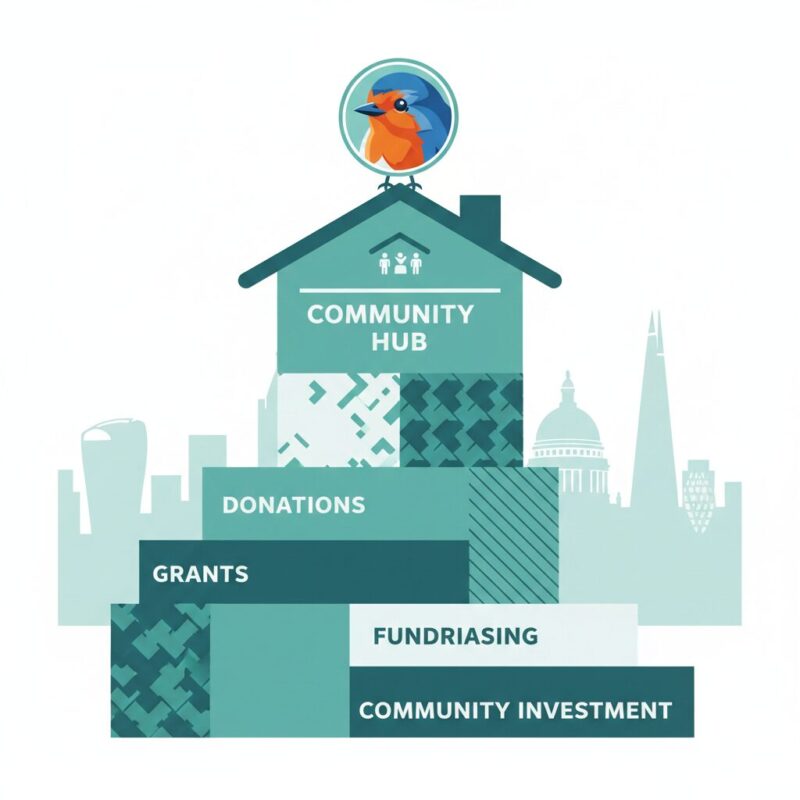
The “Resilience Pivot” is the definitive financial strategy for surviving 2026. Relying 100% on public grants is a high-risk financial strategy that frequently results in cash flow crises.
What is Blended Finance in the 2026 Context?
Blended finance involves mixing non-dilutive public grants with private equity or philanthropic capital. This diversified capital stack is the gold standard for sustainable growth. For a deeper analysis on structuring this model, review our guide on the 2026 social enterprise capital stack and blended finance.
Conducting a “Grant Readiness” vs. “Blended Finance” Audit
Leaders must assess their organizational capacity through a dual lens. A standard Grant Readiness audit checks for compliance documents, historic financials, and project scopes. A Blended Finance Capacity audit evaluates impact tracking mechanisms, private investor relations, and the ability to manage complex, multi-stakeholder reporting. Bridging the gap requires robust operational systems capable of satisfying both VC due diligence and government auditors simultaneously.
Integrating Private Capital with Non-Dilutive Public Grants
Matching private funds with public grants introduces complex compliance requirements. Securing a government grant actively de-risks an opportunity for private investors, signaling external validation of the technology. The sequencing is critical: organizations often use an approved grant commitment to close a hesitant VC round, or use committed private capital to prove financial viability in a UKRI application.
Extending Financial Runway Without Equity Dilution
Acquiring a £250k grant preserves founder equity while achieving the exact same operational milestone as a £250k seed round. The theoretical cost of equity over a ten-year horizon dwarfs the cost of acquiring a grant. Non-dilutive funding is the cheapest capital in terms of equity, but historically the most expensive to acquire in terms of time—unless intelligent orchestration tools eliminate the manual labor.
Translating Impact into R&D Compliance for UKRI Tenders
Nonprofits and social enterprises often experience intense frustration when reading highly technical R&D tenders. Incredible, high-impact projects get rejected because they fail to speak the evaluator’s language.
The Disconnect Between Social Impact and Technical R&D Language
Evaluators at UKRI – Innovate UK use scoring rubrics focused on technical risk mitigation, commercialization timelines, and hard data. Nonprofits traditionally use language focused on community benefit, care, and qualitative outcomes. The underlying project does not need to change; the framing does. Language alignment unlocks government capital.
Framework: Mapping ESG Metrics to Industrial Strategy KPIs
Translating Environmental, Social, and Governance (ESG) achievements into government KPIs requires a strict framework. For example, a program providing “community youth support” must be translated to “upskilling for the future technical workforce” to satisfy an economic tender. A “local recycling initiative” becomes “circular economy material science testing.” Building a Theory of Change that connects qualitative social work directly to quantitative national economic outcomes satisfies government auditors.
Standardizing “Innovation” Language for Non-Technical Sectors
Innovation in the eyes of UK funding bodies extends beyond software. It encompasses process improvement, novel delivery mechanisms, and scalability models. An educational nonprofit can reframe a new curriculum delivery method as “EdTech Innovation” or “Digital Skills Scalability.” Using standardized phrasing in the executive summary forces evaluators to score the application against innovation metrics rather than standard service delivery rubrics.
Treating Grant Operations as Strategic Infrastructure
The constant scramble for impending deadlines destroys team morale and application quality. The burnout crisis in the nonprofit and startup sectors regarding grant writing is severe, but it is fundamentally an infrastructure problem, not a personal resilience problem.
The Cycle of Urgency and the Nonprofit Burnout Crisis
The “Cycle of Urgency” involves finding a grant two weeks before a deadline and forcing teams to work excessive hours to generate a draft. According to an analysis of the 4 Practical Fixes for the Nonprofit Burnout Crisis by The Chronicle of Philanthropy, this approach exacts a massive physiological and organizational toll, directly causing high staff turnover and degraded output quality.
Refilling the Tank: Organizational Restructuring over Individual Wellness
Superficial wellness initiatives cannot cure structural overwork. As outlined in Managing Burnout: Rethinking the Way We Refill Our Tank by NGMA, organizations must restructure grant teams. You must transition from a state of constant administrative scramble to treating grant operations as a structured, scalable system. This involves separating discovery, writing, and compliance roles, and utilizing technology to handle rote discovery tasks.

Ethics, Capacity, and the Grant Writer’s Dilemma
When capacity is stretched thin, professionals face immense pressure to inflate impact numbers or cut corners on compliance checks. The Grant Writer’s Dilemma: Ethics, Capacity, and Burnout by Instrumentl highlights these ethical compromises. Proper tech infrastructure protects organizational integrity by ensuring thorough, un-rushed compliance checking and maintaining a clear audit trail of claims.
Mastering the Application Process with AI-Powered Orchestration
Addressing administrative debt requires modern AI-powered orchestration. The sheer volume of compliance reading required—often exceeding 50 pages per grant—cripples human bandwidth. FundRobin provides the standard for full lifecycle orchestration, turning fragmented workflows into a unified strategy.
The Challenge of Fragmented Databases
Organizations waste hundreds of hours manually searching fragmented databases and unlinked portals. Checking dozens of different government and private funder websites introduces the risk of missing critical updates. Manual tracking is an outdated methodology in 2026. For detailed UK strategies, review our dedicated UK funding overview.
Bypassing the Noise with Smart Grant Matching
FundRobin’s Smart Matching compares organization and opportunity context to help prioritize fit. Instead of basic keyword tracking, advanced NLP understands contextual relationships—matching “disadvantaged youth” with “at-risk teenagers” automatically. Match labels and rationale support human review, ensuring that screening time drops drastically. Based on our 24-organization case study program, one UK animal welfare charity reduced discovery time from 6.5 to 1.5 hours per week by utilizing explainable match rationale.
Generating Compliant Drafts and Reducing Admin Debt
Administrative debt stems from repetitive formatting, portal navigation, and baseline drafting. FundRobin helps teams generate high-quality first drafts based on current Organisation Brain truth. The AI acts as a contextual assistant, allowing human talent to focus on partnership building and strategy. In our case study program, a US public university research office reported their first-draft time fell by about 40%, while a UK social enterprise saw weekly admin time drop from 8 hours to 3.5 hours.
Robin AI Assistant: Grounded AI vs. Hallucination Risk
The fear of AI hallucination—inventing false statistics or funder rules—is valid when using generic consumer tools for legal documents. The Robin AI Assistant operates as a grounded contextual assistant. It works from authorized organization, Library, and application context, retaining source and provenance evidence. It relies on current factual authority rather than conversational memory to provide reliable proposal support.
Building Collaborative Workspaces for Multi-PI Applications
Large-scale academic bids suffer from version control nightmares and endless email chains. Secure, collaborative workspaces with role-based permissions resolve this chaos. Learn more about managing complex academic partnerships in our strategic AI orchestration for multi-PI grants guide.
Global Scalability: Applying UK Rigor to International Strategy
The UK has some of the most rigorous funding standards globally. Mastering UKRI portals and strict compliance frameworks like GDPR prepares an organization perfectly for international expansion. A UK-compliant proposal is exceptionally well-positioned for global submission.
Cross-Border Collaboration and Expanding the Footprint
Accessing post-Brexit Horizon Europe funds requires robust cross-border collaboration tools. For specifics on European expansion, explore our EU funding capabilities. Similarly, the massive philanthropic and federal ecosystems in the US and Australia require adaptable infrastructure. Learn how FundRobin adapts to these regions via our USA grant overview.
Streamlining International Discovery
Managing multi-currency, multi-region grants requires a single pane of glass. A unified Smart Dashboard standardizes performance benchmarking for multinational operations. To begin exploring global opportunities without immediate commitment, you can browse our active database using the free Grant Finder tool.
The Cost of Inaction and Maximizing ROI in Grant Seeking
The manual approach to grant writing is financially unsustainable in 2026. Return on Investment (ROI) is the ultimate metric for grant operations, and organizations must calculate the true cost of their administrative debt.
Calculating the True Cost of Manual Application Generation
Consider the hourly rate of a senior grant writer, consultant, or academic PI. Multiply that rate by the 40+ hours required to manually draft, format, and compliance-check a complex UKRI proposal. This massive sunk cost occurs before the application even reaches the evaluation stage, where industry baseline success rates remain highly competitive.
Subscription Tiers That Scale With Funding Success
FundRobin offers transparent pricing designed to deliver immediate ROI:
- Growth Tier (£49.00/month or £470.40/year): Includes a guided 30-day Showcase Trial for authorized organizations. Offers robust pipeline tracking and AI-assisted first draft tools.
- Impact Tier (£199.00/month or £1,910.40/year): Designed for scale, delivering advanced organizational knowledge governance and larger capacity.
- Custom Enterprise: Contact-led solutions for massive research institutions and multinational NGOs.
(Note: Foundation and Starter tiers are closed to new sales; historical customers maintain access, but new organizations select between Growth and Impact to ensure sufficient processing capacity).
Key Takeaways: Implementation and ROI Strategy
- Calculate the hourly cost of your team’s manual grant discovery phase; replacing this with Smart Matching recovers approximately 5 hours per week per staff member.
- Utilize the 30-day Showcase Trial (post-authorization) to benchmark FundRobin’s AI generation speed against your current manual drafting timelines.
- Centralize your organizational truth into the Organisation Library to ensure all team members write from compliant, current facts rather than outdated legacy documents.
- Implement a strict “No Blank Page” policy—require all first drafts to be generated from vetted context to guarantee adherence to funder constraints.
Frequently Asked Questions
What is UK innovation funding and how has it changed for 2026?
UK innovation funding in 2026 refers to government-backed grants and R&D capital, primarily distributed through UKRI, focused heavily on Industrial Strategy mandates rather than broad, generic grants. The GOV.UK – Innovation Funding Service confirms that open-scope “Smart Grants” have been severely reduced in favor of targeted capital for deep tech, green energy, and life sciences, requiring strict sector alignment for approval.
How do I apply for the Biomedical Catalyst fund?
Access the Biomedical Catalyst competitions directly through the UKRI Innovation Funding Service portal, verify your SME eligibility, and ensure your proposal meets strict NHS data and medical ethics compliance standards. According to UKRI – Innovate UK, applications must demonstrate translational research capabilities, typically requiring robust partnerships between private enterprise and academic institutions.
What are the differences between Smart Grants and R&D grants?
Smart Grants are typically broader, open-scope funding mechanisms, whereas R&D grants in 2026 are heavily restricted to specific technical advancements and Industrial Strategy KPIs. As shown in the comparison table above, R&D grants require higher technical risk mitigation and offer lower competition for exact matches, while legacy Smart Grants suffered from massive application volumes and generic commercial criteria.
How can AI help with the innovation funding service portal?
AI can significantly reduce the excessive hours spent searching the innovation funding service portal by using semantic matching, scoring relevancy, and generating compliant first drafts based on current organizational truth. By automatically mapping funder requirements against your established knowledge base, grounded AI orchestration prevents technical disqualifications and reduces the administrative burden of parsing 50-page guidance PDFs.
What is blended finance for social enterprises?
Blended finance is the strategic mixing of non-dilutive public grants with private capital or equity, specifically designed to extend runway for social enterprises and startups. This diversified capital stack de-risks the organization for venture capitalists while ensuring that strict public grant outcomes are met alongside commercial growth targets.
How do UKRI Investor Partnerships work for startups?
UKRI Investor Partnerships provide a framework where Innovate UK grant funding is aligned directly with vetted private VC investment, typically starting at the £500k threshold. This mechanism allows high-growth startups to double their financial runway without suffering total equity dilution, provided they pass both government technical evaluation and private investor due diligence.
What are the best ways to reduce grant writer burnout?
Reduce burnout by treating grant operations as core infrastructure, automating manual discovery with contextual AI orchestration tools like FundRobin, and eliminating the “Cycle of Urgency.” The Chronicle of Philanthropy data indicates that structural operational fixes—such as separating drafting from compliance and utilizing shared pipelines—are far more effective than individual wellness programs.
Can I use UK innovation grants for international expansion?
Yes, mastering the rigorous compliance standards of UK innovation grants prepares your organization to meet the due diligence requirements for EU and US international funds. Frameworks like GDPR and strict UK financial auditing directly overlap with global requirements, making cross-border applications significantly faster to execute.
How do I translate ESG metrics into Industrial Strategy language?
Map qualitative social impact indicators directly to the quantitative KPIs required by government R&D tenders using a strict Theory of Change framework. For example, translate local community support programs into “technical workforce upskilling” to align with economic mandates, ensuring evaluators score the project on structural innovation rather than standard service delivery.
What are the typical success rates for UKRI grant applications?
Industry baseline success rates for highly competitive UKRI streams often fall below 10-15% for manual, generic applications. Organizations that utilize data-driven targeting and contextual NLP matching to pre-screen opportunities ensure they only invest drafting hours into funds where they have a distinct structural advantage and proven eligibility.
Embracing the Future of Funding Acquisition
The funding landscape will only become more competitive and technically demanding. Organizations that continue to chase generic grants using manual workflows face unsustainable administrative costs and severe team burnout. By adopting a blended finance strategy, translating impact into hard R&D compliance, and leveraging intelligent orchestration through FundRobin, your organization secures the strategic infrastructure necessary to dominate your sector and accelerate your mission.
