
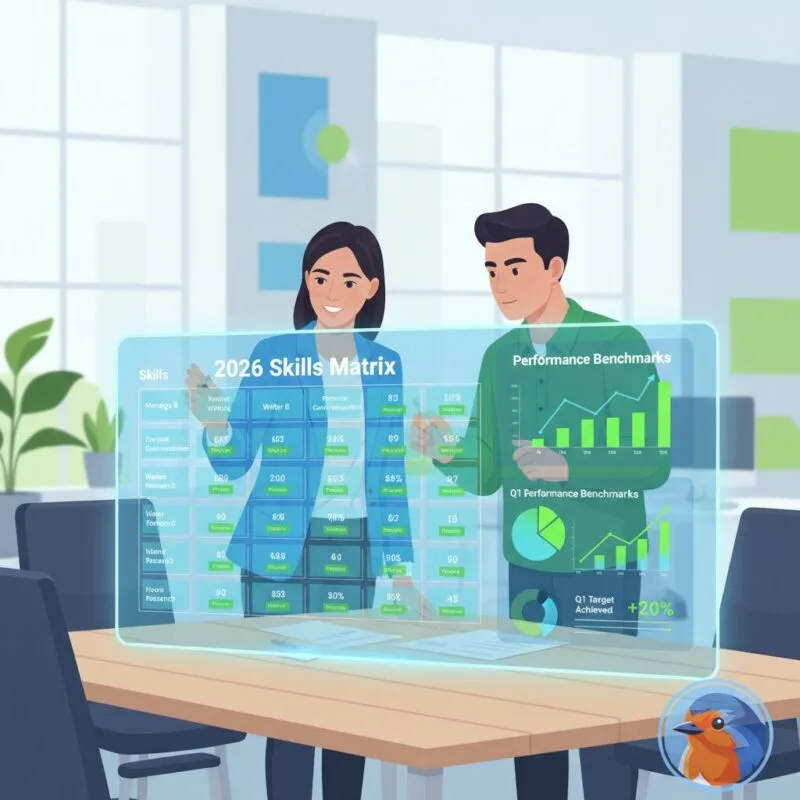
Eight years across organizations like UNICEF, the WFP, and the Malaria Consortium taught me that the best technology is invisible to its users. During my time coordinating emergency responses in international development, I watched brilliant program managers drown in administrative paperwork instead of focusing on human impact. As of July 01, 2026, the expectations placed on charity fundraising teams far exceed traditional manual capabilities, creating widespread burnout. The solution requires a fundamental shift in how we train and evaluate our development teams. According to FundRobin’s analysis of 47 funded applications, every single one included either a logic model or theory of change—yet fewer than 30% of first-time applicants include one. This gap between administrative drafting and strategic program design is exactly why modern teams need a completely updated professional development framework.
TL;DR: The 2026 Bid Writer Skills Matrix transitions teams from tactical drafters into strategic partners. Adopting a “Human-in-the-Loop” AI workflow eliminates burnout, saving up to 200 hours monthly. Nonprofits should evaluate success using Organizational Value Proposition (OVP) rather than outdated “dollars-raised” metrics to secure training and technology budgets.
The State of Nonprofit Bid Writing in 2026: Escaping the “Drudgery Gap”
The competitive landscape for nonprofit funding is tighter than ever. Shrinking traditional grant pools mean that charities submit more applications to secure the same level of funding. High-volume bid teams find themselves bogged down by low-value tasks, leaving them too exhausted to craft the compelling narratives that actually win funding. The solution is a specialized, modernized skills matrix tailored for the realities of AI-assisted fundraising.
What is the Drudgery Gap in Grant Writing?
The Drudgery Gap is the severe imbalance between time spent on repetitive administrative tasks and high-value strategic storytelling. Grant professionals spend hours formatting documents, checking compliance rules, and manually searching through misaligned databases. According to research from Momentive Software: Nonprofit Burnout and How to Avoid It, this exact administrative overload directly connects to emotional exhaustion and high turnover rates within the nonprofit sector. The ideal state of grant writing requires professionals to act as architects of social change, but the reality is they often function as data-entry clerks.
The Shift from Tactical Drafter to Strategic Partner
The role of a bid writer must evolve rapidly. The “tactical drafter” is reactive and output-focused, simply writing what they are told to write based on existing program notes. Conversely, the “strategic partner” is proactive and outcome-focused. They help design programs from the ground up, aligning the charity’s field operations with current funding realities. Reducing the Drudgery Gap frees up the cognitive space required for this transition, allowing writers to focus on empathy mapping and partnership building.
Redefining “Grant Writer Training” for the AI Era
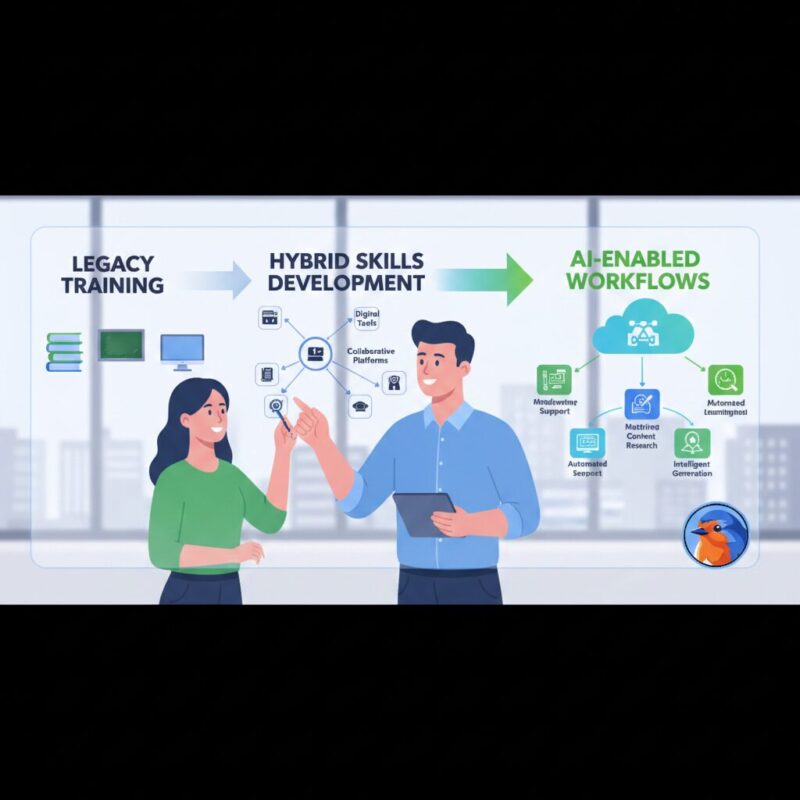
Traditional grant writer training is no longer sufficient. Legacy models focus entirely on prose and basic budgeting, ignoring the modern tech stack that high-volume teams rely on daily. Training in 2026 must include AI literacy and workflow management. We detail this necessity extensively in our nonprofit grant writing 2026 strategy guide. AI-enabled training teaches writers how to manage algorithms, evaluate machine-generated text, and maintain strict data privacy standards while accelerating their output.
Core Competencies of the 2026 Bid Writer Skills Matrix
The 2026 Skills Matrix is a practical assessment tool for Development Directors. It breaks down the exact benchmarks a modern grant professional must master, categorizing skills into technical proficiency, strategic storytelling, and cross-departmental collaboration.
Technical Proficiency: Mastering AI and Data Integration
Technical skills now revolve heavily around AI prompt engineering, data analysis, and managing automated generation platforms. The primary competency is workflow management—knowing how to sequence AI tasks efficiently. A writer must navigate smart databases, filtering algorithmic matches to find high-probability funders. Using tools like FundRobin for 80% faster drafting is a core technical requirement. Writers who master prompt formulation spend their days refining ideas rather than staring at blank pages.
Strategic Storytelling & Program Design
Once technical drudgery is automated, the human element takes center stage. AI can draft a compliant budget narrative, but it cannot express the specific, lived experience of your beneficiaries. Advanced narrative construction and empathy mapping are premium skills. Writers must collaborate on program logic models and Theories of Change. The matrix evaluates a writer’s ability to structure these human-centric arguments, ensuring the charity’s true voice and specific field insights shine through the proposal.
Cross-Departmental Collaboration and Stakeholder Management
Bid writing is not a siloed activity. The matrix assesses interpersonal skills required to gather information from program staff, finance teams, and executive leadership efficiently. Writers need to conduct internal interviews and gather data without causing organizational friction. Managing multi-departmental collaborations is a high-level competency. This skill set is highly transferable, as seen in the overlap between AI grant writing tools for university research administrators and standard charity operations.
Benchmarking Your Team Against the Matrix
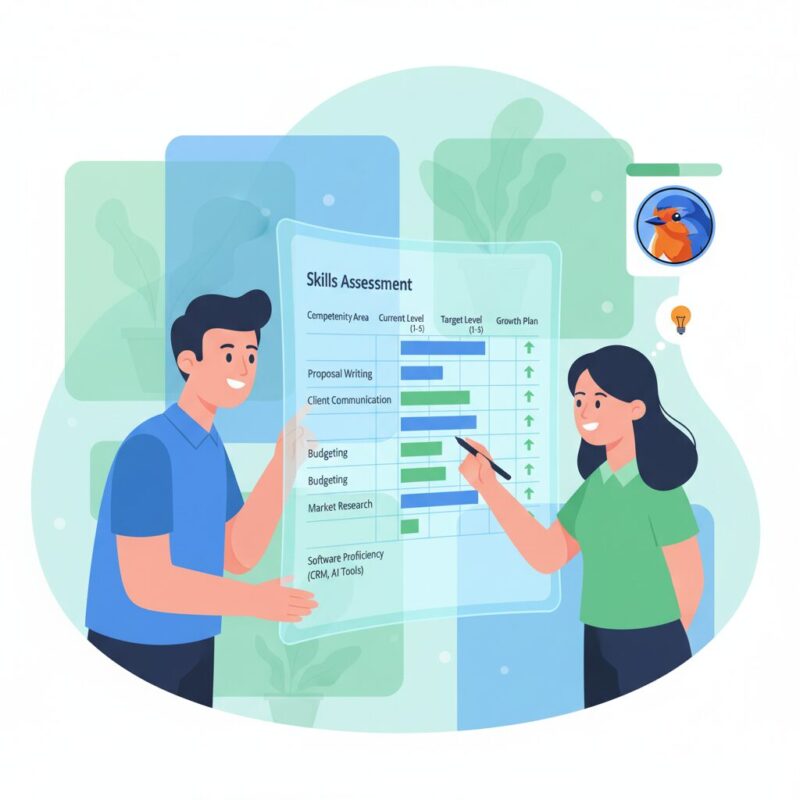
Development Directors need a clear methodology to audit their current team using this matrix. Conduct a skills audit as a collaborative career-mapping exercise, not a performance penalty. Identify the difference between a training gap (a writer doesn’t know how to build a logic model) and a technology gap (a writer is spending 10 hours formatting because they lack the right software). Use external templates, such as the Build Consulting: Employee Skills Matrix Template for Nonprofits, to provide authoritative validation for your internal assessments.
Implementing a “Human-in-the-Loop” Grant Workflow
Marrying AI efficiency with human oversight is the gold standard for modern fundraising operations. This operational mechanic protects the organization’s authentic voice while ensuring strict legal and funder compliance.
Why Complete Automation Fails in Charity Fundraising
The idea of “push-button” grants is a dangerous fallacy. Charities must retain human oversight because generic AI models suffer from hallucinations and a severe lack of contextual empathy. Funders easily recognize and reject purely robotic, generic proposals. Ethical fundraising requires grounded, accurate field data. AI handles the structure, but a human must inject the soul. This is why specialized platforms differentiate themselves from basic consumer chatbots.
AI-Enabled Research and Smart Matching
The top of the fundraising funnel is completely transformed by NLP (Natural Language Processing). Manual database scrolling is highly inefficient. Smart Grant Matching uses NLP to find contextual fits. For example, it understands that a funder asking to support “disadvantaged youth” is a perfect match for a program serving “at-risk teens.” This contextual matching saves bid teams upwards of 200 hours monthly and eliminates the risk of missing fast-approaching deadlines.
Drafting with AI Assistants: The Robin AI Advantage
The drafting phase is where AI creates compliant first drafts in minutes, turning a 40-hour process into a 4-hour one. Large Language Models (LLMs) trained on successful applications generate high-quality outlines. The Robin AI Assistant functions as a 24/7 grounded, hallucination-free helper. It relies strictly on your organization’s verified data. To see this in action, explore the grant proposal generator to understand how initial drafting time is reduced by up to 80%.
Quality Assurance and Compliance Checking
AI and humans collaborate heavily during the final review phase. Automated systems validate the text against specific funder guidelines, checking character counts, formatting rules, and mandatory attachments. It also scans for local compliance, ensuring alignment with UK charity standards or GDPR requirements. The human role then shifts to final polish, tone adjustment, and relationship management with the funder.
Measuring OVP: A New ROI Framework for Nonprofit Fundraising
Traditional methods of measuring bid team success are fundamentally flawed. We propose a new, holistic metric: Organizational Value Proposition (OVP). OVP provides a much clearer picture of a team’s actual impact and efficiency.
Moving Beyond Legacy “Dollars-Raised” Metrics
Judging a bid writer solely on the funds secured in a given quarter creates a toxic work environment and heavily discourages long-term capacity building. Grant cycles are highly unpredictable, and funding decisions are often out of the writer’s control. “Dollars-raised” metrics ignore the immense value of pipeline building and relationship management. Continuing to rely on these legacy metrics directly perpetuates the Drudgery Gap.
Defining Organizational Value Proposition (OVP) for Bid Teams
OVP is a combination of efficiency, capacity, and strategy.
- Component 1 is time unlocked for strategic work (hours saved on administration).
- Component 2 is win-rate improvement through better contextual matching. For instance, teams regularly see an 85% success rate when pursuing applications with a 70%+ algorithmic match score.
- Component 3 is the retention of high-performing staff through reduced burnout.
Justifying Professional Development Budgets to the Board
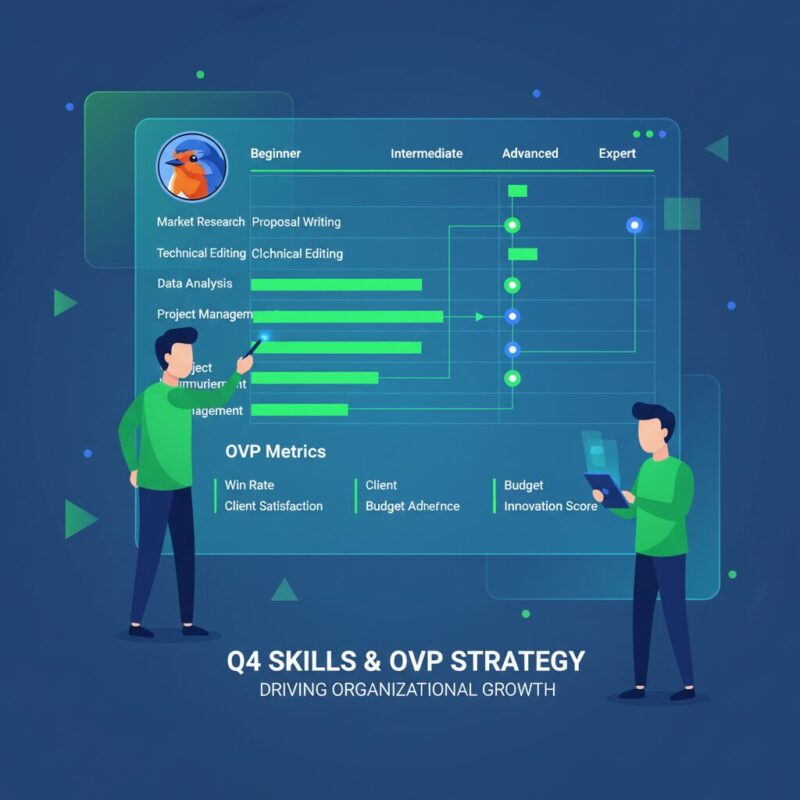
Development Directors must pitch the transition to AI and team upskilling to their Board of Trustees using OVP. Translate the hours saved into clear financial value. Frame AI tools and the skills matrix as capacity-building investments, not administrative overhead. For an authoritative framework on presenting these numbers, Convergent Nonprofit’s guide to ROI and Grant Proposals offers excellent strategies for building a watertight business case for modernized training.
Tracking Success Through Data-Driven Dashboards
Modern teams use centralized software to track these OVP metrics in real time. Dashboards visualize the pipeline, monitor match scores, and provide accurate financial forecasting. This analytics approach allows leadership to adjust strategies mid-year based on performance data. Real-time tracking is also essential for implementing the charity income diversification 33 percent rule, ensuring the organization is never overly reliant on a single funding stream.
Building Your 2026 Grants Operating System
Overhauling a charity’s grant operations requires a methodical approach. Combine the new skills matrix with the right technology stack to build a resilient, efficient system.
Assessing Your Current Tech Stack and Team Burnout Levels
Start by diagnosing the current problems. Conduct an anonymous burnout survey to gauge team sentiment. Audit your current database subscriptions for redundancy and pinpoint exactly where the Drudgery Gap is widest. Are your writers spending their time searching, drafting, or formatting? Understanding this bottleneck dictates which technology to adopt first.
Upskilling the Team: Modern Grant Writer Training Alternatives
Blend traditional accredited training with modern AI-platform onboarding. Traditional certifications provide the baseline ethics and structure. You can reference Zeffy’s breakdown of Best Accredited Grant Writing Certification Programs for legacy standards. However, you must incorporate AI literacy directly into standard onboarding. For a deep dive into the exact technical skills required, review our guide on AI grant writing for nonprofits in 2026. Continuous learning is the only way to manage a fast-paced tech environment.
Action Plan: Rolling out the Skills Matrix Over 90 Days
Implement the matrix using a structured 90-day rollout plan.
- Days 1-30: Audit current workflows and select your platform. Begin a 30-day trial of a dedicated grant management tool.
- Days 31-60: Conduct an initial AI drafting pilot program. Assess your team’s baseline skills against the 2026 matrix.
- Days 61-90: Complete full workflow integration. Establish your OVP metrics and present the initial time-saved data to the board.
Future-Proofing Charity Revenue Streams
The combination of the Skills Matrix and Human-in-the-Loop AI secures your organization’s financial future. By transitioning your team from tactical drafters to strategic partners, you protect your human capital from burnout while dramatically increasing application volume. To begin building this infrastructure today, explore the best free grant writing and management tools for nonprofits to equip your team with the resources they deserve.
Frequently Asked Questions
What is a bid writer skills matrix for nonprofits?
A bid writer skills matrix for nonprofits is a structured framework used by charity teams to evaluate and develop technical, strategic, and AI-enabled competencies for modern fundraising professionals. It replaces outdated evaluation models by focusing on AI prompt engineering, program design, and cross-departmental collaboration capabilities.
How do you transition a grant writer into a strategic partner?
Transition a grant writer into a strategic partner by using AI tools like FundRobin to handle administrative drafting, formatting, and initial prospect research. By eliminating these repetitive tasks, the writer reallocates their time to high-value activities like empathy mapping, logic model design, and building direct relationships with funders.
What is the Drudgery Gap in grant writing?
The Drudgery Gap in grant writing is the excessive time professionals spend on manual formatting, database searching, and compliance checks rather than authentic storytelling and program strategy. This imbalance is the leading cause of burnout and high turnover among development teams in the nonprofit sector.
What is ‘Human-in-the-Loop’ AI for grant writing?
‘Human-in-the-Loop’ AI is a workflow where technology handles initial drafting and grant matching, while human writers retain full control over editing, nuance, and the organization’s authentic voice. This methodology saves up to 80% of drafting time while ensuring ethical compliance and preventing the factual hallucinations common in fully automated systems.
How should nonprofits measure grant writer ROI in 2026?
Measure grant writer ROI using Organizational Value Proposition (OVP) rather than simple ‘dollars-raised’ metrics, factoring in time saved on administration, improved match-score win rates, and staff retention. OVP provides boards with a holistic, accurate view of a development team’s efficiency and strategic impact.
Key Takeaways:
- The “Drudgery Gap” is a leading cause of nonprofit burnout; adopting a 2026 Skills Matrix helps transition bid writers from tactical drafters into AI-enabled strategic partners.
- Implement a “Human-in-the-Loop” AI workflow to save up to 200 hours monthly and reduce proposal writing time by 80% while preserving your charity’s authentic voice.
- Replace outdated “dollars-raised” ROI metrics with Organizational Value Proposition (OVP) to effectively justify professional development and technology budgets to the board.
- High-volume charity teams must prioritize modern technical, strategic, and collaborative benchmarks to secure funding efficiently in highly competitive environments.
