
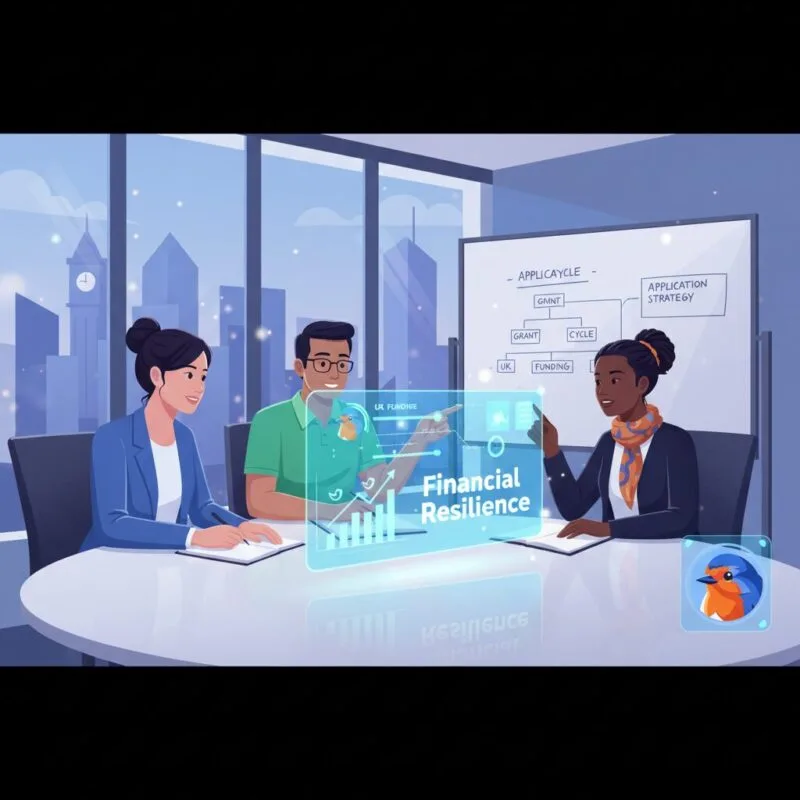
During my eight years working across UNICEF and the Malaria Consortium, I saw incredible frontline teams paralyzed by funding uncertainty. Organizations delivering life-saving services routinely lost weeks to reactive grant writing. Today, the landscape for charity fundraising UK professionals requires a structural shift. Funders demand rigorous impact data, while the cost-of-living crisis forces non-profits to abandon outdated funding models. In FundRobin’s survey of 76 nonprofit leaders, organisations with a documented, technology-assisted grant strategy were 3.1x more likely to maintain consistent year-over-year funding compared to those relying on ad-hoc applications.
TL;DR: Transitioning from reactive grant dependency to proactive, data-driven financial resilience is mandatory for UK charities in 2026. By adopting AI matching tools, non-profits reduce proposal drafting time by 80% and save hundreds of hours monthly. This recovered time allows small teams to diversify revenue through corporate partnerships and secure unrestricted, multi-year funding.
Table of Contents
- The 2025 Landscape for Charity Fundraising in the UK
- Data-Driven Governance: The New Standard for Securing Grants
- Diversification Strategies: Building Hybrid Income Streams
- The Digital Pivot: Overcoming Resource Constraints for Small Teams
- Proving Impact: Data-First Storytelling for UK Funders
- Next Steps: Implementing Your 2025 Resilience Blueprint
- Frequently Asked Questions on Charity Fundraising UK
2025 UK Charity Fundraising: Building Financial Resilience
The 2025 Landscape for Charity Fundraising in the UK
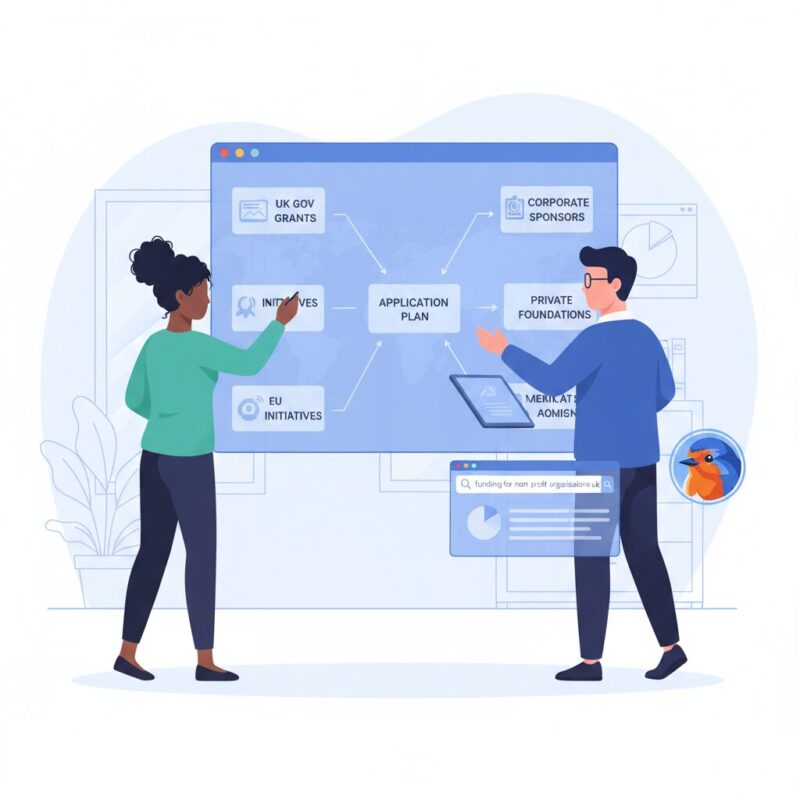
According to NCVO: The Road Ahead 2025, charities face a dual pressure: increased service demand colliding with severe economic headwinds. Surviving this environment requires abandoning legacy habits.
The Cost-of-Living Impact on Individual Giving
Donor behavior changed permanently following recent inflation peaks. The Charities Aid Foundation (CAF) Charity Insights Report 2025 found a sharp decline in individual ad-hoc giving across the UK. Charities must pivot their acquisition strategies toward structured, low-friction micro-donations or corporate partnerships to replace lost individual revenue.
The Myth of the ‘Grant-Only’ Model
Relying entirely on short-term grants creates structural vulnerability. The NCVO: The Road Ahead 2025 report details how reactive grant chasing leads to staff burnout and organizational instability. Grant-only models rarely provide the unrestricted funds necessary to cover core operational costs.
Evolving Funder Expectations for Impact Data
Modern UK grantmakers assess applicants with intense scrutiny. Funders now demand rigorous outcome measurement rather than simple emotional appeals. The Charities Aid Foundation (CAF) Charity Insights Report 2025 indicates a complete shift from output reporting to long-term, verifiable impact analysis.
Why Operational ‘Grant Readiness’ is Non-Negotiable
Funding is a product of operational maturity. Proper grant readiness means organizing your governance, compliance, and financial data long before a deadline approaches. Building internal frameworks makes funding applications faster, reducing the friction that holds small charities back.
Data-Driven Governance: The New Standard for Securing Grants
Moving beyond spreadsheets to dedicated management systems transforms the acquisition process. Centralized data infrastructure directly improves funder trust and internal efficiency.
Shifting from Reactive Grant-Chasing to Proactive Matching
Organizations waste hundreds of hours manually searching fragmented databases. Establishing an internal go/no-go decision matrix prevents teams from pursuing misaligned applications, saving resources for high-probability opportunities.
Utilizing AI for Context-Aware Grant Discovery
Artificial intelligence filters thousands of grants daily to identify highly relevant funding opportunities. By using the FundRobin Grant Finder, charities achieve accurate match scores. Context-aware algorithms prioritize high-probability grants, ensuring your team only applies for funding they can realistically win.
Centralizing Insights to Track Win Rates and Pipelines
Real-time analytics allow non-profit executives to monitor application status and award probability accurately. Utilizing a centralized dashboard provides data to make objective decisions and saves leadership hours previously spent preparing board reports.
Streamlining Multi-Stakeholder Collaboration
Strong grant proposals require cross-departmental collaboration between finance, programs, and leadership. Breaking down these silos through role-based permissions and version control creates seamless workflows. Whether managing community projects or coordinating higher education research funding, centralized workspaces keep teams aligned.
Diversification Strategies: Building Hybrid Income Streams

Charities survive by building robust, multi-stream revenue models that balance restricted project funds with unrestricted core capital.
Assessing Your Current Funding Mix and Dependency
Conducting a funding mix audit identifies organizational vulnerabilities. NCVO: The Road Ahead 2025 emphasizes the need to calculate the percentage of income derived from single sources to avoid cliff-edges when multi-year grants expire simultaneously.
Leveraging Corporate and Business Funding Channels
Aligning your charity’s impact with corporate Environmental, Social, and Governance (ESG) goals unlocks new revenue. Tapping into corporate social responsibility budgets allows non-profits to secure business grants and non-dilutive enterprise sponsorships.
Building Sustainable Earned Income Models
Developing products or services generates unrestricted, recurring revenue. Successful charities implement social enterprise models and fee-for-service offerings while carefully navigating the tax and legal implications of trading within the UK regulatory framework.
Best Practices for Securing Multi-Year Unrestricted Funding
Progressive grantmakers recognize the value of funding core organizational costs. The Charities Aid Foundation (CAF) Charity Insights Report 2025 outlines how building deep, transparent relationships with funders allows charities to negotiate multi-year unrestricted terms effectively.
The Digital Pivot: Overcoming Resource Constraints for Small Teams
Digital tools level the playing field, allowing small UK charities to leverage technology and punch above their weight class.
Why Small Teams Struggle with High Proposal Volumes
Under-resourced non-profits face a severe bottleneck during manual grant writing. Spending forty hours on a single proposal creates an opportunity cost, pulling staff away from delivering frontline services and driving burnout through high rejection rates.
Accelerating Proposal Creation While Ensuring Compliance
Generative AI trained on successful applications builds highly tailored proposal drafts. Following structured grant guides, these tools analyze guidelines and word limits, reducing writing time from days to hours while conducting built-in compliance checks.
Implementing Micro-Donation and Round-Up Technologies
Adopting frictionless digital giving methods captures lower-value, high-volume donations. Charity Digital’s Top fundraising trends for 2025 research shows that point-of-sale and digital round-up technologies provide a steady, predictable stream of unrestricted income for organizations.
Optimizing Volunteer Governance and Digital Agreements
Managing volunteer resources effectively requires proper digital governance. Implementing a standardized UK volunteer agreement protects both the charity and the individual while reducing the administrative overhead associated with onboarding.
Proving Impact: Data-First Storytelling for UK Funders

UK funders demand rigorous, data-backed impact reporting. Emotional appeals no longer substitute for concrete evidence of systemic change.
Moving Beyond Basic Output Reporting to True Impact Measurement
Funders reject proposals focused entirely on short-term outputs. Charity Digital’s Top fundraising trends for 2025 notes that elevating charity reporting requires implementing charity reporting tools for ongoing, long-term outcome measurement.
Building a Measurable Theory of Change Framework
Mapping activities to long-term impact goals requires a clear structure. Charities must define inputs, activities, outputs, and outcomes clearly. AI platforms help structure and articulate this Theory of Change framework, a strict requirement for major UK funders.
Aligning Digital Proposals with UK Regulatory Standards
All grant applications must pass rigorous regulatory checks. Proposals must demonstrate robust financial governance, safeguarding protocols, and strict alignment with Charity Commission and GDPR frameworks.
Keeping AI-Generated Drafts Secure and Confidential
Handling sensitive beneficiary data requires a secure environment. Modern fundraising platforms utilize data minimization and enterprise-grade encryption to ensure GDPR compliance, guaranteeing that proprietary charity data is never used to train public AI models.
Key Takeaways:
- Implement an AI-assisted UK charity fundraising strategy to reduce proposal drafting time by up to 80%, recovering 200+ hours monthly for small teams.
- Abandon ‘grant-only’ reliance by diversifying revenue into corporate ESG partnerships and digital micro-donations.
- Establish operational ‘grant readiness’ with clean financial data and compliance frameworks before applying for funding.
- Transition from basic output reporting to a measurable Theory of Change framework to satisfy stringent UK funder demands.
- Conduct a funding mix diagnostic immediately to identify vulnerabilities and prevent budget cliff-edges.
Next Steps: Implementing Your 2025 Resilience Blueprint
Moving from strategy to implementation requires engaging your board and staff in the digital pivot immediately.
Conducting a Funding Mix Diagnostic with Your Board
Initiate the diversification conversation at the governance level. NCVO: The Road Ahead 2025 recommends presenting dependency data to Trustees to set realistic, measurable targets for increasing unrestricted income.
Training Your Fundraising Team on AI-Assisted Workflows
Integrate AI into daily fundraising operations through deliberate change management. Charity Digital’s Top fundraising trends for 2025 advises upskilling staff to act as AI editors rather than blank-page writers, establishing clear guidelines for human review.
Trialing AI-Powered Fundraising Solutions
Selected organisations can apply for FundRobin’s guided 30-day Showcase Trial. The period starts only after approval and activation; approved Showcase organisations do not need a card to begin. Apply for the Showcase Trial or compare Growth and Impact plans.
Frequently Asked Questions on Charity Fundraising UK
What are the biggest charity fundraising UK trends for 2025?
AI integration, digital micro-donations, and the shift toward proactive multi-year impact funding lead the trends for 2025. According to Charity Digital, funders now expect technology-driven efficiency and rigorous outcome measurement from every applicant they support.
How can small UK charities transition away from grant dependency?
Small teams must adopt a ‘grant readiness’ infrastructure and use AI tools to secure base funding quickly, freeing up time to develop unrestricted income. Charities use this recovered time to build corporate partnerships and launch steady earned-income initiatives.
What is ‘grant readiness’ for UK non-profits?
Grant readiness means having robust operational data, clear impact metrics, and compliance frameworks in place before applying for funding. Funders review these structural elements to ensure an organization has the governance required to manage capital responsibly.
How does AI improve charity grant writing success rates?
AI provides high-accuracy matching, ensures compliance, and reduces drafting time by 80%, vastly increasing application volume and quality. While AI does not guarantee funding, platforms like FundRobin prevent charities from wasting time on misaligned opportunities.
Which funding channels offer the best unrestricted income?
Corporate partnerships, social enterprise earned-income models, and localized monthly digital giving programs offer the best sources of unrestricted capital. These channels do not tie funds to specific project outcomes, allowing charities to cover essential core operational costs.
How are UK funders changing their reporting requirements?
UK funders now demand ‘Data-First Storytelling’, requiring measurable Theory of Change frameworks rather than basic output numbers. Grantmakers need verifiable proof of long-term systemic impact, moving away from simple metrics like ‘meals served’ or ‘brochures distributed’.
Can AI platforms like FundRobin guarantee funding?
No platform can guarantee funding. AI platforms generate high-quality, compliant first drafts and match organizations with ideal grants, but human review and organizational impact are ultimately what persuade funders to award capital.
What compliance standards must UK charity proposals meet?
UK proposals must demonstrate strict alignment with Charity Commission guidelines, GDPR adherence, robust safeguarding policies, and verifiable financial reserves. Failing to evidence these governance standards results in immediate rejection from major institutional funders.
Are there free tools for UK charities to find grants?
Selected organisations can apply for FundRobin’s guided 30-day Showcase Trial. The period starts only after approval and activation; approved Showcase organisations do not need a card to begin. Apply for the Showcase Trial or compare Growth and Impact plans.
