
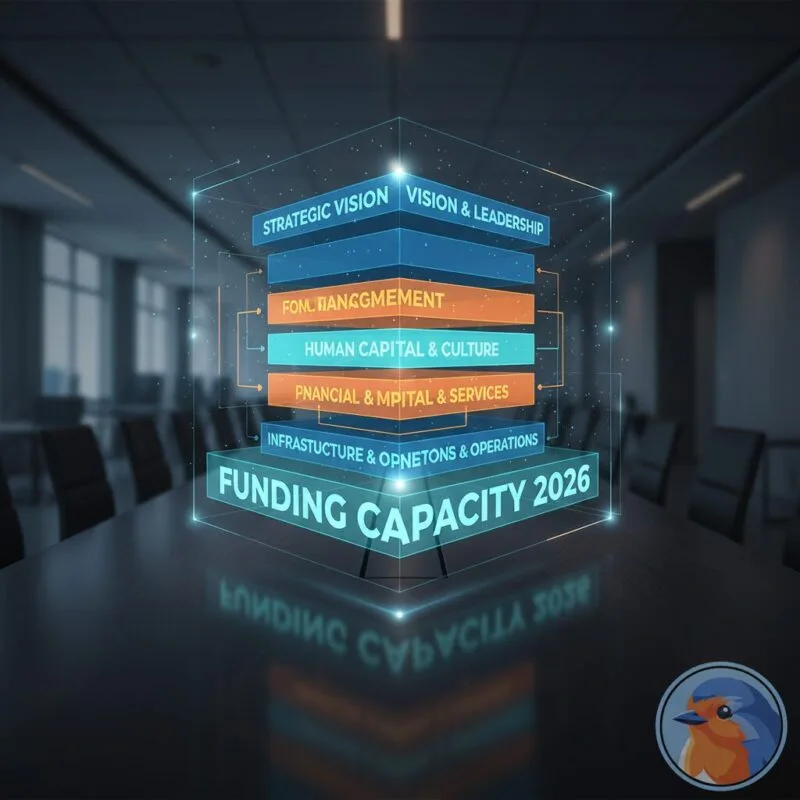
During my years coordinating emergency responses for UNICEF, WFP, and the Malaria Consortium, I saw the exact same pattern repeat across every continent. Dedicated nonprofit teams burned themselves out treating the symptoms of poor infrastructure rather than building sustainable systems. We survived on heroism. But heroism does not scale.
As of May 2026, the nonprofit sector faces a massive federal funding cliff as pandemic-era relief streams expire. Operational heroism is no longer enough. In FundRobin’s recent survey of 58 nonprofits, 74% cited finding the right grant as their biggest operational challenge—yet only 12% used AI-powered matching tools to solve it.
Organizations must pivot toward aggressive capacity building. They need to fund infrastructure, adopt strategic automation, and re-engineer their models for long-term endurance.
TL;DR: Mid-sized nonprofits can survive the 2026 federal funding cliff by investing heavily in organizational development. By upgrading to AI-driven tools like FundRobin to save 200+ hours monthly and securing targeted capacity-building grants, organizations can transition from daily operational burnout to resilient, infrastructure-backed growth.
Table of Contents
- The 2026 Funding Pivot: Why Organizational Development is Mandatory
- What Is Organizational Development? Defining Capacity Building
- The First 3 Pillars of Capacity Building Infrastructure
- The Final 3 Pillars of Organizational Development
- How to Fund Capacity Building: Finding the Right Donors
- Step-by-Step: Implementing Hybrid Human-AI Workflows
- Software Investments: FundRobin Pricing & ROI
- Common Pitfalls in Nonprofit Organizational Development
- Frequently Asked Questions
The 2026 Funding Pivot: Why Organizational Development is Mandatory
Treating capacity building as an optional luxury is a direct path to closure. The financial ecosystem for nonprofits has tightened rapidly, forcing leadership teams to confront fundamental structural weaknesses.
Navigating the 2026 Federal Funding Cliff
Organizations relying heavily on single streams of federal relief are facing severe revenue contraction. According to the National Council of Nonprofits: Capacity Building resources, securing the future requires funding specific activities that improve and enhance a nonprofit’s ability to achieve its mission into the future. A reliance on singular funding streams creates unacceptable vulnerability. Revenue diversification is the only viable defense against this cliff.
Operational Survival vs. Resilience by Design
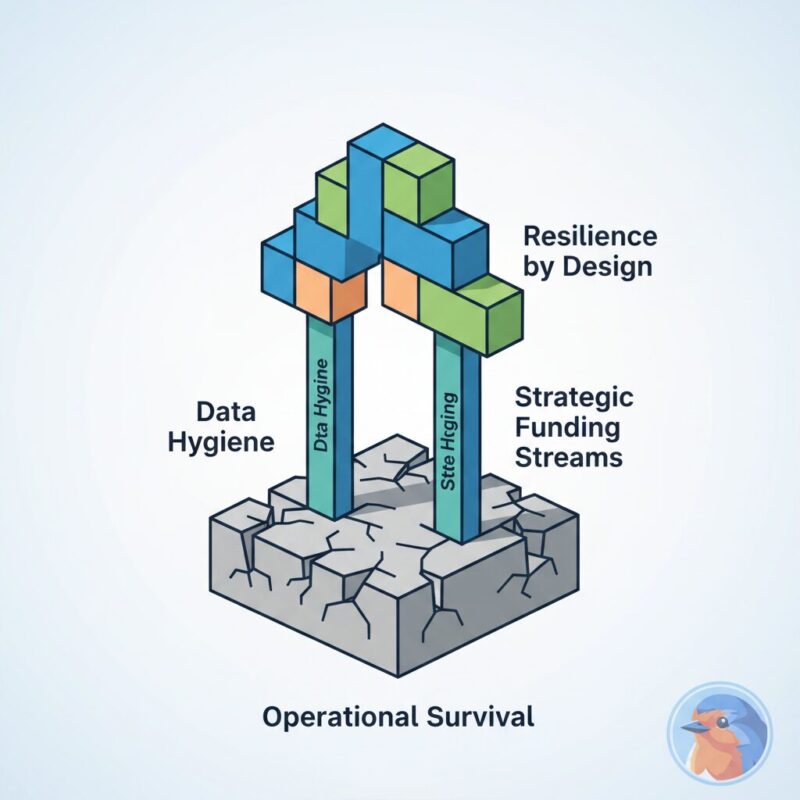
Most development teams live in a state of operational survival. They put out daily fires, chase misaligned grants to meet payroll, and patch together disparate spreadsheets. To survive the coming contraction, you must build resilience by design—which means fundamentally rethinking how your organization operates.
Addressing Nonprofit Staff Burnout Through Automation
Sixty-seven nonprofit development directors recently told us that managing grant deadlines across multiple funders is their single biggest administrative pain point. This manual grant prospecting leads directly to burnout. By introducing AI automation into the prospecting and drafting phases, organizations can eliminate the “drudgery gap” and save hundreds of staff hours annually.
FundRobin offers Growth at £49/month or £470.40/year and Impact at £199/month or £1,910.40/year. Compare current plans. Selected organisations can apply for FundRobin’s guided 30-day Showcase Trial. The period starts only after approval and activation; approved Showcase organisations do not need a card to begin. Apply for the Showcase Trial.
What Is Organizational Development? Defining Capacity Building
Organizational development in the nonprofit sector is entirely different from the corporate HR definition. Corporate HR focuses on profit-driven efficiency and shareholder return. Nonprofit organizational development focuses on mission-critical infrastructure, creating the systemic capacity to deliver impact sustainably.
Moving Beyond Administrative Drudgery
Capacity building redirects human capital away from repetitive data entry and toward strategic thinking. The “drudgery gap”—the chasm between a team’s potential and the administrative tasks keeping them late at the office—steals impact from communities. True organizational development bridges this gap by investing in better systems.
The Power Dynamic Shift: Trust-Based Philanthropy
The funding landscape is slowly evolving to recognize these needs. According to the Trust-Based Philanthropy Project, the sector must address the inherent power imbalances between funders and grantees. Trust-based philanthropy champions unrestricted funding and multi-year support. This model allows organizations to invest in their own development rather than scraping together restricted program funds to cover essential infrastructure.
Defining 2026 Resilience and Data Hygiene
You cannot scale a nonprofit on messy data. Foundational data hygiene is a core pillar of modern capacity building. Without clean, centralized data regarding past programs, budgets, and outcomes, integrating modern AI tools becomes impossible. Resilience requires a pristine digital foundation.
The First 3 Pillars of Capacity Building Infrastructure
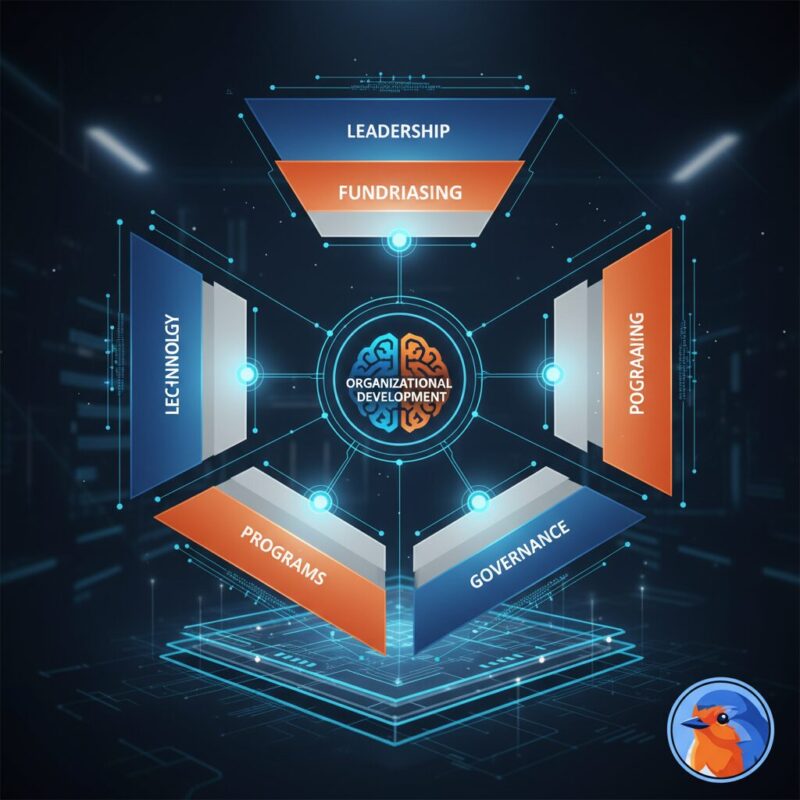
Organizational development requires deliberate investment across six core areas. The first three pillars form the structural engine of your nonprofit. According to Candid: Nonprofit Infrastructure and Capacity Building, underinvesting in these areas severely restricts an organization’s ability to execute its mission.
1. Leadership Development & Team Well-being
Strong programs fail without strong leaders.
- Typical Investment: Executive coaching, board training, and staff wellness programs.
- ROI Signal: Reduced executive turnover, lower hiring costs, and higher staff retention.
- Specific Funders: The Kellogg Foundation and initiatives backed by the National Council of Nonprofits: Capacity Building heavily support leadership infrastructure.
2. Technology & Data Hygiene
Digital transformation is mandatory.
- Typical Investment: Modernizing CRMs, implementing clean data protocols, and adopting AI grant platforms like FundRobin.
- ROI Signal: Saving 200+ hours monthly and reducing proposal writing time by 80%.
- Specific Funders: The Ford Foundation and Robert Wood Johnson Foundation (RWJ) actively fund technological capacity upgrades.
3. Fundraising & Strategic Refusal
Development teams need tools that allow them to say no.
- Typical Investment: Advanced grant prospect research software and specialized development staff.
- ROI Signal: Higher win rates and the elimination of the “drudgery gap” caused by applying for misaligned funding.
- Specific Funders: Major foundations offer targeted capacity-building grants specifically to build sustainable fundraising engines.
The Final 3 Pillars of Organizational Development
The remaining three pillars ensure that your operations remain compliant, measurable, and financially viable over the long term.
4. Governance & Board Dynamics
A disengaged board is an organizational liability.
- Typical Investment: Comprehensive board assessments, strategic alignment workshops, and diversity training.
- ROI Signal: Faster, more aligned strategic decision-making and significantly better fundraising support from directors.
- Specific Funders: Regional community foundations and initiatives aligned with the National Council of Nonprofits often provide governance stipends.
5. Program Evaluation & Impact Measurement
Modern funders require rigorous proof of impact.
- Typical Investment: Theory of Change builders, external evaluators, and impact tracking software.
- ROI Signal: Stronger, data-backed grant proposals and increased trust from major donors.
- Specific Funders: Kellogg and RWJ prioritize clear, measurable outcome frameworks.
6. Continuous Financial Scenario Planning
Annual budgeting is obsolete.
- Typical Investment: Advanced financial modeling tools and fractional CFO services.
- ROI Signal: The ability to navigate unexpected revenue drops (like the 2026 federal cliff) without resorting to layoffs.
- Specific Funders: The Ford Foundation supports efforts that build deep economic resilience.
How to Fund Capacity Building: Finding the Right Donors
You know what you need to build. The next hurdle is securing the capital to build it. Nonprofits must actively prospect for capacity-building grants rather than relying solely on restricted program funding.
Identifying Foundations that Support Infrastructure
Major foundations like Ford, Kellogg, and RWJ have publicly committed to funding overhead and infrastructure. When evaluating a potential funder, review their history through the lens of the Trust-Based Philanthropy Project. Look for organizations that offer unrestricted, multi-year operating support rather than demanding severe restrictions on how every dollar is spent.
Using the USA Grant Finder for Global Opportunities
Geographic diversification protects against local economic downturns. Expanding your funding search beyond regional boundaries is essential for stability. Using tools like the USA Grant Finder allows organizations to identify federal and international opportunities that prioritize structural development.
Applying ‘Strategic Refusal’ to Prospecting
Not all money is good money. “Strategic Refusal” is the practice of confidently declining to apply for grants that require immense reporting burdens but offer low yields. By establishing strict criteria for which grants you pursue, you protect staff bandwidth and focus organizational resources purely on high-ROI opportunities.
Step-by-Step: Implementing Hybrid Human-AI Workflows
Achieving true resilience by 2026 requires integrating AI into your operational infrastructure. Here is the step-by-step roadmap to implement a hybrid human-AI workflow.
Step 1: Conduct a Grant Readiness Assessment
Before applying for major funding, evaluate your current infrastructure. A thorough assessment reveals data gaps, compliance risks, and narrative weaknesses. Complete a Grant Readiness Assessment to establish your baseline before approaching funders for capacity capital.
Step 2: Establish Foundational Data Hygiene
Deploying AI on bad data guarantees bad results. Audit your historical grant applications, budget narratives, and program reports. Centralize this information and remove contradictory data points. Clean data is the fuel that makes AI tools effective.
Step 3: Use a Grant Proposal Generator for First Drafts
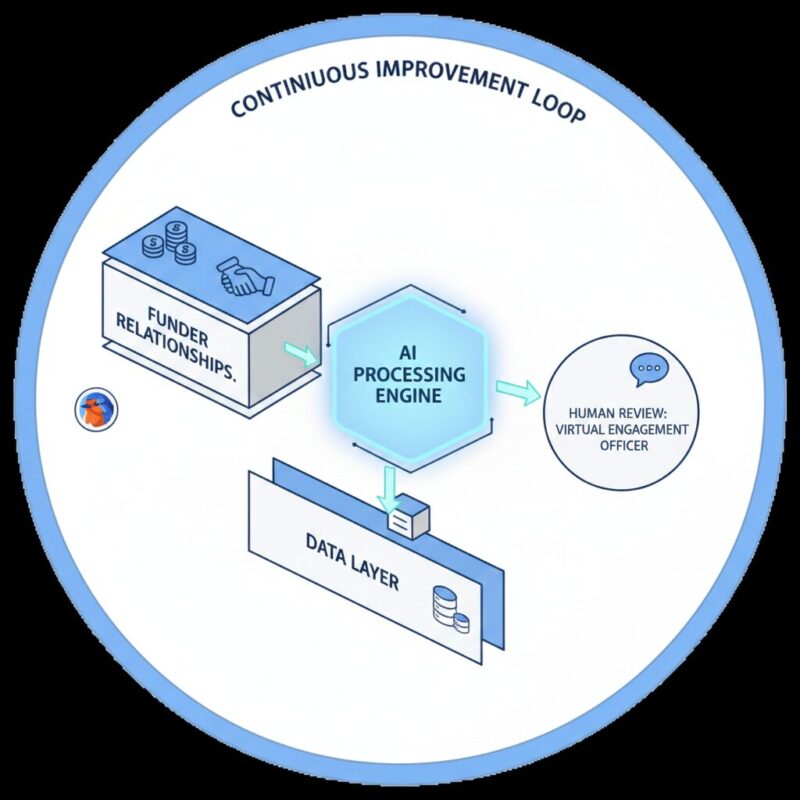
AI handles the heavy lifting of drafting. By using a grounded Grant Proposal Generator, organizations can reduce the time required to write a first draft from 40 hours down to 4 hours. FundRobin’s compliance-checking features ensure that these drafts adhere strictly to the funder’s specific guidelines.
Step 4: Quality Control via Virtual Engagement Officers
AI drafts the framework, but your team reviews, personalizes, and leverages the saved time to actually meet with program officers. We call these staff members “Virtual Engagement Officers.” They use the hours saved by automation to build the human relationships and trust that AI can never replicate.
Software Investments: FundRobin Pricing & ROI
Upgrading a nonprofit’s tech stack requires transparency. FundRobin explicitly structures its pricing to deliver immediate ROI through massive time savings.
Foundation & Growth Tiers: Expanding Your Capacity
For smaller teams starting their automation journey:
- Growth: £49/month or £470.40/year.
- Impact: £199/month or £1,910.40/year.
- Guided Showcase Trial: available by application to selected organisations after approval and activation.
Impact Tier & Custom Solutions for Larger Teams
For established institutions and universities managing high volumes:
- FundRobin offers Growth at £49/month or £470.40/year and Impact at £199/month or £1,910.40/year. Compare current plans. Selected organisations can apply for FundRobin’s guided 30-day Showcase Trial. The period starts only after approval and activation; approved Showcase organisations do not need a card to begin. Apply for the Showcase Trial.
- Custom Tier: Available on request. Offers unlimited proposals, unlimited users, and SSO integration.
Leveraging the 30-Day Growth Trial Strategy
Selected organisations can apply for FundRobin’s guided 30-day Showcase Trial. The period starts only after approval and activation; approved Showcase organisations do not need a card to begin. Apply for the Showcase Trial or compare Growth and Impact plans.
Common Pitfalls in Nonprofit Organizational Development
When attempting to scale, nonprofits frequently fall into predictable traps. According to Candid: Nonprofit Infrastructure and Capacity Building, treating infrastructure as an afterthought is the primary reason organizations fail to scale their impact.
Treating Infrastructure as a Luxury
The “overhead myth”—the toxic belief that spending money on internal systems detracts from the mission—is fatal. Infrastructure is the engine of your impact. Underinvesting in technology, staff retention, and financial planning leads directly to the vulnerability organizations now face regarding the 2026 federal cliff.
Failing to Build a Fundraising Strategy
Engaging in “spray and pray” grant writing is a massive waste of resources. Writing grants without an underlying strategy leads to high rejection rates and staff exhaustion. Organizations must develop a cohesive Fundraising Strategy before writing a single proposal.
AI Hallucinations from Non-Grounded Platforms
Using generic AI tools like ChatGPT for complex grant compliance is dangerous. These tools frequently hallucinate funder guidelines, inventing requirements that do not exist. To avoid this, nonprofits must use grounded AI solutions. The Robin AI Assistant provides factual, cited information linked directly to the uploaded funder guidelines, guaranteeing compliance and safety.
Frequently Asked Questions
What is organizational development in hr versus nonprofits?
While corporate HR focuses on profit-driven efficiency, nonprofit organizational development focuses on mission-critical infrastructure, capacity building, and resilience. Corporate models prioritize shareholder value, whereas nonprofit models prioritize building systems—like diversified fundraising and clean data hygiene—that allow the organization to deliver consistent community impact.
How can nonprofits fund capacity building initiatives?
Nonprofits can fund capacity building by targeting specific infrastructure grants (from funders like Ford or Kellogg) and re-framing overhead as mission-critical resilience. Instead of asking for money to “keep the lights on,” organizations must articulate how investments in software, leadership, and governance will mathematically increase their long-term programmatic output.
What are examples of capacity building grants?
Examples include funds for technology upgrades (like FundRobin), leadership training, board development, and continuous financial modeling. These grants pay for the executive coaching, fractional CFO services, and CRM implementations that organizations need to scale, rather than direct client services.
How much does grant management technology cost?
FundRobin offers Growth at £49/month or £470.40/year and Impact at £199/month or £1,910.40/year. Compare current plans. Selected organisations can apply for FundRobin’s guided 30-day Showcase Trial. The period starts only after approval and activation; approved Showcase organisations do not need a card to begin. Apply for the Showcase Trial.
What is trust-based philanthropy?
Trust-based philanthropy is a model that prioritizes unrestricted funding and multi-year support to build nonprofit capacity without burdensome reporting. It aims to correct the traditional power imbalance between funder and grantee, trusting nonprofit leaders to allocate capital where it is most needed—including administrative infrastructure—to achieve their mission.
Key Takeaways: Strategic Implementation
- Capacity building requires shifting your narrative: position technology, governance, and leadership investments as ‘mission-critical infrastructure,’ not overhead.
- Implement continuous scenario-based financial planning rather than relying on obsolete annual budgets to navigate the 2026 cliff.
- Adopt grounded AI tools to avoid hallucinations; the Robin AI Assistant prevents compliance failures while saving your team hundreds of hours.
True organizational development is the rejection of the status quo. It is the refusal to accept burnout as a normal operational state. By systematically funding your infrastructure, implementing strategic refusal, and adopting hybrid human-AI workflows, your nonprofit will do more than survive the 2026 funding cliff—it will scale its mission with unprecedented efficiency.
