
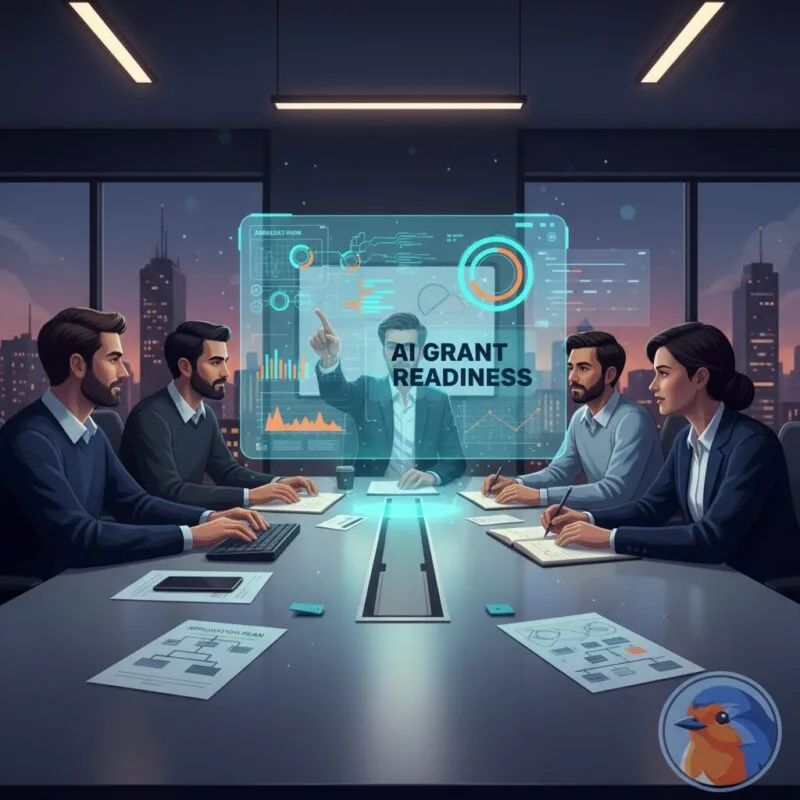
During my decade executing £200M+ transformation strategies for FTSE 100 clients, I learned a simple truth: manual data entry destroys organizational capacity. Today, the nonprofit sector faces this exact crisis. May 2026 data from FundRobin’s survey of 67 nonprofit development directors reveals that managing grant deadlines across multiple funders is their single biggest administrative pain point. The traditional approach to securing funding is broken, and patching it with more manual effort is no longer an option.
TL;DR: Overcome administrative burnout and low success rates by shifting from manual grant writing to a scalable, AI-powered data flywheel. This strategic framework maximizes funding ROI, turning scattered impact data into targeted, compliant proposals that secure sustainable, multi-year funding partnerships.
The 2026 Shift: Escaping the Nonprofit “Drudgery Gap”
AI Grant Readiness: A Sustainable Finance Framework
The “Drudgery Gap” is the massive administrative burden of manual grant prospecting, writing, and reporting that overwhelms nonprofit teams. In 2026, relying on spreadsheets and starting every proposal from a blank page is a direct path to failure. Funders demand higher levels of compliance and impact measurement, pushing development teams past their absolute limits. Organizations must abandon broad “spray and pray” application methods and adopt highly targeted, relational funding models powered by intelligent data.
The 16-Month Burnout Cycle in Grant Operations
The average tenure of a nonprofit development professional is just 16 months. This rapid turnover is not a personal failure; it is a systemic flaw. Fragmented organizational data prevents consistent proposal generation, forcing writers to reinvent the wheel for every application. The mental toll of constant rejection paired with an unmanageable administrative load drives top talent out of the sector. According to the Grant Professionals Association (GPA), achieving basic grant readiness requires a baseline of organized historical data—a standard that manual systems simply cannot maintain in a fast-paced funding environment.
Transactional vs. Relational Funder Engagement
The old model of submitting generic applications to hundreds of foundations is dead. Today, securing funding requires deep mission alignment and relational engagement. However, finding the exact right funder takes hundreds of hours manually. True mission alignment means understanding the implicit requirements of a funder’s portfolio, not just skimming their website. Nonprofits need systems that parse this complex contextual data rapidly, allowing human operators to spend their time building actual relationships with program officers rather than drowning in search queries.
Why a New Sustainable Finance Framework is Necessary
A modern sustainable finance framework connects internal impact data directly to funder narratives efficiently and securely. When you operate with separate CRMs, standalone spreadsheets, and isolated Word documents, that framework breaks down. Information gets lost, metrics go unreported, and proposals lose their persuasive power. True financial sustainability requires predictable, scalable grant pipelines that function independently of any single staff member’s personal hard drive.
Benchmarking Your Organization’s Grant Readiness Maturity
Grant readiness is no longer just about holding a 501(c)(3) or charitable status. It requires actionable, deployable data. The Grant Readiness Maturity Model functions as a diagnostic tool to assess where your operations currently stand, highlighting the exact steps needed to integrate AI successfully.
Level 1: Reactive and Manual Operations
Organizations at Level 1 operate entirely in survival mode. Development teams conduct manual database searches and face a blank page every time a deadline approaches. This reactive stance leads to missed deadlines, poor formatting, and remarkably low success rates. Heavy reliance on individual heroics rather than institutional systems traps teams in a cycle of diminishing returns.
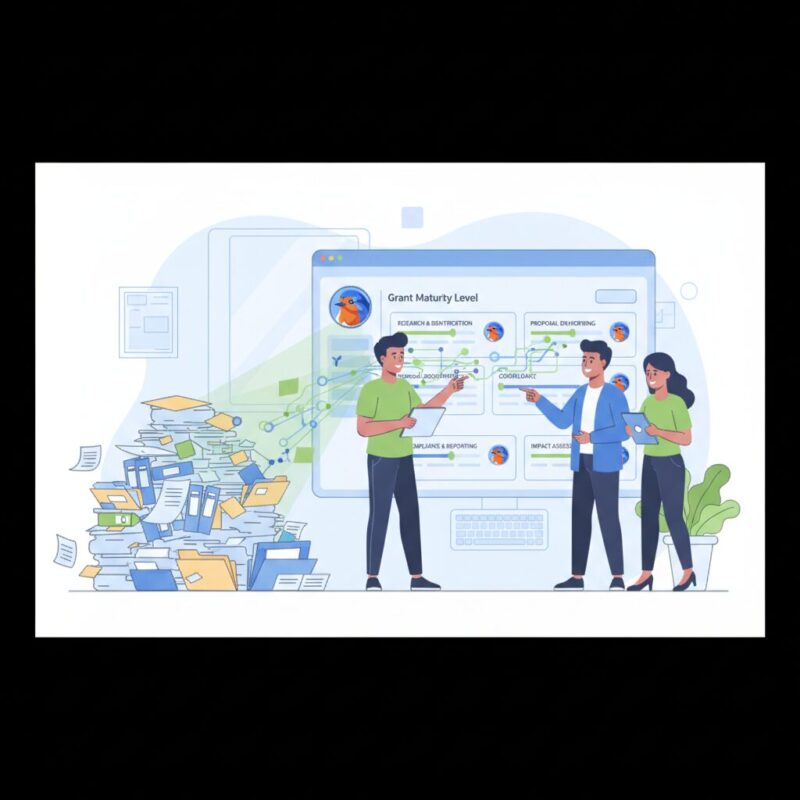
Level 2: Standardized but Siloed Workflows
At the intermediate level, processes exist, but they lack integration and intelligent automation. Teams use generic project management software, yet financial data remains disconnected from narrative outcomes. Compliance with regional standards requires tedious manual oversight. For example, maintaining accurate reporting for the Charity Commission, as outlined by FundRobin UK, demands significant administrative overhead when historical data cannot be instantly adapted to new funder templates.
Level 3: The AI-Enabled Strategic Flywheel
The ideal state of grant readiness occurs when centralized data and AI seamlessly interact to accelerate funding. In this Level 3 environment, organizations utilize adaptive learning tools that improve match accuracy over time based on feedback. The AI drafts the baseline proposals and identifies the strongest targets, shifting human effort away from initial drafting and entirely toward strategic relationship building and narrative refinement.
Building Your Internal Data Flywheel with AI
An internal data flywheel operates on a simple mechanic: internal data combined with AI matching and automated drafting equals exponentially higher success rates. By connecting these elements, mid-sized organizations can eliminate the 200+ hours typically wasted on manual discovery. The AI acts as a highly sophisticated assistant that generates compliant first drafts, leaving the nuanced final polish to your human experts.
Centralizing Impact Data for Funder Narratives
The first step is preparing your organizational data—budgets, past successes, and theory of change—so an AI can utilize it securely. You must create a centralized repository of approved organizational narratives. Structuring this data for Large Language Model (LLM) consumption requires strict security protocols. Grant tech must utilize AES-256 encryption and maintain absolute GDPR compliance. Your proprietary data should never be used to train broad, public AI models.
Automating Discovery with Smart Grant Matching
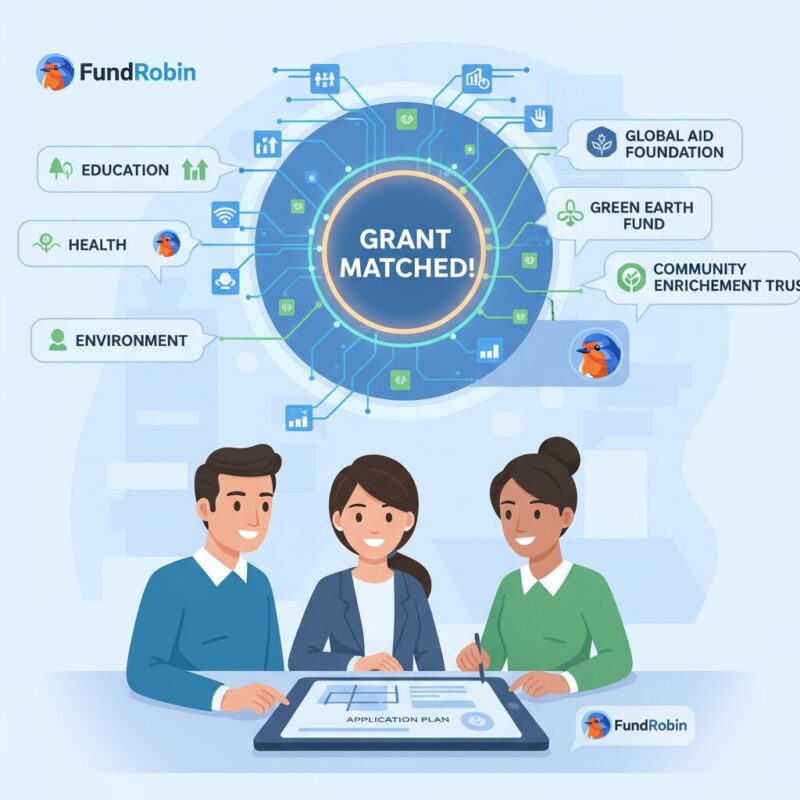
Manual database searches fail because they rely on basic keywords. Natural Language Processing (NLP) goes further, understanding context to match concepts like “disadvantaged youth” with a funder looking for “at-risk teenagers.” According to the FundRobin Grant Database, NLP algorithms provide a 0-100% accuracy matching score, allowing teams to prioritize outreach based on statistical probability. Accessing a comprehensive, real-time grant database ensures your team never misses a relevant deadline. Using a dedicated FundRobin Grant Finder automates the most tedious part of the prospecting lifecycle.
Closing the Gap with Smart Proposal Generation
Once a highly-matched opportunity is identified, AI translates those requirements into a tailored first draft. LLMs trained on successful application structures can draft comprehensive executive summaries and line-item financial narratives in minutes. A May 2026 analysis from the FundRobin Budget Justification toolkit found that applications with a narrative budget justification were 2.8x more likely to progress past the first review. AI handles the automated compliance checking against specific guidelines, requiring humans only for the final 20% of strategic editing.
Strategic Upskilling: AI Software vs. A Sustainable Finance Course
Many nonprofit leaders mistakenly believe that sending their development directors to a sustainable finance course will solve their funding shortfalls. While education is valuable, you must weigh the time-to-value of theoretical coursework against the immediate operational ROI of deploying AI-driven grant software.
Is a Sustainable Finance Course Enough for Your Team?
A sustainable finance course offers excellent macroeconomic theory and strategic frameworks. However, theory does not automatically draft proposals, locate niche funders, or parse complex compliance documents. For overwhelmed teams, adding coursework without removing the administrative burden often exacerbates burnout. A sustainable finance course teaches you the destination, but AI-enabled software provides the vehicle to actually get there.
Measuring the Financial ROI of AI-Assisted Workflows
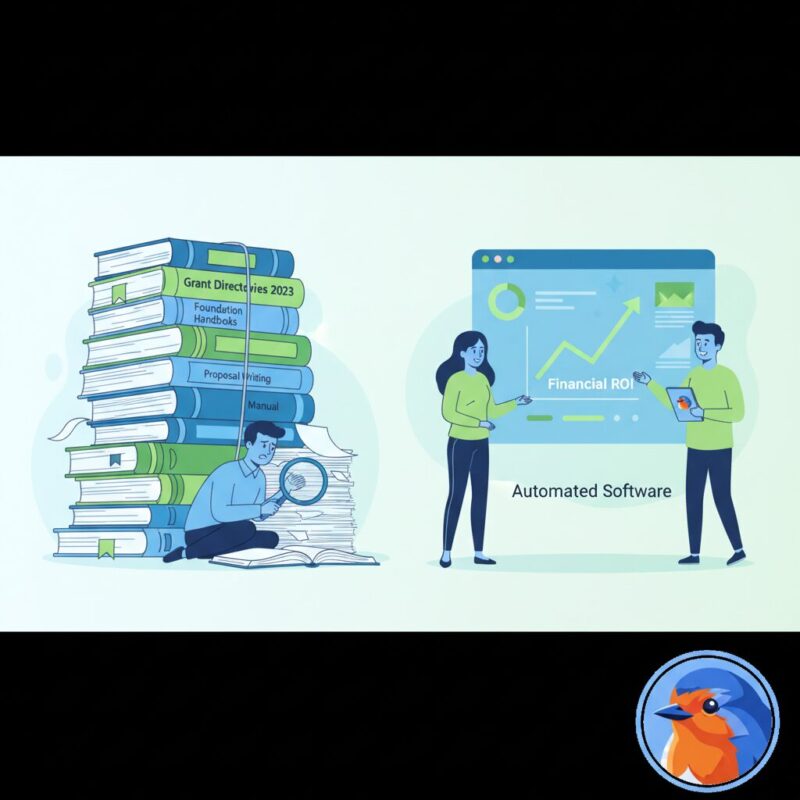
The business value of AI grant tools becomes obvious when you calculate the hard costs. Multiply the hours spent on manual proposal writing by your staff’s hourly rate. Then, factor in the financial impact of increasing your volume of high-quality submissions. An AI assistant provides instant, grounded answers based exclusively on your proprietary data—eliminating hallucination risks while reducing proposal creation time from 40 hours down to just 4 hours. This translates directly to reduced overhead and increased grant revenue.
Investing in Scalable Platforms for Immediate Returns
FundRobin offers Growth at £49/month or £470.40/year and Impact at £199/month or £1,910.40/year. Compare current plans. Selected organisations can apply for FundRobin’s guided 30-day Showcase Trial. The period starts only after approval and activation; approved Showcase organisations do not need a card to begin. Apply for the Showcase Trial.
Frequently Asked Questions
How do I build a sustainable finance framework for a nonprofit?
Build a sustainable finance framework by executing a three-step process: assessing organizational maturity, centralizing impact data, and integrating AI tools to automate proposal generation. First, audit your current workflows to identify manual bottlenecks. Then, secure your historical data in an encrypted repository. Finally, deploy a closed-loop AI platform like FundRobin to match opportunities and draft compliant reports, transforming unpredictable grant cycles into a scalable revenue engine.
Will a sustainable finance course help me win more grants?
A sustainable finance course provides excellent foundational strategy, but implementing AI-driven grant writing platforms offers much faster, measurable ROI for winning grants. Courses require hundreds of hours of study and do not solve the immediate problem of proposal drafting. AI directly reduces the manual drudgery gap, increasing your funding win rates by automating the execution of the strategy you already possess.
How can AI solve the nonprofit drudgery gap in grant writing?
AI solves the drudgery gap by using Natural Language Processing to surface highly relevant grants and automatically generate compliant first drafts. Tools like FundRobin save development teams up to 200 hours monthly by eliminating blank-page drafting and manual database scrolling. This automation allows grant professionals to redirect their energy toward editing, relationship building, and high-level strategy, actively preventing the 16-month burnout cycle.
What is a grant readiness assessment?
A grant readiness assessment is a diagnostic audit of a nonprofit’s capacity to find, apply for, and manage external funding. As of 2026, modern assessments have shifted to include AI-readiness and data centralization as core components. It evaluates whether your organization has the historical data, compliance tracking, and automated workflows necessary to compete in an increasingly data-driven philanthropic landscape.
How does FundRobin compare to traditional grant search methods?
FundRobin outperforms traditional methods by using contextual NLP matching rather than basic keyword searches across its database of 1,200+ active opportunities. Traditional searches require human operators to manually read and vet hundreds of misaligned foundation profiles. FundRobin acts as a 24/7 AI assistant that scores matches from 0-100%, never hallucinates, and cites all sources directly from your centralized data.
FundRobin offers Growth at £49/month or £470.40/year and Impact at £199/month or £1,910.40/year. Compare current plans. Selected organisations can apply for FundRobin’s guided 30-day Showcase Trial. The period starts only after approval and activation; approved Showcase organisations do not need a card to begin. Apply for the Showcase Trial.
Systemic Resilience: Designing a Sustainable Grant Strategy
Systemic resilience means your organization thrives even when key personnel leave. By freeing up time via AI, teams can focus on high-value, collaborative tasks that build long-term sustainability.
Collaborative Workspaces for Multi-PI and Cross-Department Teams
Managing complex, multi-disciplinary grants requires seamless collaboration. Historically, research compliance and cross-departmental efforts bogged down in email chains and version control nightmares. Centralized AI dashboards provide role-based views, ensuring everyone from finance to program delivery operates from the same approved data set. This allows leadership to manage an institutional portfolio strategy holistically.
Vetting Funders for True Mission Alignment
AI-driven analytics help you identify which funders are actually worth your limited time. By analyzing historical win rates and accuracy scoring, teams can prioritize outreach efficiently. Research from Grant Station proves that aligning funder priorities directly impacts success rates. AI helps you avoid mission drift by instantly filtering out misaligned applications, allowing you to focus exclusively on highly relevant FundRobin Charitable Organizations grants.
Transitioning to Long-Term Funding Partnerships
The ultimate goal of the AI Data Flywheel is not just to submit more applications, but to cultivate multi-year relationships. The AI handles the operational drudgery; your humans handle the relationships. By using precise data to provide timely reporting to existing funders, you prove your reliability. Scaling sustainable funding requires this exact balance—leveraging intelligent tech to create the space for authentic human impact.
