

In my eight years navigating the nonprofit sector across UNICEF, the WFP, and the Malaria Consortium, I saw firsthand why traditional grant discovery fails. Brilliant charities lose out not because their work lacks merit, but because they stumble on technical compliance. Today, funders evaluate your operational stability before they ever look at your social mission.
As of May 2026, charity regulations have tightened funder expectations entirely. Good governance is no longer optional; it is the absolute baseline for entry. In FundRobin’s recent survey of 39 UK charities, 54% had never formally documented their reserves policy — leaving them immediately disqualified from demonstrating financial resilience to major funders.
TL;DR: UK grant eligibility in 2026 goes beyond proving need. Funders now require strict governance, including a minimum of three unconnected trustees, clear governing documents, and preparation for the upcoming £1.5M SORP audit thresholds. AI platforms like FundRobin streamline finding and securing these complex opportunities, saving teams 200+ hours monthly.
The Baseline: Core Legal & Governance Requirements for UK Charities (2026)
UK Charity Grant Eligibility & 2026 SORP Requirements
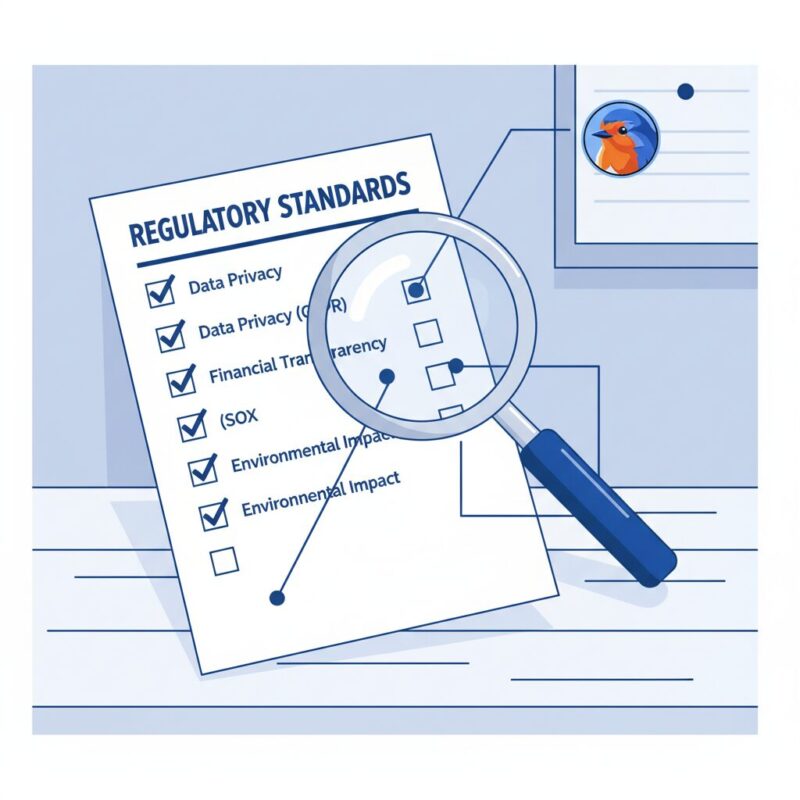
Before you write a grant proposal, funders screen your organizational structure. They require immediate proof of objective decision-making and legal compliance.
The ‘Three Trustees’ Rule and Your Governing Document
The strict requirement for UK grant eligibility is a minimum of three unconnected trustees and a legally sound governing document (like a constitution or trust deed). Unconnected trustees—meaning they are not related by blood, marriage, or business partnership—prove to funders that your charity maintains objective financial oversight. If a husband and wife sit on a board of three, most automated funder portals will immediately reject the application.
Registration Status: Navigating the Charity Commission
While grassroots community groups can win micro-grants, accessing serious funding requires official registration. According to the Charity Commission for England and Wales (Guidance & Regulation), mandatory registration triggers once an organization hits the £5,000 income threshold. Once registered, you unlock larger UK charity grants that are strictly closed to unregistered entities and Community Interest Companies (CICs).
Essential Safeguarding Policies and Volunteer Frameworks
Funders view safeguarding as a universal requirement in 2026. Even if your charity focuses on environmental conservation rather than vulnerable youth, you still manage volunteers and public interactions. You must have formalized structures in place. Implementing a proper UK Volunteer Agreement tool ensures you protect both your staff and your organization from liability.
Why ‘Good Governance’ Outweighs Simple Need
Emotional appeals no longer win six-figure grants. According to the Fundraising Regulator (Code of Fundraising Practice), ethical governance and operational stability mitigate risk. Funders act like investors; they want to know your charity will survive the next five years to deliver on the promises made in your proposal.
Surviving the 2026 SORP Shift: Audit Thresholds and Financial Eligibility

Financial transparency is the second major hurdle for eligibility. The upcoming changes to financial reporting will severely impact Tier 2 charities (those in the £500k–£1.5m bracket).
Understanding the New September 2026 Audit Requirements
The regulatory landscape shifts dramatically in September 2026. The Charities SORP (Statement of Recommended Practice) is changing how charities must report income and assets to maintain compliance. Charities must adopt these new accounting practices daily, not just at year-end, to pass the preliminary financial screening for major grants.
How the £1.5m Income Threshold Impacts Eligibility
The proposed shift moves the mandatory audit threshold to £1.5m. According to UK Government Charities & Tax Guidance, charities crossing this line face intense financial scrutiny. Funders view charities hovering just below this threshold with caution, often requiring voluntary audits to prove financial competency before awarding major multi-year grants.
Transitioning to Impact-Driven Financial Narratives
Funders now demand “Impact-Ready” reporting. Activity-based reporting tells a funder what you bought (e.g., “We purchased 50 laptops”). Impact-driven reporting explains what changed (e.g., “We increased digital literacy for 50 seniors by 40%”). You must structure your budget narratives around this social return on investment to remain eligible for top-tier funds.
Tactical Steps for FRS 102 and SORP Compliance
Aligning your operations requires immediate action:
- Audit your current reserves policy against the 2026 standards.
- Upgrade your digital accounting tools to ensure real-time reporting.
- Review FundRobin’s comprehensive guide to FRS 102 and the new SORP to map your exact transition timeline.
Proving ‘Impact-Readiness’: What Major UK Funders Actually Want
Winning applications go beyond financial compliance. Modern funders demand qualitative proof of “Impact-Readiness” and strategic grant readiness, focusing on digital infrastructure, environmental consciousness, and community involvement.
Defining ‘Digital Resilience’ Without the High Overhead
Funders use “digital resilience” to describe an organization’s ability to handle data securely and operate efficiently. You do not need an enterprise-level IT budget to prove this. Demonstrating strict GDPR compliance, utilizing secure cloud-based workflows, and maintaining basic cybersecurity protocols satisfies most funder requirements for digital competence.
The Hidden ESG Metrics Mandated by 2026 Funders
Environmental, Social, and Governance (ESG) criteria are quietly becoming mandatory in UK grant applications. Even hyper-local charities must now explain how they reduce their carbon footprint (Environmental), ensure diverse board representation (Social), and manage funds ethically (Governance). Frame your existing practices using this terminology to meet funder expectations.
Authentic Community Engagement and Participatory Grantmaking
Funders want proof that you involve the community in your decision-making. According to the National Council for Voluntary Organisations (NCVO), participatory grantmaking requires lived experience. Your proposal must document how the target community actively designed the project, moving away from a “savior” narrative to a collaborative model.
Understanding the Office for the Impact Economy
The emerging Office for the Impact Economy signals a macro-level shift in UK government focus. Government funding priorities rapidly trickle down to independent trusts and foundations. Charities that align their mission narratives with broader economic impact and community wealth-building will find themselves eligible for a much wider pool of government-backed funding.
How to Accelerate Grant Discovery and Secure Non-Dilutive Funding
The 2026 eligibility criteria are complex, and navigating them manually drains resources that should go toward your mission. Technology acts as a force multiplier for small teams fighting for non-dilutive funding.
Overcoming the 200-Hour Manual Search Barrier
Organizations waste up to 200 hours a month manually searching fragmented databases for grants they ultimately do not qualify for. This manual grind leads to missed deadlines and the emotional toll of low success rates. You cannot afford to spend weeks analyzing criteria only to discover a minor governing document error disqualifies you.
Using AI for Smart UK Grant Matching
FundRobin’s Smart Grant Matching uses Natural Language Processing (NLP) to contextually align your exact charity profile with over 1,200 active opportunities. Instead of relying on keyword searches, the Grant Finder tool provides a 0-100% accuracy matching score, ensuring you only apply for funds where you meet every strict 2026 requirement.
Expanding Your Horizon: Eligibility for US and Global Grants
UK charities are not restricted to domestic funding. International funders actively seek competent UK partners. The platform easily adapts to identify your eligibility for EU, Australian, and US specific funding opportunities, expanding your horizon without requiring you to learn foreign compliance laws from scratch.
Cost-Effective Tools to Scale Proposal Generation
Selected organisations can apply for FundRobin’s guided 30-day Showcase Trial. The period starts only after approval and activation; approved Showcase organisations do not need a card to begin. Apply for the Showcase Trial or compare Growth and Impact plans.
Frequently Asked Questions
Do charities need exactly three trustees to be eligible for UK grants?
Yes, most UK grant funders strictly require a minimum of three unconnected trustees to ensure objective financial oversight. If trustees are related by marriage or business, funders view the board as compromised and will typically reject the application during the preliminary compliance check.
What is the new charity audit threshold for 2026?
The proposed 2026 shift moves the mandatory income threshold for charity audits to £1.5M. Charities crossing this line must undergo rigorous formal audits, while those just below it often face increased pressure from major funders to provide voluntary audits as proof of financial stability.
What counts as a governing document for grant applications?
A governing document is a formal legal framework—such as a constitution, trust deed, or articles of association—that outlines your charity’s specific purpose and operational rules. Funders require this document to confirm that your legal mission aligns exactly with their funding objectives.
Can I get a UK grant if my charity is not registered?
While unregistered community groups can apply for charity grants in the form of micro-grants, they face severe funding limits, usually capped at £5,000. Reaching the threshold to officially register with the Charity Commission is required to unlock large-scale, multi-year funding opportunities from major trusts and foundations.
Can AI actually write a compliant UK charity grant proposal?
AI tools like FundRobin provide highly accurate, compliant first drafts by matching your organizational data against successful grant frameworks. While human oversight is necessary for the final review, the technology reduces writing time by 80% and ensures no mandatory funder criteria are accidentally missed.
Key Takeaways:
- Prepare immediately for the 2026 Charities SORP shift and the £1.5M audit threshold to remain attractive to major funders.
- Ensure your governing documents are current and you maintain a minimum of three unconnected trustees to pass automated screenings.
- Transition your financial reporting from activity-based metrics to outcome-driven “Impact-Readiness” narratives.
- Stop wasting 200+ hours monthly on manual database searches; utilize AI matching platforms to target only the grants you are strictly eligible to win.
Conclusion
Securing UK charity grants in 2026 demands far more than a compelling social mission; it requires a bulletproof foundation of legal governance and financial transparency. By upgrading your operational standards to meet the new SORP thresholds and leveraging AI to eliminate the manual search burden, you position your organization to thrive. Audit your baseline compliance today, implement strict reporting standards, and let technology handle the heavy lifting of your next major application.
