
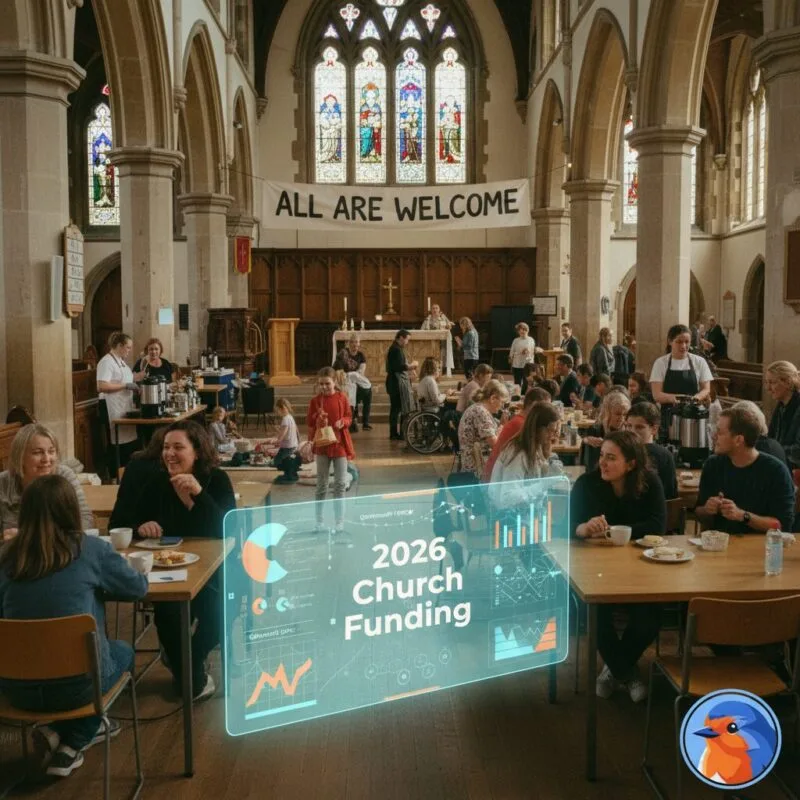
During my eight years coordinating emergency responses and managing capital across the international nonprofit sector, I learned a hard truth. The most well-intentioned community work fails when administrators rely entirely on reactive strategies and volunteer burnout to secure revenue. In FundRobin’s survey of 58 nonprofits, 74% cited finding the right grant as their biggest operational challenge—yet only 12% used AI-powered matching tools. According to Grantsights: Grants for Churches: Federal & Private (2026), the capital available for faith-based community impact is expanding rapidly, but accessing it requires a fundamental shift in operations.
TL;DR: Navigating church funding in 2026 requires moving from volunteer-led efforts to a professionalized, AI-assisted strategy. By establishing grant-ready infrastructure, faith-based organizations can access growing federal security pools like the NSGP and secular foundation money without compromising their religious identity, while potentially saving 200+ hours monthly through automation.
Table of Contents
- The 2026 Landscape of Church Funding: Moving Beyond the Scarcity Mindset
- Establishing a Grant-Ready Faith Infrastructure
- Navigating Security Grants and Government Funding
- Unlocking Private Social-Impact and Community Funds
- Automating the Church Funding Pipeline for Maximum ROI
- Frequently Asked Questions
Church Grant Strategy 2026: Professional Funding Guide
The 2026 Landscape of Church Funding: Moving Beyond the Scarcity Mindset
Many religious organizations operate under a scarcity mindset, relying exclusively on congregational tithes. As traditional religious giving fluctuates, a proactive pursuit of secondary revenue streams is no longer optional. Federal and private secular bodies are increasing allocations for community impact programs run by faith groups.
The highest hurdle faith-based organizations face is not a lack of available capital, but a heavy reliance on volunteer grant writers who quickly burn out under the weight of manual prospecting.
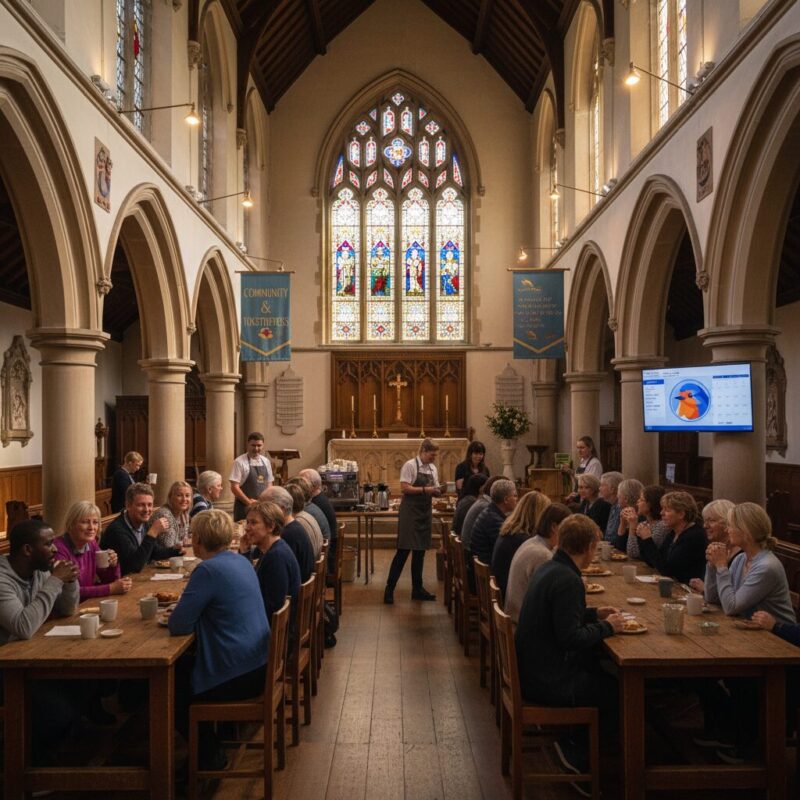
Analyzing Shifts in Federal and Secular Church Funding
Macro-economic shifts and updated policy frameworks have created a “level playing field” for religious institutions. State and federal agencies now allow faith-based organizations to compete for dollars on equal footing with secular nonprofits, provided the funds are strictly demarcated for non-religious community services.
These initiatives primarily target emergency relief, local development, and disaster recovery. Administrators must tap into the broader scope of grants for charitable organizations to build sustainable budgets.
What Types of Grants Are Available for Churches?
Churches can access three primary categories of funding: Infrastructure and Security grants (for physical upgrades and threat deterrence), Community Social Services grants (for food banks, youth programs, and shelter), and Historic Preservation grants (for structural repairs to legacy buildings).
Funding for inherently religious activities—like worship services or proselytizing—is almost universally disqualified by secular grantmakers. Conversely, community benefit activities are highly qualified. Small capacity-building grants offer the best starting point for organizations building their application history.
Overcoming Volunteer Grant Writer Burnout with AI
Volunteer attrition rates skyrocket when individuals face the fragmented, labor-intensive reality of finding funding. Scouring databases manually drains time and morale.
FundRobin provides a direct solution to this constraint. By moving from manual searching to AI-powered discovery, organizations reclaim 200+ hours a month. At £159/month for the Growth tier, churches secure multi-user access and generate five highly targeted proposal drafts monthly. This investment delivers immediate ROI by producing professional results at a fraction of the cost of hiring dedicated staff.
Establishing a Grant-Ready Faith Infrastructure
Finding opportunities is entirely secondary to being legally and operationally ready to accept them.
Key Takeaways: Implementation ROI
- Implement centralized document management immediately—organized SOPs cut application writing time by 50%.
- Transition from narrative-only reporting to hard quantitative metrics (e.g., “served 400 meals” instead of “helped the hungry”) to satisfy secular funder requirements.
- Create distinct accounting ledgers to separate restricted community grants from unrestricted tithes, preventing catastrophic audit failures.
- Expect a 12-to-24 month return timeline when building a sustainable funding pipeline; avoid reactive “emergency” grant writing.
Transitioning to Data-Driven Grant Administration
Funders demand more than compelling stories. They require statistics integrated with those stories. You must provide exact numbers: demographic reach, hours tutored, and people sheltered.
Establish simple tracking frameworks, such as a localized theory of change, for your outreach programs. According to Instrumentl’s Grant Readiness Checklist, professionalized tracking directly correlates to higher success rates in securing institutional capital. Moving your ministry reporting to hard quantitative metrics transforms your organization from a well-meaning charity into an accountable community partner.
SOPs for Centralized Church Document Management
Disorganized paperwork causes churches to miss hard deadlines. Develop Standard Operating Procedures (SOPs) for maintaining a digital repository of core documents.
Keep the following updated and instantly accessible: 501(c)(3) or equivalent charity commission letters, three years of audited financials, an active board of directors list, and nondiscrimination policies. Research from Cloudvara regarding Grant Management Best Practices shows that organizing these documents in advance eliminates the institutional knowledge gap caused by volunteer turnover.
Maintaining Religious Identity While Meeting Secular Audit Standards
The most common pain point for faith leaders is the fear that secular funding will dilute their religious identity. The solution lies in the “Translation Layer”—the ability to map spiritual missions to secular, data-driven reporting requirements.
When applying for a grant, translate your “feeding ministry” into “food insecurity mitigation.” You are not changing your core work; you are changing the vocabulary used to report it. Furthermore, you must maintain absolute accounting separation. Grant funds must be used exclusively for the permitted community service and never commingled with general tithes. This precise data organization is essential for strategic AI orchestration and multi-PI grants.
Navigating Security Grants and Government Funding
Federal security funding represents one of the most critical and lucrative avenues for faith groups today.
2026 Eligibility Requirements for the NSGP
The Nonprofit Security Grant Program (NSGP) is a primary target for medium-to-large religious organizations. According to CA.gov’s 2026 Funding for Faith-Based Organizations, state and federal agencies are heavily prioritizing the protection of vulnerable community spaces.
Administrators must understand the difference between NSGP-Urban Area (UA) allocations and NSGP-State (S) allocations, which depend entirely on your geographic location. The core eligibility requirement is demonstrating that the organization is at high risk of targeted violence. You must also maintain an active Unique Entity Identifier (UEI) on SAM.gov. If you operate in America, understanding how to secure capital across the USA is critical for federal compliance.
Preparing Vulnerability Assessments and Justification Data
When applying for federal security grants, a completed, rigorous vulnerability assessment is mandatory prior to application.
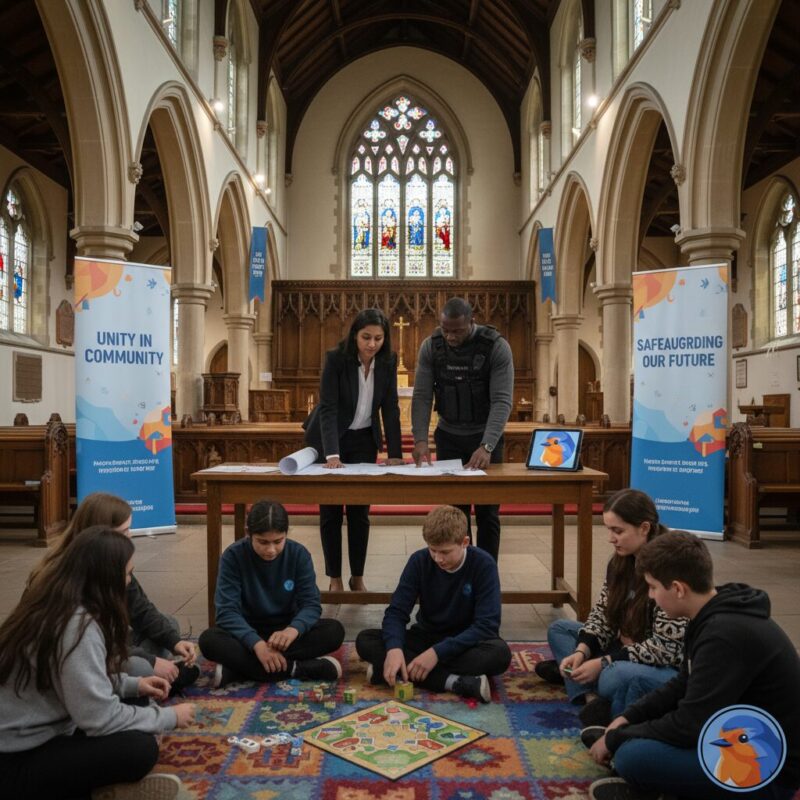
Partner with local law enforcement or the Cybersecurity and Infrastructure Security Agency (CISA) to conduct a professional threat assessment. You will use this document to write your Investment Justification (IJ). Every piece of requested equipment—whether reinforced doors or surveillance cameras—must tie directly to a specific vulnerability identified in your assessment. The Omnilert Nonprofit Security Grants 2026 Guide indicates that poorly justified equipment requests are the leading cause of application rejection.
Tracking Compliance and Post-Award Reporting
Winning the award is only the first step. Strict reporting and procurement rules govern federal funds.
Administrators must adhere to federal procurement standards (such as 2 CFR 200), which dictate how you must bid out security contracts. You are also subject to rigorous quarterly reporting requirements regarding project milestones and financial drawdowns. Failure to comply results in fund clawbacks. Using centralized compliance dashboards ensures you never miss a reporting deadline.
Unlocking Private Social-Impact and Community Funds
Private and corporate foundations offer flexible, albeit highly competitive, alternatives to government programs.
Funding Church Repairs vs. Community Services: The Crucial Distinction
General philanthropic foundations rarely fund brick-and-mortar building repairs unless the structure serves a distinct, broader community function, such as doubling as an emergency shelter.
Conversely, organizations operating in the UK can approach specialized entities. According to the National Churches Trust, specific preservation funds exist solely for historic structural repairs. Split your strategy: target preservation trusts for roofs and boilers, and approach social-impact trusts for outward-facing ministry programs. This hybrid approach mirrors the broader shift toward blended finance and social enterprise capital stacks.
The Google Ad Grant Checklist: Securing $10,000/Month for Ministry Growth
The Google Ad Grant provides $10,000 per month in search advertising, acting as an excellent entry point into grant management.
To qualify, your organization must:
- Obtain official TechSoup validation.
- Maintain a high-quality, active website with clear community value.
- Hold official charity or 501(c)(3) status.
Securing this non-cash funding drives massive visibility for your community programs, which indirectly boosts future cash-based fundraising efforts by proving your reach.
Restricted vs. Unrestricted Funds: Navigating Faith-Based Audits
Financial taxonomy dictates your survival during an audit.
Restricted funds must be spent on the exact project outlined in your application. Unrestricted funds can be used for general operations. Commingling restricted secular money with the general congregation tithe fund triggers immediate audit failures. Set up separate accounts or distinct ledger codes to maintain crystal-clear financial boundaries.
Automating the Church Funding Pipeline for Maximum ROI
Manual prospecting and drafting consume hundreds of hours while yielding low win rates. AI orchestration is the ultimate ROI play for 2026, shifting operations from reactive scrambling to proactive strategy.
Centralizing Prospecting with Multi-Region Smart Grant Matching
Manual database searches fail because volunteers rarely know the exact terminology foundations use.
FundRobin’s Smart Grant Matching utilizes an NLP algorithm that understands the context of your mission. It accurately matches your “youth ministry” with “at-risk teen development” opportunities. With a daily database refresh of over 1,200 opportunities across the US, UK, EU, and Australia, you can centralize your search through a dedicated grant finder.
Using AI Proposal Generation to Accelerate Funding Proposals
Writing a full federal or foundation proposal manually takes upwards of 40 hours. This creates an immediate capacity ceiling for small teams.
FundRobin’s Smart Proposal Generation reduces drafting time by 80%, creating highly compliant first drafts in minutes. The platform’s Robin AI Assistant provides grounded, hallucination-free guidance on complex application requirements. Investing in professionalized AI tools allows administrators to submit multiple high-quality proposals monthly, drastically increasing the capital acquisition pipeline.
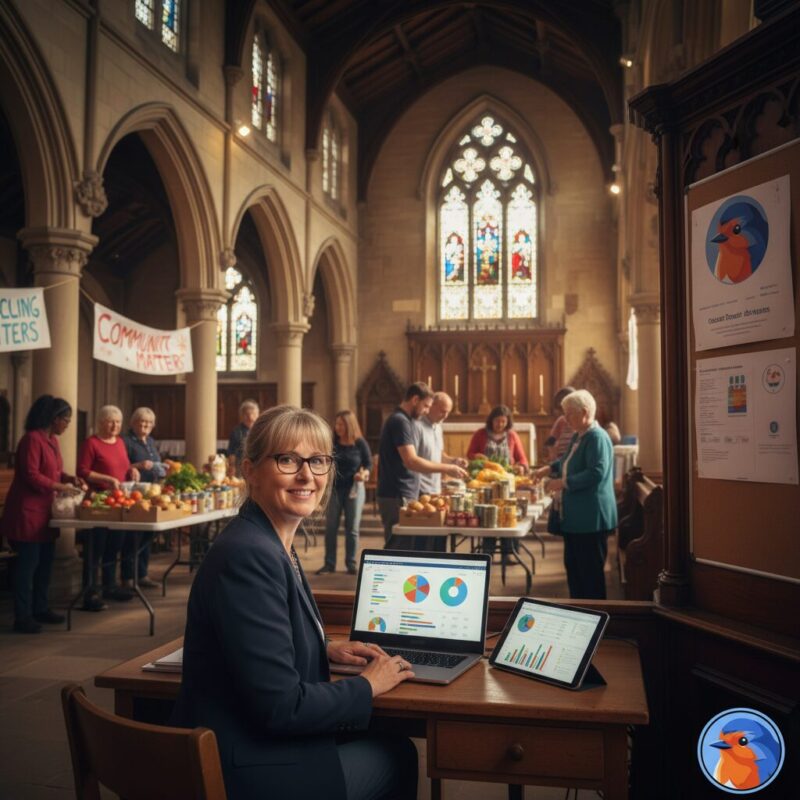
Building a Resilient, Multi-Year Church Funding Strategy
Stop viewing grants as a one-off lottery. Manage your applications as a 12-to-24 month operational pipeline.
Utilize smart dashboards to track application statuses, monitor green/amber/red deadlines, and accurately project future income. By moving away from “emergency grant writing” and embracing a structured, AI-assisted approach, your faith-based organization secures the financial resilience needed to expand its community impact permanently.
Frequently Asked Questions
Can churches get government grants for funding?
Yes, churches can get government grants, provided the funds are used strictly for secular, community-benefit purposes like food pantries, disaster relief, or facility security. Federal and state agencies prohibit the use of government capital for inherently religious activities, such as worship services or proselytizing.
What types of grants are available for church funding?
The top types of grants available to churches include Security grants (like the NSGP), Community development and social service grants, Historic preservation grants for building repairs, and Capacity-building tech grants like the Google Ad Grant. Administrators should target social service grants first, as they align naturally with outward-facing ministry work.
How do we get unrestricted church funding for general operations?
General operating support is exceedingly rare from secular foundations. Focus instead on packaging your community outreach programs into specific, measurable projects that appeal to impact-driven funders. By fully funding your outreach programs through restricted capital, you free up your general tithes for unrestricted operational use.
How long does the church grant application process take?
The process typically takes 2-4 weeks to establish organizational readiness, 1-3 months for targeted prospecting, and 3-6 months post-submission for federal or foundation decisions. Using AI tools like FundRobin reduces the drafting phase by 80%, allowing teams to move from discovery to submission in a matter of days.
What are the basic eligibility requirements for a church to apply for grants?
Eligibility typically requires official tax-exempt status (501(c)(3) in the US, or registered charity status in the UK/EU/Australia), a minimum of 1-3 years of clean financial records, and an active board of directors. Furthermore, organizations must demonstrate a clear operational separation between their community service funds and their religious activities.
Key Takeaways: Maximizing Efficiency
- Stop relying on burnt-out volunteers; implementing AI-driven platforms like FundRobin saves over 200+ hours monthly, turning a scattered process into a highly profitable operation.
- Access vital federal funds via the Nonprofit Security Grant Program (NSGP) by preparing rigorous, data-backed vulnerability assessments.
- Secure secular funding by perfectly translating your spiritual mission into measurable community impact metrics.
- Establish eligibility for tech resources like the $10,000/month Google Ad Grant to drive immediate visibility before pursuing complex federal funding.
Professionalizing your financial infrastructure guarantees that your organization spends less time hunting for resources and more time executing its core mission. By embracing modern orchestration tools, church leaders can permanently break the cycle of volunteer burnout and secure lasting community impact.
