
As a former humanitarian coordinator, I know the exhaustion of chasing funding while trying to run frontline services. You pour everything into your community, only to hit a wall of administrative complexity. As of May 15, 2026, the administrative load for charities in the North of England is heavier than ever due to major shifts in regional funding structures.
However, structured preparation changes outcomes. 76 nonprofit leaders told us recently that organisations with a documented grant strategy were 3.1x more likely to maintain consistent year-over-year funding. To secure your share of regional support this year, you need a highly targeted, data-informed methodology.
TL;DR: Cumbrian nonprofits can secure 2026 funding by mastering the new digital CRM portal, tailoring narratives to the specific Main, West, or Furness geographic committees, and anchoring proposals with Cumbria Observatory data. FundRobin streamlines this entire process, matching organizations with hyper-local opportunities to reclaim hundreds of administrative hours.
Table of Contents
- Understanding the 2026 Landscape of North of England Charity Grants
- Decoding the CCF Three-Committee Geographic Approval Structure
- The “Cumbrian Grant Intelligence” Framework: Anchoring with Observatory Data
- Your Complete 2026 Cumbria Grant Readiness Checklist
- How FundRobin Streamlines Your Regional Grant Applications
Cumbria Community Foundation 2026: Grant Strategy Guide
Understanding the 2026 Landscape of North of England Charity Grants

The 2026 funding environment in the North introduces strict structural changes to grant applications. The most immediate shift is the move toward mandatory digital CRM portals for application processing. Small-to-medium Cumbrian voluntary leaders already face severe service-demand burnout. Adding complex software navigation to the mix pushes many teams to the breaking point.
To survive this cycle, charities must adopt a “Cumbrian Grant Intelligence” strategy. This means moving beyond generic applications to a structured, data-led approach.
The Critical Role of the Cumbria Community Foundation in 2026
The Cumbria Community Foundation (CCF) is the primary nexus between local philanthropists and community causes in the region. According to the Third Sector Trends in England and Wales 2025 (UKCF) report, community foundations are shifting their 2026 priorities heavily toward measurable, long-term charity resilience rather than short-term project fixes.
The CCF assesses whether an organization can sustain its operations beyond the immediate grant cycle. Understanding how to frame your application for this specific type of funder is essential. You can explore the mechanics of this relationship further in our article on community foundation grants.
Mastering the 2026 Digital Grant Application CRM Portal
Paper applications and emailed PDFs are gone. The new digital-first application environment demands structured data entry. Many nonprofits struggle when transitioning to CRM portals because they attempt to write applications directly into the system.
You need centralized documentation ready for upload. Financials, governance policies, and impact reports must exist in organized, web-ready formats before you log in. To navigate this technical compliance landscape efficiently, review our complete nonprofit grant discovery and compliance guide.
Decoding the CCF Three-Committee Geographic Approval Structure
Cumbria Community Foundation is not a monolith. Funding decisions happen at a hyper-local level. The Cumbria Community Foundation – Grant Priorities outline specific geographic boundaries for funding distribution. Understanding which committee reviews your application is the difference between a quick rejection and funding success.
Navigating the Main Committee vs. West and Furness Committees
The CCF divides its funding strategy across three distinct committees.
The Main Committee reviews applications for county-wide initiatives and areas outside the specialized coastal zones. If your project spans multiple districts like Carlisle and Eden, you fall under this remit.
The West Committee manages funds specifically tied to the industrial and economic realities of West Cumbria. To win approval here, you must tailor your narrative to address post-industrial economic shifts and rural isolation.
The Furness Committee evaluates applications based on the unique health needs and employment challenges of the Furness peninsula. Generic “poverty reduction” language fails here. You must address local economic uplift targets directly.
Comprehensive List of 2026 Grant Types
Different committees favor different funding structures based on their strategic priorities. Use our sector grants tool to discover specific funds, but expect to encounter these primary categories:
- Core Funding Grants: Designed for operational costs, heavily favored by the Main Committee to support county-wide charity resilience.
- Project-Specific Grants: Targeted funds for new initiatives, often utilized by the West Committee for localized community interventions.
- Capital Grants: Funding for physical assets or building improvements, requiring extensive matched-funding evidence.
- Emergency Resilience Funds: Rapid-deployment funds prioritizing organizations with clear community health impact, frequently seen in Furness applications.
The “Cumbrian Grant Intelligence” Framework: Anchoring with Observatory Data
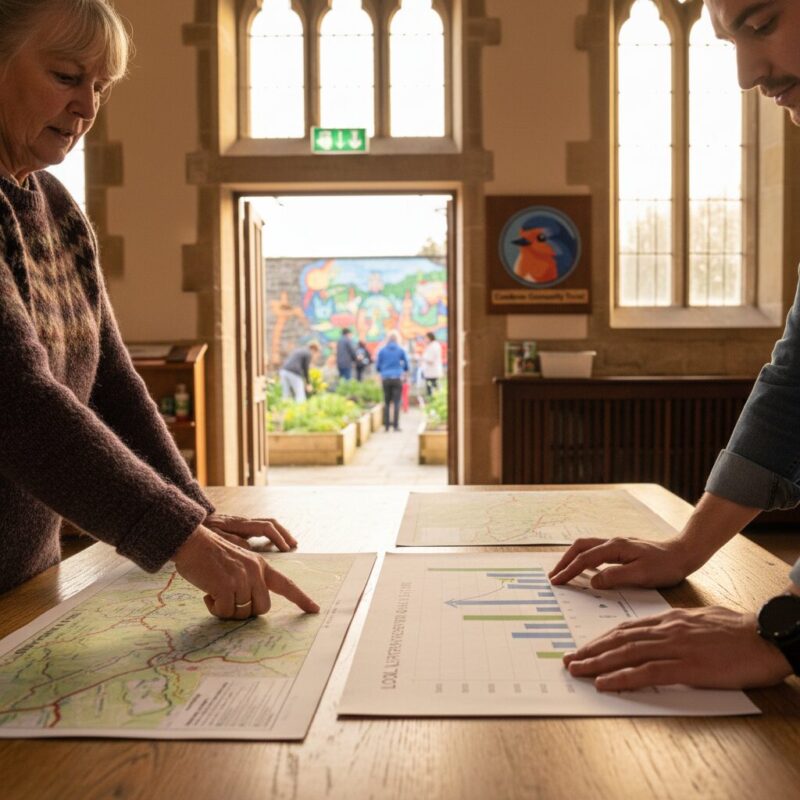
Emotional community stories matter, but they are no longer enough. The 2026 assessment panels require hard statistical data to back up qualitative claims. We call this the “Cumbrian Grant Intelligence” framework.
You must eliminate blind applications. Transition from purely anecdotal pleas to evidence-led cases using the Cumbria Observatory – Economy & Employment database. This platform holds the exact deprivation metrics that assessors use to verify your claims.
Mapping Community Needs to Economy & Employment Indices
Take a common community complaint, such as a lack of youth employment opportunities. Assessors see hundreds of applications stating “young people need jobs.”
Instead, map this feedback to the official indices. According to the Cumbria Observatory – Economy & Employment data, specific wards experience measurable disparities in claimant counts. Your application should state: “Local feedback indicates severe youth unemployment, a reality supported by the latest Observatory data showing a 15% claimant rate in our target ward, outperforming the county average.” Committees prioritize applications that reference these official regional statistics.
Adopting the “Multiple Capitals” Framework for Resilience
Grant assessors favor charities that understand how a financial grant produces broad social return on investment (ROI). The Third Sector Trends in England and Wales 2025 (UKCF) research indicates that funders want to see impact across multiple domains.
The “Multiple Capitals” framework allows you to present your organization’s value beyond basic finances. You demonstrate how financial capital builds social capital (community trust), human capital (skills and health), and natural capital (environmental benefits). Managing this multi-layered data is complex, but strategic AI orchestration can help synthesize these varied impact metrics into a cohesive narrative.
Your Complete 2026 Cumbria Grant Readiness Checklist

Before touching the CCF CRM portal, you must conduct a pre-submission audit. Rushing into the digital system without preparation leads to timed-out sessions and fragmented applications.
Step 1: Governance and Charity SORP 2026 Compliance Audit
Up-to-date governance is the first hurdle. Digital portals use hard stops. If your policies are out of date, the system prevents you from advancing.
You must verify your compliance with upcoming financial regulations. The implications of FRS 102 and the revised accounting standards require immediate attention. Ensure your financial team has reviewed our guide on surviving FRS 102 and Charity SORP 2026 to prevent technical rejections at the first stage of the portal.
Step 2: Integrating Grants into a Blended Finance Strategy
Do not rely solely on grants. The Cumbria Community Foundation – Grant Priorities documentation shows a preference for organizations with diverse income streams. Risk-averse committees want to see a “capital stack.”
Blended finance mixes grants, trading income, and public donations. Showing diversified income makes your application highly competitive. Assessors know that if one funding stream fails, your service will survive. Build your financial model using our 2026 social enterprise capital stack framework.
How FundRobin Streamlines Your Regional Grant Applications
FundRobin is an AI-powered platform built specifically on rigorous UK funding standards. We understand that tracking disparate geographic committees and portals drains your energy.
Our platform replaces manual tracking with intelligent automation, ensuring you navigate the 2026 grant cycle without burning out. We offer a 30-day free Growth tier trial to prove this value directly to your team.
Automating Discovery for Northern-Specific Cycles
The Smart Grant Matching algorithm uses contextual understanding, not just basic keywords. FundRobin automatically monitors and matches hyper-local, Northern-specific opportunities.
Our system filters over 1,200 active opportunities to find exact matches for Cumbria’s Main, West, or Furness criteria. Visual urgency indicators prevent you from missing critical portal deadlines, ensuring you only apply for funds you are actually eligible to win.
AI-Driven Proposal Generation Built on UK Standards
The Smart Proposal Generation tool safely drafts high-quality applications tailored exactly to CCF standards. The system is trained on successful applications and official guidelines, generating compliant first drafts in minutes.
Your data is secure and never used to train public models. Furthermore, the Robin AI Assistant provides factual, grounded strategy advice. It does not hallucinate. By automating the structural writing process, FundRobin reduces writing time by 80% and saves your team 200+ hours monthly, allowing you to focus on frontline community impact.
Frequently Asked Questions
How do I apply for Cumbria Community Foundation grants in 2026?
Apply for Cumbria Community Foundation grants in 2026 by transitioning your documentation to the new digital CRM portal, mapping your qualitative needs to Cumbria Observatory data, and ensuring your application aligns with the specific geographic committee (Main, West, or Furness). The Cumbria Community Foundation – Grant Priorities require fully digital compliance this year, meaning paper applications are no longer accepted.
What are the three geographic committees for Cumbria charity grants?
The three geographic committees are the Main, West, and Furness committees, and each has hyper-local socioeconomic priorities that dictate funding approval. The Main committee handles county-wide initiatives, while the West and Furness committees focus strictly on the post-industrial and health-related challenges specific to those coastal and peninsular regions.
How can Cumbrian charities use Cumbria Observatory data in applications?
Use Cumbria Observatory data by mapping your community’s qualitative feedback directly to the official Economy & Employment deprivation indices for your specific ward. For example, Cumbria Observatory – Economy & Employment statistics can prove that your target area has higher-than-average unemployment, anchoring your emotional narrative in undeniable regional facts.
How does FundRobin help nonprofits find North of England charity grants?
FundRobin helps nonprofits find North of England grants by using an AI matching engine that continuously monitors UK and Northern-specific cycles, pulling the latest requirements directly into a centralized dashboard. This contextual filtering removes ineligible grants instantly, saving development teams over 200 hours a month in manual search and portal tracking.
Are there specific grants for the West and Furness regions in Cumbria?
Yes, the West and Furness committees manage funds designated strictly for those regions to address hyper-local industrial shifts and economic uplift. Applications for these funds must specifically reference the demographic and employment realities of the coastal areas, rather than relying on generic county-wide data.
What is required for the new 2026 digital grant portal for Cumbria?
The 2026 digital portal requires applicants to complete pre-submission audits, ensure Charity SORP 2026 compliance, and organize all financial documentation digitally before logging in. The Third Sector Trends in England and Wales 2025 (UKCF) report notes that funders are heavily scrutinizing baseline governance, meaning incomplete digital profiles face immediate rejection.
Key Takeaways:
- Master the New CRM Portal: The 2026 transition requires Cumbrian charities to digitize documentation and streamline their application workflows ahead of deadlines.
- Target the Right Committee: Stop submitting generic applications. Tailor your narratives specifically to the Main, West, or Furness geographic committees to drastically improve approval odds.
- Anchor with Observatory Data: Shift from anecdotal pleas to evidence-led narratives by directly citing Cumbria Observatory’s Economy & Employment deprivation indices.
- Automate for Efficiency: Leverage AI tools like FundRobin to navigate complex compliance requirements, reclaiming 200+ hours monthly for frontline service delivery instead of administrative burden.
