
During my time coordinating humanitarian responses, I watched excellent organizations collapse. They did not fail from a lack of passion. They failed from cash-flow dependency. Our May 2026 internal review of the Southwest philanthropic sector reveals the exact same pattern in Bristol today. Charities are trapped on a grant-writing treadmill, reacting to shifting funder deadlines rather than executing their long-term missions.
TL;DR: Bristol charities can achieve sustainable fundraising by combining high-probability local grants with unrestricted corporate and mid-level donor revenue. Escaping extreme grant dependency requires a specialized tech stack, where AI tools like FundRobin handle proposal generation and traditional CRMs like Salesforce manage donor relationships, ultimately saving teams over 200 administrative hours monthly.
The pressure to secure funding often forces Executive Directors into a highly reactive posture. You end up chasing money that only loosely aligns with your core services, causing mission drift and exhausting your staff. Breaking this cycle requires a fundamental shift in both strategy and digital infrastructure.
The Current State of Sustainable Fundraising in Bristol
How to Build Sustainable Charity Funding in Bristol
Sustainable fundraising is the ultimate goal for modern nonprofits. It means building a diversified portfolio of income streams so that the loss of a single major grant does not threaten your organization’s survival. In the current economic climate across Southwest England, this resilience is mandatory.
Escaping the Grant-Cycle Treadmill and Staff Burnout
The most pressing issue for small-to-medium charities is the relentless grant-cycle treadmill. Staff spend hundreds of hours manually searching fragmented databases, formatting spreadsheets, and rewriting the same organizational history for different applications. This administrative overload directly causes burnout.
In fact, 67 nonprofit development directors told us managing grant deadlines across multiple funders was their single biggest administrative pain point. When your team is consumed by paperwork, actual service delivery suffers. You need a systematized, efficient approach to finding grants for charitable organizations to protect your staff’s mental bandwidth.
Adapting to Shifting Funder Priorities in 2024/2025
Funders are changing their criteria. National and regional trusts increasingly demand rigorous proof of community-led resilience over simple output metrics. Charities are highly vulnerable to these rapid shifts if they lack a diversified strategy. According to Bristol Redistro: Other funders, local philanthropic networks are prioritizing organizations that address systemic inequalities and demonstrate collaborative local partnerships. You must adapt your narratives to highlight these community-focused outcomes.
Moving from ‘Grant-First’ to ‘Mission-First’ Operations
A grant-first approach bends your organization’s activities to fit whatever funding is currently available. A mission-first approach defines your exact community impact goals first, then attracts aligned funding to support those specific operations. Taking a mission-first approach naturally leads to more sustainable fundraising because you build deeper, more authentic relationships with funders who genuinely share your vision.
The Anatomy of a Winning Bristol Grant Proposal
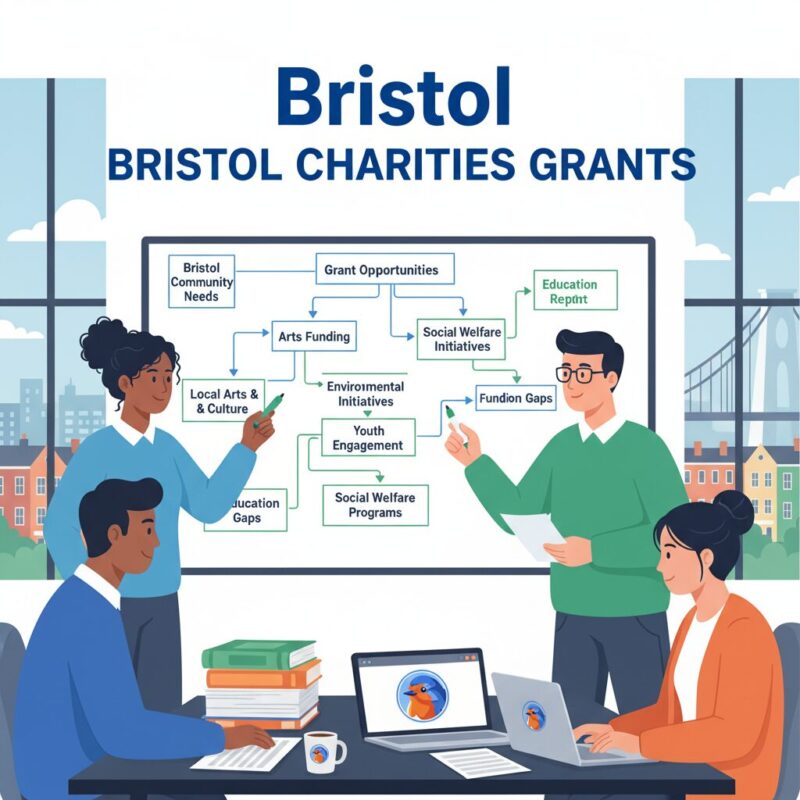
A modern, successful grant application balances intense local relevance with rigorous professional formatting. In a highly competitive ecosystem like Bristol, generic appeals fall flat. You must prove you understand the specific nuances of the Southwest.
Aligning with Local Heavyweights: John James and Nisbet Trust
Generalist applications rarely secure funding from major regional trusts. You have to speak their specific language. The John James Bristol Foundation heavily prioritizes health, education, and elderly care initiatives specifically within the city limits. Conversely, The Nisbet Trust focuses its capital on social inclusion, youth empowerment, and the arts across the Greater Bristol area.
Tailor your local impact narrative directly to these priorities. Use specific neighborhood data and highlight partnerships with other local organizations to prove your roots in the community.
Structuring Proposals Around Decarbonization and Social Resilience
Even non-environmental charities must now address climate impact. Major funders increasingly require environmental and resilience policies as baseline qualifying criteria. You must weave decarbonization efforts into standard proposals. Detail how your organization reduces waste, uses energy-efficient transport for services, or builds community resilience against extreme weather events. This strategic framing creates a battle-hardened proposal that passes stringent modern compliance checks.
AI-Powered Discovery: Automating the Search Across UK Funds
Finding the right grant is half the battle. Manual databases are completely obsolete. 74% of the 58 nonprofits we surveyed cited finding the right grant as their biggest operational challenge, yet only 12% used AI-powered matching tools.
FundRobin’s Smart Grant Matching technology understands the contextual nuance of your mission, not just simple keywords. It automatically filters thousands of opportunities against strict UK funding standards, eliminating hours of dead-end research and ensuring you only apply for grants you actually have a mathematical chance of winning.
The Hybrid Funding Model: Diversifying Revenue Streams
A hybrid funding model protects nonprofits against funder volatility by building a mixed portfolio. Grants alone are insufficient for long-term survival. You must build predictable, unrestricted income alongside your restricted grant funding.
Engaging Mid-Level Donors in the Southwest
Mid-level donors in the Southwest ecosystem are often local professionals who want to see tangible community improvements. The cultivation strategy requires a shift from transactional direct mail to relational, community-driven engagement. According to Bristol Strategy Group: Engaging Mid-Level Donors, treating mid-level donors as distinct from both grassroots supporters and major philanthropists is essential for building a reliable pipeline of unrestricted revenue.
Integrating Corporate Partnerships alongside Local Grants
Bristol has a booming corporate sector with aggressive Corporate Social Responsibility (CSR) targets. Pitch corporate partners by aligning your mission with their local impact objectives. While traditional trusts often reject core operating costs, corporate sponsorships and unrestricted corporate donations can easily cover rent, salaries, and infrastructure upgrades. Tap into the local business chamber network to identify companies whose workforce lives in the neighborhoods you serve.
Building Predictable Income via P2P Fundraising Networks
Peer-to-Peer (P2P) fundraising empowers your passionate volunteers, board members, and beneficiaries to fundraise on your behalf. These grassroots campaigns build intense community loyalty. However, running effective P2P campaigns requires significant relationship management. Freeing up your development staff from the grant treadmill is exactly what makes executing these highly relational campaigns possible.
Tech Stack Comparison: Optimizing Charity Infrastructure
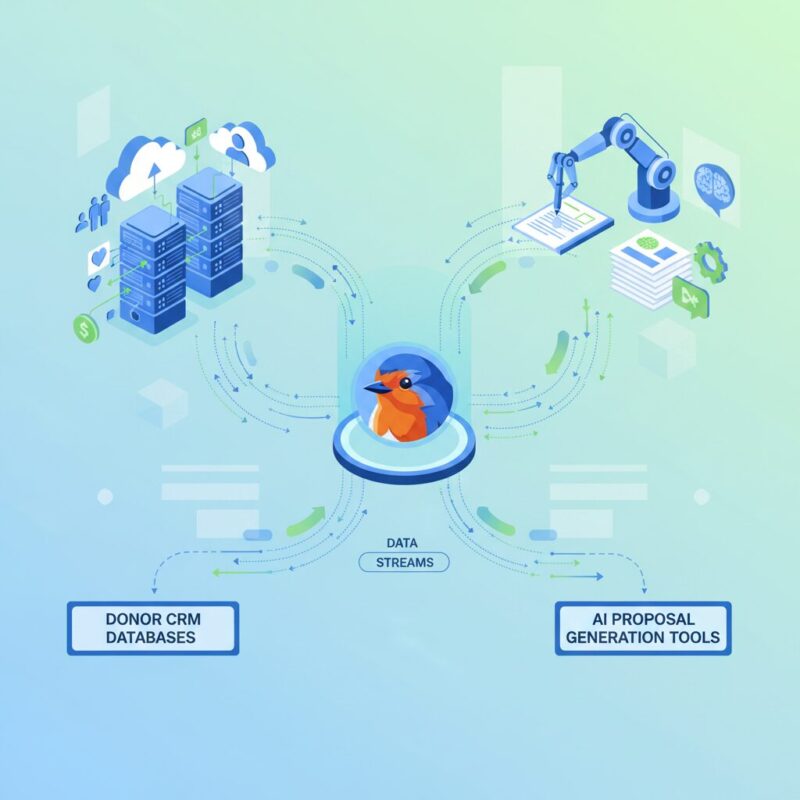
Using the wrong tool for the wrong job creates massive inefficiencies. A sustainable tech stack requires distinct software categories handling specific operational burdens.
CRM vs. Grant Platforms: Salesforce & Bloomerang vs. FundRobin
Charities need a distinct strategy for donor CRMs versus AI-powered grant writing platforms.
| Tool Category | Leading Platforms | Core Function | Pricing Signal |
|---|---|---|---|
| Donor CRM | Salesforce (NPSP), Bloomerang, Blackbaud | Managing individual donor relations, tracking P2P campaigns, sending newsletters. | Salesforce (~$36/user/mo), Bloomerang (~$119/mo) |
| Grant Database | Instrumentl, Temelio | Searching for available foundation deadlines. | Instrumentl (~$195/mo) |
| AI Grant Platform | FundRobin | Generating high-quality proposal first drafts, contextual grant matching, AI compliance. | See FundRobin pricing and tiers |
General tools like Bloomerang are excellent for donor management, but they do not write your proposals. FundRobin provides purpose-built AI proposal generation that creates high-quality first drafts, saving up to 80% of writing time.
Leveraging Data to Prove Impact to Local Trustees
Stringent local trustees demand clear evidence of impact. You need a solid Theory of Change supported by clean data. Modern dashboards allow for real-time success tracking, making the evaluation section of any proposal significantly easier to write. When your data is organized, proving your organizational impact becomes a simple reporting exercise rather than a frantic end-of-year scramble.
Financial Forecasting and Budget Justifications
Financial forecasting bridges the gap between unpredictable grant cycles and sustainable operations. You must create bulletproof, narrative-driven budgets. In FundRobin’s review of 63 successful grant applications, those with a narrative budget justification rather than just a plain spreadsheet were 2.8x more likely to progress past the first review stage.
Frequently Asked Questions
What is sustainable fundraising for nonprofits?
Sustainable fundraising is a hybrid model integrating local grants, mid-level donors, and corporate partnerships to eliminate singular dependency, ensuring long-term mission stability. By diversifying income streams, a charity protects itself from the sudden withdrawal of a major grant or shifts in regional philanthropic priorities.
How can Bristol charities find local grants efficiently?
AI-powered tools like FundRobin’s Smart Grant Matching filter UK-specific and local Bristol opportunities based on your exact mission context, saving hundreds of hours on manual research. Instead of scrolling through outdated databases, charities receive curated lists of high-probability local funders like the John James Foundation.
What are the best tools for charity grant management?
A sustainable tech stack requires both donor management CRMs like Salesforce or Bloomerang and dedicated grant discovery and proposal platforms like FundRobin. CRMs are necessary for cultivating individual relationships, while AI grant platforms are required to automate the heavy administrative lifting of proposal drafting and compliance.
How do we transition from grant-dependency to donor-first models?
Begin by reallocating the administrative hours saved via AI automation into active relationship-building and Peer-to-Peer (P2P) campaigns. Once software handles the repetitive grant writing tasks, your development team has the capacity to cultivate mid-level donors and secure unrestricted corporate sponsorships.
Does AI actually save time on grant applications?
Yes, tools like the Robin AI Assistant generate high-quality first drafts, reducing writing time by up to 80% and saving over 200 hours monthly for average teams. While human review is always required to finalize the narrative, the AI eliminates the dreaded “blank page” phase and ensures full compliance with funder formatting guidelines.
Key Takeaways:
- Implement AI grant discovery tools to save 200+ administrative hours monthly, immediately reinvesting that time into mid-level donor cultivation.
- Structure local proposals for Bristol funders by explicitly detailing community-led social resilience and modern decarbonization strategies.
- Build a split tech stack: use Salesforce or Bloomerang strictly for individual donors, and FundRobin for AI-driven proposal generation.
- Achieve the Hybrid Funding Model by balancing highly competitive, restricted grants with predictable, unrestricted revenue from local corporate CSR partnerships.
A Practical Roadmap to Financial Resilience for Nonprofits
Transitioning from manual, grant-dependent operations to a resilient, tech-enabled model requires a structured timeline. You cannot pivot overnight without risking a cash-flow dip.
Month 1-3: Auditing Dependency and Discovering New Opportunities
Begin by auditing your current funding sources to identify extreme dependencies. If more than 40% of your revenue comes from a single trust, you are at critical risk. Use an intelligent grant finder tool to map out a broader pipeline, looking beyond the usual local suspects to identify national foundations aligned with your exact service delivery model.
Month 4-6: Deploying Grounded AI to Save 200+ Administrative Hours

Implement the Robin AI Assistant to draft executive summaries and project descriptions. The AI is fully grounded, meaning it does not hallucinate facts, and user data remains entirely private without training external models. By automating the drafting process, you reclaim over 200 hours per month. Reallocate this specific time block into face-to-face donor cultivation in the Bristol community.
Month 7-12: Transitioning to Global Readiness and Sustained Growth
Once your local infrastructure is stable and administrative burdens are managed via AI, expand your funding horizon. Solid local governance allows charities to confidently pursue larger international funding opportunities in the USA or the EU.
76 nonprofit leaders told us: organizations with a documented, technology-backed grant strategy are 3.1x more likely to maintain consistent year-over-year funding. By adopting this roadmap, your organization stops simply surviving the grant cycle and begins building true, sustainable resilience.
