
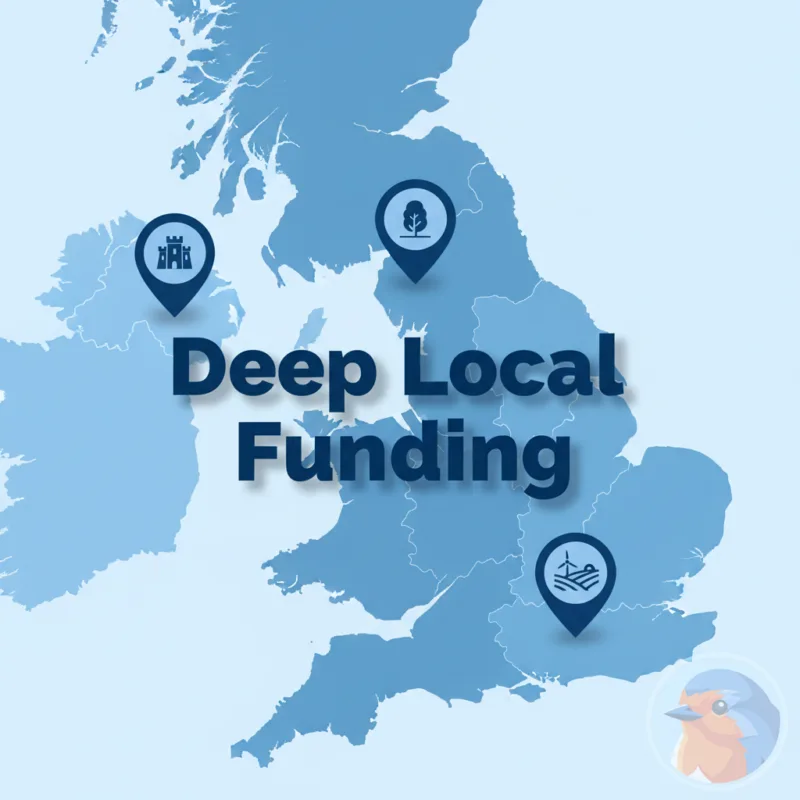
As of September 22, 2026, UK charity grant funding faces a severe operational bottleneck. Overworked nonprofit teams remain trapped in a high-volume application cycle, pushing out generic proposals to every national funder available. This untargeted strategy accelerates burnout and ignores the specific fiscal realities driving regional donors.
TL;DR: UK nonprofits can eliminate application burnout by adopting a Go/No-Go scoring matrix to target mission-aligned regional funding. In 2026, shifting focus to localized priorities—like Welsh infrastructure, Surrey’s strict financial compliance, and Lincolnshire’s community-led initiatives—drastically improves win rates compared to generic national campaigns using AI-powered contextual discovery.
Escaping the “Grant-Writing Factory”: The 2026 Shift to Precision Funding
High-volume “spray and pray” application methods rarely succeed. When organizations treat the UK funding landscape as a monolith, they miss the distinct regional constraints governing local money. According to the FundRobin: UK Charity Grant Funding Guide 2026, moving from national volume to local precision requires fundamentally changing how charities evaluate opportunities.
The Cost of Application Burnout for UK Nonprofits
Administrative drudgery actively drains resources from frontline delivery. Teams spend hundreds of hours manually searching fragmented government databases, copying and pasting the same generic narratives into unaligned applications. This cycle creates a “hamster wheel” effect where the administrative cost of securing a grant frequently eclipses its actual monetary value.
Shifting from High-Volume to Trust-Based Grantmaking
Trust-based grantmaking now dominates donor expectations. Funders want deep alignment with their localized goals, not just a passing match with broad charitable themes. Building genuine resilience requires moving away from highly restricted project grants and towards unrestricted capital, which funders only award when they see clear, proven alignment with their specific regional mandate.
Why Regional Alignment Outperforms National ‘Spray and Pray’
Generic platforms ignore the local nuances that trust-based funders prioritize. Treating a community foundation in Lincolnshire exactly like a devolved government body in Wales leads to immediate rejections. Targeting specific, local funds yields a demonstrably higher return on investment because the applicant pool is smaller and the mission alignment is tighter.
How to Use the Strategic Refusal Framework (The “Go/No-Go” Matrix)
The Strategic Refusal Framework is a decision-making tool designed to eliminate grant-writing fatigue before it starts. Organizations use this scoring structure to rate Alignment, Capacity, Win Probability, and Return on Investment (ROI) objectively. Doing this ensures the team only commits resources to viable bids.
Defining Mission Alignment vs. Viability
Score mission alignment out of 10 points. If a grant opportunity scores below an 8, discard it immediately. Chasing unaligned money creates mission creep, forcing organizations to invent new projects simply to fit funding criteria. True viability means the grant funds the work you already intend to do, without distracting your frontline staff.
Establishing Your Data-Readiness Checklist
A rapid Go/No-Go decision requires immediate access to specific information. Your team needs a prepared data-readiness checklist containing updated impact metrics, standardized budget forecasts, and up-to-date compliance certificates. Having these components ready accelerates compliance evaluation in grant discovery, allowing your team to confidently advance or abandon an application in minutes.
Automating the Discovery Process with AI-Driven Filtering

Manual filtering is slow and prone to human error. FundRobin compares organization and opportunity context to help prioritize fit using smart matching technology. Match labels and rationale support human review, providing an automated first pass that speeds up the Go/No-Go matrix process. FundRobin’s 240+ customer research corpus repeatedly shows that eligibility and fit checking remains a distinct, time-consuming job after initial discovery; accelerating this step reclaims significant administrative time.
Regional Deep Dive 1: Targeting 2026 Grants in Wales
The funding environment in Wales operates under devolved rules. According to the Welsh Government Decision Reports 2026, the administration’s primary funding priorities lean heavily toward hard infrastructure and localized economic development.
Decoding Devolved Infrastructure Priorities
“Infrastructure” in a Welsh context means physical and digital community assets. To align with these priorities, nonprofits must translate government terminology into actionable project plans. Whether building community hubs or upgrading digital inclusion facilities, applications must prove they support long-term regional development over short-term social interventions. Organizations can maximize these bids by exploring blended finance for Welsh infrastructure to demonstrate diversified revenue.
Navigating High-Authority Government Portals (GOV.WALES)
GOV.WALES is the primary source for devolved funding data, but navigating its structure takes time. The portal remains static and bureaucracy-heavy. Nonprofits should establish a specific methodology for extracting decision reports, focusing their searches exclusively on final award notices to understand what the government actually funds rather than what it broadly discusses.
Leveraging FundRobin to Identify Welsh Opportunities
Instead of checking government portals manually each week, teams use FundRobin’s organisation-specific grant discovery to surface relevant opportunities. The system parses available UK, EU, and devolved region data, helping organizations locate funds that match their exact profile without the daily burden of navigating clunky administrative websites.
Regional Deep Dive 2: Securing 2026 Grants in Surrey
Surrey presents a completely different landscape. Facing tight fiscal pressures, Surrey councils and local funders prioritize accountability above all else. A compelling social narrative will not succeed here without rigorous financial backing.
The Push for Ultimate Financial Accountability
Surrey funders want transparent budgeting and a clear demonstration of financial resilience. Applications must show exact ROI calculations and long-term sustainability plans. Presenting a stable financial history, often requiring detailed compliance with standards like navigating FRS 102 and Charity SORP, is mandatory for advancing past the initial review stage.
Compliance Alignment for Local Authorities
Local authorities expect zero deviation from safeguarding, GDPR, and rigorous reporting frameworks. Organizations must align their internal policies perfectly with these local requirements before applying. Missing a single, localized compliance check in Surrey results in immediate rejection, regardless of project merit.
Matching Surrey’s Fiscal Demands using AI Proposals
FundRobin’s contextual grant assistant, Robin, works with authorized opportunity and organization context to help teams manage these strict demands. By working from authorized guidelines and the organization’s verified knowledge, teams can draft proposals that address Surrey’s specific financial and compliance nuances without starting from a blank page.
Regional Deep Dive 3: Unlocking 2026 Grants in Lincolnshire
Lincolnshire funding focuses on hyper-local, community-driven projects. The Lincolnshire Community Foundation Grant Matrix 2026 indicates a strong shift away from top-down statutory projects toward grassroots initiatives designed by the communities they serve.
Prioritizing Community-Led Initiatives
A community-led initiative means the beneficiary group has active decision-making power over the project. Framing a proposal around top-down charity management fails in Lincolnshire. Successful frameworks clearly map how local residents designed, requested, and will manage the funded intervention.
Engaging with the Lincolnshire Community Foundation
The Lincolnshire Community Foundation remains the primary gatekeeper for regional funds. Aligning your organization’s goals with their specific stated objectives requires analyzing their latest priority matrix. Small charities must focus heavily on engaging with local community foundations before submitting cold applications, building relationships based on shared community impact.
Turning Community Impact into Compliant Grant Narratives
Writing for Lincolnshire requires balancing emotional storytelling with strict data presentation. Teams should use a Theory of Change framework to outline their local impact. This structure connects the narrative of community need directly to measurable outcomes, satisfying both the heart of the foundation and the compliance checklist of the grant administrators.
Bridging the Drudgery Gap with FundRobin
Transitioning from a volume-based factory to a precision-based strategy requires the right infrastructure. Using a dedicated platform helps teams keep opportunity and application work in one workspace, moving away from fragmented spreadsheets.
How Smart Grant Matching Saves Time
Smart Grant Matching helps teams filter out irrelevant grants early. For example, according to a recent FundRobin case study program (September 2026), a UK animal welfare charity reduced their weekly discovery time from 6.5 hours to 1.5 hours by using matching tools. They screened 140 opportunities and confidently shortlisted 19, demonstrating how focusing on fit drastically reduces wasted effort. Teams can access the free Grant Finder tool to begin streamlining their own discovery process.
Utilizing the Robin AI Assistant for Local Research
The Robin AI assistant provides contextual help grounded in reviewed organization knowledge. Because it uses source and provenance evidence stored in the Organisation Brain, it supports factual research without inventing details. This grounded approach aligns perfectly with strategic AI implementation for nonprofits, allowing teams to explore regional rules safely.
Moving from Restricted to Unrestricted Capital Strategically
The ultimate goal of saving administrative time is redirecting it toward building unrestricted funding relationships. FundRobin provides workflow views for tracking grant opportunities, helping teams benchmark performance and manage their pipeline. Reinvesting saved time into donor relationships secures the flexible, unrestricted capital necessary for long-term survival.
Common Pitfalls in Regional UK Grant Seeking
Pivoting to a regional strategy comes with specific risks. Treating local grants identically to national ones guarantees failure.
Failing to Translate Government Guidelines

Mimicking bureaucratic jargon from GOV.UK or GOV.WALES alienates human reviewers. Complex guidelines require translation into compelling, plain-language narratives that center on your specific mission.
Overlooking Local Compliance Nuances
Assuming standard UK-wide compliance covers specific regional demands frequently derails applications. A safeguarding policy accepted in London may fail Surrey’s localized checks. Teams must verify localized compliance requirements during the initial Go/No-Go review phase.
Ignoring Institutional Readiness and Reporting Requirements
Winning a grant but failing the reporting phase damages future funding prospects. Organizations often neglect to set up tracking structures before the award arrives. Implementing clear reporting frameworks and preparing your data library beforehand ensures you can manage the grant efficiently once secured.
Frequently Asked Questions
How do I find local grants in Lincolnshire for my community project?
Start by using AI-powered grant discovery platforms like FundRobin to filter specifically for Lincolnshire. Look for community-led initiatives and engage directly with the Lincolnshire Community Foundation’s published priority matrix to ensure your grassroots project aligns with their current funding cycle.
What is a grant Go/No-Go matrix and how does it save time?
A Go/No-Go matrix is a strategic scoring framework that evaluates a grant’s alignment with your mission, resource capacity, and win probability. It saves time by eliminating unviable applications early, preventing teams from spending hours on proposals they are unlikely to win.
How are 2026 grants in Wales different from UK-wide funding?
In 2026, Welsh devolved funding heavily prioritizes regional infrastructure and localized impact rather than general UK-wide social initiatives. Securing these funds requires specialized tracking of GOV.WALES decision reports and a clear demonstration of long-term economic development.
What are the key compliance requirements for Surrey charity grants?
Surrey funders in 2026 demand ultimate financial accountability, requiring strict adherence to frameworks like FRS 102. Applicants must provide transparent budgeting, robust ROI calculations, and flawless alignment with local authority safeguarding rules to pass initial screening.
Can AI write a grant proposal for a local community foundation?
Yes, contextual grant assistants can help draft proposals tailored to specific community foundation guidelines by working from your authorized organization knowledge. However, humans must always review the outputs to ensure the narrative captures the authentic community impact required by local funders.
Key Takeaways:
- Implement a ‘Go/No-Go’ scoring matrix to stop chasing unviable grants and focus exclusively on mission-aligned regional funding.
- Adapt to regional nuance in 2026: Wales prioritizes infrastructure, Surrey demands strict financial accountability, and Lincolnshire focuses on community-led initiatives.
- Use contextual grant discovery tools to reclaim hours of administrative time by identifying opportunities that match your specific organizational profile.
- Translate complex government data from portals like GOV.WALES into actionable proposals rather than copying bureaucratic jargon.
Transitioning from volume-based applications to a precision-targeted strategy defines successful fundraising in 2026. By respecting regional nuances and implementing strict Go/No-Go frameworks, organizations stop wasting time on unviable bids and start securing the funds necessary to sustain their mission.
