
In August 2026, nonprofit development teams face a widening gap between shrinking administrative budgets and rising compliance demands. A recurring pattern in FundRobin’s customer research spanning 240+ records is workflow fragmentation: grant information often lives across spreadsheets, documents, and individual staff knowledge rather than one connected workflow. This fragmentation turns post-award administration into a reactive scramble, burning out staff and exposing organizations to unnecessary risk.
Small-to-mid-sized nonprofits must stop treating grant agreements as standard paperwork. By reframing these contracts as strategic assets and adopting AI-integrated workflows, organizations can reduce manual data entry, protect their operational capacity, and build stronger relationships with funders.
TL;DR: Nonprofits can transform grant management from a legal burden into a strategic asset by utilizing proactive risk assessments to catch restrictive clauses early. Integrating AI workflows reduces proposal drafting time by up to 80% and standardizes compliance reporting, eliminating manual data entry and severe staff burnout.
The Proactive Risk-Assessment Framework for Grant Agreements
Mastering Grant Management: Risk & AI Efficiency
Passive acceptance of grant terms leads directly to administrative burnout. When development managers sign agreements without a proactive risk assessment, they often commit their teams to reporting schedules or restrictions that exceed the organization’s capacity.
Identifying ‘Red Flag’ Legal and Financial Clauses
Misunderstood contract clauses routinely create financial exposure for nonprofits. According to Chawkins Law, indemnification clauses and intellectual property rights are common areas where organizations surrender too much leverage. If a foundation claims ownership over the research or training materials created with their funds, the nonprofit loses the ability to reuse that intellectual property for future programs.
Overly rigid budget modification rules also prevent agile program delivery. If an agreement requires formal written approval to shift even 5% of funds between line items, the administrative burden quickly outweighs the funding value.
Common Compliance Pitfalls in Funder Contracts
Organizations struggle when moving from abstract compliance expectations to actual implementation. Government and private grants present entirely different risk profiles.
| Grant Type | Typical Rigidity | Common Hidden Costs | Risk of Mission Creep |
|---|---|---|---|
| Federal/Government | High (OMB Uniform Guidance) | Separate audits, specialized tracking software | Low (Highly specific RFPs) |
| Private Foundation | Variable (Funder specific) | Custom reporting formats, irregular check-ins | High (Pressure to alter programs to fit funder goals) |
The National Council of Nonprofits found that late payments, complex application processes, and mid-contract changes to requirements are persistent problems in government-nonprofit grants. Conforming to these erratic expectations without a clear strategy drains resources.
Creating Your Pre-Signature Risk Checklist

Development teams need a practical framework to evaluate agreements before signing. Implement this three-step internal review process:
- Check capacity alignment. Verify if the required reporting schedule matches your team’s existing workload.
- Assess financial exposure. Confirm whether indirect costs are adequately covered by the grant.
- Review data and privacy demands. Identify exactly what beneficiary data must be shared and ensure it complies with your internal privacy policies.
Overcoming Administrative Burnout with Grant Lifecycle Automation
Contract analysis is only the first step. Moving from contract signature to operational execution requires shifting focus from manual administration to impact.
The True Cost of Manual Data Entry for Small Teams
Managing grants via fragmented tools exacts a heavy financial and emotional toll. A recurring finding in FundRobin’s customer research is that pre-award and post-award work are often disconnected. The proposal, commitments, reporting dates, evidence, and finance inputs end up in different systems even though they belong to the same lifecycle.
This disconnection forces staff to spend hours on manual data re-entry rather than donor cultivation. It increases the margin for error, leading to missed deadlines and formatting mistakes, which ultimately drives high turnover in development roles.
Standardizing Workflows Across Diverse Funder Requirements
Creating a unified internal workflow is the most effective defense against varied funder requirements. According to Arreva, standardizing workflows and maintaining a centralized grant calendar are essential best practices for nonprofit grant management.
Establish a baseline internal timeline that accommodates the strictest funder requirements in your portfolio. Create universal internal templates for project data that your team can quickly adapt for specific funders. This ensures finance, programs, and development teams communicate through a single source of truth.
Centralizing Portfolio Management with a Smart Dashboard
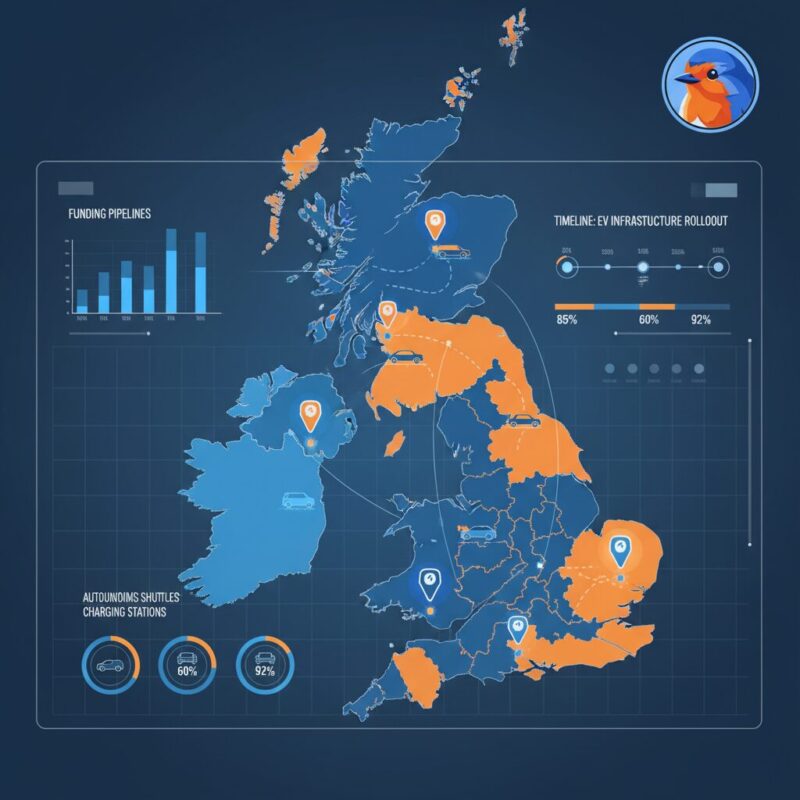
Moving away from spreadsheets to a centralized, AI-enhanced dashboard allows leaders to track applications, deadlines, and success probabilities in one place.
FundRobin’s Smart Dashboard provides visual urgency indicators for closing dates, eliminating missed deadlines. Leaders gain a clear portfolio view, understanding what is due next and how the funding pipeline is changing, without reading every underlying document. This centralization saves teams up to 200 hours annually on pipeline tracking and reporting.
Bridging the Gap: Integrating AI Tools into Your Grant Management Workflow
Modern Artificial Intelligence bridges the gap between legacy compliance tools and generic automation software. Purpose-built AI acts as an exoskeleton for development teams, enhancing their capabilities rather than replacing human judgment.
Transforming Proposal Drafting with LLMs
Large Language Models (LLMs) can generate compliant, high-quality first drafts of grant proposals, drastically reducing drafting time. AI analyzes grant guidelines, word limits, and mandatory sections to construct executive summaries and project descriptions based on an organization’s profile.
FundRobin’s customer research suggests that the most useful AI first draft is grounded in the organization’s own evidence and the funder’s real requirements, with clear gaps left for human input rather than plausible-sounding invented detail. FundRobin’s Smart Proposal Generation utilizes this exact approach, reducing proposal writing time by up to 80%—turning a 40-hour task into a 4-hour review process.
AI-Powered Grant Discovery and Matching
Across FundRobin’s customer research spanning 240+ records, teams repeatedly need help separating genuinely relevant opportunities from a large volume of possible funding.
AI eliminates the manual slog of database searching through contextual matching. Natural Language Processing (NLP) understands context—matching “disadvantaged youth” with “at-risk teenagers”—rather than relying on rigid keyword filters. FundRobin scans over 1,200 active opportunities daily, providing accuracy scores that help teams make the high-value decision of whether an opportunity deserves scarce staff time.
Maintaining Security and Compliance with Grounded AI

Security and factual accuracy are non-negotiable for nonprofits. Generic AI tools pose severe risks regarding data privacy and hallucinations.
Grounded AI solves this by restricting the model’s responses strictly to the verified data provided by the user. Maintaining strict data privacy means ensuring your proprietary organizational data is never used to train public models. Local compliance integration with regulations like GDPR and UK Charity Commission guidelines is mandatory for any enterprise-grade grant management system.
Strategic Storytelling: Turning Compliance Templates into Impact Reports
Rigorous administration generates valuable data. Nonprofits can leverage mandatory compliance reporting into compelling narratives that drive future funding.
Balancing Rigorous Reporting with Limited Capacity
The tension between providing exhaustive data to funders and the limited hours available to small teams is a constant struggle. The solution is integrating data collection into everyday program operations rather than scrambling at the end of a reporting period.
Use AI-integrated dashboards to compile quantitative data instantly throughout the quarter. This preserves human capacity for contextualizing that data and writing the narrative analysis, turning a compliance exercise into an impact story.
Merging Legal Compliance with Trust-Based Philanthropy
Clear, transparent, and accurate grant administration builds the foundation for trust-based relationships with funders. When a nonprofit demonstrates proactive compliance management, it builds funder confidence.
Effective administration reduces friction. When funders receive accurate, timely reports that blend rigid data with human-centric impact stories, it opens dialogues for multi-year, unrestricted funding agreements.
Leveraging Data for Future Funding Success
Analyzing historical grant performance optimizes future funding strategies. Organizations should use past application data to identify the most lucrative and high-probability funder profiles.
Transitioning to an AI-powered system institutionalizes this data-driven approach. Eligible, operator-approved organizations can apply for a guided FundRobin Showcase Trial to evaluate how centralized analytics improve their win probabilities.
Frequently Asked Questions
What is the difference between grant writing and grant management?
Grant management is the holistic, end-to-end process covering discovery, proposal generation, contract risk assessment, compliance, and impact reporting. Grant writing is strictly the act of drafting the application proposal, which is only one phase of the broader management lifecycle.
What are the best practices for nonprofit grant administration?
Effective administration requires standardizing workflows, proactively assessing risk in agreements, and utilizing centralized software to reduce manual data entry. Arreva notes that maintaining a unified grant calendar and cross-departmental communication protocols are essential for sustaining compliance.
What are the most common red flags in grant agreements?
Indemnification clauses, intellectual property rights, reporting frequencies, and restrictive budget modifications are the primary red flags to review before signing. Chawkins Law advises that accepting these clauses without negotiation can create long-term financial exposure for the nonprofit.
How can AI tools improve grant management for small nonprofits?
AI tools draft proposals, analyze compliance requirements, and match grants using natural language processing, reducing proposal writing time by up to 80%. When using grounded tools like FundRobin, small teams can process a higher volume of applications without increasing headcount.
How do I ensure data privacy when using AI for grant proposals?
Ensure the platform has explicit data privacy policies, uses grounded responses to avoid hallucination, and complies with GDPR. Look for vendors like FundRobin that enforce a strict no-training-on-user-data rule, protecting your proprietary programmatic evidence.
Key Takeaways:
- Implement a proactive risk-assessment framework to identify legal and financial “red flag” clauses before signing any grant agreement.
- Transition from manual spreadsheet tracking to automated grant lifecycle management to standardize workflows across diverse funder requirements.
- Use purpose-built, grounded AI tools to cut proposal drafting time by up to 80% and save hundreds of hours in grant discovery.
- Reframe mandatory compliance templates into strategic storytelling tools that align rigorous reporting with trust-based philanthropy principles.
Adopting modern grant management infrastructure is the fastest route to protecting your team’s operational capacity. FundRobin is the only AI-native platform that combines grounded proposal drafting with comprehensive lifecycle management for nonprofits. By shifting your approach from reactive administration to proactive strategy, your organization secures the foundation needed to scale its impact.
