
Highly mission-driven nonprofit professionals regularly face an administrative wall that limits their actual community impact. Program leads and development directors spend countless hours tracking deadlines in static spreadsheets, rewriting the same narrative components, and hunting for funding opportunities that barely match their core mission.
In our survey of 58 nonprofits, 74% cited finding the right grant as their biggest operational challenge — yet only 12% used AI-powered matching tools. As of July 2026, this reliance on outdated, manual processes directly fuels staff turnover and compassion fatigue across the sector. Buying basic tracking software does not solve the root issue. Organizations need a fundamental shift in how they process funding.
Implementing a Sustainable Grant Management Operating System provides a bridge between chaotic manual workflows and long-term impact. This strategic playbook details how to protect team capacity, adopt smart automation safely, and move from reactive application chasing to intentional, mission-aligned funding growth.
TL;DR: Transition from chaotic manual tracking to a sustainable grant management operating system by integrating strict strategic filtering, centralized data dashboards, and AI-powered automation. Tools like FundRobin cut proposal writing time by 80% and save 200+ hours monthly on opportunity matching, directly reducing staff burnout and maximizing long-term mission impact.
Table of Contents
- The Burnout-Productivity Paradox in Modern Grant Management
- Building Your Strategic Grant Filter
- Operational Architecture: Centralizing Your Grant Lifecycle
- Automating the Heavy Lifting: From Blank Page to Compliance
- Fostering a Culture of Sustainable Grant Administration
- Frequently Asked Questions
Sustainable Grant Management: Beating Nonprofit Burnout
The Burnout-Productivity Paradox in Modern Grant Management
Nonprofit leaders are caught in a trap where working harder on administrative tasks actively limits the time they can spend delivering their programs. This reactive cycle actively detracts from long-term mission impact, creating a burnout-productivity paradox.

The Hidden Costs of Reactive Grant Chasing
Many organizations operate on a “spray and pray” model. They submit high volumes of applications with low probabilities of success just to keep the pipeline full. Spending 40 or more hours on a misaligned application drains internal resources and damages morale.
According to Nonprofit Quarterly, relentless administrative overload is a primary driver of staff burnout and turnover. When development teams face continuous rejection from poorly matched funders, the psychological toll compounds the financial cost of lost staff time. The National Council of Nonprofits notes that these persistent workforce shortages severely restrict an organization’s ability to serve its community.
Why Spreadsheets Are Breaking Your Mission Impact
Managing complex grant lifecycles in siloed spreadsheets creates immediate operational bottlenecks. Version control issues arise when multiple team members edit offline documents. Missed deadlines occur because static cells cannot send automated reminders. Manual data entry prevents leadership from gaining a clear, real-time view of organizational sustainability.
To scale impact, nonprofits must transition away from static spreadsheets. A dynamic grant management system centralizes tracking, ensuring that critical compliance dates and reporting requirements never fall through the cracks.
Trust-Based Philanthropy and the Funder-Side Shift
A growing movement among funders acknowledges the immense administrative burden placed on nonprofits. Trust-based philanthropy aims to simplify applications, reduce reporting requirements, and provide unrestricted funding. Research from the Center for Effective Philanthropy shows that adopting these practices significantly improves the nonprofit-funder relationship.
Peak Grantmaking emphasizes that funders are actively working to reduce the burden on grantseekers. While the industry gradually shifts toward these equitable practices, nonprofits still require robust internal systems to manage their current portfolios efficiently during the transition.
Building Your Strategic Grant Filter
Migrating away from reactive applications requires a framework that protects team time. The most effective grant management strategy sometimes involves choosing not to apply at all.
Shifting from “Can We Apply?” to “Should We Apply?”
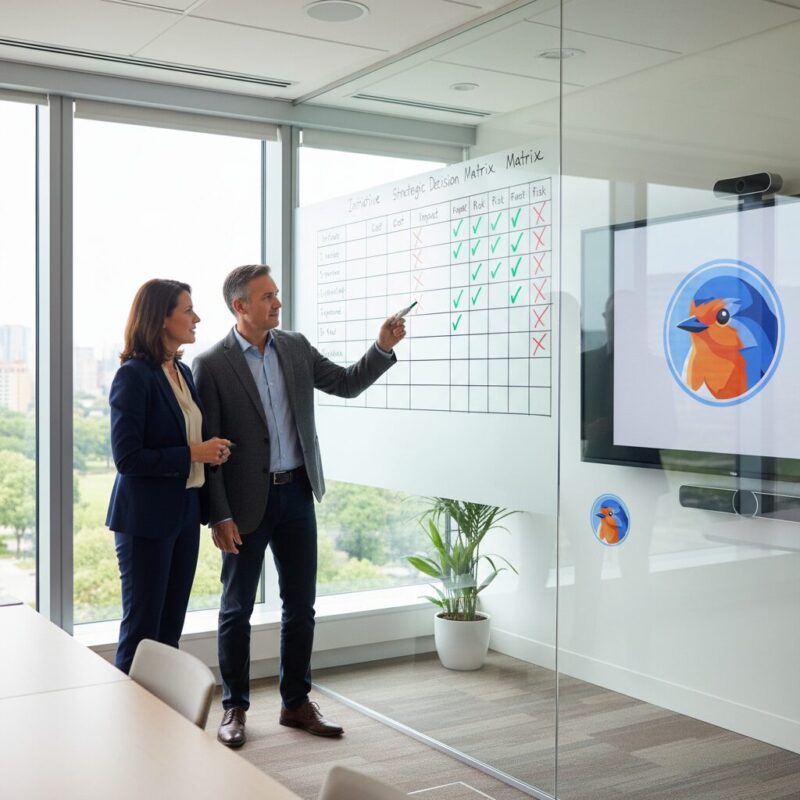
Meeting basic eligibility requirements does not equal strategic alignment. Organizations must calculate the true cost of an application by multiplying the expected staff hours by their hourly rate. If writing an application costs $2,000 in staff time for a highly competitive $5,000 award, the return on investment is fundamentally flawed.
Evaluate the post-award compliance burden before accepting funds. Highly restrictive grants with intense monthly reporting requirements can drain more resources than they provide. The Bridgespan Group highlights that ignoring these hidden administrative costs traps nonprofits in a “starvation cycle” where overhead is systematically underfunded.
Using AI for Contextual, High-Probability Matching
Digital strategic filters replace hundreds of hours of manual database searching. FundRobin’s Smart Grant Matching utilizes AI Natural Language Processing (NLP) to move beyond simple keyword searches. For example, while legacy databases require exact keyword matches, NLP understands context, automatically linking an organization serving “disadvantaged youth” with a grant targeting “at-risk teenagers.”
FundRobin’s AI filters over 1,200 active opportunities daily, assigning a 0-100% match score based on your specific organizational profile. Organizations utilizing this contextual matching save an average of 200 hours monthly and achieve an 85% success rate on opportunities scoring over 70%.
Operational Architecture: Centralizing Your Grant Lifecycle
Scalable grant administration requires a unified digital foundation. Relying on disconnected tools—separate Word documents, Excel sheets, and email threads—inevitably causes compliance failures and lost data.
Centralizing Portfolios for Clearer Impact Measurement
Maintaining all grant data in one secure location allows for accurate impact tracking. Centralized data aids organizations in building comprehensive Theory of Change models and outcome measurements, which funders increasingly demand. In Higher Education environments, this unified approach drastically simplifies multi-PI (Principal Investigator) collaboration.
According to Instrumentl, centralizing proposal data directly supports long-term sustainability planning. When financial leaders have immediate access to historical win rates and reporting metrics, they can construct realistic multi-year budgets. The Stanford Social Innovation Review confirms that this level of digital transformation is essential for modern nonprofit survival.
Leveraging Smart Dashboards for Pipeline Tracking
Real-time analytics allow leadership to predict funding income accurately. FundRobin’s Smart Dashboard replaces these disconnected systems with visual urgency indicators, eliminating missed deadlines and providing immediate clarity on funding pipelines.
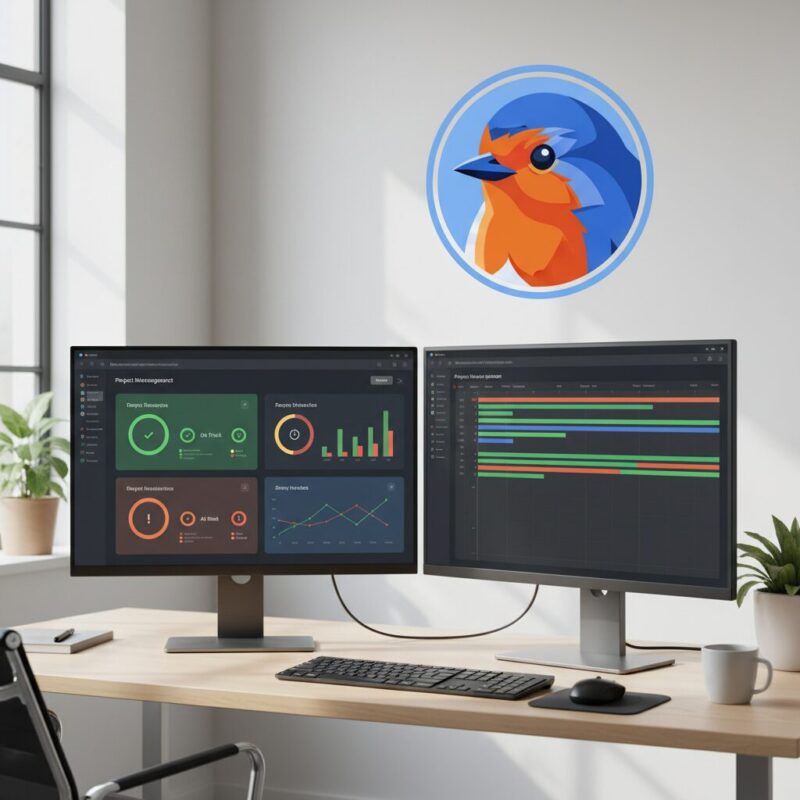
Color-coded urgency flags (green, amber, red) ensure team members know exactly what needs attention today. Role-based views tailor the data experience, giving Executive Directors high-level financial forecasting while providing Grants Managers with detailed task lists. Tracking win rates by funder, grant type, and value establishes clear performance benchmarks for the development team.
Automating the Heavy Lifting: From Blank Page to Compliance
Writing the proposal narrative remains the most time-consuming phase of the grant lifecycle. Generative AI fundamentally changes this process by augmenting human grant writers, solving “blank page syndrome” while ensuring strict compliance with funder guidelines.
Bridging the Implementation Gap with AI First Drafts
FundRobin’s AI engine analyzes funder guidelines, mandatory word limits, and scoring rubrics to generate compliant first drafts of executive summaries, budgets, and project descriptions. This automation reduces proposal writing time by up to 80%—turning a 40-hour drafting process into a 4-hour review process.
The Chronicle of Philanthropy notes that nonprofits adopting AI tools see immediate productivity gains. However, AI creates first drafts, not final submissions. The output is highly customizable, and human professionals must edit the narrative to inject empathy, specific community nuances, and organizational voice before finalizing the submission.
Grounded AI: Maintaining Accuracy and Data Privacy
The two most common fears regarding AI in the nonprofit sector are factual hallucinations and data privacy breaches. FundRobin solves both through the Robin AI Assistant.
Robin AI utilizes “Grounded AI” architecture. It is trained specifically on successful grant applications and explicitly cites sources to prevent hallucinations. You receive factual, step-by-step guidance tailored to international funding rules, including UK-specific requirements.
Data privacy is absolute. FundRobin practices strict data minimization, is fully GDPR compliant, utilizes enterprise-grade AES-256 encryption, and never uses user data to train public LLM models. Your organizational data remains entirely your own.
Fostering a Culture of Sustainable Grant Administration
Technology alone will fail without organizational buy-in. A sustainable operating system requires both advanced tools and a cultural shift in how leadership approaches administrative workflows.
Securing Team Buy-In for New Tech Workflows
Burnt-out staff frequently resist new software, viewing implementation as just another task on their plate. To secure buy-in, introduce new tools through quick wins. Use Robin AI to tackle a notoriously difficult, text-heavy application first. When the team sees a draft generated in minutes rather than days, resistance drops.
Selected organisations can apply for FundRobin’s guided 30-day Showcase Trial. The period starts only after approval and activation; approved Showcase organisations do not need a card to begin. Apply for the Showcase Trial or compare Growth and Impact plans.
Communicating Administrative Capacity Needs to Funders
A modern operating system empowers nonprofits to push back on unrealistic demands. Use the hard data from your centralized dashboards to demonstrate the actual cost of program administration and reporting.
Initiate transparent conversations with funders about your capacity limits. Negotiate for adequate overhead coverage and advocate for trust-based reporting formats. By adopting tools like FundRobin, organizations eliminate internal inefficiencies, freeing up the necessary time to focus on what truly matters: delivering undeniable impact to the communities they serve.
Frequently Asked Questions
What is a sustainable grant management operating system?
A sustainable grant management operating system is a holistic approach integrating human-centric organizational culture, strategic filtering, and technical automation (AI) to eliminate burnout and optimize funding success. It moves beyond traditional software by connecting pipeline tracking, AI proposal drafting, and compliance monitoring into one unified, secure platform.
How does AI improve grant matching and discovery?
AI improves discovery by utilizing Natural Language Processing (NLP) to understand the specific context of your mission, matching concepts like “disadvantaged youth” to “at-risk teenagers” automatically. This contextual intelligence increases match accuracy significantly, saving organizations up to 200 hours per month that would otherwise be spent on manual, keyword-based database searches.
What are trust-based philanthropy reporting standards?
Trust-based philanthropy reporting standards prioritize simplifying application requirements, accepting alternative reporting formats (like oral reports or existing data), and shifting the administrative burden from the nonprofit to the funder. This approach fosters transparency, provides unrestricted funding, and reduces the burnout associated with overly rigid compliance tracking.
Can I use AI to write my grant proposals?
Yes, you can use specialized LLMs trained on successful applications to generate structured, highly compliant first drafts, cutting writing time by up to 80%. However, human review remains essential; grant professionals must edit the AI-generated draft to add specific community nuances, emotional resonance, and final factual verification before submission.
Is our organizational data safe when using AI grant tools?
Your data is completely safe when using purpose-built platforms like FundRobin that practice strict data minimization and utilize enterprise-grade AES-256 encryption. Secure AI grant tools are fully GDPR compliant and explicitly guarantee that your proprietary organizational data is never used to train public language models.
How can startups leverage grant management tools?
Startups can leverage these tools to efficiently identify and secure non-dilutive funding opportunities, such as UK Innovate grants or federal SBIR programs. By automating the discovery and drafting process, founders can extend their operational runway between equity rounds without sacrificing equity ownership or distracting their core engineering teams.
Key Takeaways:
- Grant management must shift from a reactive software tool to a holistic ‘operating system’ that pairs human-centric culture with smart automation to prevent staff burnout.
- Implement a strict ‘Strategic Grant Filter’ to protect team capacity by evaluating mission alignment and hidden compliance costs before committing resources to a proposal.
- AI reduces proposal writing time by up to 80% (from 40 hours to 4) by generating compliant, high-quality first drafts, though human review remains critical for final polish.
- Effective operational architecture centralizes pipeline tracking, enabling data-driven financial forecasting and immediate, transparent impact measurement.
- Nonprofits must advocate for trust-based philanthropy practices while internally adopting ‘Grounded AI’ tools that maintain data privacy and eliminate hallucinations.
Transitioning to a modern grant management operating system is no longer optional for organizations looking to scale. By centralizing data and securely automating the heaviest administrative lifting, nonprofits can finally break the burnout cycle. FundRobin provides the digital foundation necessary to stop chasing low-probability funding and start building a sustainable, mission-aligned financial future.
